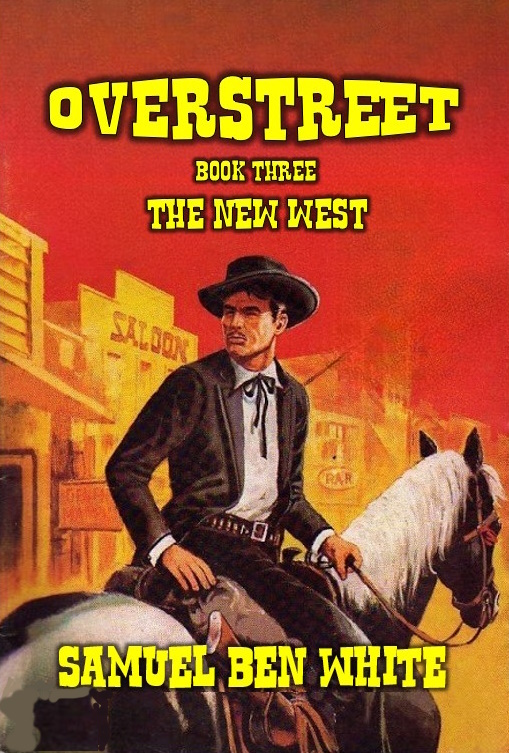
The conclusion of the John Overstreet saga. The gunfighters are hanging up their guns, a new century is dawning, and a different kind of fight comes to the You’ll See. But one more gunfight is on the horizon for John Overstreet: the last gunfight.
Available in ebook (in many formats, including Apple) and paperback.
…
Reading Sample
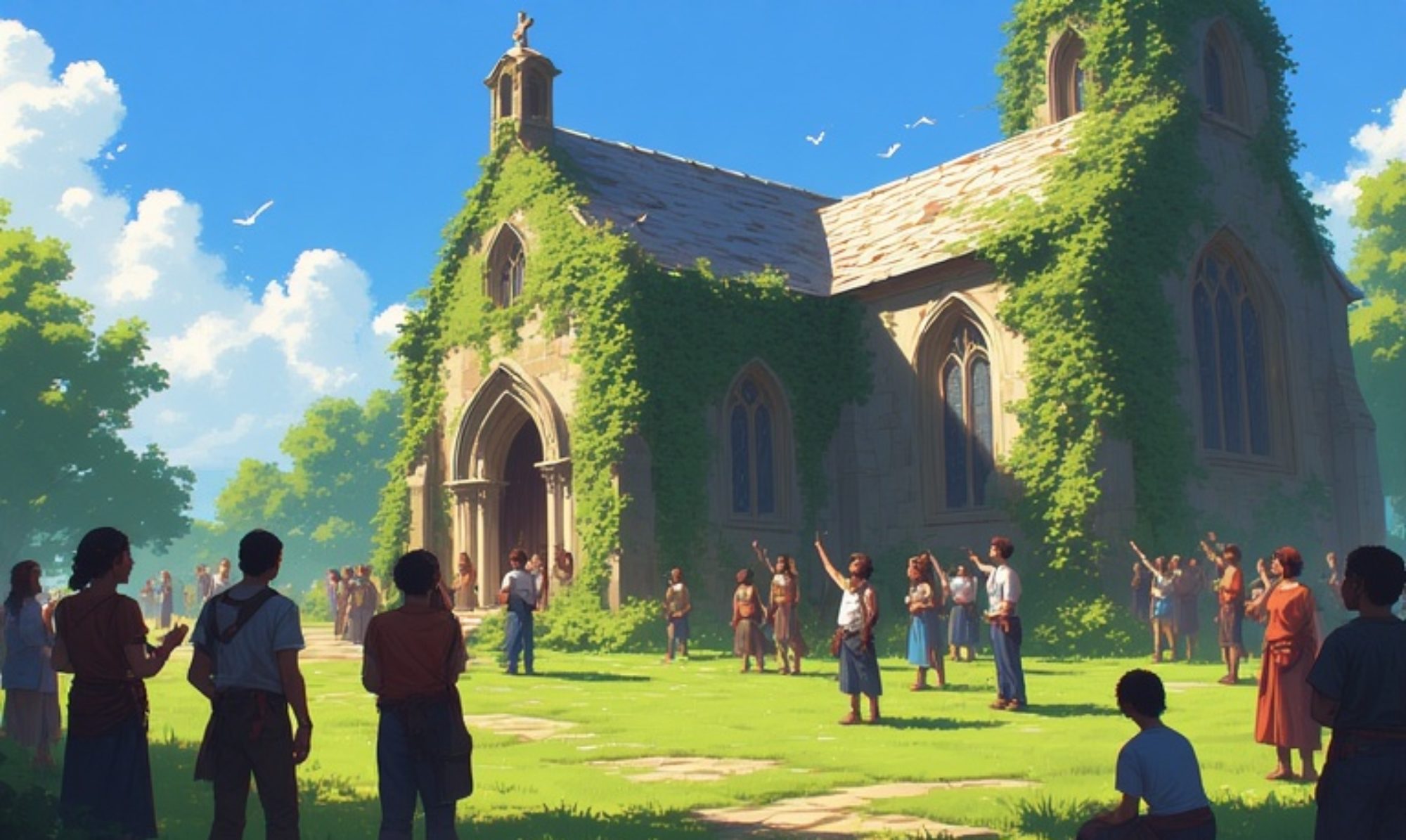
“Aunt Melinda! Aunt Melinda!” Ben shouted as he ran up the road from town. He had run all the way and though he was about out of breath, he was long on enthusiasm and that was making the difference. Afraid something was wrong, Melinda stepped out on the porch and was relieved that he seemed to be shouting it in a happy way. Still calling her name, he ran up onto the porch and into her arms, panting happily like a dog. “What is it, Ben?” He tried to tell her his news, but his wind had finally caught up with him (or left him, depending on how one looked at it) and all he could do was stand there and breathe heavily. He was a blonde-headed boy with his mother’s green eyes and his father’s good looks. A little more stout than his older brother, he was still good-sized for his age and becoming very athletic. His real passion, though, was art. So he held up a piece of paper and managed, “Read this.” Melinda took the paper and read, “‘Dear Mister Rathum, We are pleased to inform you that the drawing you submitted has been chosen as a finalist and will be on display in the Denver Museum of Art and is eligible for first prize in The Rocky Mountain News’ Young Artist Competition.’ Oh Ben, this is wonderful!” She gave him a hug, which he barely acknowledged as he took the paper back and read it again. “Can we go see it? In the museum, I mean?” “You bet we will!’ Melinda told him with another hug. “We’ll take the whole family. And we’ll be sure and let Jo and Leonard know, too.” “Can I write them?” “You sure can.” “Can I tell Uncle John when he gets in?” “Certainly.” Melinda laughed and added, “You might want to sit down and breath between now and then, though.”
“Uncle John!” Ben practically screamed as John rode into the ranch yard. “I’m a finalist!” John got off his horse and, walking it to the Hayloft, asked, “A finalist for what?” Ben quickly explained the commotion and showed John the paper. John read it and gave Ben a hug. “Aunt Melinda says we can go to Denver and see my picture in the museum.” “You bet your life we will. Come on, let’s put my horse up, then we’ll go make some plans. Which picture was it?” “That picture I drew of the Old Homestead with that special pencil you got me for Christmas.” “That was a good picture.” He tousled Ben’s hair and added playfully, “Must’ve been the pencil.”
“And this drawing,” the tour guide explained, “Was drawn by a member of our very own tour group: Mister Benjamin Rathum of Como. Wave your hand, Ben.” As Ben shyly stuck up his hand, the group of a couple score people clapped politely and several were heard to remark that it was amazing a child of his age could draw so well. He received several pats on the back and more than one vote of confidence that he would win the prize. Nervous beyond belief, Ben held tightly to John Mac’s hand and just nodded at all the compliments. If anyone noticed that Ben’s blonde hair didn’t seem to fit in with the black-haired family he was traveling with, they were polite enough not to say anything. Everyone involved, including Ben, thought of him as part of the Overstreet family these days. John Mac followed him around the way Andrew and Emily followed John Mac around and John and Melinda treated him like one of their own. In return, he treated John and Melinda as if they were his parents. Almost from the moment he had come to live with them, there had been a bond of love that was so strong as to be unbelievable. But Ben was a very special boy, one bound to make a mark in the world if in no other way than all the people he would be kind to. As the tour moved on, Melinda realized that Emily was about to fall asleep where she stood. Melinda whispered to John, “I’m just going to sit in that chair over there and snuggle Emily. She needs a nap and my feet are killing me.” “We’ll come back and get you before we leave,” John whispered in return. Melinda sat in a big, surprisingly comfortable chair, and Emily eagerly climbed into her lap. She had chattered on the whole train ride from Como and in the carriage from the train station to the museum and had worn herself out. And while she and Andrew were both giving up their naps as a general rule, Emily could still be persuaded to take one in her mother’s lap now and again. As she sat there, Melinda found that she was almost tired enough to go to sleep herself. They had gotten up early, then all dressed in their best clothes so they could come straight to the museum, and the long day was suddenly catching up with her. Through half-focused eyes, Melinda absently watched the few other patrons who had elected to tour the museum sans a guide. There was an elderly couple who talked happily about every picture; a college-aged looking young man who scrutinized every piece of art as if he were a world-renown art critic visiting the Louvre; and a middle-aged woman with fading blonde hair who stopped at every picture, examined the name plate then moved on without seeming to have seen the picture at all. Melinda found herself watching the woman. She moved slowly, her feet almost dragging, as if she had walked to the museum from a great distance. Melinda had read of people who appeared to be “beaten down by life” and, while she had seen a few such people, this woman was the personification of the idea. Melinda couldn’t see her face, but she could see the slumped shoulders, the tired gait, the hands that reached out to every name plate as if for a life raft. Melinda began to wonder about the woman and what her story might be. She tried not to stare at the woman—even though she guessed that the woman was oblivious to everything around her—but cast furtive glances her way in an attempt to, somehow, read the woman’s story. Suddenly, Melinda was very awake, but was also thankful that Emily was there. An inveterate people watcher, Melinda had spent many hours watching people while holding one or another of her children on the porch of the Como Hotel or the boardwalk on Rowe Street. She had even done it a few times in Denver and had always enjoyed it immensely for there were so many more people to watch. The woman was wearing a traveling dress of impeccable style, which would have been incongruous with the picture she put forth except that it was still dusty from travel. In a world where the streets were mostly dirt and carriages mostly open, the dust wasn’t necessarily out-of-place. But the dress was so nice, Melinda realized that what looked odd was that normally someone with a dress like that wouldn’t have stepped out of their railway car without borrowing a brush from one of the porters and giving it a once-over. The train? Melinda suddenly wondered why she thought this woman had just gotten off a train. She realized, with closer scrutiny, that it wasn’t just dust that clung to the woman’s dress but soot. That fine soot that Melinda had been so careful to brush off her own dress before coming over. So what would posses a person who seemed so ill at ease with life to hop a train and come to a museum? Maybe, Melinda thought, she’s downtown for something else and stopped by the museum to kill time. There were a few lawyer’s offices nearby and the capitol building wasn’t all that far away. No. She came to believe as she watched the woman (less and less furtively), that the woman was in the museum for a purpose. There was something in these pictures that she was looking for. What could it be? No again. As Melinda watched the woman’s movements she realized that the woman was looking not at the pictures but the names. One of these pictures was done by someone that meant something to the woman. A grandchild perhaps? All the pictures in this room were done by children twelve years of age and under and it was unlikely that this woman could have a child in that range. What is it about a grandchild’s picture that would so enthrall this woman, so entrance her that she would travel across country to see it? The woman came then to Ben’s picture and stopped. She actually looked at the picture, and then put her hand on the name plate as if it and not the wall behind it were holding her up. She put her other hand to her heart as if to keep it from killing her, and just stared. Just as Melinda began to shoot various scenarios through her mind to explain these events, she mumbled to herself, “Oh my!”
That murder was done is clear to all. But who was murdered? And will anyone be brought to justice or will a whole town look the other way?
Published by Outlaws Publishing and available on ebook (in many formats) andin paperback!
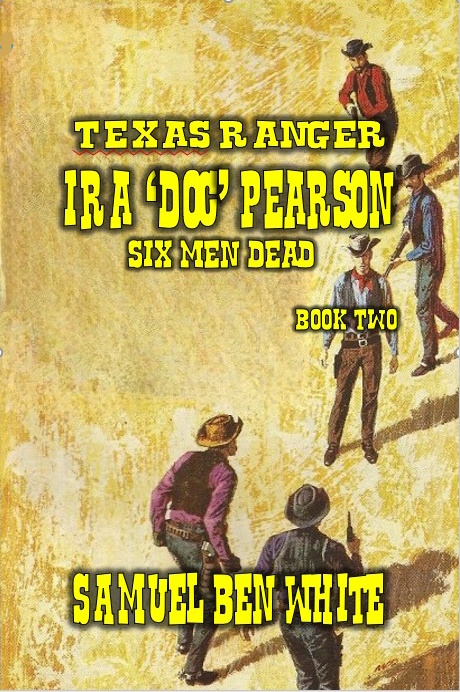
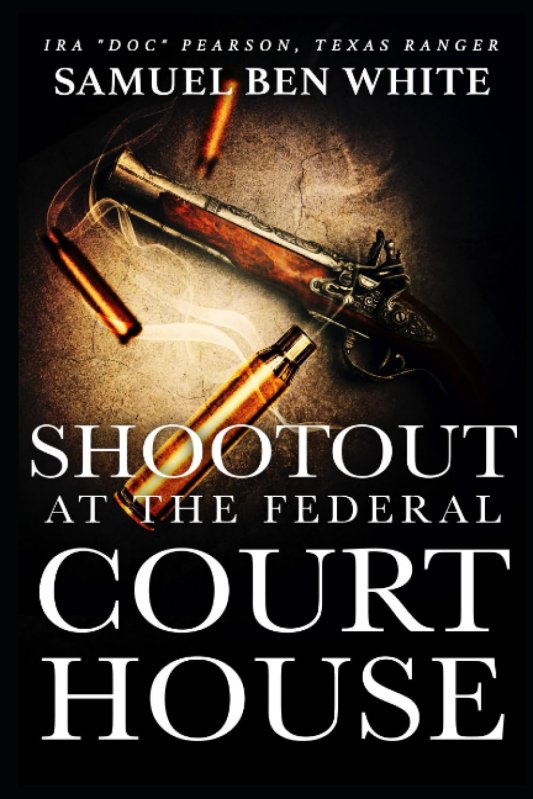
Six men rode into the west Texas town of Rook in December of 1895. Moments later, all six men lay dead in the street, shot to death by the good citizens of the town.
Ira “Doc” Pearson is sent by the Texas Rangers to investigate, expected to just rubber stamp the proceedings for the dead men were known as the Lawrence Gang: wanted in Texas and New Mexico for bank robberies, rustling and murder.
Ira knows, however, that one of the members of the Lawrence Gang was in jail in Lubbock at the time of the massacre. So who was the sixth man who died that day?
Official Texas is satisfied that justice was done, but Ira can’t let it go.
Also available on Audible and iTunes, narrated by Tom Lusty!
Six men rode into the Texas panhandle town of Rook. By the looks of them, six hard men, five of them on fine horses such as only an outlaw could afford, all wearing guns that had seen some use.
The people of Rook took all this in in a moment, and that was all they took.
Rifles, six-shooters and shot-guns seemed to appear as if by magic from every upstairs window on the dusty street. No signal had been heard or seen.
All fired at once and six men went down. Only two were even able to get their guns out of their holsters, but neither got off an effectual shot before scratching their last sign in the dirt of the street.
No horses were hurt more than a couple grazes, for the men (and maybe some women, if the rumors were true) of the west in general and Rook in particular thought a lot of horse flesh and had taken great care not to hit any of the animals.
All six riders died quickly. Nobody was gut-shot and writhing in the dirt, for the people of Rook were good shots
and toasted each other later in the saloons and each other’s houses that there had been no suffering. Not like the banker these men had made die slowly down in Banderas, or that parson who’d just been in the bank at Dimmit at the wrong time and had taken a month to die.
Nope, just six clean deaths.
One couldn’t say it was just six shots, though. Someone counted up later and found that most of a hundred Rook bullets had struck the six bodies. It was a wonder they hadn’t more than grazed the horses.
No one from Rook had so much as a scratch on them. Maybe some red eyes or sore throats from the smoke of the gunpowder, but nothing more. It had just been a few seconds of red-laced hell and then it was over. Six lay dead and a lot of people across west Texas and eastern New Mexico started sleeping easier again.
The worthies of Rook buried the six bodies in a single grave out at the town cemetery and the Campbellite parson said some words over them. A marker was put up but all it said was, “Lawrence Gang” and, below that, “Put here by the good citizens of Rook on 4 December, 1895“.
Chapter One
Folks took notice
when the stranger rode into town on the sorrel horse of his. It wasn’t quite like the old days, when every stranger who passed through Rook was noted, though, for mor
And this stranger wasn’t an especially striking specimen. A shade over six foot, with short light hair and beat-up clothes—though of tough cloth—nice boots, and a saddle that had seen some miles. Nor did his gun catch anyone’s eye, for while things were starting to get civilized, there were still quite a few men who wore guns, especially if they were traveling for civilization hadn’t completely caught up with the road agents. The stranger’s horse was a good-looking animal, one that looked like it could go all day and night, but it wasn’t a “show horse” for all that. Just a good-looking horse anyone would be proud to have, but not the kind that made people say to themselves, “I want that horse!”e people traveled anymore. On any given day, a dozen strangers might ride through, stopping only for water or a meal, before making their way back onto the road to Hereford or maybe McKeon. Most of the time, they drew no more notice than if a local had ridden through.
What got people’s attention, and set the tongues to wagging and brought the whispers to a dull roar was the silver on the man’s chest, for he wore the badge of a Texas Ranger. The badge was polished and glinted in the bright Texas sun, catching the eye of everyone who even glanced that way.
Soon, Sheriff Montgomery was hustling out of his office and greeting the stranger even as the man was tying his horse to the hitching rail in front of the jail. Extending his hand in a manner that seemed to be forced friendliness over an underlying nervousness, he said, “Howdy. I’m Sheriff Montgomery. I, um, I figured one of you would come.”
“Did you now?” the stranger replied, taking off his riding gloves then taking the sheriff’s hand. “Pearson’s my name. Ira Pearson. I reckon you already realized I’m a Ranger.”
“Uh, yes sir,” said the sheriff, even though he was probably a good fifteen years older than the Ranger. “Won’t you come inside?”
“Thank you,” the Ranger said politely.
Sheriff Montgomery watched with keen interest as the Ranger took off a Stetson that had seen some miles but was well-taken care off. The Ranger brushed some dust off the hat and then hung it on a peg just inside the door. The Sheriff saw then that the Ranger had the most grey eyes he had ever seen. Somehow both piercing and bland at the same time.
“Coffee?” the sheriff offered.
“Don’t mind if I do,” Ira Pearson replied. He took the cup gratefully, then sat in the offered seat. He waited a beat for the sheriff to sit down behind his desk, then said, “You probably know why I’m here.”
“To give the town a medal?” the sheriff tried to joke.
Ira Pearson chuckled, shaking his head. “There are some in Austin who have already suggested that. The citizens of some of your nearby towns would probably go along with that idea. But no, Sheriff,” he said, suddenly becoming more stern, “I don’t think anyone is going to try to argue that the Lawrence Gang didn’t have some retribution coming. However, six men shot down in a street with no provocation does look a lot like murder to the courts.”
“Murder?” the sheriff demanded. “After what they did in Monahans, or to them sheepherders down by—“
The Ranger held up his hand to forestall further talk from the sheriff and said, “We know those things. The whole state knows those things. And I have access to crimes I daresay you haven’t even heard of save in rumor, Sheriff. But there are laws in this state and murder is at the top of the list—even when the person murdered deserved what they got by every known set of rules.”
“So what are you going to do, Ranger?” The last word was said with something less than admiration in its tone.
“My orders are to investigate exactly what happened and turn in a report to my superiors. I can make recommendations, but it will be up to the Attorney General what is to be done ultimately.” He smiled then and asked affably, “May I assume that I will have the full cooperation of this office, Sheriff?”
“Um, uh,” the sheriff fumbled, taken off guard by the sudden friendliness, “Sure. Absolutely.”
“Thank you.” The Ranger reached into a vest pocket, pulled out a little notebook such as most ranchers carried for tallying up stock, and a pencil that was already sharp and said, “For starters, I’d like to hear your account of what transpired on Wednesday of last week.”
The sheriff cleared his throat, looked around for help where there was none, then began, “Well, it really started before last Wednesday.” Steeling his will, he said, “Here’s what happened, Ranger—wait, ain’t you the one they call ‘Doc’ Pearson?”
The Ranger hesitated, chagrin on his face, then replied, “Yes. But I prefer Ira, or Pearson, or Ranger or ‘Hey You’ for that matter.”
“All righty,” the sheriff agreed, wondering what the story might be behind both the nickname and the obvious dislike the wearer had for it. Still, he shrugged then began, “I’m sure you know all about the Lawrence Gang. Well, I know it, too, and I may know more than you think I do. But that’s no never mind. What I do know is that in the last week of November they stuck up a stage over by Lubbock. Shot the driver and the express man. Beat up the passengers—three men and a woman—and left them beside the road. One of the men is still laid up, they tell me.
“From there, they drunk up half the liquor in Littlefield and shot out most of the windows. Beat a bank teller half to death ‘cause he didn’t have but twenty dollars to give them. Y’know, Ranger, they used to just rob a bank now and then. But somethin’ went wrong with that Frank Lawrence up here,” he gestured toward his own head. “I ain’t saying they didn’t deserve jail or death for the robbin’, but here lately they just went plumb crazy.
“After Lubbock, and then being in Littlefield, I didn’t worry none ‘cause I figured they was headin’s away from us. Next thing I know, they’re in Olton, then somebody east of Hart said he thought he saw them on the trail to Tulia. Everybody in this town had heard that, too, Ranger, so they got up the citizen’s committee and started asking what they should do.” He looked furtively toward the door, as if hoping someone would come in and interrupt his proceedings, before continuing, “Now I, um, I told them what we’d have to do was arrest them Lawrences and then get word to you—the Rangers, I mean, not just you personal.
“Sudden like, ever’body in town’s walkin’ on eggshells. Men wearing Colts strapped to their pants that hadn’t been fired in ten years. I was, I tell you, I was worried about a accident—“
“Accident?” Pearson questioned.
“You know how it is,” the sheriff explained, somewhat plaintively. “Ever’body’s on edge and, first thing you know, one fella’s bumped into another in the saloon and all of a sudden ever’body’s firin’ guns and somebody lays dead.”
“And that’s not what you wanted? Dead men in the street?”
“What? No sir!” Sheriff Montgomery objected forcefully. “I never wanted no such of a thing! But I tell ya: when it happened, the people of Rook handled it like men.”
“And how was that?” the Ranger asked calmly.
The sheriff was sweating, even though it was a cold panhandle day outside and the pot-bellied stove was only putting a dent in the chill. He suddenly blurted out, “Well, you remember back a couple years ago when that posse caught up with the Lawrences down hear Odessa, don’t you? Had ‘em chained up and everything. But ol’ Pete Lawrence, he had him a cousin there in Odessa who got a file to ‘em. They slipped out slick as whistles in the night and have been raising—well, you done told me you know what they been doin’.”
He stopped for a moment, formulating his words, then offered, “I told ever’body that we needed to catch them Lawrences legal and hold ‘em tight! I was goin’ to swear in a passel of deputies and we was goin’ to watch over them like new mothers over a baby ‘til you could get here.”
“Wise plan. What happened to it?”
“’It’?”
“The plan. What happened to the plan?”
“Went all to pieces,” the sheriff said with a laugh. Suddenly enjoying himself, he explained, “Word had somehow got out that our bank had took delivery of a large sum of money, so I was on edge anyway. Then, we heard about the Lawrences coming. Then, that morning, Collin Warner—he runs a little dairy operation just south of town—he wakes me up and says he seen a bunch of men hiding out in a draw on his place. He said he seen their fire, then snuck up on ‘em knowin’ nobody honest would be a camped out like that without saying ‘hey’ to the owner. Collin, he used to be in the Army and he injunned his way up there and said he seen Pete and Frank big as life—“
“How’d he know it was them?”
“Wanted posters, I reckon. Ever’body knows—knew—Frank had that scarred-up nose from when that feller bit him down in Abilene. And Pete was so skinny he had to stand twice to cast a shadow. And ol’ Onion Taylor, we all knowed what he looked like on account of the stories told about him. And they was true, let me tell you. Must’a took thirty shots hisself before he went down.”
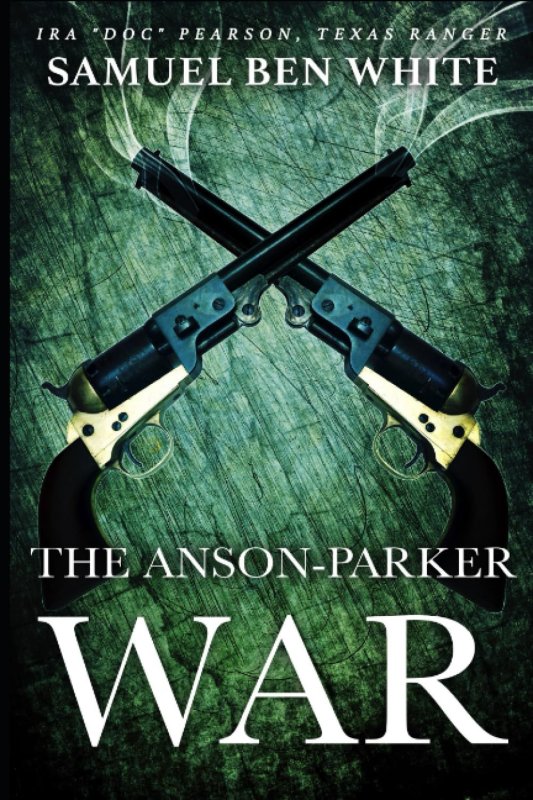
A range war is coming. Texas Ranger Ira Pearson is sent to investigate. But is there someone behind the scenes pulling the strings?
Published by Outlaws Publishing and available for Kindle and in paperback!
Texas Ranger Ira Pearson is sent undercover to Van Bent, a town in far west Texas where rumor has it a range war is brewing. Posing as a doctor–aided by the very training he has tried so hard to distance himself from–Ira is quickly involved in the feud. As he tries to keep the war from escalating, Ira can’t help but think there is something else going on, that either someone behind the scenes is pulling some strings, or there is just an evil festering beneath the surface of Van Bent. With a nurse he is training on the job by his side, Ira is tasked with stopping the war and, perhaps more importantly, finally answering the question for himself of whether he was supposed to be a doctor all along.
…
Sample Chapter
Undercover work? Ira considered as he gathered his things at the hotel. He hadn’t had to do anything like that since he was with the Houston police force a few years before. Not real undercover work, anyway. Occasionally, as a Ranger, he had ridden into a situation with his badge in his pocket and had not announced his presence or true intent until he had the lay of the land, but not true undercover work.
He wondered, of course, what it might be. A dope smuggling ring? There were rumors of cocaine becoming a problem among the silver miners out west. Slavery? It was outlawed but there were a lot of prostitution rings that—in Ira’s estimation—came awfully close to breaking those laws with their “contracts” for the women. It occurred to Ira that he wouldn’t mind breaking up an operation of either of those evils.
Still, why him? There were other Rangers, he knew, that had more experience with drug smuggling. Ira had helped in an operation on the matter a couple years back, but his area of expertise was more along the lines of cattle rustling or kidnapping. Kidnapping? he wondered. There were always rumors of the Comancheros stealing American children and selling them as slaves in Mexico—or kidnapping Mexican children and bringing them to the States as “servants”. Could it be something like that?
Ira knew there was no way he was going to find out until he got to Kerrville and spoke with Billings, but he couldn’t help but speculate in his mind.
McKay had given him a fairly loose timetable, so Ira eschewed the trains and rode Scout cross-country to Kerrville—posting his letter to Rose in the next town down the line. Ira still wasn’t sure where things stood with Rose. Was she “his gal”? Did he want her to be? Nor did he know if she wanted to be his gal—or anything, for that matter. She was a friend, certainly, and probably one of his best friends. But he could not honestly say whether he wanted her to be anything more and was pretty sure she felt the same way. So why, he asked himself, had he bothered to send the letter? Because he cared enough about her that—if he wound up undercover for a long time and unable to write—she wouldn’t think he had forgotten her.
He didn’t dawdle, but nor did he push his horses for he brought along a pack horse he could switch with. All in all, he made pretty good time.
He also didn’t shave, thinking that if he needed to look different from his normal self, a beard and mustache were an easy disguise—which he could shave off if not needed. He wasn’t one of those men who could seemingly grow a fresh beard overnight, but by the time he arrived in Kerrville six days and a hundred and fifty miles later he had a decent start. If nothing else, it had the advantage of drawing no attention his way as he just looked like another long-riding saddle tramp.
The problem, it occurred to him on the six day ride, was his eyes. Some people (especially women) seemed to like his eyes, some people said they were too strange to be attractive (also women), but everyone who met him agreed that Ira had the greyest eyes they had ever seen. He doubted that his eyes were discussed by bandits on the trail, but they were going to be hard to disguise were he to meet anyone he knew. He thought about getting some spectacles with just plain glass for lenses, hoping that might distract from his eyes. It occurred to him that maybe he could get some spectacles with tinted lenses such as people with sensitive eyes sometimes wore, but thought that might draw more attention rather than less.
Ira checked in at the Kerrville Union Hotel and the man at the desk barely looked at him, let alone made eye contact, certain Ira was just a saddle bum and probably thinking they’d have to give the sheets an extra wash after this Walter Moore left. Ira thanked him, saw that his horses were tended to, then went upstairs. The fifty cent bath felt good but it sure increased his desire for a shave.
He had supper in the hotel dining room, an inauspicious room off the inauspicious lobby and was served an even more inauspicious supper. What they had advertised in the menu with some fancy French words was just a medium-sized steak and some green beans. Neither was bad, nor were they the kind of meal Ira would be hankering to return for. Still, they beat his trail cooking.
After checking on his horses he walked around town a bit then headed back to the hotel. He stretched out on the bed after taking off his boots—expecting to be disturbed by a tap on the door at any minute—only to find himself waking up to faint morning light. He was rested, but more than a little chagrined at himself for it didn’t pay a Ranger to sleep too well or two hard.
After splashing some water on his face, he went downstairs and took care of business before heading into the hotel dining room. It turned out they weren’t serving breakfast that day, so he made his way to a little café down the street that was clearly open and put off a smell so charming Ira told himself he would be happy just to stand there and inhale. Inside, he got a breakfast almost too large for one man to eat, but Ira did his best and eventually polished his plate.
He was sitting on a bench later that morning in front of the hotel when a man in a plain, store-bought suit and bowler hat sat nearby. The man asked in a casual but clear manner, “Walter Moore?”
“Who’s asking?” Ira replied, giving the man a better look.
The man asked, “Would you like a cigarette paper?”
Ira was puzzled but replied, “I’m more of a cigar man, if anything.”
The stranger let a little smile creep into his eyes, then said, “I’ll roll you one. But don’t smoke it here. The hotel owner’s kind of picky about such things.”
Based on the number of butts on the wooden porch beneath Ira’s feet the Ranger seriously doubted that assertion, but took the offered cigarette with a “Much obliged.” The stranger nodded, then tipped his hat and stood up, walking away without a backward glance.
Ira stood up a few minutes later, the cigarette in his shirt pocket, and made his way to a little courtyard on the side of the hotel. Making as if he were trying to light the cigarette but fumbling with it, he dropped it on the ground. Grumbling, he bent over to pick it up, unrolling it as he did so. He saw that there was writing on it. Putting the paper in his right front pants pocket, he walked around to the back as if going to the privy.
When he was confident no one was watching, he read the note. “Old blue barn on southeast side of town. Dusk.”
Ira tore up the pieces of the note and dropped them into the privy’s hole. He laughed to himself, “If anyone wants to fish them out of there, more power to ‘em.”
He loafed around town that day, trying to be neither suspicious nor too unobtrusive, and eventually made his way to the southeast side of town. Once there, the barn—which he had located earlier in the daysat off by itself making the approach to it visible, meaning no one was going to sneak up on that barn while there was still light.
Ira dismounted Scout then walked up to the barn, putting his hand to his Colt and made sure the thong was off, then eased inside the old structure. Taking a moment to let his eyes adjust as much as they could, he looked around. He stepped to some old stalls and went to stand in one of them, leaning his left side against a post and keeping his right hand close to the revolver.
He hoped he didn’t jump too much when a voice from the next stall whispered, “How’d you know which stall I was in?” Before Ira could answer, the voice—a man’s—said, “Never mind. You go by Walter Moore now?”
“Yes,” Ira replied succinctly. Then, “Mister Billings?”
“Yes. McKay sent you, right?”
Ira nodded, realized the man couldn’t see the gesture, and so answered, “He did. What’s this all about? And are we supposed to pretend we don’t know each other?”
In a gravelly voice, as one who recently got over the croup, Billings told him,“Not here, per se, but thanks to that business in Rook last year, you and I are known associates. I have a job and it occurred to me from the start that you’re the man for it, but it needs to be kept hush-hush until we know for certain there is something there. Do you still have doctor’s equipment?”
“Yes,” Ira replied, trying to keep the grumble out of his voice but probably not keeping the surprise out. “A few things, like what I’ve used when patching someone up in the field.”
“From now until this is over, if you take this assignment, you’re Walter Moore. I know your record, Pearson. You didn’t just kind of read for medicine with some frontier sawbones; you went as close to medical school as Texas had at the time—and finished with high recommendations from the school in Galveston.”
Ira hesitated, then replied, “Before the college officially opened up. I studied under a man named Gerald Miktam. He was an obstetrician and taught at the old college before they closed it.”
“I’ve met him. Brilliant man. Then you had an education better than most doctors in the state—barring the most recent graduates, of course.”
“Maybe. What’s this all about, Mister Billings?”
There was a long pause, then Billings replied, “Come over here and let’s have a little light.” Ira followed the man into a darker corner of the barn which had probably been a tack room way back when. Billings lit a lantern, but kept the flame low. Still, it allowed them to see each other as they sat in two rickety old chairs by an even shakier table.
Billings produced a map from a satchel and spread it out on the table. “You know anything about Van Bent?”
“Town, isn’t it? Just this side of El Paso?”
“That’s the one. Wait, you weren’t in on that group of Rangers that stopped the Fitzsimmons-Maher fight in El Paso a couple years ago, were you? That was close to Van Bent and you might have been recognized—”
“No. I was hip deep in bringing down those wire cutters west of Lubbock about then.”
“Oh, right. Good work there. Anyway, about Van Bent. Ranching town, little dry land farming. Railroad goes through there, east to west. Started out as just an end-of-the-tracks town, then just about died when the railroad went on. There was talk for a while, though, that a railroad bridge might be built over the Grande and the town perked up a bit. Kind of reached an equilibrium now, you might say.”
“Something going on there that needs a Ranger?”
“Yes. Well, maybe. But it’s something that I think requires a particular Ranger: you.”
“Me? What do I bring to anything that a dozen other Rangers don’t?” When Billings didn’t answer right away, Ira looked into the man’s eyes and saw something like a friendly smirk in the dim light. “What? Oh wait, no. I don’t know what you’ve heard—“
“I’ve heard about how you patched up a couple of our Rangers after that border fight a couple years ago, and how you performed actual surgery last year in Big Spring.” As Ira made a face like a man about to object, Billings said, “And I happen to know, as stated earlier, that you have better medical training than most actual doctors—“
“I don’t think—“
“The average doctor in Texas has less than one year of medical training, and most of them were just apprenticed under another doctor with the same level of training. You’re one of the few who can actually claim to have been to medical school.”
“I didn’t—“ Ira tried to object.
“Haven’t you heard?” Billings said with what was intended to be a friendly smile but was not seen that way by Ira. “The School of Medicine there in Galveston has recognized Doctor Miktam’s students as having a medical degree on par with those their first year graduates received.”
“No. I hadn’t heard that,” Ira told him, a mixture of chagrin and pride battling for supremacy within. “But what does all that have to do with Van Bent, Texas, and needing a Ranger?”
Billings reached into his satchel and pulled out a wanted poster for a man listed, primarily, as Augustus Zamorra, though there were several aliases listed as well. “What do you know about this man?”
Ira looked over the poster and replied, “Mostly just what it says here: wanted for murder and horse thieving—but all on the Mexico side of the border.”
“Anything else?”
“Just trail gossip. Seems like most of his crimes have taken place in Mexico, but every now and then he gets the blame or credit for something that happened on this side of the river. Some people say he’s one of the Comancheros, others say they hate him as much as everyone else. One fella I heard once was trying to say the Comancheros were afraid of this … ‘Gus’. That’s what they call him, isn’t it? ‘Gus Zemore’?”
“Yes. That’s one of the many names he is known by.” Billings rearranged the papers so that the map was on top and explained, “We suspect he’s done more on this side of the border than we’ve tried to let on. Didn’t want the public panicked.”
“Those west Texas boys are more likely to take a pot shot at him than panic.”
Billings nodded, but then added, “I dont doubt it. But we want this Zamorra alive.”
“Why alive?”
“There’s something going on down there. Something that’s got the people of Van Bent and El Paso on edge.”
“And you think if you can catch Zamorra he’ll tell you what it is?”
“Maybe. We’ve caught some small timers, but they’re only from the fringes. They haven’t told us anything—if they know anything.”
Ira asked, “What makes you think Zamorra knows anything? As I recall, he’s never been accused of being part of a gang. He’d be an outsider to any plan, wouldn’t he?”
“Maybe not. We think the whole loner thing is an act, a put-up. We’ve been watching him for some time and he’s a lot closer to the big scores than we at first thought. Never right there, mind you, but a bank or train robbery, a high-profile kidnapping. Zamorra’s almost always nearby. He’s either in on it—“
“Or he knows who is and is trying to catch some of the leavings.”
“That’s what we think.”
“So again,” Ira reiterated, “Why a Ranger? And, more importantly, why me?”
Billingss waited a long minute, then said, “Trouble’s coming to Van Bent. There are two factions that control that town: the Ansons and the Parkers. It’s been just a little feud between families—wait, I don’t want to downplay it too much. There’s been some fist fights but, well, it’s been kept within the families so far. Rumor is, though, that one of the sides is bringing in some hired guns to wipe out the other side—”
“So why not bring in a whole bunch of Rangers like Major Jones did and wipe them out?”
“Believe me: we’ve discussed that. The problem is that, so far, we don’t have enough to go on. Could be the whole thing is just rumor. Not that two families trying to shoot up the other isn’t worth our time, but we got enough egg on our face pulling in Rangers from everywhere just to stop a prize fight. And this being so close to El Paso, that fight would be on everybody’s mind. We need to get the facts, first.”
“Move a garrison there. Let it be known you’re after wire cutters.”
Billings was a moment before answering, “We need someone on the ground, but someone who doesn’t look like a Ranger. So then it occurred to me one day that Van Bent has everything: a school, a couple churches, even a volunteer fire department. Has a sheriff but I have a suspicion that he’s on the payroll of the criminal element.”
“And this has to do with me … how?”
“What Van Bent doesn’t have, is a doctor.”
“Really? It’s not that small is it?”
“More than a thousand people, maybe two. It had a doctor, eastern fellow from what I hear. Wife and family. My guess is that the little woman didn’t care for far west Texas and he left to keep peace in the home. Can’t blame him, really. Anyway, the town council wrote to the state asking for help in finding them a doctor. I came across the request, happened to remember what you did in Big Spring last year, and thought we might have an answer to solve our problem and the town’s.”
“You just didn’t take into account that I am not a doctor anymore. Never was, really.”
“There’s a Doctor Alexander in Big Spring that says different.”
“You’ve talked to him?” ira asked, surprised.
“By telephone,” Billings replied, the telephone still a new enough invention that even those who had used one many times were still proud of the fact.
“But I had no choice. That man was going to die if I didn’t operate.”
Billings smiled, again trying to be friendly and not realizing that the light from the lamp made him look more ghoulish than inviting, “See, that’s where it’s you. If it had been me, that man would have died. I wouldn’t have had the first idea what to do other than maybe hold a bandage over the wound. You may not think of yourself as a doctor, but you know how to be one.”
“What’s your interest in this? This seems a little out of the bailiwick for a state attorney—”
“Deputy attorney general,” Billings corrected. “But you’re right. I’m interested because, well, I got interested in this because I have a sister who lives in Van Bent. She wrote to me about this feud. I know my sister: she doesn’t scare easy and neither does her husband. If she says something’s coming, I believe her.”
“So how does Gus Zemore fit into all this?”
“Honestly? He may not. But down Mexico way he’s been known to fight for pay. If it’s true that one side is bringing in hired guns, I would look for the other side to try to get Gus.” Billings leaned closer, his elbows on the table, and said, “Gus is past forty. You and I know that’s old for an outlaw unless they either get someone else to do their work for them—”
“Or they’re very good at what they do,” Ira completed.
“Either way, we don’t want him in Texas if we can help it. But also, if we could capture him and turn him over to the Mexican authorities, it might build up a little good will between our countries. We’ve got spies in Mexico, but we don’t have an official presence in Van Bent. I told my sister I’d try to change that and Captain McKay thought of you right off. Said you were wasted just tracking down panhandle rustlers and runaway brides.”
Ira was trying furiously to think of objections, coming up with several, but finally said, “You want me to go into Van Bent and pretend to be the doctor?”
“No, I want you to go into Van Bent and be the doctor. If we sent any other Ranger in there to pretend, they’d be discovered as soon as they did something—anything. I want you to go there and be our eyes and ears.”
“For how long? I was undercover once with the Houston police but that was only for a few days. Just long enough to work the docks.”
“So you’ve been an undercover doc before,” Billings laughed. He laughed alone. Answering the question with a more serious voice, he said, “There’s a possibility this could go on for months. A possibility, mind you. But me, I’ve got it in my mind that this is building to something. Something that will hit before summer is over.”
“But you don’t know that for sure?”
“How could we? Unless we knew some gold shipment were coming through or something. No, this is, admittedly, open-ended. But you know how our hot Texas summers work on folks, especially the bad element.” Billings, a good man at reading body language, asked, “What is it about this job that has you so vexed?”
Ira had a few sarcastic comments jump to mind, but decided to go with honesty, “I don’t want to be a doctor. It’s true that I can be one, but I closed that door a long time ago.”
“Maybe it’s time to reopen it.” Billings again tried that winning smile (that worked so well in sunlight) and offered, “You’re what? Thirty-two, thirty-three? Colonel Jack retired from the Rangers at thirty-four. McNelly died at thirty-three. Most Rangers your age are looking for something else to do: ranching, becoming a town peace officer. You’re one of the few who has something they can turn to right away.”
“I think about being a rancher sometimes,” Ira replied, deflecting. “My father’s a rancher. I could take over his spread, or go start my own somewhere.”
“But you don’t want to be a doctor. Why?”
“I have my reasons,” Ira replied, hoping his tone was as insolent in his voice as it was in his head.
Billings waited a long moment before saying, “I know about your wife. It may be time to put that behind you.”
“I have. And part of putting it behind me is putting being a doctor behind me.”
“Are you refusing this assignment?”
“Can I refuse it?” Ira asked with surprise.
“Of course,” Billings told him. “But I think you’re the best man for it. And you’re the only man who could go in as a doctor.”
“Surely someone else could go in as a banker or a lawyer or something. Bartenders hear a lot of the talk.”
“We know. I know. But every one of them is going to be viewed with suspicion. Everyone knows the Rangers don’t have company doctors. So a doctor moves into town, shows himself to be competent, everyone in town will be satisfied that he’s a real doctor.”
Ira leaned back in the chair, thinking of all the objections he could make. He was also thinking that he had thought just what Billings brought up: he was getting older. It wasn’t quite like the early days when most Rangers were in their twenties, but the few who lasted into their thirties (or, rarely, forties) were becoming Captains and administrators, something Ira had never really aspired to. He liked the part of the job where he was operating alone, riding fence lines, checking brands.
He suddenly told Billings, “If I do this, I can’t just ride into Van Bent on the train later this week and set up shop. Besides equipment, I’d need to go apprentice—for lack of a better word—with an actual doctor, somebody like Alexander.”
Billings smiled widely and said, “I was thinking the same thing. Four weeks be enough time?”
“Give me six.”
“Then you’ll accept the assignment?”
Ira hesitated, then said, “For six months. If I don’t have a clear indication of—of some … wrongdoing, I want the freedom to pull out. I’ll even help the town find a new doctor, but I want to be back out on the trail.”
“Accepted,” said Billings, who extended his hand. Ira hesitated the briefest of moments, but then took it. Ira had spent so many years running from being a doctor that he told himself this was a chance to discover what he really thought about it, more than just the one night in Big Spring had previously provided.
“From this moment forward, you are Walter Moore. Get used to signing that name, saying it, and reacting to it.”
“Where will Ira Pearson be?”
“Back east, with a delegation from the state government that’ll be working with congress on issues of horse and cattle theft in the west. Write out a letter to your mother now and then and get it to me. I’ll see that it gets posted from Washington.” He quickly added, “Don’t lie. Don’t write, ‘I’m enjoying the magnolia blossoms’. Just a generic, ‘I’m doing fine. Can’t wait to get back to my usual duties.’ Like that.”
“There’s someone else I might have you post a letter to,” Ira mentioned, almost against his own will.
Billings smiled but didn’t say anything. Turning off the lamp, he gathered his things and stood up. Ira could tell what was going on by the sound. Outside, Billings told him, “I used to be a cowboy, you know that? Rode with three trail herds up to Kansas, once to Wyoming. Twice, I rode with men who used to be doctors. Both of them, they had to leave the profession because they were drunks. And old Holliday was a lunger. You don’t drink, do you?”
“Taste now and again, but no, not a drunk. No consumption, tuberculosis or cancer either, so far as I know. Had a hang nail once.” After a few steps, toward their horses, he added, “Oh, and I got shot in the back once.”
“That’s the kind of thing that would make me want to stop being a Ranger,” Billings commented.
“The thought entered my mind,” Ira admitted. “But I had a matter I was determined to see to completion first.”
“I know of what you speak. That’s long since settled. And you’re still a Ranger—and a good one.”
“The people of Rook might disagree,” Ira chuckled.
“Maybe some of them, but not all.” Billings patted Ira on the shoulder like they were old friends and said, “I’m glad you’re aboard with this. It might be a wild goose chase, but I don’t think so. And every town needs a doctor, right?”
“Right,” Ira replied, as one who doesn’t fully agree. As they reached their horses, surprised to learn they were tied near each other in the thick brush south of the barn, Ira asked, “Where do I go from here? Big Spring?”
“No, you’re known there. Let me send some wires, then I’ll get a message to you as soon as I can. Anybody know you in Dallas or Fort Worth?”
“Maybe. No close friends or associates, though. Rarely ever been east of there.”
Billings snapped his fingers, looked around sharply as if he regretted the sound, then said in a low voice, “I know a doctor in Corsicana. I think he’d do the Rangers a favor—and keep quiet about it, too. Name’s Tobias Charberon. I’ll contact him.”
“Charberon.” Ira swung into his saddle and asked, “Same kind of message as today? Cigarette paper and all?”
“Nothing so clandestine, now that we’ve met. The fellow who brought you the message this morning? I’ll have him take his meals in the hotel you’re staying at these next couple days. Act like you don’t know one another. But, if you see him sitting there with his coffee cup upside down—like he doesn’t want any—that means you can head for Corsicana. If Charberon doesn’t agree, then I’ll get in touch with you in some way and we’ll find another doctor for you to study under.”
“You really think someone’s watching you?”
“Not that I know of, but I don’t think we can take that chance. Any rumor you were seen with me before all this started and word will get back to the criminal element.”
“You that well known?” Ira queried.
“In some circles. In the wrong circles.” Billings looked like he was about to get his horse moving when he suddenly asked, “Are you the man who came up with that system of using dynamite to thwart fence-cutters?”
“Different Ranger, though his name is Ira, too.”
“Darn. I would like to shake that man’s hand. That’s the kind of inventive thinking we need.”
“Doctors rarely use dynamite,” Ira told him.
“Well, you know: applying new solutions to old problems. You men do that, don’t you?”
“I don’t know. I’m not a doctor.”
“But for the next few months, you will be,” Billings reminded him. He sat with his hands crossed on the pommel, looking in Ira’s direction (maybe, in the dim light it was hard for the Ranger to be sure) and said, “You know, back in the days of Captain Hays, there was more than one man who gave up doctoring to be a Ranger for a while. You’ll just be going the other direction.”
“I reckon,” Ira replied.
They shook hands then rode off in their respective directions, Ira surprised at himself for agreeing to the assignment. He told himself it was because he was a man who took the jobs given, but this was the first job given him that caused so much pause.
Was it just a simple murder of a man passing through, or is there a larger plot afoot? Ira “Doc” Pearson is on the case, if he can survive it.
Published by Outlaws Publishingand available on ebook (in many formats) and in paperback!
Ira “Doc” Pearson is brought to an almost-dead body found beside the road. Before the man can reveal who his killer was, he expires, leaving Ira to uncover the mystery. And Ira doesn’t even know the identity of the dead man!
Meanwhile, someone is bringing in a lot of toughs to Van Bendt, TX, and the surrounding towns. Someone who has deep enough pockets to keep them paid, under controlled, and even satisfied with imported “working women.” Is someone just reopening one of the nearby gold or silver mines, or setting up a corridor for trafficking stolen goods across the border? Or does someone have imperial designs much bigger than that?
Can Dr. Ira Pearson, former Texas Ranger, uncover and even thwart the plot?
“He was like that when I found him, Doc.” Wandy Mitchell was squatting near the man who lay in the dirt, his neck at a seemingly impossible angle and a fresh bullet wound in his back. Wandy, himself, was a stout man of middle age, a family man, and known as a decent worker when sober.
The doctor reached out with expert hands and checked for a pulse. To his own surprise, he said, “This man is still alive!”
“I wasn’t sure,” Wandy mumbled. “But I, um, I had heard you should’na move a feller with a neck injury like that.”
“That is correct. Still, this man is alive. See if one of you can fetch me a buckboard. And a plank at least as long as this man is that we can use to put him in the buckboard.”
“Hawthorn has a buckboard,” someone in the small crowd that was gathering commented before the sound of scrambling feet indicated they were rushing to fulfill the doctor’s order.
“I seen a plank over by that barn yonder. C’mon Red, let’s go see is it long enough.” More feet moved out after that.
Erstwhile Texas Ranger Ira Pearson, now the town doctor in Van Bendt, Texas, was kneeling over the body. It did look at first glance as if the man’s neck were broken. If so, Ira wondered, what was the best treatment? He was likely paralyzed from the neck down, and would be for life—whatever life were left to him. Would he be better off living or dead? Ira knew that wasn’t his call to make, but it was a question he couldn’t help but asking.
Still, how was the man alive at all? A broken neck, a bullet wound that if it wasn’t right through the heart or spine could not have missed either by much. If this man lived another minute, it would be a miracle, Ira thought.
“Anyone know this man?” he asked, without looking up. There were several responses, all in the negative. Out of long habit, Ira glanced at the crowd now and then as he examined the man on the ground.
As Ira did his best to make sure the man’s breathing was unobstructed, he gave a quick glance to the man himself. Mid- to late-twenties, Ira guessed. Unremarkable features but with the latest hair style. Large mustache, carefully trimmed and waxed at the ends. His clothes were nice but showed some wear. The jacket he wore was something of an odd cut, shorter on the sides than most local men wore—almost like some of vaqueros from south of the border, but not quite.
The plank was soon there and Ira instructed the men how to position it and the man while Ira held the man’s neck and head as immobile as possible. Shortly after they had him on the plank, Wandy was there with the buckboard. Enlisting even more people—for at least one woman pitched in—they gently moved the man into the buckboard while Ira continued to brace the man’s neck with his own hands. Once the man was in the buckboard, Ira instructed, “Wandy, let’s get this man to my office. Don’t stop for anything, but drive as if you were transporting the baby Jesus himself.”
“Aye-aye,” replied Wandy, starting the buckboard off gently.
To the crowd, Ira said, “I’d appreciate it if some of you would come to my office and help us unload him.” Most of the crowd followed along, on foot, talking lowly as they did. Someone commented that it was like being in a funeral procession for a live person and was quickly shushed.
The man had been found just off the main trail to the north, not so well-traveled as the road to the west that connected the town to El Paso, but with a steady stream of travelers most days. Wandy, from his seat on the wagon, said, “I didn’t see nobody but this feller around, Doc. No horse, neither. How you reckon he got there?”
“Horse probably ran off when the rider was shot,” Ira replied. He was trying to focus on the patient, but his mind kept going to questions along the lines of what Wandy was discussing. “You didn’t see anyone riding off into the distance?”
“Naw, but it was close enough into town that whoever done it could have ducked into or around a building easy enough.”
“There are no powder burns on this man’s clothes,” Ira commented, not really caring whether such information should be disseminated or not. So it could have been a rifle shot from some distance away. Knocks him off his horse and he lands hard, hard on his neck, I mean. It’s a wonder the man is still alive. You check his pockets for any identification, Wandy?”
“Nope. I didn’t touch him. I was riding with Dewey—me and him been doing some work for MacKnight—and we seen this body beside the road. I don’t think Dewey did see him ‘til I pointed him out. When we come closer, I thought about just sending Dewey on to the undertaker. Ain’t that right, Dewey?”
Ira hadn’t realized Dewey was one of the men traveling along until Wandy asked his question. Dewey replied, “That’s right, Doc. I thought o’ coming to the undertaker, too. Couldn’t see no way that man was alive.”
“Did either of you hear a shot?” Ira asked.
“Not me,” Wandy replied, to be echoed by Dewey.
“This man was shot, obviously, and by the amount of blood under him I don’t think it could have been too long before you two showed up. Dewey,” Ira said suddenly, “How do you feel about blood?”
“Huh?”
“Go back to where you found this man and see if you can find the slug. There was blood under him, so the bullet had to have passed all the way through.”
“That’d be the wildest kind of luck, wouldn’t it?” Dewey asked. “I mean, if that bullet passed through this feller, it could be a hunderd feet from the body.”
“Right. Well, get a hold of the Sheriff and Chubby. Maybe they can find it. You’re right: it’d be the wildest kind of luck, but it might help us.”
“I’ll go tell Sheriff Wood,” Dewey said before wheeling his horse in the direction of the Sheriff’s Office. It turned out he needn’t have done so for Ben Wood was waiting for the procession at the doctor’s office.
He, along with the crowd who had walked along, helped Ira get the patient into the doctor’s office and surgery. There, Mina Pearson—Ira’s wife and nurse—was setting out the instruments she anticipated the doctor needing. They got the man onto the operating table, chest up—though with his head still at that odd angle. Ira gave her a thankful nod, thanked the crowd of helpers, then politely ran them out of his surgery. As Ira was washing his hands, Sheriff Wood asked, “Do you know what—”
“I know almost nothing, Sheriff,” Ira replied, hoping not too shortly. “Wandy and Dewey came up on this body—this man—on the northbound trail. They’re the ones you ought to talk to.”
“Right,” Wood responded. An ex-Army officer, he was not used to being brushed off, but he had enough sense to know that—in matters such as this—the doctor needed to put his complete focus on the patient. He wanted to ask more, but turned smartly on his heel and went outside to question the two locals. It was made somewhat difficult by the fact that everyone who helped carry the man—and a few who only walked along—had an opinion they needed to share.
“Who is this?” Mina asked as she began to cut away the man’s coat and vest and shirt.
“No one’s recognized him so far, or admitted they have, anyway,” Ira replied.
“I’ve sure never seen him,” Mina commented in that southern drawl of hers.
The man never woke up before he died.
And Ira Pearson could not figure out how he had lived as long as he did. A broken neck, a shot to the spine. If there were any solace, it was that the man did not appear to have suffered. At least, there were no outward signs of pain or indications that he was even aware of his injuries—or anything.
He was a man of pale skin—that skin which hadn’t been out in the sun, anyway—some sunburned on his face and neck. He wore a western cowboy hat that had seen some wear, but wasn’t worn out. Light brown hair thinning on top, brown eyes. The rounded shape of his head made Ira think of the few men he had met of eastern European descent, but he knew that wasn’t an absolute. Other than that coat, which was differently cut but probably didn’t amount to the category of strange, he was dressed like any other man who might have been riding that part of the range on that day: woolen trousers, shirt and vest off a rack, cowboy boots stamped on the inside as being from the “Boot Top – Odessa”, which might be one place to start. No gun, but fewer and fewer men were wearing them anymore.
There wasn’t much in his pockets. A silver pocket-watch engraved, “With love, Leona,” was the most telling item, though what it told they couldn’t tell right away. A few coins and paper money adding up to seventy-one dollars—not a paltry sum, but if the motive had been robbery the would-be thief had been scared away by the appearance of Wandy and Dewey. A pocket knife of no distinguishing significance. A half-empty packet of smoking tobacco but no sign of a pipe or papers.
Sheriff Wood put out word to the major papers and various law enforcement agencies describing the man and asking for information—no word of his death—but did not carry a lot of hope in the endeavor. There was just a description of his person and his clothes, that he was last seen around far west Texas, and had an acquaintance named Leona. In the meantime, the man was interred in the local cemetery as a “John Doe” and wrapped tightly in oil cloth should the need to exhume him arise. Most of the folks who had helped carry him came to the funeral, as well as the Sheriff, the doctor and his nurse, and a few curiosity seekers who never missed a funeral anyway. The preacher from the church where Ira and Mina attended said the obsequies under a cloudless and hot, west Texas sun.
After the crowd had mostly dispersed, Sheriff Wood asked Ira in a low voice, “You get word to the Rangers?”
“I assumed you had,” Ira replied.
“I did, but, well, I thought they might take more notice if it were to come from you.”
“I can send a wire, but I’m not a Ranger anymore. I think they’re more likely to pay attention to a duly-elected official than me.”
“Maybe.” He took off his hat and ran his hand through his now-thinning hair, then said, “Me and Chubby have both been out there. We sure can’t find any sign of the bullet that killed this fellow. You think it’s important?”
“Probably not. If it were some uncommon caliber and we knew of only one man in town who had a rifle like that—but no. Not likely.”
“The best bet,” Mina injected, “Is that someone will see that notice in the paper and realize it’s their cousin or husband who was out this way and hasn’t checked in.” She shrugged, as if embarrassed, and added, “That’s not exactly a ‘good bet’ is it?”
“You’re right, though,” Wood said. “Me and Chubby’s been all over that area out there the last couple days. No sign of an unclaimed horse that might be that man’s ride, no unexplained tracks nearby—well, I mean, it’s right by a major trail. Lots of tracks, but none suspicious. What would the Rangers do in a case like this?” He quickly defended, “I know how to keep peace and diffuse arguments before they turn into fights, but I must admit I know little of investigations.”
“Keep your ear to the ground. Lot of times, someone saw something that they didn’t know they saw, or they don’t remember it until later.” Ira offered a smile as he patted the sheriff on the shoulder and said, “The fun part is sifting through all the people who remember things they just made up or don’t matter in any way to the situation at hand.”
As they parted ways, Ira was reminded of the strange relationship he had with the Sheriff. Ira was a former and well-thought-of Texas Ranger. Ben Wood was a retired army officer used to command. Ira frequently told anyone listening—and himself—that he had no interest in returning to the Ranger fold, but the town still seemed to think of him as “their Ranger” as much as “their doctor”. This rankled Wood, but the sheriff was also smart enough or wise enough to use a good resource when one was available. So while he would have preferred to take on all such matters alone, he knew the value of having a pipeline to the Rangers handy. He was also becoming enough of a politician to keep up appearances of a good relationship with someone the town liked so much.
When Wood was out of hearing range, Mina asked—though still in a quiet voice, “How would you investigate this, if you were still a Ranger?”
“Mostly, I would do just what he’s doing: send out notices and ask questions. There’s always someone who saw something. A dog that barked when it was thought no one was around. A shirt that went missing off a laundry line. The first thing I would probably do—and Ben may be doing it—is to try and find out how that man got where he was. If he were shot from a horse, what happened to the horse? Even if he walked to that point, where did he walk from? We’re assuming he came in from the north, so I’d start asking people up along that way if they had seen him come by. If he were on horseback, then he must have watered his horse somewhere. Was it at a farm or in a community?”
“It’s a cinch he didn’t walk in from the north, not in this weather. And his boots would be worn to a frazzle.” Mina smiled at his enthusiasm and asked, “Do you wish you were still out there, on the trail as it were?”
Ira smiled and replied, “That’s a bit of a loaded question—or the answer is. That aspect of it, the puzzle and the thinking, I liked that. And I liked being on horseback and seeing new horizons.” He leaned over and gently drew her into a kiss before saying, “But then, I really like working with the world’s prettiest nurse, and coming home to her as my wife. And I like—well, I don’t want it to sound like I like to see someone in pain—but I do like it when someone comes in and they don’t know what’s wrong with them and we figure it out—you, me and the patient. You’re good at asking the right questions, you know.”
“I find that interesting, too. Sometimes, I think you should be in a research hospital, or at least in a big city somewhere, helping a lot more people than you do here.”
“If I did that, we couldn’t delay for a few minutes after a funeral and just talk. Shoot, we probably couldn’t even get away to go to the funeral.” As he started his horse toward the office, he added, “I think I have the distinct advantage over a younger man in that I have learned what’s important to me. I get to help people, I get to ride a horse, and—best of all—I have you.”
“Why Doctor,” she said, exaggerating her Alabama accent, “You do go on, don’t you?” She waved in front of her face as if she were holding a paper fan, such as southern women like her grandmother used to do. She remembered her grandmother, still trying to hold on to the “genteel south” long after everything had changed and the image made her shake her head—not with sadness but with a sort of ironic wistfulness for her grandmother.
“You all right?” Ira asked quickly, noticing the look on her face.
She forced a smile and said, “Mostly. Just a brief vision of the past, is all.”
Mina had never really regretted leaving Alabama, for there had been nothing left for her there except the prospect of trying to hold on to a past she had never experienced. She had made—or been given—a wonderful and fulfilling life out in the dry town of Van Bendt, so different from where she had grown up as to seem like something out of one of the more fantastic pulp stories. Still, she did miss her family at times, just not enough to go back.
“Want to go for a ride?” Ira asked as they were closing up shop for the day, the number of people in Van Bendt in need of doctoring having been unusually low that day.
“Always,” Mina replied with a light laugh. “But why do I get the feeling you have something in mind for this ride?”
“I have no idea, Nurse,” he replied as he put on his hat. Locking the door to the office, they went to where their horses were standing in the little corral adjacent and led them past the gate.
The gate closed and latched, they mounted up and—before they had even taken a dozen steps—Mina asked, “We’re going to go look at the scene of the slaying, aren’t we?”
He gave her a mock scowl and replied, “It’s really not a good idea for a Ranger to be this predictable.”
“Good thing you’re not a Ranger anymore,” she laughed in return. “And honestly, I doubt that anyone knows you as well as me, anyway.”
“That is probably true,” he said as they set out.
“What are you hoping to find?” Before he could answer, she quoted in a voice that loosely approximated his bass, “’I’ll know it if I see it.’” Back in her normal voice she asked, “This is one of those moments, isn’t it?”
“If I didn’t love you so much that could get annoying.”
There was still a spot of blood on the sand, which marked where the John Doe had fallen. Ira was surprised no one had covered it in the two days since the presumed murder, if not with intent to do so but just the milling about of people curious to see the site of a murder.
“We’re all assuming murder,” Ira said as he got off his horse. Mina stayed on hers for two reasons: she knew Ira was apt to mount and dismount frequently during such a pursuit and she really enjoyed riding a horse. Side-saddle (like this day) or astride, she really didn’t care, she just like being horseback.
“What else could it be?”
“Hard to say. Might be some scenario where this was self-defense, though that seems unlikely. About all I can rule out is suicide.” Ira stood there, hands on hips, trying to picture exactly how the body had lain. With that in mind, he reoriented himself slightly, trying to guess where the shot had come from. Talking mostly to himself, he said aloud, “The shot hits him square in the back, and goes through on a pretty straight path. The shooter seems to have been on a level with the victim. Was the victim mounted or walking?”
“If he were mounted,” Mina offered, “That makes it harder to tell where the shot came from, doesn’t it? The horse could have bucked him off, or even if he fell right away there’s no telling whether he slumped off to the side of the horse or went tail-over-teakettle over the horse’s head.”
“Right. Still, let’s pick an idea. Say he falls off to the side of the horse—no, I’m thinking the shot slammed him forward, then the horse bucks him off backward and that’s how he broke his neck. Still,” he looked around and said, “There’s just no indication which direction the bullet came from. Since none of us have ever seen him before—at least, no one has come forward who admits it—we assume that he was heading into Van Bendt. He’s shot in the back. He falls forward,” Ira didn’t go all the way to the ground, but pantomimed what it might have looked like.
Then, he shook his head and said, “That wouldn’t explain the broken neck, I don’t think. I’ve been shot in the back and you just fall forward, you don’t break your neck going down.”
“Unless you hit your head on something.”
“That’s true. But there wasn’t a rock nearby that would explain that or an accompanying bump on the head, and there sure weren’t any tracks to indicate the man had been shot somewhere else and dragged over here. There was enough blood pooled under him—and enough still here now—to make me think he was shot right here.”
“Any chance someone broke his neck somewhere else, then brought him here and shot him?” Mina queried.
“I’d stake everything I know about bullets and anatomy to say that shot came from a longer distance away than someone just standing over the body.” He went over to his saddlebags and pulled out a small spade he had carried in there for time out of mind, going back to his earliest days with the Rangers. He started digging where the blood stain was and soon got below the distance the blood had seeped. As he dug, he chopped up the dirt a bit to make sure he didn’t miss anything withal.
Mina, meanwhile, was walking her horse in a slow, ever-widening circle, to see if she could see anything—though she didn’t know what she was looking for, either. She was several yards away when Ira told her, “I’m not finding a bullet, which is consistent with my theory.”
“How far into the soil can a bullet go after passing through a body?”
“I don’t know for sure, but hard ground like this, and no further than from a man’s hand to the ground, I wouldn’t think it would be very far. I’m sure not seeing any indication at all that a bullet passed through this soil.”
Mina made her way to a clump of rocks and ocotillo, saying as much to herself as Ira, “This would be a good place to hide. Provide a level field of fire—maybe even if John Doe were on horseback.”
“Maybe, but being in among rocks will also echo the sound. I can’t figure our man was shot too long before Wandy and Dewey came along. Why didn’t they hear a shot?”
Mina was still on her horse, peering among the rocks in hopes of seeing a shell but wary about getting down for a cool spot in the shade of a rock would be an excellent hiding place for rattlers as well as snipers. She offered, “How sober were they?”
“Good question, but I don’t remember seeing anything that made me wonder at the time.”
“Smoke’s Livery isn’t too far away. If he’s got a good rhythm going while he beats out a shoe, could that noise drown out the sound of a bullet?”
“Maybe. Like you say: he gets a rhythm going when he’s hammering. If the shooter times his shot to that rhythm, it might be hard to distinguish a gunshot from one of his dings. ‘Specially depending on the distance the listener was away from the shot.”
“Aren’t there things you can put on your gun to make it quieter?”
“Silencers?” Ira called back, for she was several yards away by that time. “They’re not as effective as the stories would make you believe. They can also altar the accuracy of the gun and it sure looked to me like whoever shot our man was an expert marksman.”
Walking around in a widening circle of his own, he commented, “Presumably, someone shoots this man in the back with a rifle. Then runs up and break his neck just to make sure? Then he’s got to get away before Dewey or Wandy see him.”
“Why do you assume it’s a man? Women can pull guns on men as easily as other men.”
He gave her a sardonic smile, for the first time they had met she had been holding a gun on him, then said, “Take a pretty strong woman to break a man’s neck like that. There may be women who could do it, but not many, I wager.”
“Would provide a strong motive, though,” she said as she rode back closer to him. At his puzzled look, she said, “Jealousy. Infidelity. Maybe she pulls the trigger and her lover or husband steps over and snaps his neck just to make sure.”
“You have a scary imagination, Nurse.”
“Comes from being married to a Ranger,” she replied. Then, “Are you sure his neck was broken? I mean, did you actually cut into his neck and find the broken bone—or bones?”
“No, but you saw how he was laying—”
“And he was still breathing. I remember this man that lived near me in Houston. Sweet man, probably in his fifties or so—not really old. Anyway, there was something wrong with his neck and he was always walking around looking like he was watching his feet. If you spoke to him and he wanted to reply, if he wanted to see your face he had to move his whole upper torso. What would cause that?”
“Something wrong with the musculature in his neck, I suppose. I’ve seen that before once. Read about it, too. I suppose that’s possible, ‘specially the way he seemed to be breathing just fine.”
“Man like that, he’s going to have a hard time seeing an attacker.”
“Another good point.” He stopped and looked around again, focusing on the rocks Mina had ridden among, as he said, “Still, someone wanted this man dead, and succeeded. Why? Was it a robbery but the assailant hadn’t counted on Wandy coming up just then? Was there some other reason to want this man dead?”
“There’s always a reason,” she countered. At his surprised look, she said, “You’ve been around long enough to know that if someone gets it in their mind to kill another human bein’, they’ll think of a reason. It may be a weak reason to everyone else, but it works in their mind. And like you and the sheriff were saying: a lot of men have been killed for less than seventy dollars.”
Ira nodded and added, “Or if whoever did it had some reason to think John Doe had more than seventy dollars on him.”
Mina snapped her fingers and asked, “What if he did? We looked closely at the neck so I think we would have seen if there were marks where some sort of valuable necklace had been yanked away. But what if he were wearing a valuable ring, or a bracelet of some sort?”
“A bracelet? On a man?” Ira challenged dubiously.
“Some men do. It’s not common, but some do. Or what about a money belt? How long would it take to pull one of those off?”
“A money belt plus seventy dollars in his pocket?”
“Sure. The seventy might be his own but he’s carrying a large sum for someone else in—say! What if it weren’t money? What if the man had a paper on him of some value? A land deed, or a bank certificate or something like that. If the killer knew where it’s being carried, like in his vest pocket, it might take no time to snatch it and run.”
Ira nodded, saying, “That makes as much sense as anything. Still, they had to be quick. Make the kill, grab the papers, run.”
“Not if it’s a local person,” Mina told him. At another of his puzzled looks, she said, “You were telling me how quickly the crowd gathered. Where’d they come from? You didn’t see them when you rode up but seconds later they’re there. If people can come up that quickly, someone can disappear as quickly, right? Or what if it were someone in the crowd? They perform the murder, hide behind a rock or something when they hear Wandy and Dewey, then when they see the crowd they just act like part of it. That would also give them a chance to see if the sentiments of the crowd are leaning one way or another—or if someone saw something.”
“It would be chancy, but this sure looks like cold-blooded murder and someone that cool might have the nerve to stand in a crowd like that.” He shook his head and said, “I saw everyone in the crowd that day. No strangers, other than the dead man.”
“We don’t know the hearts of our fellow townspeople,” she pointed out.
“You’re getting scary again.”
“Not necessarily. And I’m still not saying that murder is good or justified, but who knows what was in the killer’s mind? Maybe he knew John Doe, or knew of him, and somehow was convinced he had to kill him before he got to town. Maybe it goes back to something a long time ago.”
“John Doe wasn’t that old—”
“He wouldn’t have to be. Maybe he was just the emissary for someone else, or the son of someone our local man knew. Maybe he killed John Doe thinking it was the man he fought with back in the war or even further back.”
Ira nodded again, saying, “You’re right. I mean, I don’t know that your scenario is right, but you’re right that we should come up with as many possibilities as we can think of, based on the facts on hand, then start eliminating them.”
“A diagnosis, then?”
“Exactly, Nurse.”
“Y’know, Doc, other wives get called ‘Honey-Pie’ or ‘Sweetie.’”
“Ah yes, but are those other wives as loved and respected as you are by your husband?”
“All right, I suppose it was your turn to make an excellent point.”