When a skeleton is found in the remains of the burnt-out courthouse, most folks just treat it as a curiosity. Ira “Doc” Pearson knows it was murder and wonders if the murderer is still around.
Published by Outlaws Publishing and available on ebook (in many formats) and in paperback!
The Van Bent courthouse burns down and a body is found to have been stuffed into the floorboards years before, when the building was built. Ira Pearson is determined to discover the identity of the woman, but Sheriff Wood has little interest in the matter for he has more important matters on his hands–including a numbers runner and big city tough who came to Van Bent for some reason and promptly lost a thumb in an alley fight. Could the back alley fight and the woman in the floor somehow be connected?
Sample passage
“What’s going on, Chief?”
“I just—you need to see, first.”
The chief led the way over to the smoldering remains of the courthouse and to a ladder that had been lowered into the basement. He handed Ira some big, rubber boots, saying, “Put these on. Foller me. It’s safe,” Buckler directed as he descended the ladder.
Ira hesitated, but the man seemed to be going down with no fear. And it did look like everything was safe but soaked, hence the boots, which he put on. He took a breath, then followed the man down the ladder and into the pit that had so recently been the courthouse basement. He was glad of the rubber boots if for no other reason than that they came up to his knees and the piles of muddy ash were at least that deep.
They slogged over to a space almost in the center of the building’s footprint—which seemed surprisingly small to Ira, now that the building was gone—and Buckler knelt down and pointed. “Looky here, Doc.”
Ira bent over and saw instantly what the man was pointing at. “Human hand, ain’t it?” Buckler asked.
“Sure looks like it. Right hand.”
“No chance it’s just a fake of some kind? I seen a human skeleton over to El Paso once made out of plaster. This looks real to me, but I ain’t seen all that many human bones in my day.”
Ira moved in closer and peered at the strange object before him. “My early thought is that it’s real. Is there more?”
“We stopped work when we seen this,” Buckler answered. “If there is, I reckon it extends in under that pile there,” he continued, pointing. “I didn’t want to go no further ‘til we had you here to supervise. Thought you could tell us if this person died in the fire.”
“At an early guess, I’m going to say no. As hot as that fire was, if this were a, um, ‘fresh body’, there would probably still be more signs of flesh. And the burn marks on the bones would be different if flesh were melted off or if it were just bones in the fire.”
Buckler nodded and said, “I git ya, Doc.”
“Chief, you know of any reason there would be a skeleton in the courthouse?”
“None I can think of. Nobody had one in an office or anything—that I know of.”
“And this is on top of some things,” Ira commented, mostly to himself. Realizing he had said it out loud, he explained, “Not like this courthouse was built on top of an old cemetery and this was someone buried here. This person is above the rock of the basement. Any chance this person was stored in the basement?”
“What for?” Buckler asked, almost laughing.
“Who knows? Any old rumor that there was a body in the basement, though?”
“None that I ever heard. An’ I been here since the foundation was laid on this place. Before that, even. I helped to dig the hole.”
“All right,” Ira said, standing up. He looked around, then said, “This person’s dead, so it’s not like we can hurt him—or her—in any way. Still, let’s see if we can dig him out without jostling the bones around any more than we have to.”
“Okey-dokey,” Buckler said. “We’re going to need to brace that west wall, though. It’s bucklin’ a little and liable to collapse on us if we don’t.”
Ira nodded and said, “You get some men on that. You and me, let’s get some shovels and maybe a pry bar and see if we can find out whether there’s more under here than just a hand.” As the fire chief went off to put those instructions into action, Ira looked at the hand and remembered how finding a hand like this had landed his friends the Jameses in all sorts of trouble. He hadn’t been there, but he had heard the story. He also had thought over the years that, if he had been there, he could have kept Polly from spending that year in prison that she hadn’t deserved.
Buckler was soon back and, as three men worked to shore up the west wall, he went to work with Ira at pushing the ash and dirt away from the hand.
Soon, they were seeing a wrist, and then part of a forearm. And then, it seemed as if the arm were reaching out from within a wooden frame. “A casket?” Buckler asked as he looked at the wood.
Ira took up one of the shovels and scraped some of the dirt and ash away, then said, “Look at this, Chief. This isn’t a casket. Not built like that.”
Buckler shoved some of the dirt away himself and said, “That there’s flooring.” As Ira nodded, Buckler commented in worried awe, “This body was inside a floor! Somebody hid a body in the floor.” He reached out and rubbed some ash away from the top, saying, “That’s the tile from the first floor. I’m picturing in my mind and them joists for the first floor was foot-wide beams. Two foot on center.”
“Plenty of room to hide a body,” Ira commented.
Buckler tried to made a joke as he said, “Ain’t nobody goin’ to fit me in a foot-by-two space lessen they squeeze me down a might.” He looked up suddenly and asked, “You don’t reckon it’s a child, do ya, Doc?”
“Based on the size of that hand, I’d say it’s at least someone fifteen years old, or more. Not a big person. Might be a lady.”
Buckler took off his hat, as if at a funeral, and said with reverence, “God be with us.”
Ira raised up, tapped through the mud and ash in a couple places, then said, “Looks like there’s a fair-sized portion of that floor here still intact. Relatively speaking, anyway. Let’s clear it off and get some more pry-bars over here.”
“Think the whole body’s still together?”
“I’d have to say that would be beyond belief, but finding this at all is pretty incredible. And somebody better go fetch Sheriff Wood.”
“After all this time?”
“Whether we can figure out how this person got here I have my doubts, but it’s not likely to have been for benign reasons that someone hid a body in between floorboards. I think the sheriff needs to know.”
Buckler nodded again, then detailed someone to go get the sheriff and the other two men to help them pry the boards apart. It was not easy for the floor had been well made and they were trying to not disturb the bones any more than absolutely necessary.
Sheriff Wood was with them a while later—and quite a crowd had gathered nearby though the volunteer fire department men and Wood’s deputy Chubby were keeping them back—when they finally got the right boards pried up. There were a couple of reverent exclamations, the Catholics present crossed themselves, and Ira was the first to articulate any recognizable words.
“This was a woman,” he said. Though the visage before them was mostly of bones, there was just enough muscle and tendons still clinging to the form to keep the skeleton intact.
“How old, you reckon?” Buckler asked, watching with great curiosity, but also with a clear reluctance as to touching the bones.
Ira shook his head, but leaned closer and said, “I can give a better answer with more study, but her hips make me think she was old enough to have given birth. There was no sign of arthritis in that hand we saw first.” He then pointed and said, mostly to Wood, “Look there, Sheriff. However she came to be between these boards, someone murdered her to get her here.”
Wood looked, as did the other men close by, and could see the crack in the skull Ira was pointing to. Wood, feeling the need to say something, “She was either dead when she was put in here or close to it. Nobody would have lived long after a rap like that.”
Ira nodded in agreement then said, “It’s been a long time, Sheriff. Trail’s going to be colder than a polar bear. But this fire just revealed a murder.”
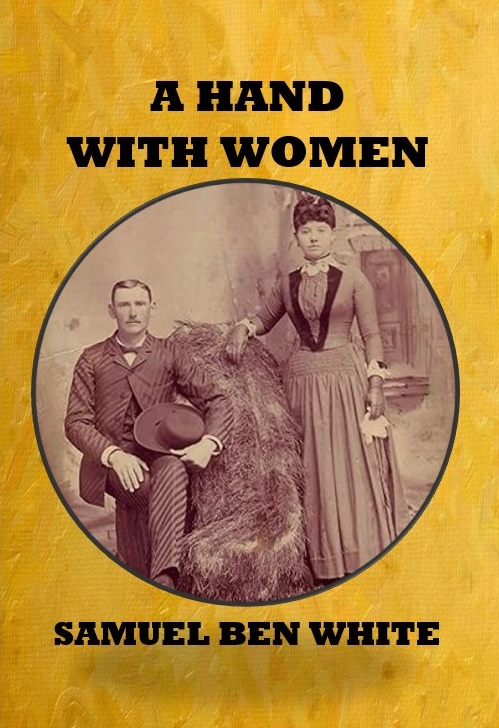
Louis L’Amour meets Agatha Christie in this mystery set on the Texas plains in the late 1800s. A mysterious woman, part of a human body, and a posse all converge on a lonesome cowboy named Morgan James.
Published by Outlaws Publishing
Available for ebook (in many formats) and in paperback.
Morgan James left McKeon, Texas, ahead of a neck-tie party the esteemed locals were preparing to throw in his honor.
His horse had been tired when he hit McKeon to start with, and after a night of hard riding, it was about done in—and so was Morg. So he stopped at what looked at first glance in the early morning sun like a deserted ranch for water and a rest. It wasn’t so deserted as it looked, for a woman with a haunted look about her lived there. She offered Morg shelter, but there was still something about her that gave him the willies.
The ranch was called the T-Bell and there were those who said that death stalked the T-Bell range. Others said it was the woman who ran it that was being stalked, while still others said she was crazy, or a witch.
And then Morg found the better part of a dead body on the part of the T-Bell range that backed up on Palo Duro Canyon and suddenly all those wild stories he had been hearing didn’t seem half-wild enough.
…
Sample reading
I was never much of a hand with women. Not that I had ever been around many of them I wasn’t related to, but when I was, words flowed about as freely from me as water did in those dried-up creek beds back home. The more I think about it, that’s a pretty good description all the way around ‘cause when rain did come back home, the creeks would suddenly swell up and overflow and cause all kinds of destruction. That’s me, too. Around women, I’d get tongue-tied and couldn’t hardly make a word come out that made sense, but then, sometimes, I couldn’t shut up. I’d talk like a carnival barker and, generally, make a fool of myself. So I had learned, mostly, to be even quieter. When there was a woman around, she didn’t generally take much notice of the quiet, homely man—whether I was standing in the corner (not unusual), or right next to her. What I did know about women-folk, they was more likely to look at and admire a fancy piece of furniture than a guy like me. Looking back now, maybe I wouldn’t have gotten in so much trouble if’n I’d knowed how to talk to women. Or, at least, had knowed how to let them talk to me and still keep my wits about me. You take my pa. Why, he could talk to a woman just as easy as talking to a fella. Just had that easy, friendly, way some men have about them even though I’d say he weren’t no better looking than me. But he could walk into a room and folks would notice, or he’d start yarning and the women folk would be listening as close as the men. Don’t get me wrong: my pa loved my ma and anyone who even hinted that he might have stepped out on her would find themselves on the business end of a punch to the nose, from me or anyone who really knowed my pa. He was just … I heard someone describe him once as “charming” and I think that’s the word that fit best. I think when them moments came where I’d be shooting my mouth off like a wagon wheel in need of grease that, deep down, I was trying to be like Pa. Another thing about Pa was that he sure never would have gotten himself in a fix like the one I was in. The only trouble I ever knowed Pa to have was with the bankers. Not that he was a robber or sharp of any kind, but he was a farmer, and farming’s a chancy thing in Texas. Maybe it is anywhere, but down there in central Texas, when one year you got nothing but rain, then the next nothing but hail, then the year after that all the dust and dirt Oklahoma can spare, why, it just ain’t a stable business to my thinking. But Pa, he loved it. Sometimes I thought he even liked arguing with the banker, ‘cause he sure did it enough. I remember one time when he fell behind on some payment or other and the banker sent out a couple of the toughs from town to “attach” Pa’s best mules. I was just a young’un then, and was wondering what they would attach the mules to, but Pa, he stood right up to them. He was holding a shot-gun like he meant business and told them two men that if the banker wanted Pa’s mules he could come get ‘em hisself. They argued a little, but they didn’t want to argue too much with that scatter gun, so they rode off, saying they would be back with the banker. They showed up the next day, banker with ‘em but looking scared, and Pa hands over the reins to them mules just as calm as you please. Next day, he takes me along with him and we head west, away from town, and over to Old Man Possum’s place. I reckon now that I’m grown that that man’s name wasn’t really Possum, but that’s what everybody called him. My pa made a deal with Possum that afternoon. He traded two weeks worth of me for two weeks worth of Possum’s oxen. It’s hard to say who got the worst deal out of that. I was twelve years old and pretty strong for my age, so I was set to working in Possum’s garden, as he called it. It wasn’t much of one, but it needed weeding and watering—from a can, water drawn from a well that seemed like it must have been halfway to China in depth and as far as possible from the garden and still be on Possum’s place. So I took care of that garden, slept in Possum’s barn, was fed meals that ran mostly to stews with mighty little meat by Possum’s wife (I never had no idea what to call her other than “ma’am”) and did a few other odd jobs around the place. My father, though, he got stuck trying to finish his plowing and planting with a team of oxen that, he said, was more muley than mules. But he got it done, and we worked that farm without mules that summer—and without much talk, for I was some mad at my pa for trading me off like that—but it was a good, rainy year for that time and that place, so we had the best crop we’d ever had. Pa took the money we made, paid off that banker that took the mules, then went thirty miles away and opened up an account with another banker. Pa fixed up to be a pretty fair farmer and had a good eye for dairy cows, so though we was never rich—while I was to home anyway—he generally ran ahead and rarely behind. That other banker, the one Pa went to after the first one, his bank eventually became quite a going concern and I heard he liked to rub it in on that guy Pa had left. When I turned fifteen, though, I lit out. I wasn’t mad at Pa, and he didn’t begrudge my leaving, but a cattle drive from way down south came through our area and the drover asked if I or my pa would like to ride along and make a few dollars as one of the men he had started the drive with was sitting back in Leander with a broken leg. I think Pa hated to see me go, but he had done some yonderin’ when he was about my age, and then he had fought in the war, so he knew what it was like to be a young man who feels the need to get out and test hisself against the world. He shook my hand, slipped me a five dollar gold piece (where it come from I always wondered, for I had sure never known him to have any extra money lying about) then told me to write my ma now and again. I said I would and lit out, nothing to my name but a used Colt, a used-er saddle, a middlin’ horse, and not enough of an idea what I was going to do for it to be considered good or bad. When I rode up on that little farm house, boards old but took care of with white wash next to a barn in similar state, it was fifteen years later and I had a sight of riding behind me, and a lot of years. I was done in and thinking anywhere, no matter how ragged, would be a good place to stop and cool off for a moment. When I saw that it had a pump and a trough, why I thought I was as close to heaven as a body could come on this green earth, which wasn’t much green that year, but that’s not really important to the tale I don’t think. There was an old army canteen at the base of the pump, the lid screwed on tight. I figured that was left by some good Samaritan and that the water in the canteen was so’s anybody who came along could prime the pump. It was a common practice out there in them dry lands, and every man—even the outlaws and ne’er-do-wells—knowed to refill the canteen before riding on. Why even me, riding ahead of a posse like I was, I was already figuring that my first move after getting that pump a-flowing would be to fill that canteen and set it back where it was for the next guy, even if it was them that was hunting me. So when I picked it up and nothing sloshed, I said a word my church-going parents would not have approved of. I apologized to them and the Lord, then reached for the handle on the pump. I took a good look at the water in the trough, then, and saw that it was pretty and clear, not old and scummy like I had been expecting. Fact was, there wasn’t any green at all on that trough, just a little in the grass around the trough where water had been sloshed. Sloshed by who? I wondered, as most western people would have heard me coming for a quarter mile—and seen me for twice that—and been out to greet me or shoo me on my way. I’d seen nobody, though, so I cranked that handle a couple times and water gushed out of there like Moses’s rock. I filled up that canteen out of habit and set it by the pump, then drank some myself and splashed some on my face. That horse I was riding, an old fellow with a blaze across his nose and a faded Spectacle brand on his rump, he was already at work on the water in the trough and looked at me as if to say, “I seen this water was fine right off. What was you waiting on?” It was a dry day, and I drank my fill, but it wasn’t really all that much; I suppose on account of having spent a lot of dry days in my life. So I filled my own canteen, then drank again. With water in my belly, which suddenly felt like too much water when I started to walk away from that pump, I tried to think of what I should do next. Running from that posse seemed like a bad idea the more I done it. They were going to catch me, sooner or later, and even if they didn’t, someone would. And then even though I still thought I wasn’t guilty of what they said, I was guilty of … what was it a sheriff I once knew called it? Escaping justice? Evading arrest? Yeah, that was it. So even if I got shed of that posse this day, they would put out a wanted poster saying I was wanted for evading arrest and there was no way I could deny the fact. If I was to ask my ma and pa, I reckoned they would have told me to go back and face the music. Setting a good bit of store by both justice and the Good Lord, they would have told me that the truth would set me free, or something like that. I didn’t want to doubt the Lord, but I knew the carrying out of justice would be done by men, and I had no cause to trust them. Specially not in a bunch like that. One man, I might could talk to him and set him right, but a whole bunch like that, and with me being a man who had run like he was guilty even if he wasn’t? No, I didn’t have a lot of confidence in justice being did. The short of it was: a local man was dead and I was a stranger. I was pretty sure I hadn’t killed him, but everyone else who might be a suspect was a knowed local, which made it a lot easier to suspect me. Who knows but what I might have thought the same in their place. I told myself then that, if I was ever in such a situation, I’d cool my heels and find out what the facts was before making a decision. Such an idea was fine and dandy, but it still left me out there on the prairie with a posse likely somewhere behind—and not by much. It was then I noticed there was a bit of a garden beyond the house, and some straggly fence guarding a draw further back. I couldn’t see anything being kept in that fence—or kept out by it—but it didn’t look broken down so I was guessing there were cows beyond those barbs. The barn door was half-closed, so I couldn’t tell if there was anything in there. So, I up and hollers, “Hello the house!” like a neighborly westerner should. In the city, they tell me a person would walk right up to a stranger’s door and knock, but all my life I had been told that the best thing to do—the friendly thing to do—was announce yourself before even setting foot on the porch, just in case they didn’t want you to come no further. Most folks wouldn’t begrudge anyone some water, but they lived out there in the middle of nowhere because they wanted to stay in the middle of nobody and didn’t want nobody coming round unexpectedly. And in that country, you could see who was coming. It was flat and there wasn’t hardly a tree in sight, and very little roll to the land except where that draw was. It was the kind of land that made me mindful of a man I worked for during roundup down near what would later be called Sudan. He was a grizzled, grumpy old man who once told me he picked such flat land because when his wife left him, he wanted to watch her go for a week. Where this little farm sat, it was almost that flat. It was deceiving, though, because I had a hunch that draw was just one of the tentacles of the canyon, which one could ride up on all of a sudden. Even without the canyon, flat lands are rarely as flat as they appear and little dips and hollows can hide a lot more than one would think—just ask them that fought the Indians for them lands. For all the flatness, it wasn’t a bad spread. The buildings could use some work, but that well was good water and in that country, water was gold. A man could run some cattle, or maybe grow some crops. I couldn’t see any way a man could get rich off that land, but I was thinking a body could make a living, and I’d seen just enough rich people to make me think the man who made a living was probably better off than the man who was rich. Me, I’d been nothing but a drifting saddle-bum, a good hand on a ranch, but I’d started to think that I wouldn’t mind putting my feet under the same table night after night, plowing my own land or cutting my own hay or riding herd on my own cattle. Fourteen or fifteen years before, I’d have said that would never be for me, but a man changes over time, or I had, anyway. That was sort of why I had been in that town to start with, the one that now wanted me back so badly that they’d sent a posse of men to look for me. I had come there to hunt up a job ‘cause I had heard that the local ranches were hiring for a round-up. It had been in my mind that I could stay in one area for a while and keep my eye out for a likely piece of land that I could buy and develop for myself. My great plan didn’t make it past the first night. I’ve never been much of a drinker, but I was new to town and there’s not a better place to learn what’s going on than a saloon and that town only had two of them. Looking back, I wished I had tried the other one, but I went into one called “Jeb’s” and there was a fair sized crowd already drinking. A faro game was going, as well as some kind of a wheel you could bet on. (I never liked them wheels ‘cause it seemed likely they were weighted and, even if they wasn’t, the odds of winning seemed awfully low. I played faro a few times, and won a little, but my money had always been too hard to come by for me to throw it away like that.) I ordered a drink, leaned against the bar, and surveyed the room. Right about then, one of the guys playing faro, a big, hairy fellow with a too-tight shirt and a scar on the back of his head where the hair didn’t grow, he grabs the faro dealer by the collar and jerks him over the table, calling him a cheat. That faro dealer wasn’t much of a man size-wise, but he was quick with a knife and had this thin-bladed job out and driven deep into the big man’s right arm. The big man hollers and fetched that faro dealer upside the head with his left hand but the faro dealer still wasn’t having any of it and drives that knife into the man’s gullet. From that point on, it was a little hard to say what all happened, but as near as I can remember, one of the big man’s friends took exception to what had transpired and smashes a chair over the faro dealer’s head. The dealer went to his knees, then the man who was spinning that chance wheel comes up with something like an Indian club and brings it down on that friend’s head. Then someone else jumped, then someone else. Before you knew it, everyone in that saloon was throwing punches. Including me. Now, with the clear vision of looking back, what I should have done was skedaddle out of there, even if I had to duck under a table and crawl. But I had been in some fights before and usually gave a good account of myself. Not a big man—just right at six foot—I had the muscles of hard work and had learned a little just from being knocked down here and there. So when a fella crashed into me and spilled that drink all over my best shirt, why naturally I straightened him up and give him an upper-cut to the chin. Somebody else took offense at that, or maybe just wanted in on the fight, and jabbed me in the kidneys. It hurt something fierce, so I took to pounding on the man who I thought had done it. He was standing in the right spot, anyway. From there on, it was just a circus act, with men throwing chairs, punches and each other until the room was a mess and we were, too. Of a sudden, a shotgun blast goes off and we all stop what we’re doing to see the sheriff of that town standing in the doorway, a couple deputies by his side and a scattergun in his hand. Then he tells us we’re going to pay for the damages and anyone who tried to leave the room without putting at least five dollars in the saloon-keeper’s hat was going to jail until such time as he, the sheriff, thought we deserved getting out. Now, I begrudged that five dollars, for I had been planning to send it to my bank, but I figured five dollars was better than a night in jail so I chucked it into the hat and the sheriff let me walk out the door, but not before asking my name. I told him it was Morgan James and he let me go but told me not to leave town right away. My horse was tied up out front, so I hopped up on it and rode him out to a clump of trees I had seen west of town, figuring to bed down there for the night since the few dollars I had hoped to spend on a room were now in my Cindy Lou Fund, as I sometimes thought of it. They weren’t so much trees as just tall scrub, but after checking for snakes they made for a decent place to bed down, and a little off the road. I ground-hitched the horse and lay down. It was just a few minutes after I stretched out that I heard a ruckus coming from town. I wasn’t but a couple hundred feet from the back door of the other saloon and sounds can travel pretty well on a prairie night. Once my ears was attuned, which was mostly a matter of waking up, I heard someone shouting that someone named Buster McKeon was dead, and something about his head being stove in. Someone else said something about him being still on the floor of Jeb’s when the fight was over and how they had thought he was just knocked out until someone felt of him and realized he wasn’t just out, but dead. I was listening good, then, for who doesn’t like to hear a good yarn like that? It was at that moment that I began to wish I had crawled out when that big hairy fella got stabbed in the arm ‘cause my ears caught real clearly someone saying the name, “Morgan James.” Someone else said something about how they all knowed each other so it had to be that stranger who killed this McKeon. Part of my brain said I ought to walk in right then and clear my name, but that part of the brain was stampeded by the rest of me that said I better get out of there because McKeon was the name of the owner of the biggest ranch around. I didn’t know Alexander McKeon or this Buster by sight, but I told myself there was no chance I was getting a job in that town now and I had best put some distance between me and them good folks. As the crowd moved off towards where I had seen the sheriff’s office, getting louder and angrier as they went, I hurriedly and quietly rolled up my blanket, saddled my horse (he wasn’t too happy about that!) and slipped off into the night as fast as I could go without making any noise. There’s always noise, though, and with every one I made, I scrunched my shoulders, waiting to hear someone from town holler, “He went that way!” I didn’t hear any such thing, but I still didn’t relax much even as I prodded the horse to a slightly faster gait as we got a couple hundred yards from town. Most of a day later, after watching over my shoulder and seeing a faint dust cloud that I was sure was a posse on my tail, I arrived at that little, run-down farm. Even though that well water was as good as I had said, I was about to come to the conclusion that no one was home when the front door of that little house opens up and a woman’s voice says, “You’ve had your drink, now move on.” I looked up in surprise and for the first few moments I couldn’t have told you whether she was tall, short, fat, skinny or pretty, because all I could see was that old Sharps .50 she was holding that would have drove a hole through me bigger than my horse if let loose at that distance.
Bat Garrett happens to be on hand when the Native Sun Trading Post blows up. Two bodies are found in the rubble, presumed to be the owners of the trading post. But Jody has seen them before. Jody knows that, if there’s anyone in the world with motive to want the two shop-owners dead … it’s her.
Years before, Jody was kidnapped and brainwashed to think she was the child of Robert and Helen Alexander. When Bat discovered her and rescued her, the Alexanders disappeared. Most assumed them dead, but Jody was never sure. Now, to find out that they had been living near her has Jody rattled. She, with Bat’s help, has to find out just why the Alexanders have stayed so close to the one person who had the most reason to hate them.
I have missing time of my own, but doesn’t everyone? The afternoon that was so boring it might as well have never happened. The time you had the flu that lasted a week and all you can remember of it is one gross blur spent in the bathroom. Some people have holes in their memory thanks to alcohol or drugs. That wasn’t my problem.
I had a whole year missing from my life—a little more in fact. And I mean gone! One moment I was one place and the next I was somewhere else and I haven’t the foggiest what went on in between. If not for people around me telling me that a year disappeared in that short time, I never would have known—or cared.
Bat can’t imagine that I don’t care now, but I swear I don’t. I remember one time when I had to have surgery and they put me under for it. I remember the anesthesiologist saying, “Countdown from one hundred” and I got to ninety-seven. Next thing I knew, I was waking up in another room with my leg all bandaged up. The big difference was that no one around me ever asked, “But don’t you worry about the missing hour?!?!” the way they ask, “Don’t you worry about the missing year?!?!”
Maybe, somewhere, deep down inside, what I feel almost rises to the level of curiosity. But seriously, as soon as I “woke up” I saw a doctor and they confirmed for me that I had not been violated, all my (healed) broken bones had been broken before my missing year and I carried no scars. Even visits to psychiatrists—complete with hypnosis—told me that I had no memories or anything of that missing year. At some point, I don’t remember the exact day, it just seemed like it was better for my future sanity to just go on with my life.
So I got married to the man I loved, we settled into married life, and then we decided to uproot to a whole new state and start a family. To be honest, the prospect of being a mother was far more alarming and intriguing to me than some blank spot in my memory. Doing my best to raise the child in a Christian home, to “give it a hope and a future” seemed way more important than obsessing about the unknowable.
As for the known present, I was in the process of cleaning up the apartment because our church was having a “Missions Weekend” and I had volunteered Bat and I to take in a couple for the weekend who were newly arrived to work at the nearby Hopi and Navajo tribal lands. We didn’t have a large place, but it was a two-bedroom apartment and we hadn’t had anyone use the guest bedroom since we had moved in. Part of the reason I had volunteered for this particular couple was that the husband was a graduate of the same college all of Bat’s siblings had gone to. Bat didn’t recognize the man’s name, but we figured he would probably remember Bat’s sisters or brother or maybe have some other names in common. Not to mention that the church Bat and I had attended while living in Dallas had been on the college campus—maybe even while this couple had been there as students. I thought it might be somewhat cramped quarters to have four adults in that apartment for a weekend, but the up side to the small quarters was that it didn’t take me long to clean.
There were times when I was envious of my sister Carley and her enormous house, but all I had to do was start cleaning and I was quickly reminded that I didn’t want a house I couldn’t clean from top to bottom in less than half an hour. If Bat or I ever made big money at anything, I frequently told people, we were going to give most of it away and spend the rest on vacations. We would not, I would say with emphasis, spend it on a spacious abode!
I was just finishing up the restroom when the phone rang. Waddling as quickly down the hall as my expanding girth would allow and grumbling that I hadn’t brought the phone to the restroom with me, I got there just as the third ring was finishing and answered breathlessly, “Hello?”
“This is Sonya Brockton,” came a voice with a lovely British accent. “Is this Jody Garrett?”
“Yes,” I replied, somewhat uncertainly as I hadn’t been expecting an accent even though the name should have registered on me.
“I understand my husband and I are staying with you this weekend,” she told me politely, still with that incredible voice.
“You are?” I asked, then kicked myself as I remembered and said, “Oh! Sonya Brockton? Yes. Yes you are staying with me. With my husband and I.”
“We are about fifteen minutes out of Flagstaff and I was wondering if you could give me directions to your place?” the voice asked.
“Um, yes. Yes, of course,” I replied, finally getting my brain around an idea that shouldn’t have been that hard to grasp. I gave her directions, then told her I would see her in a few minutes. After hanging up, I called Bat on his cell phone and told him our guests would be arriving soon. He told me he was back at the station and putting up mail for the next day, but that it would probably still be an hour before he got home.
I quickly told him I understood, and I did. The issue—or near-issue in question—was one of his coworkers who seemed to find a reason four days out of five to “slip off early”. There was always a sick kid at home, a Little League game that needed to be coached, or something. According to Bat, the scuttlebutt around the station was that a] the guy was close to getting canned and b] everyone else was making sure to work a few minutes extra every day so as not to appear to be one with the slacker.
A few minutes later, I heard a car pulling up outside and a knock at the door. Taking one more look around the apartment—and realizing my homework was still on the coffee table (how had I missed that?!?!)—I opened the door to a smiling young couple. Somehow, I had had it in my mind that they were a middle-aged couple, but these two looked to be three or four years younger than Bat and I.
The man extended his hand and said, “My name’s Andy Brockton. You must be Jody Garrett.” I shook his hand and assured him I was. He was a couple or three inches shorter than Bat’s six-one, with dark curly hair and a fairly dark complexion. Somewhat stocky of build, but not overweight, he looked like a football player. I prided myself inwardly on the sports reference, thinking Bat would be proud of me.
“I hope we’re not too early,” he apologized. “It didn’t take as long as we were expecting to get here.
“It’s just fine,” I told him. “Won’t you come in?”
Taking his wife’s hand, he introduced, “This is my wife, Sonya. You spoke on the phone.”
I hugged her and she returned the hug as Andy said, “You two look like you ought to be sisters.”
He was being generous and I think he only said that because of our hair color. But where mine was more of an auburn, Sonya’s was a deeper red. A beautiful red. And she had this fine, creamy complexion and tall, lithe build (she was almost as tall as he was even in flat shoes) that it was hard not to be envious of. As for clothes, they were both dressed in blue jeans and T’s, with tennis shoes on their feet, but Sonya looked like one of those women who would be right at home in a ball gown and a tiara. She wore no makeup that I could discern … and needed none!
“Thank you for having us,” Sonya said politely as we let go of the hug.
“You’re welcome. And, I know you probably hear this all the time, but I just love your accent!”
“Thank you. I don’t really think about it,” she said with an airy chuckle. “It’s just the way I talk.” She looked at me and asked, somewhat timidly, “Would it be impolite of me to ask how far along you are?”
“About to start my eight month,” I replied, turning sideways and smoothing my shirt so she could get the full view of my expanding belly. (Which, on some days, felt as if it were expanding right before my eyes!) “Do you have children?”
“Not yet,” she replied, with a wink toward her husband.
“I can’t help but ask what that look meant,” I commented.
Sonya blushed and Andy replied, “We’re trying,” and then blushed himself. I couldn’t help but smile, for we (Bat especially!) had often been fumble-mouthed about the same admission. Personally, I thought it was silly that a married couple would be embarrassed to admit they were having sex … but I still blushed.
I invited the couple to sit down and they joined me in the living room which, for an apartment, was pretty good sized. “So,” I opened the ball, “Where are you two from?”
“I’m from Oklahoma,” he replied.
“London,” she told me.
Most of us find it rather silly to meet someone for the first time and then have them tell us, “You remind me of … “ yet we still say things like that to other people. For myself, I tried to apologize first as I said, “Sonya, you just remind me of … someone. I know that’s silly. I’m sure we’ve never met before. You just remind me of someone, but I can’t think of who.”
Sonya shrugged and, I thought, made a conscious effort not to look over at her husband right then. I was thinking, at the time, that she probably had been told before that she looked like someone famous and it was either a running joke or a running point of exasperation among the two of them. For myself, I had been known to grow tired of short jokes (though I had a few witty rejoinders filed away and ready for use).
“How did you meet?” I asked, then quipped, “Because if I’m not mistaken, the halfway point between London and Oklahoma would be somewhere in the Atlantic.”
They chuckled and it was Sonya who answered, “I was visiting my cousin, who just happened to set me up with her best friend.”
“Oh really? She didn’t want you for herself?” I chided Andy.
He smiled, might have blushed a little, then replied, “Lynette and I had tried dating a couple times but … “ he shook his head and laughed, “We were such good friends, it was kind of like trying to go out with a sister.”
We visited on, then, and I learned that Sonya came from a family with eight children, Andy had only the one brother, and I told her about my sister and Bat’s family of five children. I was eager to hear about their ministry but also knew Bat would want to hear those details as well and didn’t want to jump the gun on him.
We were just about to the subject of favorite family pets when the front door opened, revealing my wonderful hubby in his Post Office uniform. “Who’s car—oh! You’re here,” he said with a smile. There was a brief round of handshakes, then he said, “I hate to be picky, but you’re going to need to move your car. The slots are assigned and, well, you’re in the slot for the guy next door.”
When he had pointed out to Andy where he could park, Bat asked, “Would you mind if I darted away and took a quick shower? I have spent this wonderful Arizona day in a vehicle with no air conditioning and I’m afraid I’m probably a little ripe.” We all agreed that that was acceptable, especially me, who had actually hugged and kissed him.
Bat slipped away and soon I could hear the water running. In relatively short order, he was in the midst of us, washed and dried and wearing an Astros T-shirt and a pair of shorts and holding a cold drink. He smiled widely and, making that motion as if snapping his fingers but producing no noise, suddenly asked, “I have to ask, Sonya, but how does one go from winning an Oscar to working as a missionary on an Indian reservation?”
“What?” I asked before I could fully engage my brain. Then, still disbelieving, I asked, “You—is that where I’ve seen you? On the movie screen?”
Sonya blushed even more than earlier, then replied, “Yes, ma’am.”
“Wait!” I demanded. “First off, no one over ten years old is allowed to call me ma’am. It’s Jody. But second, is he right?”
It was Bat who answered, though in a somewhat questioning way, “You’re Sonya Kiel, right? ‘Across the Andes, “Napoleon’, ‘American West.’”
“Actually, I’m Sonya Brockton,” she corrected. “But, yes, my maiden name was Kiel and I did act in those movies.” She said it like someone who was embarrassed by the fact, maybe even ashamed.
“Pardon me, but that still sounds like a really interesting story!” Bat told her in his most encouraging voice.
She grimaced slightly, which led Andy to tell us, “It really is, but, well, I don’t necessarily mean to speak for my wife, but she–”
“No, let me, Andy. He’s always trying to protect me. I just … I don’t want what I used to be to overshadow what I am now. It’s just so easy—not only for me but for the people listening—to start telling tales of making movies and red carpets that, um, a couple things start to happen. I kind of get a big head and we get completely sidetracked.”
“She’s being modest,” Andy injected. “Sonya is one of the most humble people I have ever met, but once she tells one story about the movies, soon people want more and pretty soon—“
“It takes the focus off my—our ministry.” She smiled apologetically and added, “In a setting like this, I’ll tell you anything you want to know. My life is an open book. But at the Mission’s Fair tomorrow and Sunday, I really want to put all the focus on what we’re trying to do on the Big Rez.”
She laughed then, a warm, friendly laugh that was somehow also in her accent, and told us, “I went through a period—more than a year, actually—where I wouldn’t go to the movies. And then I wouldn’t watch the telly, even the news. I told myself it was because I was like an alcoholic and didn’t want to get sucked back into the acting thing but, well … maybe that’s how it was when it started. But then, I moved from avoidance to being rather a pain about it to everyone around me—especially Andy.”
“What changed?” Bat asked with interest.
“Nothing big. Andy liked watching his sports, for one thing, and I saw no reason he should be deprived of that. But part of it was when we started doing ministry. We would be over at someone’s house and they would have the telly on. I realized I was starting to be ridiculous about it.” She demonstrated as she said, “Turning my chair so my back was to the set even if it were off. Talking louder in restaurants to drown out the telly in the room. I had to come to terms with the idea—fact, really—that acting is not, in and of itself, evil, nor are the mediums. But I am extremely … protective of what I will allow in my mind. I realized I can debate ideas, and sometimes enjoy picking apart those that are contrary to my faith, but I have a very low tolerance for foul language or gore.”
Bat smiled and said, “You realize turning off the TV is considered a cardinal sin in some households anymore, right?”
“I notice yours isn’t on,” came Sonya’s rejoinder.
“About that,” Bat said uncomfortably. “Would it be rude of me to slip into the bedroom just to watch the opening of the local news?. There was a fire—I actually reported it—a couple days ago and, well, I’m curious if they’re saying anything about it.”
“Please,” Sonya said, gesturing at the TV, “It wouldn’t be my place to tell you not to.”
“But I don’t even want to interrupt the conversation,” Bat told her deferentially.
“Mister Garrett—“
“Bat. Like those things in caves.”
“Bat,” she corrected with a smile, “You’ve got me curious now. Whether they show the story on the news or not, I’d like to know how you came to report a fire. You didn’t start it, did you?” she asked with mock suspicion.
“Go camping with me sometime and you’ll see that I have never been accused of being a fire starter,” he told her. Then, taking up the remote, made certain, “You’re sure?”
She gestured toward the TV, so Bat turned it on. Fortuitously, the newsreader was just saying, “Out of Flagstaff this evening we have the following report on the fire that claimed two lives earlier this week. Let’s go to Courtney Lyons, live in our newsroom.”
A young woman who looked to me like she couldn’t be more than a year out of high school looked nervously into the camera and said in a flat voice, “Thanks Ralph. The Flagstaff Police have released these pictures—taken from the security camera at a Flagstaff convenience store—of the two people they believe were killed in the inferno.” (She pronounced that final word as if sounding it out off a teleprompter.)
“Are you OK?” Bat asked me.
“What? Why do you ask?” I wondered, my mind having gone blank for a moment.
“You gasped when you saw the picture of the Jamesons,” he told me.
“I did?” A moment later, I patted my tummy and said, “Junior kicked just then. I think he’s going to have your feet.”
Bat nodded with a smile, then turned his attention back to the TV screen.
You know how in old cartoons they would show someone having an idea by having a light bulb appear over the character’s head? I finally knew what that felt like.
Except that a one-hundred thousand watt halogen spotlight had exploded in my brain.
I think I was coherent for the rest of the conversation and evening with the Brocktons—can remember some of the details even as they told more of how they met and just what their ministry consisted of—but I can’t be sure. Back in college, I was a cheerleader and—other than some problems with my elbows, which were congenital—I came through it all pretty well. While other cheerleaders occasionally broke a bone, the worst I ever got was a few sprains.
Except for one time, when the people who were supposed to catch me were a little out of line and I somehow managed to knock the back of my head against another girl’s collarbone. She had an enormous bruise for about a week and I had a lump, but we both shook it off and eschewed any medical attention.
The way I felt the rest of the day, I’m pretty sure I had a concussion, though I never mentioned it to anyone. (Hey! My pride is just as stupid as anyone else’s!) While no one had hit me during that evening with the Brocktons, looking back, it was a lot like I had a concussion. I’ll blame my not telling anyone on the fact that, when you’re suffering the effects, you don’t always know you’re suffering the effects.
I made up excuses, blaming it on both the baby and some sort of shake-up at the idea of two people dying in a fire, and the Brocktons might have believed me, but I doubt that Bat did. He knew I was hiding something, but he also knew me and loved me enough not to press it, assuming I would tell him what was going on when the time came. All he knew was that my mind was somewhere far away.
That’s how it felt from the inside, anyway. As I did things like make sandwiches—side by side with Sonya, who had offered to help—and answered questions and asked some of my own, I was just an automaton. My mind was several hundred miles away. I knew where it was, but tried my best to ignore it, to shove it aside, to do anything I could to keep from thinking the thoughts my mind wanted to focus on.
Sonya was a pretty woman and incredibly well-balanced. After leaving an unbelievably promising acting career, she had gone to Bible college in Dallas (at the same college Bat’s brother and sisters had attended), majored in Missions, married Andy, and even when their original plan for missions had fallen through, had stayed with it until they believed God had directed them to Arizona.
Under it all, though, I got the impression that Sonya was really a very shy person who would like nothing more than a life that never focused on her. For one thing, in all of this, the “star” of the story was her husband. She gave him the credit for leading her to Christ and leading their marriage and ministry and—again, this is my impression—she didn’t resent that at all. She seemed grateful to … not be in his shadow, but to have found a partner.
I had always thought Bat and I had the best marriage I knew of, but an evening spent with Sonya and Andy Brockton made me think we might only be in second place. Or, maybe I just told myself that to keep from thinking about the light that had exploded in my head and was still trying to overwhelm me.
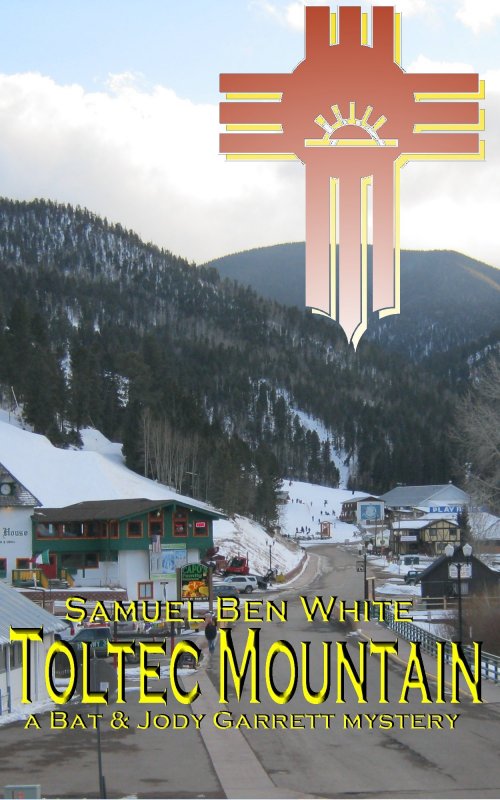
Dallas private eye Bat Garrett is called in to investigate a snowboarder who crashed in the “Mind Games”, a made-for-TV spectacular being held at Toltec Mountain Ski Area in New Mexico. What looks like just a routine accident–like the many other accidents that have happened on the slopes–becomes more suspicious when the snowboarder is found dead in her hotel room. Soon, there’s another death, and then another. Is someone stalking the “Mind Games”? Can Bat–and his wife, Jody, who is working the case undercover–unravel the mystery before the bodies pile up higher than the snow?
It was about lunchtime when I found myself sitting on a bench at “ski-Techers”, getting fitted for boots and skis and poles. Ski boots had come a long way since the first time I had put any on, but they still weren’t what I would call “comfortable”. They were, at best, “comfortable for ski boots”. I think it was Dave Barry who first referred to them as “bowling balls melted down to fit your feet” and they still felt like that in a lot of ways. They had more padding in them than they had back when I first tried the sport, so that was an improvement.
As the tech put my boots to the skis, I commented, “I saw that wreck from Monday with that Nitro lady. Looked pretty rough.”
“Uh hmm,” he replied, checking the bindings against some sort of chart.
But then, one of the other techs, who didn’t have anyone to help at the moment, injected, “Pretty wicked, wasn’t it? Almost looked like she slammed that board down on the rail a-purpose, huh?”
“Really?” I asked. “What do you mean?”
“Oh, it just seemed to me that no one would land on a rail like that unless they were trying to. Maybe she’s got some new trick that that was supposed to be the lead-in for, though.”
My tech had finally done whatever it was he was doing and entered into the conversation by saying, “I can’t imagine what that would lead into.” Then he laughed and offered, “Unless maybe the board’s made out of some sort of space-age rubber where you hit it on the rail and ‘sproing!!’ you go bouncing thirty feet into the air!”
Who still uses the term “space-age” I wondered? That was like something out of the sixties. But then, so were the ski techs. Not that they were old enough to have been born in the seventies, even, but I had noticed before that a lot of the ski techs (at every mountain I had been to) wished for a decade they hadn’t experienced except on film.
“But normally,” I mused, “Wouldn’t a landing like that just be kind of jarring? I mean, those snowboards are built to take some punishment, aren’t they?”
“Sure,” said the tech that wasn’t working on my gear, “But she hit it hard. They were showing a close-up of the crash on the sports channel last night and she hit it harder than those two chuckleheads that were trying to break a snowboard on the post office steps yesterday.”
I kept my mouth shut.
When I stepped up to the first lift line at about one o’clock, I was a little nervous, as usual. The first ski run of the year never bothered me, but the first attempt to get on and off the lift did. I hadn’t fallen off a lift in years, but the memory of my first couple times skiing—when getting off the lift was clearly my weak spot—still lingered.
Most of it was alleviated when the guy standing there telling people, “Stop here and look for the chair” said, “You’re that private detective, aren’t you?”
“How’d you know?” I asked.
“My brother works at the hotel,” he replied. Before I could pursue that line of thought further, the chair was whisking myself and a middle-aged stranger up the mountain.
“You’re a private detective, huh?” he asked in the gravelly voice of someone who smokes too much.
“Yes,” I replied, trying not to sound too cautious.
“Must be interesting,” he replied.
“It can—“ was all I got to reply …
Before he started in with, “I run an auto parts store, myself. I tell you, somebody ought to do a TV show about my work.” The rest of the ride was filled up with the glorious and lewd antics of the auto parts world. I had to admit: I was surprised there wasn’t a show about it already.
Those first few minutes were a microcosm of how my afternoon went. On an afternoon where the mountains were covered with television cameras and actual (or cable, anyway) celebrities were to be found everywhere you threw a snowball, everywhere I went people wanted to talk about being a private detective.
At first, it was kind of fun being a celebrity, but it quickly grew old. For one thing, I had always enjoyed a sense of anonymity in relation to my job. Not that this particular case required it, it still seemed strange to be known—“made” in the vernacular.
Which led to some wild speculation about why I was there. There was a rumor that someone was stealing the high-end equipment used by the athletes. Another one said there was somebody stalking one of the skiers. Still another said there was some suspicion of financial impropriety in regards to the Games themselves. A couple other rumors alleged that the indoor games were fixed in some non-specific way.
Of all the people I heard from, no one hit on the real reason I was there, which I found strange as I would have guessed that someone would have heard the story of the video I had watched with Penny and Pete. In a way, though, that made me feel a little better about my diagnosis because I was thinking that, if someone really had sabotaged Nitro’s board, that rumor would have gone around.
When the runs closed at 4 o’clock, I checked in my equipment, switched back to street shoes, and made my way to supper where I was invited to dine with a couple of the athletes from the Men’s Downhill Extreme, which I was to learn was the ski version of the terrain park Nitro had crashed on. In fact, it was held on the same park, just targeted toward some different obstacles.
The topic of conversation at supper was that day’s outdoor activities and some trash talking about the evening’s indoor games. If Nitro’s crash of Monday entered anyone’s thoughts on that Thursday evening, they said nothing about it. The big topic was a killer run put in by Steve “Onionhead” Wachowski. He wasn’t in our group, but the word at our table was that he would have to really blow his Scrabble™ game to not finish the day as the favorite for the D-E. Apparently, some new trick with a name that meant nothing to me had been the kicker. Something like the “Double-Back-Front-Triple-Lutz-Alpaca” … or something to that effect. They tried to describe it to me, but the terms they used were not, as far as I could tell, in any known language, so I just nodded like I understood them and we moved on.
From there, I made my way to a couple other popular hangouts, was greeted cordially on the street by people I had never met before, and managed to learn absolutely nothing about the case. Monday’s crash was ancient history. If there was any news in Toltec that evening, is was either that there was a P.I. in town or Onionhead’s mind-blowing run. No other topics were being discussed anywhere—at least in my presence.
Finally, I found my way into The Dive Bar and the presence of a beautiful, auburn-haired young lady who I happened to know was a year older than me but looked like she fit in with the coeds around her. Sipping her smoothie, she did a good job of pretending to play up to me and, maybe, even making any casual observers think she was slightly tipsy. Unless someone had spiked the smoothie against her will, I knew she was no more tipsy than I was.
When it seemed like enough time had passed that I could credibly pick her up, I invited her to leave with me and she did. Back in my “real life single scene” I had always been too chicken to meet girls in such a setting, let alone try to get one to leave with me (I could rarely work up the nerve to ask out even the girls I met at church!), so it was kind of a thrill to walk out of a crowded bar with the prettiest woman there on my arm.
Bat Garrett goes to the funeral of a friend from high school, only to find that there are some family members of the deceased who think the death wasn’t accidental. Bat begins to look into the death and is confronted by old memories, some ex-girlfriends, and the disturbing idea that–if it was murder–it was committed by someone Bat knew.
When I got my private investigator’s license I figured my life would be a lot like the lives of those guys who used to show up late at night in the old shows on cable. High speed car chases, fist fights (where I would always win), and beautiful women who find a guy with a spotty income strangely alluring. Occasionally even solving a case.
Why was I so often surprised back in those days when life didn’t imitate art? Or even TV?
What the TV shows were especially bad at portraying was the stakeout. Oh, you would have the obligatory shot of the guy in his car at night, flashing neon in the distance, as he sips coffee from a thermos to set the mood, but considering the shows were only an hour long (minus commercials) they couldn’t show the reality of a stakeout.
Hour after hour, and sometimes night after night, just sitting there. Trying to stay awake and trying not to drink too much coffee ‘cause then you gotta go to the restroom and leave your post. So you just sit there.
And sit there.
And, if you’re me, drinking no coffee at all because you hate even the smell of it so you drink Dr Pepper like it’s going out of style, which still leads to bathroom issues.
Sometimes, you have a client who wants a meticulous log of everything that happens. “12:15Dog barks. 1:17Pizza delivery. Delivery vehicle license number … “ It sounds miserable and tedious—and it is—but at least with those you have something to do.
This was not one of those nights. I was sitting in my car across the street from an all-night diner that served, based on the smell, fried grease. As a side dish, one could order lard straight. But working in the diner was a woman who was being rapidly stalked by middle age and a husband who was convinced she was having an affair with one of her customers.
Now, you may be thinking that my job would be to watch her through the windows and see if she paid anyone any special attention. Not exactly. The husband was pretty sure who the affair was with, so I was supposed to sit there and watch to see if the Assumed One showed up and, especially, if the Waitress Woman were to leave with him.
Five nights down and not only had the Assumed One never showed, the Waitress had treated all of her customers with the same hostile indifference. Most of her customers left looking less than happy, so I couldn’t really see any of them saying something like, “Hey babe, after that rather belligerent service and a sandwich made—apparently—from old shoe leather, there’s nothing I’d like better than to take a hot mama like you out on the town.” Eight and a half hours after she would clock in (with a thirty minute “lunch” in the middle which she smoked away on a bench around the side of the building from the front door) she would leave and go straight home.
If this were a television show, the reason for the whole farce would be that I had been working on another, more important, case and this whole thing had been cooked up as a means of distracting me. In real life, I had taken this under-paying and boring job because there just wasn’t anything else, and hadn’t been for some time. It was a slack time in the P.I. biz, apparently. And being winter, it wasn’t much of a time for painting houses, either (my other listing in the phone book).
With Jody’s paycheck from her job as a speech therapist barely covering necessities, I was taking any job I could get in hopes of making ends meet. Thankfully, our cars were paid for and we didn’t pay much in rent, but you can’t eat an apartment—even the green moldy stuff on the walls that looks almost edible. We were still newlyweds in a lot of ways but, as much as I like old Glenn Miller tunes, his song about being able to live on love was starting to ring hollow.
Another night looked like it was going to drift by with no consequence when, just after three-thirty in the morning, a car that looked like the one I was told Assumed One drove pulled up in front of the diner. I perked up a little, then. I perked up a lot when the Assumed One, Mister Wally Norris himself, got out of the car. Tall, slatternly, with a one of those big droopy mustaches like country stars wore back in the eighties, I positively identified him from a picture I had been given when he stepped into the lights of the diner’s front entranceway.
As he went into the diner, I slipped quietly out of my car and closer to the diner, camera at the ready. Once in a position where I could get some good pictures of pretty much anywhere in the seating section of the diner, I started snapping.
It was a fairly old—let’s say broken-in—SLRand worked beautifully. For daytime shoots I was transitioning to a digital camera, but for nighttime work nothing beat that oldSLRand some 1200 film. Cameras may have gotten simpler to use as time has gone on, but that old camera could practically take the pictures itself even without auto-focus. It eventually developed a light leak I couldn’t get fixed and I sold it to a collector, but I always regretted it later, thinking I should have given it a place of honor on a shelf in my office. But I didn’t have a shelf in those days, let alone an office, and the collector helped me make a rent payment, which is neither here nor there for this story as it was some years later. Months anyway.
So there I was, getting pictures of him walking into the restaurant. And then there’s a picture of the Waitress looking none too pleased to see him. As I’m snapping away, she points toward the door, instructing him to leave. (It’s clear from the body language; I didn’t have to hear what she was saying.) But Assumed One steps right up to her and grabs her by the arm.
He should have grabbed the other arm—the one carrying a customer’s food—because she slammed the tray full of food upside his head. It was a horrible sight, all that Salisbury steak and candied apple slices spreading across the room. My last picture showed him letting go of her arm as he reached for his gravy-covered face, trying to get the apple chunks out of his eyes.
I dropped the camera—trusting the shoulder strap to take care of it—and darted for the diner’s door. By the time I was through the door, Assumed One had cornered Waitress behind the counter and the one customer was a guy who was rooted in place by fear and shouldn’t have been screaming like that in my humble opinion. His screams were soon drowned out by the screams of Assumed One, who had just taken a saucer of hot grease to the kisser.
No, I don’t usually talk like that, but it is a private eye story.
As Assumed One hit the floor on all fours and clawed at his face, the cook called 911 and the Waitress stood over her assailant with the saucer held in a threatening manner. I wouldn’t have thought it could be done, either, if I hadn’t seen it. If she had been holding a Glock with a round in the chamber, her demeanor could have been no more menacing.
Despite graduating from a correspondence college with a degree in private investigations and a long-ago Boy Scout merit badge in First Aid, I wasn’t sure what the protocol was for “hot-grease-in-face”. Still, it seemed like something ought to be done, so I pulled out my gun.
“The cops are already here?” asked the cook in impressed dismay, popping up from wherever he had been hiding.
“Probably just someone else that wants to kill him,” the Waitress grumbled, remarkably calm about the whole thing. Seeing my weaponry, though, she set down the saucer. Then, told me, “Go ahead and shoot him. I’ll gladly testify it was self defense.”
Assumed One, peaking at me from between his fingers with one red eye, just whimpered and made a larger mess on the floor than had been there previously. “I’m not going to shoot you,” I told him.
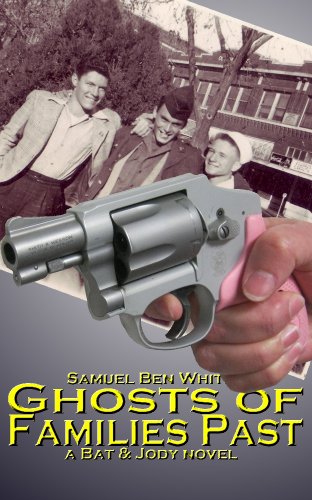
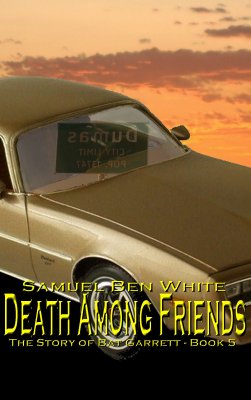
A ghost. Bat has to be seeing a ghost. While recuperating in Houston he stumbles across a shopgirl who looks and sounds just like someone he lost a year before. As his friends think he’s going crazy, and even he’s starting to wonder if he watched “Vertigo” one too many times, he tries to piece together the background of the shopgirl. The investigation takes Bat from Houston and Dallas, to Arkansas and Durango (where he meets a young Garison Fitch) and closer to the conclusion that he may not have been the only one set-up by the Home Agency.
To read more about Bat Garrett, be sure and check out “The Nice Guy“, “The Return of the Nice Guy” and “Up to Bat“. All available on Kindle & in paperback! And, if you want to read this story from Jody’s perspective (as well as find out what happened next), be sure and read “Cheerleader, Gymnast, Flautist, Spy“!
… Read a Sample
“What is it we’re going to go look at?” Dave asked as we walked through the mall. I was surprised how few people were there shopping, but I guessed it was because it was a week day. “Sunglasses. I’m telling you, Dave, these are the ugliest you’ve ever seen. They would have been great for that day in college when we had the ‘Ugliest Outfit’ contest.” “I didn’t know the Galleria had a gag shop.” “It’s not intended to be, but these will make you gag.” As we were nearing the store, I saw a girl walk into the shop ahead of us who just about took my breath away. I stopped dead in my tracks and could feel my heart pounding in my chest like faulty pistons in a Ford Granada. If I had been prone to such things, I think I would have had a heart attack. The quick and unexpected (even to me) stop on the crutches almost made me fall on my face, so I had to take a moment to regain my balance. “What—what is it?” Dave asked. The look on my face must have scared him. I imagine I went almost completely white—maybe even green. “That girl that just walked in.” “So? She was cute; but we’ve seen several of those today. She wasn’t as pretty as Heather, I didn’t think.” “No. This girl looked like … like someone I used to know.” “Let’s go see her,” he said. “Maybe it’s her.” “Couldn’t be.” “Why not? Houston’s a big city.” He smiled, “Shoot, I bet there’s more than two hundred people in this town. I hit that many cars in the parking lot.” “But this couldn’t be her, Dave.” “It’s a small world, Bat.” “But it’s not the Twilight Zone.” “What are you talking about?” “The girl she reminded me of is dead.”
Dallas private eye Bat Garrett is hired by wealthy Texas oilman Frank Gaston, who thinks someone is trying to kill him.
Bat is skeptical but when Gaston is found dead, slumped over at his desk, the fear seems to have been well-placed.
Darla Gaston, the beautiful young oilman’s daughter, is encouraged by her lawyers to fire Bat and let the police investigate. Darla, however, wants Bat to find out why her father has been calling a number in Colorado for several years. Bat discovers that Gaston has left a trail of lies and deceit, bigamy, and maybe even a decades-old smuggling operation involving children and a massive real estate deal in Oak Cliff.
It’s the biggest case Bat’s ever had, but it may cost him more than he’s ever had to give.
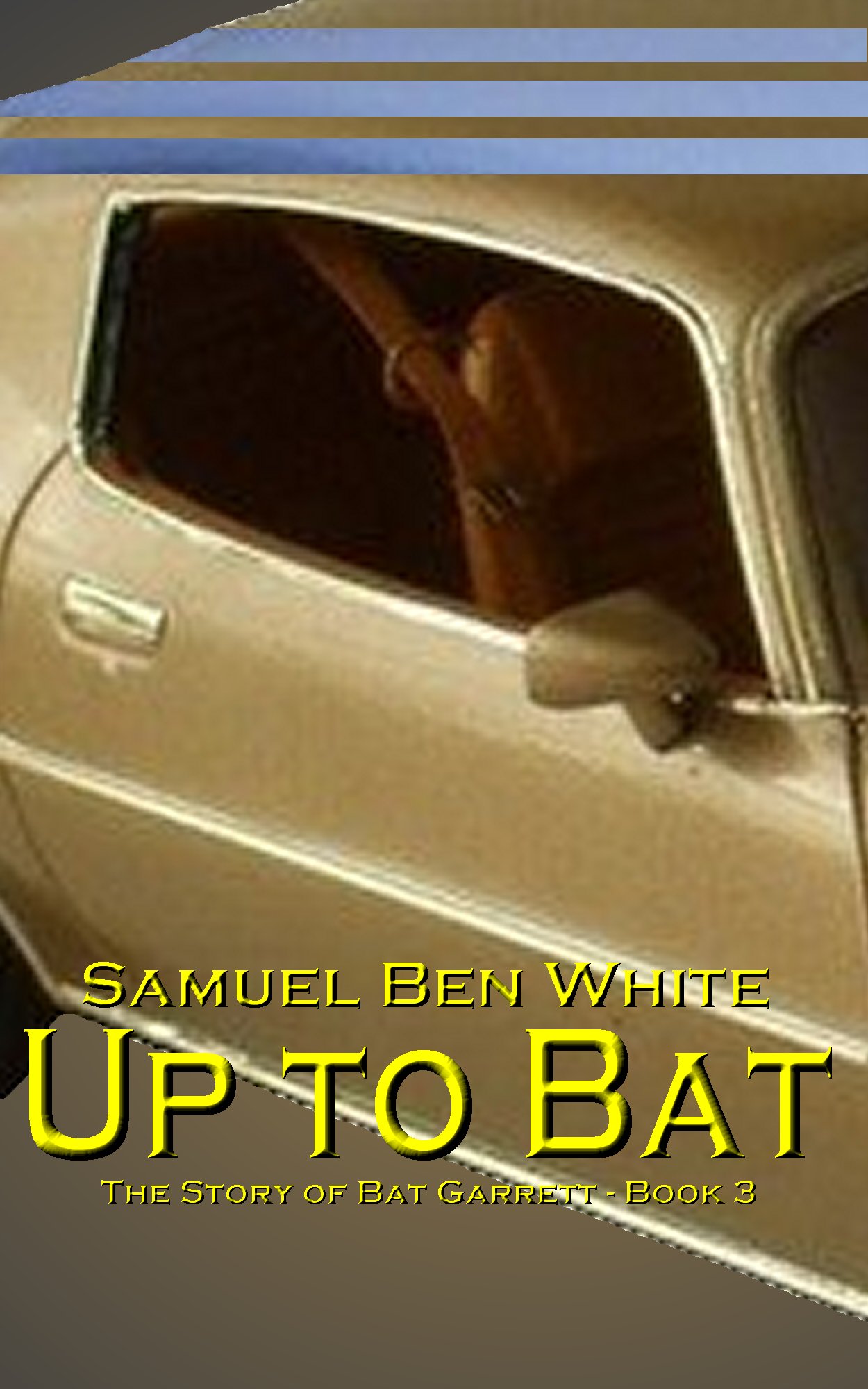
Available on Kindle and paperback. Make sure you read the whole Bat Garrett (& Jody) saga, beginning with “The Nice Guy“, followed by “The Return of the Nice Guy“, then this book, then concluded (this arc, anyway) in “Last at Bat” …
Reading Sample
My name is Bat Masterson Garrett. I’m a private detective. I always dreamed of leading a glamorous life like the P.I.s on TV, but it doesn’t seem to work out that way in real life. Real life private detectives track down husbands who don’t pay their alimony, or find out if someone is having the affair their spouse suspects them of having. Once in a while, there is a fight; but there aren’t many shootouts or car chases. I sometimes wonder why I wanted that stuff in the first place.
Detectives on TV always get the girl, too. That never happens. Like I said, the people I deal with are usually already married (albeit trying to remedy the situation). Besides, people in real life don’t even look like the people on TV. Well, some people (my former fiancé Jody Anderson) used to accuse me of looking like Kevin Costner.
Well, what she said was that I probably weighed the same as Kevin Costner. My hair’s almost the same color as his, but I have blue eyes and am only about an even six foot—while I’ve always figured him to be taller. Some girls think I’m attractive, some don’t, so I’ll let you draw your own conclusions.
One day, I was sitting in my apartment in North Dallas looking at my baseball card collection when the phone rang. My phone never rings, so it liked to scared me to death. I hastily picked up the cards I had dropped and went over to the phone, sorting them on the way. I figured the odds were that the cards were more valuable than the phone call and deserved my attention. Having once owned a baseball card shop of my own (for about six months), I knew something of their value.
I answered and a man asked, “Is this B.M. Garrett Investigations?”
“Sure is, what can I do for you?” I was real surprised that anyone wanted me to investigate something. I’m also listed in the yellow pages under “Painters: House”, and that seems to generate the majority of my calls for gainful employment. A couple times people have tried to hire me as a body guard, but I don’t much care for the “rough work” after my limited experience with it. I’m not exactly a “big dude”, anyway, and most of my schooling in self defense would fall under the heading of “run”.
“This is Franklin Gaston,” he told me, “Of Gaston Oil.” He put in a pause like I ought to have heard of him but I hadn’t so I just mumbled noncommittally. I don’t keep up with the oil market except to the extent that I go to the cheapest gas station.
He continued, “I think I am in need of the services of a private investigator, Mister Garrett. You are Mister Garrett, aren’t you?”
“Yes, but call me Bat.”
“Pat?”
“No, Bat. Like those things that sleep upside down in caves.”
“Well, yes,” he said as he tried to regain his train of thought. My name always does that to people. Thanks, Dad.
“What did you need, Mister Gaston?”
“Well,” he said cautiously. “I really think it would be much better for us to meet in private—and in person. I’m confident no one is listening in, but I would just feel more confident if I could talk to you in person.”
“I understand,” I told him. It already sounded like he was going to ask me to trail his wife and find out if she was cheating on him. If that were true, I thought, he was probably afraid she would walk into the room he was in and overhear the conversation. Maybe she was already in there. You never know about these people. One guy hired me to watch his wife then told her I would be there. I didn’t get much on her for some reason.
“Where would you like to meet, Mister Gaston?” I asked. “I’m pretty flexible.”
He seemed to be thinking a minute, then replied, “It needs to be some place out of the way. Do you have any suggestions?”
“I know just the place. It’s on Northwest Highway—”
“That’s not out of the way,” he told me.
“In a way, it is. Think about it, if you were having a secret meeting, would you normally go to one of the busiest streets in town? See, the idea is to do what’s not expected. Like in football, sometimes you run the play that seems like the worst choice because the other team is confident you won’t run that one.”
Two years after the murder of a prominent north Texas banker has been solved and the killer put in jail, Dallas private eye Bat Garrett is hired by an attractive widow to find out why her husband was killed. The police (and everyone else) say it was just a robbery gone bad, but the widow thinks differently. With Jody Anderson still on crutches from her horrific ordeal in “The Nice Guy” but by his side as always, Bat undertakes a case that leads him through an amateur archaeological society in Dallas and into a centuries old mystery in the ancient ruins of Mesa Verde in southwest Colorado. Did the unassuming banker uncover something someone else would rather have stayed hidden?
Make sure you read the prequel to this book, “The Nice Guy” and book 3 in the series, “Up to Bat“!
…
Reading Sample
Without a doubt, that was the best summer, fall and winter I had ever had.
As we have come to expect from the geniuses in government accounting, the Home Agency let me keep the money they had paid me for the job I had done for them back in the spring. It was way more than the job was worth—well, I should probably …
Anyway, I took the money and invested it in a friend who was opening up a baseball card and comic book store in Farmer’s Branch. As investments go, that wasn’t a whole lot better than just piling it up in the back yard and setting fire to it, but it gave me a chance to help out a guy who had been a good friend for a long time—and especially when I had needed one.
My private investigating business was starting to take off, too. I wasn’t getting any glamorous cases, but word had somehow gotten around that I was a pretty good hand at surveillance and so I was getting fairly steady work—some of it even from other investigation firms. I’ve always been a pretty plain guy, so I was a natural at hanging around in the background and watching other people without being observed myself.
Of course, the thing that made that summer, fall and winter better than all previous summers, falls and winters was that I had a girlfriend. A real, honest-to-goodness, she-likes-me-as-much-as-I-like-her girlfriend. I had never really had one of those before. Well, there had been Thalia, but that had been … oh, never mind. Her name was Jody Anderson and she was the love of my life. The one you know that—even if things were to go sour—she’d always be the one you’d think of as “the one great love.” The kind you’d write songs about if—unlike me—you had rhythm or any sense at all of musical style.
She had shoulder-length hair that was somewhere between auburn and brown, tending to the red in the sunshine. She was petite of build but a perfectly shaped figure for all that. And she had this great little mole just above the left corner of her mouth.
She might not have thought of that summer as a great time, because she spent most of it in the hospital, or in rehab. She had shattered her right leg—above and below the knee—and there was talk on more than one occasion that it might have to be amputated. I think she kept it strictly out of will-power.
She had broken the leg while on the job with me for the Home Agency. She had also been shot, but that—by comparison—was easily dealt with. I mean, by itself, it would have kept her in the hospital for a couple weeks at a minimum. But then she would have been out and rehab would have probably consisted mainly of walking and getting her lungs back in shape. The leg, though, was a process of multiple surgeries and rehab that lasted well past Christmas.
So I say that the government overpaid me, but I doubt that Jody would say the same thing about the remuneration she received. They took care of her medical bills, of course, but no amount of money would be worth that kind of pain and suffering.
That murder was done is clear to all. But who was murdered? And will anyone be brought to justice or will a whole town look the other way?
Published by Outlaws Publishing and available on ebook (in many formats) andin paperback!
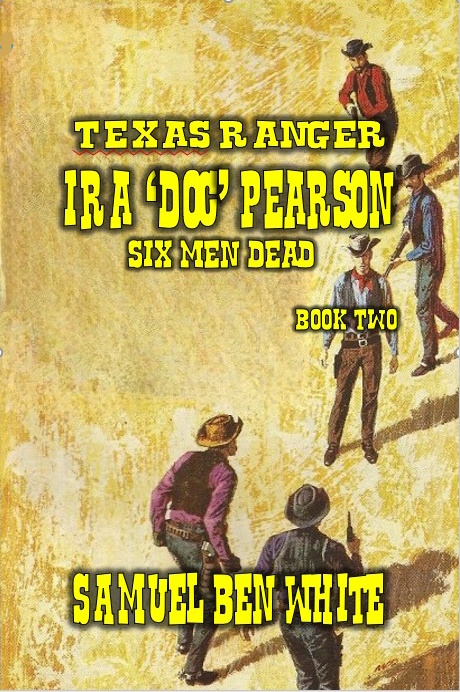
Six men rode into the west Texas town of Rook in December of 1895. Moments later, all six men lay dead in the street, shot to death by the good citizens of the town.
Ira “Doc” Pearson is sent by the Texas Rangers to investigate, expected to just rubber stamp the proceedings for the dead men were known as the Lawrence Gang: wanted in Texas and New Mexico for bank robberies, rustling and murder.
Ira knows, however, that one of the members of the Lawrence Gang was in jail in Lubbock at the time of the massacre. So who was the sixth man who died that day?
Official Texas is satisfied that justice was done, but Ira can’t let it go.
Also available on Audible and iTunes, narrated by Tom Lusty!
Six men rode into the Texas panhandle town of Rook. By the looks of them, six hard men, five of them on fine horses such as only an outlaw could afford, all wearing guns that had seen some use.
The people of Rook took all this in in a moment, and that was all they took.
Rifles, six-shooters and shot-guns seemed to appear as if by magic from every upstairs window on the dusty street. No signal had been heard or seen.
All fired at once and six men went down. Only two were even able to get their guns out of their holsters, but neither got off an effectual shot before scratching their last sign in the dirt of the street.
No horses were hurt more than a couple grazes, for the men (and maybe some women, if the rumors were true) of the west in general and Rook in particular thought a lot of horse flesh and had taken great care not to hit any of the animals.
All six riders died quickly. Nobody was gut-shot and writhing in the dirt, for the people of Rook were good shots
and toasted each other later in the saloons and each other’s houses that there had been no suffering. Not like the banker these men had made die slowly down in Banderas, or that parson who’d just been in the bank at Dimmit at the wrong time and had taken a month to die.
Nope, just six clean deaths.
One couldn’t say it was just six shots, though. Someone counted up later and found that most of a hundred Rook bullets had struck the six bodies. It was a wonder they hadn’t more than grazed the horses.
No one from Rook had so much as a scratch on them. Maybe some red eyes or sore throats from the smoke of the gunpowder, but nothing more. It had just been a few seconds of red-laced hell and then it was over. Six lay dead and a lot of people across west Texas and eastern New Mexico started sleeping easier again.
The worthies of Rook buried the six bodies in a single grave out at the town cemetery and the Campbellite parson said some words over them. A marker was put up but all it said was, “Lawrence Gang” and, below that, “Put here by the good citizens of Rook on 4 December, 1895“.
Chapter One
Folks took notice
when the stranger rode into town on the sorrel horse of his. It wasn’t quite like the old days, when every stranger who passed through Rook was noted, though, for mor
And this stranger wasn’t an especially striking specimen. A shade over six foot, with short light hair and beat-up clothes—though of tough cloth—nice boots, and a saddle that had seen some miles. Nor did his gun catch anyone’s eye, for while things were starting to get civilized, there were still quite a few men who wore guns, especially if they were traveling for civilization hadn’t completely caught up with the road agents. The stranger’s horse was a good-looking animal, one that looked like it could go all day and night, but it wasn’t a “show horse” for all that. Just a good-looking horse anyone would be proud to have, but not the kind that made people say to themselves, “I want that horse!”e people traveled anymore. On any given day, a dozen strangers might ride through, stopping only for water or a meal, before making their way back onto the road to Hereford or maybe McKeon. Most of the time, they drew no more notice than if a local had ridden through.
What got people’s attention, and set the tongues to wagging and brought the whispers to a dull roar was the silver on the man’s chest, for he wore the badge of a Texas Ranger. The badge was polished and glinted in the bright Texas sun, catching the eye of everyone who even glanced that way.
Soon, Sheriff Montgomery was hustling out of his office and greeting the stranger even as the man was tying his horse to the hitching rail in front of the jail. Extending his hand in a manner that seemed to be forced friendliness over an underlying nervousness, he said, “Howdy. I’m Sheriff Montgomery. I, um, I figured one of you would come.”
“Did you now?” the stranger replied, taking off his riding gloves then taking the sheriff’s hand. “Pearson’s my name. Ira Pearson. I reckon you already realized I’m a Ranger.”
“Uh, yes sir,” said the sheriff, even though he was probably a good fifteen years older than the Ranger. “Won’t you come inside?”
“Thank you,” the Ranger said politely.
Sheriff Montgomery watched with keen interest as the Ranger took off a Stetson that had seen some miles but was well-taken care off. The Ranger brushed some dust off the hat and then hung it on a peg just inside the door. The Sheriff saw then that the Ranger had the most grey eyes he had ever seen. Somehow both piercing and bland at the same time.
“Coffee?” the sheriff offered.
“Don’t mind if I do,” Ira Pearson replied. He took the cup gratefully, then sat in the offered seat. He waited a beat for the sheriff to sit down behind his desk, then said, “You probably know why I’m here.”
“To give the town a medal?” the sheriff tried to joke.
Ira Pearson chuckled, shaking his head. “There are some in Austin who have already suggested that. The citizens of some of your nearby towns would probably go along with that idea. But no, Sheriff,” he said, suddenly becoming more stern, “I don’t think anyone is going to try to argue that the Lawrence Gang didn’t have some retribution coming. However, six men shot down in a street with no provocation does look a lot like murder to the courts.”
“Murder?” the sheriff demanded. “After what they did in Monahans, or to them sheepherders down by—“
The Ranger held up his hand to forestall further talk from the sheriff and said, “We know those things. The whole state knows those things. And I have access to crimes I daresay you haven’t even heard of save in rumor, Sheriff. But there are laws in this state and murder is at the top of the list—even when the person murdered deserved what they got by every known set of rules.”
“So what are you going to do, Ranger?” The last word was said with something less than admiration in its tone.
“My orders are to investigate exactly what happened and turn in a report to my superiors. I can make recommendations, but it will be up to the Attorney General what is to be done ultimately.” He smiled then and asked affably, “May I assume that I will have the full cooperation of this office, Sheriff?”
“Um, uh,” the sheriff fumbled, taken off guard by the sudden friendliness, “Sure. Absolutely.”
“Thank you.” The Ranger reached into a vest pocket, pulled out a little notebook such as most ranchers carried for tallying up stock, and a pencil that was already sharp and said, “For starters, I’d like to hear your account of what transpired on Wednesday of last week.”
The sheriff cleared his throat, looked around for help where there was none, then began, “Well, it really started before last Wednesday.” Steeling his will, he said, “Here’s what happened, Ranger—wait, ain’t you the one they call ‘Doc’ Pearson?”
The Ranger hesitated, chagrin on his face, then replied, “Yes. But I prefer Ira, or Pearson, or Ranger or ‘Hey You’ for that matter.”
“All righty,” the sheriff agreed, wondering what the story might be behind both the nickname and the obvious dislike the wearer had for it. Still, he shrugged then began, “I’m sure you know all about the Lawrence Gang. Well, I know it, too, and I may know more than you think I do. But that’s no never mind. What I do know is that in the last week of November they stuck up a stage over by Lubbock. Shot the driver and the express man. Beat up the passengers—three men and a woman—and left them beside the road. One of the men is still laid up, they tell me.
“From there, they drunk up half the liquor in Littlefield and shot out most of the windows. Beat a bank teller half to death ‘cause he didn’t have but twenty dollars to give them. Y’know, Ranger, they used to just rob a bank now and then. But somethin’ went wrong with that Frank Lawrence up here,” he gestured toward his own head. “I ain’t saying they didn’t deserve jail or death for the robbin’, but here lately they just went plumb crazy.
“After Lubbock, and then being in Littlefield, I didn’t worry none ‘cause I figured they was headin’s away from us. Next thing I know, they’re in Olton, then somebody east of Hart said he thought he saw them on the trail to Tulia. Everybody in this town had heard that, too, Ranger, so they got up the citizen’s committee and started asking what they should do.” He looked furtively toward the door, as if hoping someone would come in and interrupt his proceedings, before continuing, “Now I, um, I told them what we’d have to do was arrest them Lawrences and then get word to you—the Rangers, I mean, not just you personal.
“Sudden like, ever’body in town’s walkin’ on eggshells. Men wearing Colts strapped to their pants that hadn’t been fired in ten years. I was, I tell you, I was worried about a accident—“
“Accident?” Pearson questioned.
“You know how it is,” the sheriff explained, somewhat plaintively. “Ever’body’s on edge and, first thing you know, one fella’s bumped into another in the saloon and all of a sudden ever’body’s firin’ guns and somebody lays dead.”
“And that’s not what you wanted? Dead men in the street?”
“What? No sir!” Sheriff Montgomery objected forcefully. “I never wanted no such of a thing! But I tell ya: when it happened, the people of Rook handled it like men.”
“And how was that?” the Ranger asked calmly.
The sheriff was sweating, even though it was a cold panhandle day outside and the pot-bellied stove was only putting a dent in the chill. He suddenly blurted out, “Well, you remember back a couple years ago when that posse caught up with the Lawrences down hear Odessa, don’t you? Had ‘em chained up and everything. But ol’ Pete Lawrence, he had him a cousin there in Odessa who got a file to ‘em. They slipped out slick as whistles in the night and have been raising—well, you done told me you know what they been doin’.”
He stopped for a moment, formulating his words, then offered, “I told ever’body that we needed to catch them Lawrences legal and hold ‘em tight! I was goin’ to swear in a passel of deputies and we was goin’ to watch over them like new mothers over a baby ‘til you could get here.”
“Wise plan. What happened to it?”
“’It’?”
“The plan. What happened to the plan?”
“Went all to pieces,” the sheriff said with a laugh. Suddenly enjoying himself, he explained, “Word had somehow got out that our bank had took delivery of a large sum of money, so I was on edge anyway. Then, we heard about the Lawrences coming. Then, that morning, Collin Warner—he runs a little dairy operation just south of town—he wakes me up and says he seen a bunch of men hiding out in a draw on his place. He said he seen their fire, then snuck up on ‘em knowin’ nobody honest would be a camped out like that without saying ‘hey’ to the owner. Collin, he used to be in the Army and he injunned his way up there and said he seen Pete and Frank big as life—“
“How’d he know it was them?”
“Wanted posters, I reckon. Ever’body knows—knew—Frank had that scarred-up nose from when that feller bit him down in Abilene. And Pete was so skinny he had to stand twice to cast a shadow. And ol’ Onion Taylor, we all knowed what he looked like on account of the stories told about him. And they was true, let me tell you. Must’a took thirty shots hisself before he went down.”
A range war is coming. Texas Ranger Ira Pearson is sent to investigate. But is there someone behind the scenes pulling the strings?
Published by Outlaws Publishing and available for Kindle and in paperback!
Texas Ranger Ira Pearson is sent undercover to Van Bent, a town in far west Texas where rumor has it a range war is brewing. Posing as a doctor–aided by the very training he has tried so hard to distance himself from–Ira is quickly involved in the feud. As he tries to keep the war from escalating, Ira can’t help but think there is something else going on, that either someone behind the scenes is pulling some strings, or there is just an evil festering beneath the surface of Van Bent. With a nurse he is training on the job by his side, Ira is tasked with stopping the war and, perhaps more importantly, finally answering the question for himself of whether he was supposed to be a doctor all along.
…
Sample Chapter
Undercover work? Ira considered as he gathered his things at the hotel. He hadn’t had to do anything like that since he was with the Houston police force a few years before. Not real undercover work, anyway. Occasionally, as a Ranger, he had ridden into a situation with his badge in his pocket and had not announced his presence or true intent until he had the lay of the land, but not true undercover work.
He wondered, of course, what it might be. A dope smuggling ring? There were rumors of cocaine becoming a problem among the silver miners out west. Slavery? It was outlawed but there were a lot of prostitution rings that—in Ira’s estimation—came awfully close to breaking those laws with their “contracts” for the women. It occurred to Ira that he wouldn’t mind breaking up an operation of either of those evils.
Still, why him? There were other Rangers, he knew, that had more experience with drug smuggling. Ira had helped in an operation on the matter a couple years back, but his area of expertise was more along the lines of cattle rustling or kidnapping. Kidnapping? he wondered. There were always rumors of the Comancheros stealing American children and selling them as slaves in Mexico—or kidnapping Mexican children and bringing them to the States as “servants”. Could it be something like that?
Ira knew there was no way he was going to find out until he got to Kerrville and spoke with Billings, but he couldn’t help but speculate in his mind.
McKay had given him a fairly loose timetable, so Ira eschewed the trains and rode Scout cross-country to Kerrville—posting his letter to Rose in the next town down the line. Ira still wasn’t sure where things stood with Rose. Was she “his gal”? Did he want her to be? Nor did he know if she wanted to be his gal—or anything, for that matter. She was a friend, certainly, and probably one of his best friends. But he could not honestly say whether he wanted her to be anything more and was pretty sure she felt the same way. So why, he asked himself, had he bothered to send the letter? Because he cared enough about her that—if he wound up undercover for a long time and unable to write—she wouldn’t think he had forgotten her.
He didn’t dawdle, but nor did he push his horses for he brought along a pack horse he could switch with. All in all, he made pretty good time.
He also didn’t shave, thinking that if he needed to look different from his normal self, a beard and mustache were an easy disguise—which he could shave off if not needed. He wasn’t one of those men who could seemingly grow a fresh beard overnight, but by the time he arrived in Kerrville six days and a hundred and fifty miles later he had a decent start. If nothing else, it had the advantage of drawing no attention his way as he just looked like another long-riding saddle tramp.
The problem, it occurred to him on the six day ride, was his eyes. Some people (especially women) seemed to like his eyes, some people said they were too strange to be attractive (also women), but everyone who met him agreed that Ira had the greyest eyes they had ever seen. He doubted that his eyes were discussed by bandits on the trail, but they were going to be hard to disguise were he to meet anyone he knew. He thought about getting some spectacles with just plain glass for lenses, hoping that might distract from his eyes. It occurred to him that maybe he could get some spectacles with tinted lenses such as people with sensitive eyes sometimes wore, but thought that might draw more attention rather than less.
Ira checked in at the Kerrville Union Hotel and the man at the desk barely looked at him, let alone made eye contact, certain Ira was just a saddle bum and probably thinking they’d have to give the sheets an extra wash after this Walter Moore left. Ira thanked him, saw that his horses were tended to, then went upstairs. The fifty cent bath felt good but it sure increased his desire for a shave.
He had supper in the hotel dining room, an inauspicious room off the inauspicious lobby and was served an even more inauspicious supper. What they had advertised in the menu with some fancy French words was just a medium-sized steak and some green beans. Neither was bad, nor were they the kind of meal Ira would be hankering to return for. Still, they beat his trail cooking.
After checking on his horses he walked around town a bit then headed back to the hotel. He stretched out on the bed after taking off his boots—expecting to be disturbed by a tap on the door at any minute—only to find himself waking up to faint morning light. He was rested, but more than a little chagrined at himself for it didn’t pay a Ranger to sleep too well or two hard.
After splashing some water on his face, he went downstairs and took care of business before heading into the hotel dining room. It turned out they weren’t serving breakfast that day, so he made his way to a little café down the street that was clearly open and put off a smell so charming Ira told himself he would be happy just to stand there and inhale. Inside, he got a breakfast almost too large for one man to eat, but Ira did his best and eventually polished his plate.
He was sitting on a bench later that morning in front of the hotel when a man in a plain, store-bought suit and bowler hat sat nearby. The man asked in a casual but clear manner, “Walter Moore?”
“Who’s asking?” Ira replied, giving the man a better look.
The man asked, “Would you like a cigarette paper?”
Ira was puzzled but replied, “I’m more of a cigar man, if anything.”
The stranger let a little smile creep into his eyes, then said, “I’ll roll you one. But don’t smoke it here. The hotel owner’s kind of picky about such things.”
Based on the number of butts on the wooden porch beneath Ira’s feet the Ranger seriously doubted that assertion, but took the offered cigarette with a “Much obliged.” The stranger nodded, then tipped his hat and stood up, walking away without a backward glance.
Ira stood up a few minutes later, the cigarette in his shirt pocket, and made his way to a little courtyard on the side of the hotel. Making as if he were trying to light the cigarette but fumbling with it, he dropped it on the ground. Grumbling, he bent over to pick it up, unrolling it as he did so. He saw that there was writing on it. Putting the paper in his right front pants pocket, he walked around to the back as if going to the privy.
When he was confident no one was watching, he read the note. “Old blue barn on southeast side of town. Dusk.”
Ira tore up the pieces of the note and dropped them into the privy’s hole. He laughed to himself, “If anyone wants to fish them out of there, more power to ‘em.”
He loafed around town that day, trying to be neither suspicious nor too unobtrusive, and eventually made his way to the southeast side of town. Once there, the barn—which he had located earlier in the daysat off by itself making the approach to it visible, meaning no one was going to sneak up on that barn while there was still light.
Ira dismounted Scout then walked up to the barn, putting his hand to his Colt and made sure the thong was off, then eased inside the old structure. Taking a moment to let his eyes adjust as much as they could, he looked around. He stepped to some old stalls and went to stand in one of them, leaning his left side against a post and keeping his right hand close to the revolver.
He hoped he didn’t jump too much when a voice from the next stall whispered, “How’d you know which stall I was in?” Before Ira could answer, the voice—a man’s—said, “Never mind. You go by Walter Moore now?”
“Yes,” Ira replied succinctly. Then, “Mister Billings?”
“Yes. McKay sent you, right?”
Ira nodded, realized the man couldn’t see the gesture, and so answered, “He did. What’s this all about? And are we supposed to pretend we don’t know each other?”
In a gravelly voice, as one who recently got over the croup, Billings told him,“Not here, per se, but thanks to that business in Rook last year, you and I are known associates. I have a job and it occurred to me from the start that you’re the man for it, but it needs to be kept hush-hush until we know for certain there is something there. Do you still have doctor’s equipment?”
“Yes,” Ira replied, trying to keep the grumble out of his voice but probably not keeping the surprise out. “A few things, like what I’ve used when patching someone up in the field.”
“From now until this is over, if you take this assignment, you’re Walter Moore. I know your record, Pearson. You didn’t just kind of read for medicine with some frontier sawbones; you went as close to medical school as Texas had at the time—and finished with high recommendations from the school in Galveston.”
Ira hesitated, then replied, “Before the college officially opened up. I studied under a man named Gerald Miktam. He was an obstetrician and taught at the old college before they closed it.”
“I’ve met him. Brilliant man. Then you had an education better than most doctors in the state—barring the most recent graduates, of course.”
“Maybe. What’s this all about, Mister Billings?”
There was a long pause, then Billings replied, “Come over here and let’s have a little light.” Ira followed the man into a darker corner of the barn which had probably been a tack room way back when. Billings lit a lantern, but kept the flame low. Still, it allowed them to see each other as they sat in two rickety old chairs by an even shakier table.
Billings produced a map from a satchel and spread it out on the table. “You know anything about Van Bent?”
“Town, isn’t it? Just this side of El Paso?”
“That’s the one. Wait, you weren’t in on that group of Rangers that stopped the Fitzsimmons-Maher fight in El Paso a couple years ago, were you? That was close to Van Bent and you might have been recognized—”
“No. I was hip deep in bringing down those wire cutters west of Lubbock about then.”
“Oh, right. Good work there. Anyway, about Van Bent. Ranching town, little dry land farming. Railroad goes through there, east to west. Started out as just an end-of-the-tracks town, then just about died when the railroad went on. There was talk for a while, though, that a railroad bridge might be built over the Grande and the town perked up a bit. Kind of reached an equilibrium now, you might say.”
“Something going on there that needs a Ranger?”
“Yes. Well, maybe. But it’s something that I think requires a particular Ranger: you.”
“Me? What do I bring to anything that a dozen other Rangers don’t?” When Billings didn’t answer right away, Ira looked into the man’s eyes and saw something like a friendly smirk in the dim light. “What? Oh wait, no. I don’t know what you’ve heard—“
“I’ve heard about how you patched up a couple of our Rangers after that border fight a couple years ago, and how you performed actual surgery last year in Big Spring.” As Ira made a face like a man about to object, Billings said, “And I happen to know, as stated earlier, that you have better medical training than most actual doctors—“
“I don’t think—“
“The average doctor in Texas has less than one year of medical training, and most of them were just apprenticed under another doctor with the same level of training. You’re one of the few who can actually claim to have been to medical school.”
“I didn’t—“ Ira tried to object.
“Haven’t you heard?” Billings said with what was intended to be a friendly smile but was not seen that way by Ira. “The School of Medicine there in Galveston has recognized Doctor Miktam’s students as having a medical degree on par with those their first year graduates received.”
“No. I hadn’t heard that,” Ira told him, a mixture of chagrin and pride battling for supremacy within. “But what does all that have to do with Van Bent, Texas, and needing a Ranger?”
Billings reached into his satchel and pulled out a wanted poster for a man listed, primarily, as Augustus Zamorra, though there were several aliases listed as well. “What do you know about this man?”
Ira looked over the poster and replied, “Mostly just what it says here: wanted for murder and horse thieving—but all on the Mexico side of the border.”
“Anything else?”
“Just trail gossip. Seems like most of his crimes have taken place in Mexico, but every now and then he gets the blame or credit for something that happened on this side of the river. Some people say he’s one of the Comancheros, others say they hate him as much as everyone else. One fella I heard once was trying to say the Comancheros were afraid of this … ‘Gus’. That’s what they call him, isn’t it? ‘Gus Zemore’?”
“Yes. That’s one of the many names he is known by.” Billings rearranged the papers so that the map was on top and explained, “We suspect he’s done more on this side of the border than we’ve tried to let on. Didn’t want the public panicked.”
“Those west Texas boys are more likely to take a pot shot at him than panic.”
Billings nodded, but then added, “I dont doubt it. But we want this Zamorra alive.”
“Why alive?”
“There’s something going on down there. Something that’s got the people of Van Bent and El Paso on edge.”
“And you think if you can catch Zamorra he’ll tell you what it is?”
“Maybe. We’ve caught some small timers, but they’re only from the fringes. They haven’t told us anything—if they know anything.”
Ira asked, “What makes you think Zamorra knows anything? As I recall, he’s never been accused of being part of a gang. He’d be an outsider to any plan, wouldn’t he?”
“Maybe not. We think the whole loner thing is an act, a put-up. We’ve been watching him for some time and he’s a lot closer to the big scores than we at first thought. Never right there, mind you, but a bank or train robbery, a high-profile kidnapping. Zamorra’s almost always nearby. He’s either in on it—“
“Or he knows who is and is trying to catch some of the leavings.”
“That’s what we think.”
“So again,” Ira reiterated, “Why a Ranger? And, more importantly, why me?”
Billingss waited a long minute, then said, “Trouble’s coming to Van Bent. There are two factions that control that town: the Ansons and the Parkers. It’s been just a little feud between families—wait, I don’t want to downplay it too much. There’s been some fist fights but, well, it’s been kept within the families so far. Rumor is, though, that one of the sides is bringing in some hired guns to wipe out the other side—”
“So why not bring in a whole bunch of Rangers like Major Jones did and wipe them out?”
“Believe me: we’ve discussed that. The problem is that, so far, we don’t have enough to go on. Could be the whole thing is just rumor. Not that two families trying to shoot up the other isn’t worth our time, but we got enough egg on our face pulling in Rangers from everywhere just to stop a prize fight. And this being so close to El Paso, that fight would be on everybody’s mind. We need to get the facts, first.”
“Move a garrison there. Let it be known you’re after wire cutters.”
Billings was a moment before answering, “We need someone on the ground, but someone who doesn’t look like a Ranger. So then it occurred to me one day that Van Bent has everything: a school, a couple churches, even a volunteer fire department. Has a sheriff but I have a suspicion that he’s on the payroll of the criminal element.”
“And this has to do with me … how?”
“What Van Bent doesn’t have, is a doctor.”
“Really? It’s not that small is it?”
“More than a thousand people, maybe two. It had a doctor, eastern fellow from what I hear. Wife and family. My guess is that the little woman didn’t care for far west Texas and he left to keep peace in the home. Can’t blame him, really. Anyway, the town council wrote to the state asking for help in finding them a doctor. I came across the request, happened to remember what you did in Big Spring last year, and thought we might have an answer to solve our problem and the town’s.”
“You just didn’t take into account that I am not a doctor anymore. Never was, really.”
“There’s a Doctor Alexander in Big Spring that says different.”
“You’ve talked to him?” ira asked, surprised.
“By telephone,” Billings replied, the telephone still a new enough invention that even those who had used one many times were still proud of the fact.
“But I had no choice. That man was going to die if I didn’t operate.”
Billings smiled, again trying to be friendly and not realizing that the light from the lamp made him look more ghoulish than inviting, “See, that’s where it’s you. If it had been me, that man would have died. I wouldn’t have had the first idea what to do other than maybe hold a bandage over the wound. You may not think of yourself as a doctor, but you know how to be one.”
“What’s your interest in this? This seems a little out of the bailiwick for a state attorney—”
“Deputy attorney general,” Billings corrected. “But you’re right. I’m interested because, well, I got interested in this because I have a sister who lives in Van Bent. She wrote to me about this feud. I know my sister: she doesn’t scare easy and neither does her husband. If she says something’s coming, I believe her.”
“So how does Gus Zemore fit into all this?”
“Honestly? He may not. But down Mexico way he’s been known to fight for pay. If it’s true that one side is bringing in hired guns, I would look for the other side to try to get Gus.” Billings leaned closer, his elbows on the table, and said, “Gus is past forty. You and I know that’s old for an outlaw unless they either get someone else to do their work for them—”
“Or they’re very good at what they do,” Ira completed.
“Either way, we don’t want him in Texas if we can help it. But also, if we could capture him and turn him over to the Mexican authorities, it might build up a little good will between our countries. We’ve got spies in Mexico, but we don’t have an official presence in Van Bent. I told my sister I’d try to change that and Captain McKay thought of you right off. Said you were wasted just tracking down panhandle rustlers and runaway brides.”
Ira was trying furiously to think of objections, coming up with several, but finally said, “You want me to go into Van Bent and pretend to be the doctor?”
“No, I want you to go into Van Bent and be the doctor. If we sent any other Ranger in there to pretend, they’d be discovered as soon as they did something—anything. I want you to go there and be our eyes and ears.”
“For how long? I was undercover once with the Houston police but that was only for a few days. Just long enough to work the docks.”
“So you’ve been an undercover doc before,” Billings laughed. He laughed alone. Answering the question with a more serious voice, he said, “There’s a possibility this could go on for months. A possibility, mind you. But me, I’ve got it in my mind that this is building to something. Something that will hit before summer is over.”
“But you don’t know that for sure?”
“How could we? Unless we knew some gold shipment were coming through or something. No, this is, admittedly, open-ended. But you know how our hot Texas summers work on folks, especially the bad element.” Billings, a good man at reading body language, asked, “What is it about this job that has you so vexed?”
Ira had a few sarcastic comments jump to mind, but decided to go with honesty, “I don’t want to be a doctor. It’s true that I can be one, but I closed that door a long time ago.”
“Maybe it’s time to reopen it.” Billings again tried that winning smile (that worked so well in sunlight) and offered, “You’re what? Thirty-two, thirty-three? Colonel Jack retired from the Rangers at thirty-four. McNelly died at thirty-three. Most Rangers your age are looking for something else to do: ranching, becoming a town peace officer. You’re one of the few who has something they can turn to right away.”
“I think about being a rancher sometimes,” Ira replied, deflecting. “My father’s a rancher. I could take over his spread, or go start my own somewhere.”
“But you don’t want to be a doctor. Why?”
“I have my reasons,” Ira replied, hoping his tone was as insolent in his voice as it was in his head.
Billings waited a long moment before saying, “I know about your wife. It may be time to put that behind you.”
“I have. And part of putting it behind me is putting being a doctor behind me.”
“Are you refusing this assignment?”
“Can I refuse it?” Ira asked with surprise.
“Of course,” Billings told him. “But I think you’re the best man for it. And you’re the only man who could go in as a doctor.”
“Surely someone else could go in as a banker or a lawyer or something. Bartenders hear a lot of the talk.”
“We know. I know. But every one of them is going to be viewed with suspicion. Everyone knows the Rangers don’t have company doctors. So a doctor moves into town, shows himself to be competent, everyone in town will be satisfied that he’s a real doctor.”
Ira leaned back in the chair, thinking of all the objections he could make. He was also thinking that he had thought just what Billings brought up: he was getting older. It wasn’t quite like the early days when most Rangers were in their twenties, but the few who lasted into their thirties (or, rarely, forties) were becoming Captains and administrators, something Ira had never really aspired to. He liked the part of the job where he was operating alone, riding fence lines, checking brands.
He suddenly told Billings, “If I do this, I can’t just ride into Van Bent on the train later this week and set up shop. Besides equipment, I’d need to go apprentice—for lack of a better word—with an actual doctor, somebody like Alexander.”
Billings smiled widely and said, “I was thinking the same thing. Four weeks be enough time?”
“Give me six.”
“Then you’ll accept the assignment?”
Ira hesitated, then said, “For six months. If I don’t have a clear indication of—of some … wrongdoing, I want the freedom to pull out. I’ll even help the town find a new doctor, but I want to be back out on the trail.”
“Accepted,” said Billings, who extended his hand. Ira hesitated the briefest of moments, but then took it. Ira had spent so many years running from being a doctor that he told himself this was a chance to discover what he really thought about it, more than just the one night in Big Spring had previously provided.
“From this moment forward, you are Walter Moore. Get used to signing that name, saying it, and reacting to it.”
“Where will Ira Pearson be?”
“Back east, with a delegation from the state government that’ll be working with congress on issues of horse and cattle theft in the west. Write out a letter to your mother now and then and get it to me. I’ll see that it gets posted from Washington.” He quickly added, “Don’t lie. Don’t write, ‘I’m enjoying the magnolia blossoms’. Just a generic, ‘I’m doing fine. Can’t wait to get back to my usual duties.’ Like that.”
“There’s someone else I might have you post a letter to,” Ira mentioned, almost against his own will.
Billings smiled but didn’t say anything. Turning off the lamp, he gathered his things and stood up. Ira could tell what was going on by the sound. Outside, Billings told him, “I used to be a cowboy, you know that? Rode with three trail herds up to Kansas, once to Wyoming. Twice, I rode with men who used to be doctors. Both of them, they had to leave the profession because they were drunks. And old Holliday was a lunger. You don’t drink, do you?”
“Taste now and again, but no, not a drunk. No consumption, tuberculosis or cancer either, so far as I know. Had a hang nail once.” After a few steps, toward their horses, he added, “Oh, and I got shot in the back once.”
“That’s the kind of thing that would make me want to stop being a Ranger,” Billings commented.
“The thought entered my mind,” Ira admitted. “But I had a matter I was determined to see to completion first.”
“I know of what you speak. That’s long since settled. And you’re still a Ranger—and a good one.”
“The people of Rook might disagree,” Ira chuckled.
“Maybe some of them, but not all.” Billings patted Ira on the shoulder like they were old friends and said, “I’m glad you’re aboard with this. It might be a wild goose chase, but I don’t think so. And every town needs a doctor, right?”
“Right,” Ira replied, as one who doesn’t fully agree. As they reached their horses, surprised to learn they were tied near each other in the thick brush south of the barn, Ira asked, “Where do I go from here? Big Spring?”
“No, you’re known there. Let me send some wires, then I’ll get a message to you as soon as I can. Anybody know you in Dallas or Fort Worth?”
“Maybe. No close friends or associates, though. Rarely ever been east of there.”
Billings snapped his fingers, looked around sharply as if he regretted the sound, then said in a low voice, “I know a doctor in Corsicana. I think he’d do the Rangers a favor—and keep quiet about it, too. Name’s Tobias Charberon. I’ll contact him.”
“Charberon.” Ira swung into his saddle and asked, “Same kind of message as today? Cigarette paper and all?”
“Nothing so clandestine, now that we’ve met. The fellow who brought you the message this morning? I’ll have him take his meals in the hotel you’re staying at these next couple days. Act like you don’t know one another. But, if you see him sitting there with his coffee cup upside down—like he doesn’t want any—that means you can head for Corsicana. If Charberon doesn’t agree, then I’ll get in touch with you in some way and we’ll find another doctor for you to study under.”
“You really think someone’s watching you?”
“Not that I know of, but I don’t think we can take that chance. Any rumor you were seen with me before all this started and word will get back to the criminal element.”
“You that well known?” Ira queried.
“In some circles. In the wrong circles.” Billings looked like he was about to get his horse moving when he suddenly asked, “Are you the man who came up with that system of using dynamite to thwart fence-cutters?”
“Different Ranger, though his name is Ira, too.”
“Darn. I would like to shake that man’s hand. That’s the kind of inventive thinking we need.”
“Doctors rarely use dynamite,” Ira told him.
“Well, you know: applying new solutions to old problems. You men do that, don’t you?”
“I don’t know. I’m not a doctor.”
“But for the next few months, you will be,” Billings reminded him. He sat with his hands crossed on the pommel, looking in Ira’s direction (maybe, in the dim light it was hard for the Ranger to be sure) and said, “You know, back in the days of Captain Hays, there was more than one man who gave up doctoring to be a Ranger for a while. You’ll just be going the other direction.”
“I reckon,” Ira replied.
They shook hands then rode off in their respective directions, Ira surprised at himself for agreeing to the assignment. He told himself it was because he was a man who took the jobs given, but this was the first job given him that caused so much pause.