The Dumbest Planet in the Universe

A world without sin or strife or pain.
Scott Passer III, “Trey” to his friends and family, went in for a routine heart ablation. He woke up in a spaceship little bigger than a coffin and going … where?
He finally crashes on an idyllic planet many galaxies away the locals call Oolod. They put him back together and begin to show him a world where no one even knows the meaning of lie.
And hovering over all is a mysterious figure Trey can’t see. He can’t even hear the being’s name when others speak it. Who is this strange being, and was it him that brought Trey across the universe?
And why?

$2.99 on Kindle and $12.99 in paperback. Order yours today!

A mysterious figure Trey can’t see. He can’t even hear the being’s name when others speak it. Who is this strange being, and was it him that brought Trey across the universe?
And why?

Sample Chapter

I went into the hospital for just a routine ablation. I mean, as routine as those things can be. They are attempting to get an out-of-whack heart back in whack by searing it and causing scar tissue in just the right spot. Yeah, it’s as crazy as it sounds, but it works.

And since you’re looking up what it is on line anyway, I’m not going to knock myself out explaining it to you.

As far as heart surgeries go, it has a history of success. A lot of people are back at work within weeks, sometimes days. For some people it takes a little longer, but not usually too long. Not like a lot of the other heart surgeries.

And I had had it done before. A couple years before I had had it done at a hospital in Oak City. The thing was, though, they could only do so much of it at one time, so they did (according to them) about ninety percent and then the plan was to get the remaining ten percent “in a couple years” after I was completely healed. (Yeah, I know I said that they said that most people recover quickly, and on the first round I had. I had gone back to my job as an accountant after a couple weeks—part time—and then full time by a month later. Not like I was playing pro sports or prone to ridiculous amounts of jogging, so I didn’t have a problem.)

I just had to get the job finished. Afterward, they told me, I would be back up to full strength in no time. All the old fatigue gone, better sleep at nights, a new man—if you didn’t count that I was rapidly leaving fifty in the rearview and hadn’t been a stud on any field or court since, well, ever. In Little League I was the kid you stuck in right field, in adult softball I was the man you put at second base or catcher—the two places least likely to harm the team in a no-slide league.

So maybe, with that final ten percent taken care of, I would at least be able to go on a long, brisk, walk without feeling light-headed or nauseous.

When I had it done before, I went through all the pre-test junk we’ve come to expect, filled out a ream or two of papers, then showed up at the hospital on the day in question. I was well-rested because my insurance had even sprung for a decent hotel room near the hospital for the night before and after the surgery. I hadn’t eaten or drunk anything in twelve hours when I walked through those hospital doors and, pretty soon, I was laying in a hospital gown on a hospital bed, thinking hospital thoughts.

They had wheeled me into the operating room and then this nice lady had told me she was going to put some stuff into my IV which would make me go to sleep. I started counting backward from a hundred, got to about ninety-seven … before waking up in recovery and being kind of sore and tired. It turned out, they had stopped short because the anesthesia had been wearing off and they couldn’t have continued without putting me in serious pain, the kind of pain that would have complicated my recovery.

That’s what I was expecting, then, for round two: count to three, wake up in another part of the hospital, everything hunky-dory.

Anytime you go under, though, there’s always a slight chance you won’t come back up. Or that you might have a wild dream while under the influence. The kind of dream that seems so real you will never be convinced by anyone that it was not.

The Journey

I’ve always been a man who followed his instincts. When I woke up, then, and my first instinct was to scream, that’s what I did. Instincts two through six were remarkably similar, so I followed them as well. Instinct seven was to call ineffectually for help, so I did that, followed by more screaming.

You see, I had expected to awaken to the visage of the anesthesiologist who had put me to sleep—or one as like that one as to be no matter—and then get the usual questions like “How are we feeling?” and “Would you like something to drink?” When I didn’t wake up to that, I think my responses were quite called for.

At first, I thought I was still asleep, for it was all darkness about me. But then I realized my eyes were open for I was seeing a little. Dim shapes and faint lights were all about me. Hence the screaming, though, for I appeared to be in a box. My first thought was: coffin. “I died on the table and now my heart has re-started on my own but they’ve already chucked me in a box for shipping back to … where would they ship me?”

I was born in Flomot, Texas—wait, that’s not right. I was born in Lubbock, TX, but that was because there was no hospital in Flomot. One of my first sensations upon awakening from the anesthesia was of movement, which is what helped lead me to the conclusion that I was in a coffin and someone was taking me back to Flomot for burial. I didn’t have any special affinity for Flomot, but I guess I never had made any “final wishes” known, so it made sense to bury me near my mother’s plot. They could have buried me near my father, but he was a veteran and accorded such honors, so I would only have been in the same pasture, not right next to him.

Once past most of the screaming, it came to me that if I were in a coffin, there wouldn’t be any lights. I had seen coffins advertised that were insulated so you could buy them before you needed them and use them as coolers at parties before you checked out, but I had never known of one that came with lights. And these lights didn’t seem close enough to be inside the coffin with me. Where were they coming from?

Trying to calm down and think about the problem, I hit on the idea that maybe I was inside an iron lung. I had never heard of winding up in one being one of the possibilities following ablation, but then I also had no idea what an iron lung looked like from the inside or out and, thus, the theory was no better or worse than any others I might have come to.

I tried to move my arms and legs, but while I could move them a little, I was clearly packed into some sort of … something? Box? Coffin? Shipping crate? I think my mind liked the iron lung idea because it at least connotated medical care whereas all the other options led one to think of abandonment.

Maybe it was some sort of hyperbaric chamber, I suddenly thought. I had heard the term and, while I didn’t know any more about what one looked like than I knew about iron lungs, the idea seemed more reasonable. Didn’t they use them to immerse someone in a very sterile, pure environment? Maybe, I reasoned with my still-panicky self, there had been some hint of infection and they needed me in a completely clean environment as I recovered.

With that thought in mind—and realizing it could still apply to what little I knew of an iron lung—I decided that maybe I was looking through a glass window at a darkened room in the hospital. Not one hundred percent dark, but just mostly darkened. Why would it be so? I asked. Perhaps it was late at night. Or maybe it was just part of providing a calm world for the patient to wake up in. Bright, garish, hospital lights can be rather unsettling, I knew, when one first woke up.

But then, I realized the lights were moving. And that there were a lot more of them than I had at first thought.

Stars!

I was looking through a window at stars!

And either they or I were traveling very fast.

I actually calmed down then, for it became instantly clear to me that I was having a dream. It didn’t feel like a dream, but I just guessed that to be because of the drugs. As I noticed the stars (or me) moving faster, I laughed to myself that the anesthesia should have included some Dramamine.

I also got the sense that I was accelerating away from Earth—flat on my back and feet first. I couldn’t turn around and look, of course, but that was just the idea that came to my mind. I looked for Saturn, but was already outside the solar system and moving away quickly—or so I calculated (with no available facts).

Noiné’s Eyes – Martyr’s Fire – Book 3 available now!

Order your Kindle copy today! Click here. For the paperback, click here!

AD 5252 and all of the western world is at war.
Led by King Vykyant, a coalition of more than a dozen nations has come together to fight an evil on a far-off continent. “We will fight it there to protect our families here.”
But the families at home are not free of danger, for the fight is being waged there, too.
Thousands of soldiers marching, fighting and dying in a foreign land. People at home getting spotty information at best.
A world at war, as told through the eyes of the people on every front line.

Now available for Kindle & paperback. (Due to the length of this novel, it will not be available in hardback.)

Sample Reading

Three thousand years before, the continent had been a land with everything: verdant forests, wide rivers, harsh deserts. There had been cities and towns and beaches and places where men and women went for leisure and many places where they worked. It had been a land of mystery, and legends, and ghosts.

There had been people of education and what was called sophistication, often living just feet from those who didn’t receive those accolades. There had been people in the finest clothes, often living not so far away from people who had the barest rags, then a little further away were people who didn’t know what clothes were for and—had they known—couldn’t have imagined wearing them. Technology had existed side-by-side with stone tools.

When the first of great wars had come, the majority of the continent had remained relatively unscathed. Relative being a relative term, for there had been fights and squabbles, but almost none of the large-scale harm that had affected every other continent on the planet. Some of the survivors from other continents moved to that continent thinking it would always be that way.

When the wars returned—though in the myopic view of the future’s rear view, all the wars were one—the continent was mostly spared, though circumstances made it isolated.

The continent was still rich in many ways, but especially in tyrants and graft. Its resources were plundered and sold, leaving the majority of its population in even more poverty and want than they had been before—and they had been among the planet’s poorest back then. Its great forests were plundered not just for the wood, but for the precious metals that lay beneath, a process that had begun before the wars, then accelerated after even though the booty was just being sold to fellow residents of the continent.

But then came more wars that finally poisoned the rest of the planet. That southern continent was more protected than all the others, or so it seemed at first. Very few military strikes landed there. It was not attacked with the poisons that were levied against practically everywhere else and atmospheric conditions swirled them away. The last of the people who could escape from the other continents came to the southern continent.

They brought their wealth with them—some of which had come originally from that continent, ironically. The richest brought their own security forces with them, setting up little fiefdoms, assuming that to do so was their right even as they ran those who had been on the land for time out of mind off of it. Those so displaced headed to the already crowded cities, making life even harder—or deeper into the jungle.

And then the winds shifted. Not the political winds, but the actual winds, and the poisons everyone thought they had escaped came to the southern continent.

Millions were wiped out in just months’ time.

As in the rest of the world, those who survived, survived in pockets. Perhaps more people survived on the southern continent than on others. Some estimated that while elsewhere in the world ninety percent of the population was wiped out by the wars and their poisons, on the southern continent it was “only” eighty percent. Those who survived quickly stopped burying their dead and just threw them into the rivers or natural ravines. This exacerbated the poison, and the stench.

Technology was lost.

Commerce between the pockets was impossible.

Mankind was reduced to its most primitive state as every waking hour was spent scrabbling for food and shelter. And on that continent, in its pockets, there were more people fighting for the few resources the poisons hadn’t killed. The men and women of those lands became more vicious than in the rest of the world because they had to if they wanted to survive.

A millennium later, as the poisons dissipated and people all over the world began to venture bravely beyond the piece of ground they had known for a thousand years, there was some conflict of course, as is the nature of man. In some places there was cooperation, though, as the people met others who had goods or services they didn’t have themselves. In some cases across the globe rival pockets still spoke a semblance of the same language, but in some they were so divided they couldn’t even sign to one another. There was fighting at times, too.

The southern continent knew nothing of cooperation. For a thousand years and more, all anyone had known was a mad struggle for life amidst death and when they encountered someone they didn’t know, the first thought on every mind was challenge, and murder. Pockets of stronger people conquered pockets of weaker people, though there were no pockets of weak people. The strongest took over, killing or enslaving the weaker until only the very strongest ruled. Tin-pot dictators were overrun by tyrants, and tyrants were squashed by despots. When finally a potentate arose for a time who was over the whole continent, it was with an army of people who were only biologically men, for in reality they were animals.

Like with animals, as the leader began to show weakness, he was slaughtered by a younger, stronger, lieutenant who would then rule until the same fate befell him. And so it went. For two thousand years the plants grew back, deformed and twisted from the lingering effects of the wars, but not so deformed and twisted as the men and women who occupied the lands.

Their languages were guttural and rarely written down. Their thoughts were of conquest and survival and not worth being written. Every thought was toward evil and their own advancement.

It was only natural that the puppet who was the latest to rise to “command” of the whole continent could be easily persuaded to look beyond the continent, to the lands to the north, where it was said there were good lands and weak people who would fall easily before his blade.

Noiné’s Prayer – Martyr’s Fire – Book Two!

Available now on Kindle and in paperback and hardback!

5233 A.D.

Soldiers sent on a mission of diplomacy from their king are murdered. Was it an ambush by the mysterious enemy to the south? Did the king himself have them murdered? How did the survivors make it back alive, and will they be allowed to stay that way?

Elo has found her nephew and a family beyond her reckoning. They are numerous and friendly and share her faith … and possess technology beyond the dreams of the people on the plains. Yet it is not paradise, for beneath the surface in those cold, snowy mountains is a past no one wants to recall.

And John. He is becoming a man, with a man’s ambitions and desires, but is forever haunted by the mother he never got to know. Even if he wanted to forget her, he is constantly reminded—by seemingly everyone—that he is Noiné’s child …  and her prayer.

Sample reading

“Hard to breathe up here, isn’t it?” said the older man to the younger.

The younger, in his youthful pride, had been trying not to admit to that difficulty but since the other had brought it up was less embarrassed to say, “Yes.” He wanted to say more, but at the moment he could not. He stopped and tried to fill his lungs, but was not as successful as he would have liked to have been.

The two sat down on a rock, the summit in sight but not appearing to be that much closer than the last time they had stopped. The younger man told himself he was stopping so often for the sake of the older, but in his heart he knew that he was stopping because he was out of wind.

Why?

He was pretty sure he had climbed mountains this tall before. Had they given him such trouble and he just didn’t remember it?

And how was the older man making it at all?

Maybe it was just the temperature, for it was—if not cold—brisk. And the little bits of wind that blew by seemed like they were taking away what breath he had.

“Not much further,” said the older man, standing up and gesturing towards the summit so tantalizingly close.

As the younger man stood up, he asked himself just how old the older man was. Fifty? Sixty? He had been told that such numbers didn’t mean much, and had met men and women both who were much older than those numbers. They generally didn’t walk so far and climb so high, though, seeming content to just stay near their own front porches.

Still, the older man at times didn’t look all that old. For most of this trip, in fact, he had been the first to set out and the last to stop, taking the steps—even the steep ones—with a spryness to his gait the younger man had to think about to match. On horseback, few could match him.

Yet other times—as when they sat by the fire the night before—the older man could look even older than usual. Had it just been the firelight highlighting the deep lines in the old skin? The younger man didn’t think so, for he had noticed similar appearances at other times.

But did not everyone have such times? Times when they didn’t know (or care) they were being watched and their mind had gone back—back to where? Probably different for each person, he reasoned. Some remembered an old romance, or an old homestead, or a missed opportunity. Many remembered friends who had passed away or perhaps just gone away. In that moment, more cares than usual piled up on the countenance, making the person look older and much more careworn than they were. Or, maybe it was the person seeing who had gone away, leaving behind someone they now wished they couldn’t see.

Was that true of his old friend? He knew to a certain extent it was. The man spoke of many things he had left behind—some of his own volition and some just because he had to, forced by persons or circumstances. Perhaps the man was even younger than his young friend thought but had so many such remembrances that they had worn grooves in his countenance.

His old friend, he thought as he watched the man’s steps eat up the mountain side as if it were nothing, had many cares that might have caused the marks. While the man had never seemed shy about sharing all he knew with his young friend, surely he kept some things to himself. And maybe those things didn’t necessarily wear on him, but led to a pensiveness now and then.

The younger man realized suddenly that, in his reverie, he had allowed the older man to gain on him and quickly began to make up the space, his youthful pride unable to allow anything else.

As they neared the summit of their hike, a sort of bench between two mountain peaks, the younger man began to realize that not all of the giant shapes on the ground were boulders, though they were rocks. Some of them had been carved at one time, but what they had been in the shape of he did not at first know.

Then, he saw what appeared to be a carving of a hand—larger than his own torso—holding on to something. What had it been holding? A sword hilt? A walking stick—such as he used himself?

He was about to ask the question, when he realized that some of the other carven rocks he could see must have been a part of the same statue. A shoed foot here, another hand. Most of a britches-clad leg. A very large rock that might have been a torso, carved to look like someone wearing a fur coat with a prominent collar. And then a third foot.

Then, as they reached the summit, he saw a cleared off space. Not just cleared, though, but smoothed by some sort of concrete or like substance poured between the boulders to make a flat space. There were giant footprints on the flat space, where the statues must have stood, leaving imprints where some of the flat had been pulled up—and one part of a giant carven shoe.

The older man stepped up on the flat space and—rather than looking around at the magnificent alpine vista, looked at the space as if he could … what? See through it to the mountain as it looked once before? Then, he was looking up somewhat, but still appeared to be focused primarily on the detritus of the statues, which stretched out across the tundra to the northwest.

“These statues,” the younger man asked, once he had his breath and was standing near his mentor, “Who were they of, Papa?”

The older man smiled, for the younger had called him that since childhood, and replied, “There is something of a debate about that, Son. There were, it is said, two statues, one of a man and one of a woman. They were perhaps attached—one ancient drawing I have seen shows them holding hands—so one might argue it was a single statue. As to who they were, that is where the debate comes in. It is generally agreed among all historians I have read that the man depicted was a forebear of the mountain people, named Josh.”

“And the woman?”

“That is where the debate is,” the older replied with a smile. “Some say the statue was of his wife, but others say it was of his sister, for both figure prominently in the history of the mountain people. The only agreement is that the man was Josh.”

“You have spoken of him. He was not actually the founder of the family, but he carried them through a hard time, didn’t he?”

The older man smiled and said, “You have a good memory, for I believe it to have been very long since we discussed such things.”

“Yes,” the younger replied, though it was somewhat unclear to which statement he was agreeing, perhaps to both.

“Yet, as I have thought about it, I think the credit should go to Josh. His forebear, John, may have named the family, but it was really Josh who set them aside. And who brought the name of the mountain people not just to those of bloodline, but to all those under his care.”

“Still, I like to think that John was the founder,” said the younger with a smile.

“You would,” the older man replied with a chortle.

“So who built the statues, and who tore them down?”

“There is some debate as to the answer of those questions as well.” He took a deep breath of the thin air, then said, “Look. Just look. We can have questions in a moment.”

The younger man almost bristled as he had as a child, but had learned to express some patience with his mentor’s style, but also to enjoy the brief return to the old words, for how many times had the older man said something so like that while teaching?

Where they stood was spectacular. They were not actually on the summit of the mountain, but something of a saddle between three summits, one which was probably a hundred feet higher than where they stood and the other four times that much—the third summit shorter than both, which had allowed it to be hidden as they approached. Snow still clung to those peaks in little patches. Around them in every direction, they could see peaks and valleys, rivers and lakes, as far as the eye could see. It was a mountain panorama to take one’s breath away if the elevation hadn’t already done so.

It was worth stopping to look at, the younger man admitted to himself. Over there, to the north, some of the peaks still had so much snow it looked like they were still in winter. In the valleys below—in every direction—there were green fields and the pale white trees were spreading their shimmery green leaves. And one could catch a bright sparkle of light reflecting off cascading water from miles away—in some cases from streams that were so narrow the young man could have jumped over them, but they were at just the right angle to catch and reflect the light like a diamond dropped from the stars.

They had stood there like that for many minutes before the older man bade, “Come, let us see if we can find something I was told about that might answer your second question, if not the first.”

It took the younger man some steps before he remembered what his questions had been.

Across the mountain they went, though not straight down, angling to the northwest to follow the path of the debris. Aiming for what appeared at first to be a more ovoid shape than the other pieces they could see, they neared it and the younger man asked, “Is that a head?”

As they got closer, the younger man could see that it was, indeed, a head hewn from rock. While the features had never been intricate, it was clear that it had been the head of the female figure. Her hair had been tied back in a bow, though the hair which emerged from that bow had been broken off at some point. The younger man glanced around and thought he saw a rock that might been the hair—or part of it—but he wasn’t sure.

“Look,” said the older man, “At her face. The smooth cheekbones, the simple nose, the faint smile on her lips.”

“She looks … almost happy laying there,” commented the younger man.

His mentor nodded and then said, “Now, look over here. Just where I was told.” He pointed to another ovoid rock, not far away. They stepped up to it and found another proud face, laying sidewise on the ground, looking pleased. There was a crack in the face’s nose, but otherwise it was in good shape.

“That must be Josh,” said the younger man, to which the older nodded. “So, was the other his wife or his sister?”

“Does it matter?”

“It did to them,” the younger man said with a laugh.

The older man laughed, then said, “I suppose it did. Personally, I think the female statue was of Josh’s wife, whom they name Adaline in the old stories.”

“Like the people who take care of the sick and help doctors?”

“Yes. That order is probably named for your ancestor.”

“I always wondered where that term came from. I’ve heard of Josh, but never Adaline. Wasn’t his sister named Clara?”

“Claire, I believe.”

“So who built the statues and who tore them down?”

The older man nodded, then thought a moment before saying, “It is believed that the mountain people themselves built the statues, descendants of Josh and Adaline—or Josh and Claire, his sister, for she is said to have not only had many children, but to have been just as much of a leader in the early years as her brother. As to when, I have read many scholars and they believe the statues were built about a thousand years after Josh actually lived. They were torn down about a thousand years later, perhaps twelve hundred years later.”

“I do not remember tales of there being wars then,” the younger man injected.

“There are always wars,” said the old man sagely. “But you are thinking as I am. You see, there are many among the mountain people who come to this spot—as something of a pilgrimage—and many hold that the statues were torn down by the people of the plains during one of the wars. But if the timing is correct—whether eight hundred years ago or a thousand—there is no record of warfare between the two peoples just then. In fact, in most stories there was said to have been about five hundred years of peace and relative cooperation during that time as they banded together to protect from an enemy from the north.”

“Who, then, tore the statues down?” pressed the younger man.

“Look at this head.” Then he walked uphill to the first head they had come to and bade, “Now look as well on this head. I want you to notice something very specific about both.”

The younger man walked all about both heads, then stood partway between them—but a little closer to the woman’s head—with his hands on his hips. Finally, he admitted, “I do not know what you want me to see.”

The older man walked closer to the statue of the woman, the head that was twice as long as he was tall, and said, “Imagine you are the enemy. You have come all the way to this spot, across rivers and mountains and past countless enemies. You arrive at the statue of your hated enemy’s forebear. What do you do to such a statue?”

“You tear it down,” the younger man answered, as if speaking the obvious.

“Correct. You tear it down and, then what?”

“Go on to fight the enemy. The people who are your enemy.”

The older man shook his head and said, “Think of what it took to get to this point. You want to triumph over your enemy by casting down his heroes, correct? You want to show your triumph not just to the people of the day, but to anyone who might come back—especially anyone who might come back with the hope of rebuilding the statues.”

After several minutes, the younger man shrugged and—just a little bit petulantly—said, “I do not see what you think I should.”

“If you were a warrior and had chopped off the head of your enemy’s king, what would you do with that head?”

The younger man wanted to bristle, tired of being “taught” but managed to say, “Throw it away?”

“Yes. But if you are like most soldiers throughout history, you wouldn’t just do that. You would use it for a football if it were much smaller, you would throw it in a pond, or perhaps take turns striking it.”

The younger man was trying to figure out what his mentor was driving at while still bristling and telling himself he was too old to be taught this way when it suddenly came to him, “If these statues had been blasted by an enemy, or even pulled down with ropes, the heads would have rolled much further away, or they would have been broken to pieces—the ears and noses chopped off. Foul scribblings carved into the very rock.”

Seeing the older man nodding proudly, the younger man hypothesized, “Whoever took down these statues, respected the heads. They respected the memories of Josh and Adaline—or Claire. Why? Why would they do that?” He paused, waiting for an answer, then said, “They were not enemies of Josh and Claire, or Adaline. They were … who? Mountain people? If so, why would they tear down the statues?”

The older man led the way over to a rock about midway between the two heads—a rock that didn’t appear to have been part of the statues—and motioned for the younger man to sit as he did the same. When seated, he chided, “Though you don’t seem to remember their names, remember what I taught you about Josh and Adaline, and even Claire?” As the young man nodded, he continued, “Does Josh seem like the sort of person who would have wanted a statue in his honor?”

“I can’t claim to know that much about him,” the young man said with a laugh.

The laugh was shared, then the older man said, “Think about who Josh and his sister and his wife—and his sister’s husband—served. And all their children, and the others they gave their name to. Did he not say, ‘You shall have no graven images before me’?”

“But they didn’t worship at these statues, did they?” the younger man challenged. “They were just to honor the forebears, weren’t they?”

“I believe so. Still, I think two things happened over time. While people might not have worshiped these statues, some came here thinking more highly of who they represented than they should have. You know the stories. Josh and Adaline were not perfect. They were leaders, but not saviors—”

“There’s only one of those.”

“Precisely. I think there was a movement among some of the mountain people to think more highly of their founders than they ought. That was the first thing I believe happened. The second thing I believe happened was that some of the descendants of Josh and Adaline realized this so they took the statues down. Yet, they couldn’t bring themselves to despoil them, for they honored their ancestors as well.”

“So they took down the statues, but left the heads intact? Why?”

“You, more than anyone else, should be able to understand.”

The younger man wanted to get angry again, but managed to say, “But I do not.”

The older man smiled warmly and said, “You know all the stories I have told you of your mother. You want her honored, but do you want her worshiped?”

“Well, I—”

“What if someone were to build a statue in honor of your mother and start to worship that statue, or just give it more reverence than what your mother stood for. Would you not try to stop them? To change their minds? To tell them the truth about your mother and who she worshiped?”

“I, um, I suppose.”

“What if you were to rush into the town square and take down the false idol erected to your mother? You tear it down just as you believe she would. Yet, it is carved to look just like her. Could you bring yourself to despoil her face?”

“I—” the younger man started to say one thing, then exhaled what little breath he could gather and nodded, saying, “I think I understand. That’s what happened here?”

“It’s what I think happened here,” said the older man with a smile. “Some of the mountain people still say it was enemies who tore down these statues, and I suppose they could be right though no one knows for sure. It is just my thought that that those who tore down the statues did it to honor Josh and Adaline—or Claire—just as those who built the statues had set out to do.”

After a bit, the younger man said, “That does make sense. I think you’re right.” After a bit, the younger man asked, “I saw a giant hand when we were first approaching the place where the statues stood. It appeared to be holding something, but I do not know what. Do you know what the statue was holding?”

With a shrug the older man replied, “Not for sure. I have seen drawings, though none were made by people who had actually seen the statues. Some were purported to have been made by people who had talked to people who saw the statues, though that is in doubt in most cases. Some say that Josh was holding onto a sword, but I found that doubtful for there is no reliable story of him ever using a sword. There is one prominent story of him using what we would call a percussion weapon—”

“I remember that,” the young man said excitedly. “When he shot the man who had tried to attack his sister.”

“Yes. But whatever was in his hand didn’t look like any sort of percussion weapon I’ve ever seen. It might have been a plow handle or a hoe or some implement like that. I find that most likely, for he was a mighty man of the soil, as most of his descendants are now.”

“Do we know for sure it was Josh’s hand? What if it were Adaline’s, holding onto some sort of medical implement? She was a doctor, wasn’t she?” he asked, the story about her coming back to him. Why had he not remembered her name? he wondered.

“Yes, she was. I have never seen a drawing depicting such, but you could be right.” He smiled and said, “I like to think you are right, that it was her hand, not his. Doctor or farmer, what made Josh and Adaline memorable—or Claire, who was said have been a seamstress as well as a mother—was their faith and their overarching hope in the future. As the world was falling apart around them, they were said to have clung to their faith—the faith you share with them—to see them through.” He patted the younger man on the shoulder and said, “I like that idea. Perhaps she was holding some implement a doctor of her day would use. Bringing healing of body and soul to the people.”

The younger man nodded, then prompted, “You say it’s the faith I share with them. Do you still not share it with us Cyro?”

The older man smiled and replied, “I do, but sometimes I am like some of those people who came to worship at these statues. I forget to worship the God the people depicted worshiped and find myself only honoring your mother.”

“She would not want to be worshiped.”

“I know that,” Cyro said with a wan smile. “On the other hand, the faith she showed me was the most genuine thing I have ever known—save perhaps your faith. I spent many years denying that faith—any faith—and that is a hard habit to rid oneself of.” He stood up suddenly and said, “We will speak of this more. But first, John, let us find a good place to have a fire and a camp for the night for it will be most cold up here after dark.”

Noiné’s Child – Martyr’s Fire – Book One

Order it today for Kindle, paperback or hardback!

(Published Aug 13, 2022)

5225 A.D.


It has been three millennia since the last of the great wars.
Two thousand years since mankind emerged from the little pockets they had fled to, trying to avoid the poisons.
Ancient tribes, politics and allegiances are all forgotten. Science? Religion? Philosophy? Engineering? Gone. Forgotten. Without a trace.

In the aftermath of the murder of her family, Noiné emerges from the ashes of her home, clinging to an ancient and mostly-forgotten faith and determined to make things better for herself, the child she hopes to have, and the sister who may yet live.

Cover book one

Sample Reading

Noiné was seventeen when the raiders came.

She had been out in the fields, in a little depression that made her invisible from the house. On such days it was hot—not just warm, but hot—yet she still liked to go there when her chores were done for it was the closest thing to solitude she could find in her life. No parents or grandparents and, especially, no siblings. Just far enough away that she could barely hear the normal goings-on of the farm, but close enough that she could hear should someone call out.

She liked a little time alone now and then. She wasn’t quite so enamored of solitude as her nearest sister, but she did like to take a few moments now and then to just revel in silence. A person from the city might have said she lived always in silence, but Noiné didn’t think so. There were always the noises of a farm: the clink of metal, the stomp of hooved feet, the turning of the windmill. Add in the noises of her youngest siblings, who never stopped talking! and it became overwhelming at times. She would move off to where she could hear if called, but have a little peace. Sometimes she prayed, sometimes she sang little ditties and hymns to herself, and sometimes she just sat and barely thought about anything.

Therefore she heard the scream.

Noiné popped her head up cautiously, thinking her mother had perhaps seen a mountain lion and not wanting to draw attention to herself from the cat as she was so exposed. What Noiné saw was a handful of men on horseback, attacking the farm. One of them was riding away with Noiné’s mother across the saddlebow in front of him. She thought she saw her father—or maybe her father’s father—lying facedown in the yard. She saw her grandfather—her mother’s father—try to charge the raider carrying off her mother and receive the lead from some sort of percussion weapon full in the chest for his troubles. He slumped to the ground and moved no more as Noiné watched.

Noiné was too scared to make a sound. She lay facedown on the prairie grass, feeling its warmth against her skin, and wept as silently as she could. When she could get her hearing back, she lay still, listening for sounds from the farm. There were still hoofbeats and footfalls, though no more screams. And then she heard the crackle of flames and each pop was like seeing her grandfather shot again. Her heart heaved in her chest and she was afraid she would make a sound that might be heard. It seemed to her as if her heartbeats could be heard!

Would that be so bad? she asked herself. Wouldn’t I rather die with my family than survive alone? A voice inside her head told her she was a young woman, thought pretty by some, and the men who would carry off her mother would do the same to her and worse. She clutched at handfuls of the prairie grass as she thought of her mother. She prayed her mother could escape.

Or die quickly.

Her wits returned in conjunction with the setting of the sun. She left her little depression and made her way to a nearby draw, hunched down and, hopefully, unseen. Once in the draw, she made her way towards town. It was all of six miles and likely seven, but she was sure she could make it—even if it turned dark before she could get there.

The dress she wore was a light brown, simple thing, which would help her blend in with the surroundings as the sun sat. Her long brown hair she had twisted into a single braid down the center of her back, as was the custom for a woman of her age among her people. She fingered it lightly as she set out, the feel bringing her both comfort and sadness for her mother had braided it for her. For the last time? she wondered.

She had only gone a few steps when she turned back. She crept back to where she had been hiding and peeked over the roll in the fields. There was no movement around her house, and her house itself was just a smoldering ruin. In the fading light she could see the lump in the dirt where her grandfather had fallen. She saw another, similar lump near the ruins of the barn and had to cover her mouth to keep herself from making an anguished sound aloud. She felt the sound in her throat and chest, though.

Noiné topped the small roll and made her way to the remains of the house. When she was close, she whispered the names of her siblings but heard nothing in response. Where were they? In the house? Had they been taken by the bandits to be sold as slaves or something even worse? She stepped over toward the barn and saw that the lump was her grandmother, and near the barn her other grandfather. She wanted to fall down into the dirt and lay there with them until she died, but her legs continued to walk as if by their own volition.

She found no sign of her father. She guessed him to be wherever the children were, for he would have protected them to his last breath. How would he have done so? He was not a fighting man. Strong, resolute, and a harder worker than any two other men, he would have fought back with his hands if he could. He might have retreated to the corn crib, which was close to the house but had solidly built walls. She had a vision of him trapped in the house with the little ones and suddenly it became clear: if that were how he died, while the house burned and crashed around him, he would have been holding her siblings close and saying prayers over them and telling them the stories of their family’s faith that he knew so well.

She made herself stop and say one of the prayers he had taught her and her siblings. It gave her a little strength, and then she began to walk. Five miles to town? she asked herself. More like seven, she thought. And she had never made the journey in the dark—she had made it rarely enough in the light. But she was convinced she could find the town. Would she find help? Her family had never been shunned in town, but neither had they been regulars, coming in only twice a year: once to buy seed and once to bring in the harvest. Even doctoring, they did themselves.

They were not without friends, though. There was the family named Trook to the east, but that was in the wrong direction. And what if the raiders had hit them, too, for the one who rode off with Noiné’s mother was heading that direction.

There were other farming families they were either friendly or acquainted with, but were mostly in the wrong direction as well. The ones that weren’t, were off the path if she were to make straight for town. Oh well, she thought, maybe I’ll at least see one of them if I somehow get off the track.

An hour later, she was sure she was still on the right track but was wishing she had brought some water. She thought she recognized some of the landmarks even in the wan light of a fading moon, and thought old lady Deen’s farm might be nearby—and she had a good well, one of the best around—but Noiné was afraid that if she got off the track she might not find it again. And she had seen no lights on the horizon to indicate a campfire or even a lantern, so the path seemed her best bet.

She had cried much that first hour, but then it slowly faded and she just became an automaton, putting one foot in front of the other, thinking of nothing except staying on the path—which she imagined looked rather silvery in the moonlight. At least, she prayed what she was seeing was the path. She wasn’t sure what anyone she came to could do, but she just kept telling herself she had to make it. When her mind began to get numb with the exhaustion and darkness, she kept herself alert by reciting the prayers her parents had taught her. She even smiled as she realized that she was subconsciously saying the prayers to the cadence of her footsteps and, if she wanted to increase or decrease the speed of one she had but to increase or decrease the speed of the other.

She did. Her shoes—which hadn’t been much to start with—were torn and her feet were bleeding when she finally came to the outskirts of the little village the locals called Forest (though the forest it was named after was little more than a few old, gnarled, wind-blasted stumps anymore). She had fallen once—she wasn’t sure why—making her clothes dirty and the palms of her hands wet with blood and sweat. She had a tear near the knee of her skirt from the fall but she told herself to be thankful for that because it let a little cool air in on what was a surprisingly warm night.

She had run almost mindlessly at first, then settled to a walk when her lungs and side commanded her to, not knowing what sort of help she might find in town for her family only had the minimum amount of contact with the people there. Noiné knew why that was, but also knew to not talk about it, even within her family. Still, she hoped there would be someone there who would be willing to help, for weren’t the raiders a problem to all?

As she approached the town, she wasn’t sure where to go, but then she saw a slew of horses tied up before one building and decided with what was left of her mind to go there. Some men were standing around on the porch before the building—which she thought might be a public house of some sort—and one of them made a half-hearted effort to stop her as she burst through the crowd and into the building.

Inside, before her eyes even adjusted, she called out, “I need help! The raiders have attacked my family.”

Someone nearby put a hand on her arm and said something like, “You need to get out—”

But then a voice spoke from the middle of the room and all other sound disappeared. “What is the problem, young lady?” a voice of command asked. She looked and as her eyes adjusted to the dim light and the dark paneling inside, she saw a tall man standing up and coming toward her. As he stepped into the light she saw that he was a man of regal bearing, taller than most and with a strong face. He reached out to her with large hands, which she took nervously and found them calloused.

She said, the words flowing quickly, “I live just northeast of town, about seven miles. Raiders attacked our farm. I saw one of them carrying off my mother. I saw my grandfathers laying on the ground, dead. I—I ran.”

The man came closer, then commanded someone to his left, “Get this young woman a drink, and food if she can take it.” He helped her to a chair and asked her in kind tones, “Now tell me exactly what you saw and how we may get to your place.”

Noiné took a sip of the proffered drink, then related all she had seen—little as it was—and directions on how to get to her family’s farm. The man listened intently, then turned to another man who stood nearby, a man with the darkest skin Noiné had ever seen, and said, “Yarfan, I want the men mounted up and ready to ride now.”

“Understood, my lord,” Yarfan, the dark and very thin man who nevertheless looked to be made of long muscles, said. He turned smartly on his heels and followed his men, who were already heading outside.

The man who was clearly the leader took one of Noiné’s hands in his own and said, “Rest assured: we will find who did this.”

“May I—may I ask who you are?” she managed to reply in timid voice.

He smiled, a very nice and warm smile, and told her, “I’m the king” with a good-natured chuckle. Then, standing to his full height, he turned to a stout woman nearby who was apparently the keeper of the inn and said, “Take good care of this young lady. Provide for her needs. I will be back and will settle up for her expenses as well as our own.”

“Yes, my lord,” the innkeeper said, nodding obsequiously.

Noah

What if an inventor, say an Edison or a Leonardo—instead of sixty—had eight hundred years to invent? What if the antediluvian world were not made up of hunter-gatherers and the beginnings of an agrarian society, but of spacefarers and scientists?

And what if it were into a world like that that God spoke to tell one of the preeminent scientists of the day to build an ark of wood?

An imaginative take on what Noah’s life might have been like before God called him to build the ark. A fictional work by Samuel Ben White.

Available in Kindle and in paperback.

“As it was in the days of Noah … ”

The world has become a dark, sinful place. The crops are dying. The morning dews that used to water everything are drying up. There is nowhere safe, nowhere secure, and no one wants to listen to the one man who tries to tell them that it doesn’t have to be this way.

At five hundred years old, Noah is told by God to build an ark, to save of the human race.

Noah, who has always been rather afraid of boats, is now building a huge vessel a hundred miles from the coast. How did he get here? Why did God choose him, out of all the people alive, on the planet and off?

As he builds the ark, Noah looks back on the five centuries he has lived—on the places he has been, the women he has loved, and the God he has served. With a wife beside him and three growing sons, he is building a boat more than four hundred feet long in anticipation of a flood in a land that has never known rain.

Interstellar travel, giant beasts of the earth … this is not the story of Noah you have ever heard, or even imagined!

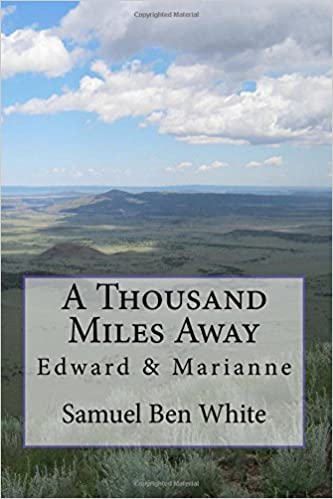
A Thousand Miles Away

Edward Garrett finds himself washed up on the shore of a foreign land, shipwrecked! As he tries to find his way home, he becomes involved with The People, a friendly—but reserved—people who live along the coast and are being harassed by brigands from the mountains known as the Brazee.

Thinking that Marcus has brought him here for just this reason, Edward agrees to lead a posse into the mountains to try and retrieve four teenage girls who were captured by the Brazee. Edward’s greatest desire is to leave, to go find his beloved Marianne and let her know he didn’t die in the great battle by the river. In the process of freeing the girls, however, he is shot and lands in a Brazee prison. There, he is forced into gladiatorial games where the only way to freedom … is death. A futuristic fantasy in the tradition of Louis L’Amour.

Order today for Kindle or Paperback

And don’t forget the two prequels to this novel: “All the Time in Our World” and “Some of the Time“!

Reading Sample

Running up the stairs of the tallest parapet of the grotesque castle that overlooked the river we in my day called the Mississippi, I was bleeding from a few minor cuts and my skin was bruised in many places, but I had never felt more alive. Nor had I felt more joyful.

Ahead of me ran Marcus, carrying his sword and with a light step as one who is running for pleasurable exercise. One might even say he carried the sword casually, though Marcus did nothing casually. All he did was carefully planned and meticulously executed. If Marcus had stopped to admire the sunset, anyone watching would have just assumed that was what he had always intended to do at that moment, for those who knew him knew that none of his steps, moves or halts were in waste.

Holding my own sword in my right hand, it’s blade still flecked with black blood for I had had no opportunity to clean it, my mind went back briefly to how we had come to be there. I say briefly for it was just a matter of steps, but the mind works in overdrive when in battle and a million thoughts may rush through a mind in their completeness in less time than it has taken me now to write this sentence.

We had crossed the great plains that I had once known as the land of Oklahoma with relative ease, though it hadn’t seemed so at the time. The logistics of moving such a great force of such disparate abilities and technologies had been one of the problems. The skirmishes we had fought against advance scouts of the Enemy had been another difficulty, though as we looked back later those battles had been like swatting mosquitoes.

As we had crossed into what had been known in my time as Arkansas and Missouri it seemed as if every valley and each forest held a new host of enemies lying in wait to ambush us. We had excellent scouts of our own, but it soon became obvious that it was not a position that promised a long lifespan. Though, as we went further, experience taught our scouts much and those who made it to the river with us were woodsmen indeed.

We came to the river fully six months after setting out on this excursion. We had been joined by additional members of the Gund Nation, as well as more Overstreets (who proved to be the best scouts for they could move through the forest more quietly than the wind itself) and even a large contingent of warriors from a people known as the T’rah’mra, who lived far to the southwest of Green River, along the sea coast. Somehow Marcus had gotten word to them and though they had set out before us it was some time before they could catch up to us. They were a people who were mighty in the skills of boat building and their service when we got to the river was immeasurable.

Still six days from the river, we had been met by a most surprising delegation. Eight men and five women—all taller than my six foot and appearing to me made of whipcord and muscle dressed in clothing that looked like something the Polynesians of my day might have enjoyed—arrived at our camp, also saying they had been summoned by Marcus. How they had received said summons none were ever clear, but Marcus greeted them warmly and assured us he had called for them. They were a people who called themselves a name which meant “Land of Wet Ground” but they were known in rumor and legend to the Gund as the Treemors.

They were somewhat darker of skin than I, but not so dark as the Cherokee or the T’rah’mra and, as I say, they were all tall. Some of them approached seven foot, though most were around six and a half. I was to find out later that they came from the deep woods that I once knew as Georgia and Northern Florida. Even with their bright clothing, they could disappear into a forest almost as well and quickly as an Overstreet.

The delegation of thirteen—a number of some significance in their reckoning—brought us the welcome news that they had a force of some hundred thousands amassed on the far side of the river, not twenty miles from the Enemy’s castle. They were the most advanced of the surface-dwelling people and maintained a primitive radio communication among their people. It was subject to disruption and had a limited range, but they assured me that they could and would work in concert with us when the time came to attack.

That time was soon. We knew the Enemy was aware of our presence and we were also certain he knew why we were coming, for he was not a being who welcomed casual visitors. While we hoped that we could maintain some element of surprise as to the “how-to’s” and “where-fore’s” of our attack, we knew that our only real hope lie in the justness of our cause. More than that, of course, was that Marcus was on our side and he had never been defeated—nor would he ever be we were sure.

I split our forces into three main divisions, though two of the divisions were—numerically—vastly superior. The smaller division—which was itself bifurcated—was our demolitions team. Half of them were to work their way to the western shore of the river and, on signal, begin to bombard the city with bombs my good friend Lomar would have relished to handle. The other half, meanwhile, had taken themselves up river approximately two hundred miles, to an ancient dam on the river that created what Marcus said was the largest inland, manmade, lake in the history of the world, larger even than the Lochs he, Marianne, Daniel and I had marveled at many years ago on our first journey. Upon reaching the dam, they would set charges and—from a safe distance—blow them and release the water of the lake.

Book of Tales – The Last Valley – Book 3

Jerry was just a college kid trying to catch one more weekend of fun before senior year when the ash hit. His college, his home town, his family—all wiped out in the blink of an eye. With the nation teetering on the edge of ruin, he joins the military to help with the search and rescue but finds that the powers that be want to use this natural disaster as cover for an unnatural war. The last war. Winner take all that’s left.

In the satellite photos, though, he sees evidence that the lands where he grew up might still have some green grass. With no idea whether anyone still lives there, Jerry dreams of someday returning to those pastures, even if it means living there all alone.

Meanwhile, Josh, Adaline, Claire and the rest of the denizens of the last valley have built a thriving community—and even have contact with another community across the mountains. But a disease is sweeping through Overstreet, one that could wipe them all out. Twenty years before, the cure would have been easy to affect, but now, their isolation may be their doom.

They can only pray for a miracle.

Make you read how this all started in “Ashes to Ashes” and “Crazy on the Mountain“!

Order today for Kindle or paperback!

Sample reading

The man on the other side of Jerry from Darren—a stout, middle-aged man in a white plantation hat, shorts too short for his build and a Hawaiian shirt unbuttoned so as to display his hairy chest and ample gut—suddenly said, “Bartender. That TV got any sound?”

The bartender looked like he was about to say something negative or sarcastic in reply, but his attention went to the TV, and then he was grabbing for the remote and fumbling with it as if it were hot before he got control of it. As he turned up the sound, everyone sitting at the bar turned their attention to see—not the usual sports anchors but one of the nightly anchors from the parent network that owned the sports channel. He was dressed in a suit and tie, but he looked uncomfortable and his skin tone was different (owing to not having the time to be made up) as he said, “To repeat, we have reports from people in Wyoming and Idaho that an enormous plume of ash and smoke has been seen spewing from the ground in Yellowstone National Park. According to these reports, the cloud was spotted by people more than a hundred miles outside the park and is estimated to be rising to a height of—“ He touched his ear in that way anchors do when getting important updates, then swallowed hard as he looked off-camera and asked, “How reliable is—“

The TV went to that picture channels use when having technical difficulties, then suddenly there appeared a harried-looking woman, standing at the podium of the White House. She took a deep breath, then said, “We apologize for breaking in on your expected programming, but we must insist that everyone in the western United States get inside the nearest building. Shut the doors and windows and, if you have breathing masks, please apply them.”

As the TV began to play a loop of what the woman had just said, several people were saying things like, “It’s even saying that on my phone!”

“And my watch!”

“It’s all that’s on the radio.”

Several swear words were heard as people began to ask questions.

“What happened?”

“A nuke?”

“That first guy mentioned Wyoming. Haven’t they always said there was a giant volcano under Yellowstone?”

“They’ve been saying that for two hundred years,” someone argued in response to that last question.

Suddenly, the alarms were sounding, telling everyone to get off the beach. Lifeguards were using bullhorns to tell specific people to get out of the water, and shore patrol boats were appearing as if out of nowhere and making sure everyone could make it to the sand safely. The warning sirens of the town of Galveston could be heard in the distance.

Darren wasn’t too steady (or cognizant of the danger), so Jerry helped him get to their motel, a ratty little place near the beach which suddenly looked better than it had all week as the traffic jam of people exiting in cars began to pile up. Ineffectual honking was added to the general din of the warning sirens—now aided by police and fire sirens. People could be heard shouting, and screaming, as they tried to obey the order to get off the beach. Voices shouted at the car in front of them, as if the person driving that car were just sitting still to be obstinate and not backed up behind a row of stopped cars, all waiting for a break in the traffic. The repeated warning from the White House could be heard coming from a thousand phones and car radios.

In the motel room, Jerry turned on the TV, to see the same warning being repeated on every channel. He stumbled across one network on which a person at a news desk was saying, “We have an unconfirmed report that the famed Yellowstone volcano has erupt—“ before the feed went down, to be replaced by the government loop. Darren’s brain had almost caught up to the moment, then, and he asked Jerry, “What’s goin’ on, bro?”

It momentarily crossed Jerry’s mind to make some comment about the stupidity of Darren’s recent attempts to talk like a surfer—or like he imagined surfers talked, for none of the actual ones did—but he replied, “Not sure. Sounds like a volcano, though.”

“In Houston?” Darren asked, squinting at the TV as if doing so would improve his perception.

“In Yellowstone,” Jerry replied shortly, staring at the TV himself, trying to will it to give more details.

Darren was about to make an attempt at humor along the lines of hoping Yogi Bear was OK, when the President of the United States appeared, standing at the podium that the spokeswoman had been standing at for the looped message. He had that calm, measured look he always carried, but Jerry noticed he appeared to be just a little short of breath. Like he had hastily dressed and run to this room from another part of the White House. He eschewed his famous winning smile to look reserved, paternal and constipated as he said, “My fellow Americans. Exactly seventy-eight minutes ago, there was an eruption of gas and ash from what we have known for years as the Yellowstone Dome. Eighteen minutes after that,” he paused and looked down, appearing to his constituency as a man who was grasping for his sanity in the face of bad news. After a moment, he looked back at the camera and said, “Eighteen minutes after that, the largest eruption in the recorded history of mankind began. Many of you have felt the tremors and even those of us who didn’t will, the experts tell me, soon be seeing a cloud of ash and dust from the arctic circle to the Yucatan peninsula and, perhaps, beyond. I must ask you to stay off all land-lines and hold all other forms of communication to a minimum as we dedicate all the resources of this great nation to our first responders. Stay off the roads and highways. Listen to your local authorities.”

He took another deep breath, stared downward at the podium for a moment that seemed excruciatingly long but was probably only a couple seconds, then looked back up at the camera and said, “’Choose this day whom you will serve. As for me and my house, we will serve the Lord.’ If you are a praying person, or even if you have never prayed in your life, Marion and I ask you to join us in supplication before the God of the Universe.”

And then most of the stations went blank and the few that remained on the air began to loop the president’s announcement. Jerry was sitting there numbly as Darren commented, “Think we can get back to college before classes start?”

“What?” Jerry had an idea that any reply was going to be wasted, but he told Darren, “I think college is over, Darren. I think everything may be over.”

“No kidding? You mean we, like, graduated?”

Jerry thought of several sarcastic replies, but finally just said, “Yeah. Just like that.”

Darren swore, but it wasn’t clear what at or to what purpose. It might have even been a word of triumph, based on the look on his face.

Jerry tried to call his parents, but no lines were available even though his phone said he was getting plenty of signal. He tried and tried again, with no success. Even tried going outside, as if that might help.

What he saw outside was the continued chaos of people trying to leave the beach, of cars jammed to a halt on the roadways, and many people just standing and watching in numb fear as an ash cloud miles high came near. It was visible first as a dark line on the horizon, but after the President’s announcement, several people had been watching for it and more than one voice had called out, “There it is!”

Then, word had spread through the crowd and even those in cars—who had so recently been honking or shouting—got out and stood, looking to the northwest as the dark line grew closer and closer. At first, it just looked like a rapidly approaching storm, but then it became clear that it was darker than most storms, and far taller, reaching hundreds or even thousands of feet into the air as it approach like a wall. Swear words were heard, as well as prayers. Some people fell on their faces, crying out prayers of repentance while others screamed or just stood numbly. Jerry even saw one woman walk to the beach, taking off her clothes as she went, and then walk calmly into the water until it was over her head. He ran close to try and find her—even enlisted a lifeguard who was still nearby and had seen the woman as well—but they never found any sign of her.

Email the author (garisonfitch@gmail.com) to find out about purchasing an autographed copy or getting the trilogy in paperback at a discount.

Be sure and read how this story started in “Ashes to Ashes” and concludes in “Book of Tales“!

Sample passage

I happened to ask, “Deanna, how long have you lived in Vail?”

“What? Oh, you might say I’ve lived there all my life.” Adaline and I looked at each other in surprise, for this was not said with the hick voice Deanna had mostly been using of late. It also made us wonder about our earlier thought that she was from Denver. She continued, in a somewhat conspiratorial tone, “My great-grandfather was the first of the family to come to Vail. The story that he told his family was that he had been a banker in Birmingham, Alabama,” the names of the city and state were said with a deep, southern accent. “But the bank had gone bust—through no fault of his own, of course, so he had headed west to seek his fortune. He said he worked several jobs in towns both big and small before landing in Vail, broke and starving, worried about his wife and kids back home for it had been some time since he had been able to send them money.

“But it was ski season and he took a job in a kitchen at one of the hotels. He worked hard and sent money back to his family and, by the end of the ski season, had worked his way up to waiter. Over the summer months, he proved himself invaluable and was made assistant manager of the restaurant, and then manager. At that point, he sent for his wife and kids and was ever so happy to see them. He got his kids—who were teenagers by then—jobs in Vail and they saved their money and, would you believe it, one day they bought the restaurant! Using all of his banking and monetary skills, he was eventually able to buy the building the restaurant was in, and his ‘empire’ was begun!”

Deanna chuckled, then said, still in the refined voice of someone who had grown up on the tonier side of life, “And thus began the Coventry empire of Vail. Pembleton is my married name, of course. I grew up attending the best schools, a member of all Vail’s best clubs, and groomed for a career in hoteliery. Yes, I know that’s not really a word, but my father always said it should be. But, I went off to college and fell in love and got married and, well, the last thing I wanted to do was to come back to Vail for anything other than a visit. Best laid plans of mice and men, right? My father had a stroke when I was just about to turn thirty, so my husband and I came back to watch over the business while he recovered. What was supposed to just be a few weeks in Vail became years, with my own children going to those same schools I did, joining the same clubs, being the same spoiled, rich brat I was. Oh how I wish we had never left Denver. My husband, Paul Pembleton, he rose to great heights in Vail, sat on all the important boards and had chairmanships in all the clubs, but I think he always resented the thought that he had only gotten there because of my family connections. It wasn’t true, of course, but it’s how men think sometimes. You know, I think he actually appreciated the ash cloud, for it allowed us all to go back to square one, with no one being anything more or less than what they could contribute.”

In a sly voice, she continued, “But speaking of square one. When my own grandmother was nearing the end of her life, I went and sat with her for many an hour, listening to her stories of growing up in Alabama, of earlier days in Vail than I had ever known. And one night, when she was strangely lucid,” a phrase that got both mine and Adaline’s attention, for we had both been thinking it in relation to Deanna, “She told me a story. According to her, my great-grandfather hadn’t been an innocent bystander in the failure of that bank, but the main instigator. His father was the actual president of the bank, you see, and my great-grandfather had been manipulating loans in some way that allowed him to pocket a sizable sum on the side. Undeclared, you might say.

“Then, one day, maybe he thought his father was about to get on to him, he withdrew an enormous sum of cash from his personal account, walked out of the bank, and no one knew where he went. Didn’t go home or anything. When my great-grandmother called her father-in-law that evening, he said they should call the police, thinking something nefarious had happened to the up-and-coming young banker. Perhaps a ransom call would come in any moment. It was then, so the story goes, that the bank president first realized what his son had been doing. He called his daughter-in-law and convinced her not to file a missing person’s report, for fear of what the publicity would do to the bank. He did agree, however, to engage the services of a private detective.”

Deanna was still speaking in a normal voice, though it became a little dreamy as she said, “I wondered if it were a private eye like in the movies: snap-brim hat, long trench coat, steel-jawed chin. Anyway, the private eye had little trouble following my great-grandfather—though ‘great’ is probably the wrong word for him,” she said with an ironic chortle. “It seems my progenitor had left a bread-crumb trail of prostitutes visited and affairs started that led all the way to Vail, where he was working as a lift attendant at the ski area while, um, serving a rich lady at night while her husband attended to his … let’s say: board functions.

“When the bank president learned of this, he brought his daughter-in-law and the kids out to Vail for a ski trip, hoping to engender one of those movie moments where the miscreant is surprised by his one true love and repents of his wicked ways. According to my grandmother, it was almost like that. Her father was happy to see his children, but not so happy to see his wife. Still, he stopped the fooling around, for a while, and took his family in. His father got him a respectable job as the manager of one of the local restaurants and my great-grandfather gave all appearances of becoming a respectable citizen again. What he was actually doing, though, was continuing his association with the rich lady. He got money out of her somehow and bought the restaurant. Set his wife up as the general manager, dumped the rich lady for a younger mistress, and made his children managers of other properties he had acquired. By the time I came along, great-grandfather was dead and his true story had been buried longer than he had.” She laughed heartily before adding, “There’s even a picture of him in the museum, all dressed up and looking distinguished, with a little plaque about how he was one of Vail’s leading citizens and top philanthropists. He even gave enough money to one of the local churches that they named the recreation building after him. Can’t you just see some youth minister telling the kids who came out to play volleyball, ‘And this building was named after a notorious sinner, who would have slept with any of your mothers who let him, in Jesus’ name, Amen!’” She cackled with laughter and then slipped back into one of her songs. Adaline and I looked at each other strangely, but continued on without a word. We did discuss later how much of the story we thought was true, but had no way to come to a conclusion. And we still thought Deanna was unhinged at best.

We made it to Vail in less than a week, which really encouraged me—and made Adaline wonder why I had thought it would take three weeks. The thing was, I hadn’t been counting on the Interstate being in such good shape, which it was. There were only a couple places where the ash had slid across it, and neither of them deep. And while Black Gore Creek ran strong in some places, it didn’t cross the highway at any point. As we pulled up in sight of Vail, I was smiling and telling Adaline how surprised everyone would be if we pulled back into town before they even came to look for our signal.

“Where are your people?” I asked Deanna, once we had her attention for she had been in the middle of a rousing rendition of either “Amazing Grace” or “I Fought the Law” (it was hard to tell).

She crawled up to crouch behind the front seat and, pointing, said, “Up yonder. You cain’t see it from here, but it’s the other side of that big white building by the ski slopes. I heared you talking about how the wind blew that gash in the ash—gash in the ash,” she repeated with a laugh, “And we had something just like that. People to the left and right was all dead, but our little gash was just fine. All things considered, I mean.”

“Think we can make it before nightfall,” I asked, for we were still a good five miles out, “Or should we make camp and get there in the morning?”

She looked up at the bright spot of the sun that almost shown through the ash and said, “Let’s see if we can push through. If we can’t, at least we can stay in one of the buildings on the edge of town. We might make’er this evenin’, though. Them’s good horses you got there.” This was a surprising statement, for she had frequently complained when we stopped to water the horses or, worse, gave them a lengthy breather and roll when we came upon that rare meadow of thick grass—or any grass. I couldn’t blame her for being anxious to get to her people, but I did get tired of her complaining—especially as we had been making such good time.

As we pulled closer to the town of Vail, some thunderheads started building to the west. “I hate to say it, Deanna, but we may need to pull up and find shelter.”

I had expected an objection, but she looked at the sky and said, “Them’s buildin’ up to be gully-washers, all right.” She pointed off to the right and said, “They’s an old mechanic’s shop up yonder. You’d be able to pull the horses into the dry.”

With impeccable timing we got the old garage doors open and the horses inside the bay just before a wall of summer rain came through. I enjoyed seeing it, though, for it made me think of the rains we used to have when I was growing up. They would come up on us all of a sudden, pelt you with raindrops the size of golf balls, then pass through as quickly as they had arrived. I could see some sunlight to the west, creating a golden line on the mountains in that direction, which made me think this would be one of those storms. It was, but by the time it had passed through it was too late to go anywhere so we set up camp in the old automotive shop. I was afraid Deanna would be upset by us stopping that close to her goal, but she just curled up on a couch in the manager’s office and went to sleep.

Crazy on the Mountain – The Last Valley – Book 2

Josh Overstreet and his sister Claire have been carving a life out of the ash for more than half a decade, unsure whether anyone yet lives outside the small valley where they have established their town of Overstreet with two dozen others.

Then Deanna Pembleton stumbles into the valley, asking for help for herself and her friends. Claiming they have eked out a life much like that of the people of Overstreet, she begs assistance, which Josh is willing to give. She is, however, clearly unhinged on some level. Could the people she is claiming to want to help just be figments of her imagination?

Against the advice of almost everyone in Overstreet, Josh and Adaline set out to try and take food to Deanna’s people, hoping that people still exist outside “the last valley”.

They never dreamed their valley might not be there for them when they get back.

Be sure and read how this story started in “Ashes to Ashes” and concludes in “Book of Tales“!

Available now on Kindle and paperback.

Sample passage

I happened to ask, “Deanna, how long have you lived in Vail?”

“What? Oh, you might say I’ve lived there all my life.” Adaline and I looked at each other in surprise, for this was not said with the hick voice Deanna had mostly been using of late. It also made us wonder about our earlier thought that she was from Denver. She continued, in a somewhat conspiratorial tone, “My great-grandfather was the first of the family to come to Vail. The story that he told his family was that he had been a banker in Birmingham, Alabama,” the names of the city and state were said with a deep, southern accent. “But the bank had gone bust—through no fault of his own, of course, so he had headed west to seek his fortune. He said he worked several jobs in towns both big and small before landing in Vail, broke and starving, worried about his wife and kids back home for it had been some time since he had been able to send them money.

“But it was ski season and he took a job in a kitchen at one of the hotels. He worked hard and sent money back to his family and, by the end of the ski season, had worked his way up to waiter. Over the summer months, he proved himself invaluable and was made assistant manager of the restaurant, and then manager. At that point, he sent for his wife and kids and was ever so happy to see them. He got his kids—who were teenagers by then—jobs in Vail and they saved their money and, would you believe it, one day they bought the restaurant! Using all of his banking and monetary skills, he was eventually able to buy the building the restaurant was in, and his ‘empire’ was begun!”

Deanna chuckled, then said, still in the refined voice of someone who had grown up on the tonier side of life, “And thus began the Coventry empire of Vail. Pembleton is my married name, of course. I grew up attending the best schools, a member of all Vail’s best clubs, and groomed for a career in hoteliery. Yes, I know that’s not really a word, but my father always said it should be. But, I went off to college and fell in love and got married and, well, the last thing I wanted to do was to come back to Vail for anything other than a visit. Best laid plans of mice and men, right? My father had a stroke when I was just about to turn thirty, so my husband and I came back to watch over the business while he recovered. What was supposed to just be a few weeks in Vail became years, with my own children going to those same schools I did, joining the same clubs, being the same spoiled, rich brat I was. Oh how I wish we had never left Denver. My husband, Paul Pembleton, he rose to great heights in Vail, sat on all the important boards and had chairmanships in all the clubs, but I think he always resented the thought that he had only gotten there because of my family connections. It wasn’t true, of course, but it’s how men think sometimes. You know, I think he actually appreciated the ash cloud, for it allowed us all to go back to square one, with no one being anything more or less than what they could contribute.”

In a sly voice, she continued, “But speaking of square one. When my own grandmother was nearing the end of her life, I went and sat with her for many an hour, listening to her stories of growing up in Alabama, of earlier days in Vail than I had ever known. And one night, when she was strangely lucid,” a phrase that got both mine and Adaline’s attention, for we had both been thinking it in relation to Deanna, “She told me a story. According to her, my great-grandfather hadn’t been an innocent bystander in the failure of that bank, but the main instigator. His father was the actual president of the bank, you see, and my great-grandfather had been manipulating loans in some way that allowed him to pocket a sizable sum on the side. Undeclared, you might say.

“Then, one day, maybe he thought his father was about to get on to him, he withdrew an enormous sum of cash from his personal account, walked out of the bank, and no one knew where he went. Didn’t go home or anything. When my great-grandmother called her father-in-law that evening, he said they should call the police, thinking something nefarious had happened to the up-and-coming young banker. Perhaps a ransom call would come in any moment. It was then, so the story goes, that the bank president first realized what his son had been doing. He called his daughter-in-law and convinced her not to file a missing person’s report, for fear of what the publicity would do to the bank. He did agree, however, to engage the services of a private detective.”

Deanna was still speaking in a normal voice, though it became a little dreamy as she said, “I wondered if it were a private eye like in the movies: snap-brim hat, long trench coat, steel-jawed chin. Anyway, the private eye had little trouble following my great-grandfather—though ‘great’ is probably the wrong word for him,” she said with an ironic chortle. “It seems my progenitor had left a bread-crumb trail of prostitutes visited and affairs started that led all the way to Vail, where he was working as a lift attendant at the ski area while, um, serving a rich lady at night while her husband attended to his … let’s say: board functions.

“When the bank president learned of this, he brought his daughter-in-law and the kids out to Vail for a ski trip, hoping to engender one of those movie moments where the miscreant is surprised by his one true love and repents of his wicked ways. According to my grandmother, it was almost like that. Her father was happy to see his children, but not so happy to see his wife. Still, he stopped the fooling around, for a while, and took his family in. His father got him a respectable job as the manager of one of the local restaurants and my great-grandfather gave all appearances of becoming a respectable citizen again. What he was actually doing, though, was continuing his association with the rich lady. He got money out of her somehow and bought the restaurant. Set his wife up as the general manager, dumped the rich lady for a younger mistress, and made his children managers of other properties he had acquired. By the time I came along, great-grandfather was dead and his true story had been buried longer than he had.” She laughed heartily before adding, “There’s even a picture of him in the museum, all dressed up and looking distinguished, with a little plaque about how he was one of Vail’s leading citizens and top philanthropists. He even gave enough money to one of the local churches that they named the recreation building after him. Can’t you just see some youth minister telling the kids who came out to play volleyball, ‘And this building was named after a notorious sinner, who would have slept with any of your mothers who let him, in Jesus’ name, Amen!’” She cackled with laughter and then slipped back into one of her songs. Adaline and I looked at each other strangely, but continued on without a word. We did discuss later how much of the story we thought was true, but had no way to come to a conclusion. And we still thought Deanna was unhinged at best.

We made it to Vail in less than a week, which really encouraged me—and made Adaline wonder why I had thought it would take three weeks. The thing was, I hadn’t been counting on the Interstate being in such good shape, which it was. There were only a couple places where the ash had slid across it, and neither of them deep. And while Black Gore Creek ran strong in some places, it didn’t cross the highway at any point. As we pulled up in sight of Vail, I was smiling and telling Adaline how surprised everyone would be if we pulled back into town before they even came to look for our signal.

“Where are your people?” I asked Deanna, once we had her attention for she had been in the middle of a rousing rendition of either “Amazing Grace” or “I Fought the Law” (it was hard to tell).

She crawled up to crouch behind the front seat and, pointing, said, “Up yonder. You cain’t see it from here, but it’s the other side of that big white building by the ski slopes. I heared you talking about how the wind blew that gash in the ash—gash in the ash,” she repeated with a laugh, “And we had something just like that. People to the left and right was all dead, but our little gash was just fine. All things considered, I mean.”

“Think we can make it before nightfall,” I asked, for we were still a good five miles out, “Or should we make camp and get there in the morning?”

She looked up at the bright spot of the sun that almost shown through the ash and said, “Let’s see if we can push through. If we can’t, at least we can stay in one of the buildings on the edge of town. We might make’er this evenin’, though. Them’s good horses you got there.” This was a surprising statement, for she had frequently complained when we stopped to water the horses or, worse, gave them a lengthy breather and roll when we came upon that rare meadow of thick grass—or any grass. I couldn’t blame her for being anxious to get to her people, but I did get tired of her complaining—especially as we had been making such good time.

As we pulled closer to the town of Vail, some thunderheads started building to the west. “I hate to say it, Deanna, but we may need to pull up and find shelter.”

I had expected an objection, but she looked at the sky and said, “Them’s buildin’ up to be gully-washers, all right.” She pointed off to the right and said, “They’s an old mechanic’s shop up yonder. You’d be able to pull the horses into the dry.”

With impeccable timing we got the old garage doors open and the horses inside the bay just before a wall of summer rain came through. I enjoyed seeing it, though, for it made me think of the rains we used to have when I was growing up. They would come up on us all of a sudden, pelt you with raindrops the size of golf balls, then pass through as quickly as they had arrived. I could see some sunlight to the west, creating a golden line on the mountains in that direction, which made me think this would be one of those storms. It was, but by the time it had passed through it was too late to go anywhere so we set up camp in the old automotive shop. I was afraid Deanna would be upset by us stopping that close to her goal, but she just curled up on a couch in the manager’s office and went to sleep.

TimeKeeperS: Rectification

An EMP knocks out all the power in North America. As people are scrambling to get generators (or anything else) running, they begin to hear rumors. Nuclear war. Chaos. What about the President? Is she alive or did she die in the disaster?

Mary Orsen discovers that her ability to travel through time was not affected by the EMP. She has the power and the ability to go back in time and prevent the war. But she also knows that she’ll only make things worse if she doesn’t go back and change what really started it. Was it the EMP, or had it actually begun before that?

Mary consults with men who have traveled through time before: Bat Garrett and Garison Fitch. They are old now and can, however, only give advice. If the world is going to be saved, there can only be one TimeKeeper.

And Mary’s pretty sure she’s not it.

Available now on Kindle and in paperback!

To read how the TimeKeeperS got started, make sure you read “TimeKeeperS” (as well as the Garison Fitch & Bat Garrett books!) and the conclusion in TimeKeeperS:Restoration!

Sample Chapter

“Thank you, sir,” Marianne said as she handed the uniform to Captain Remmick. “It was an honor to wear them, especially since I haven’t earned them.”

“You may before this is over.” Remmick sat the uniform aside and looked at the attractive woman before him in her “W” T-shirt and cargo pants and thought that if he were thirty years younger—and then made himself focus on the business at hand. In a low voice, he asked, “What’s it like when you zap to other places with that device of yours?”

“Honestly, sir, it’s nothing. I mean, it’s a weird sensation to suddenly be somewhere else, but the actual travel is so quick the brain can’t comprehend it. You’re just here, and then, you’re there. It was a little disorienting at first, but now I’m used to it.” She laughed and added, “Except for jumping into what seemed to this west Texas gal like a monsoon and being grabbed by a Captain so I wouldn’t fall overboard. That one was kind of wild.”

“How is it,” he hesitated, trying to work out his words, then said, “You jumped into the middle of a spray of salt water, right? Does all that salt water get absorbed into your body? What if you zapped to a place where there was a bird, or a cat or something?”

“That’s part of why I send out the sensors,” Marianne explained. “Trying to avoid all that as much as possible. But, in reality, it’s not like I’m beaming somewhere like on ‘Star Trek.’ My atoms aren’t being disassembled or anything. I am moving through space. So I would actually bump the cat out of the way. Actually startled a raccoon once.”

“What if it were something like a desk—or a wall?”

She lifted her pant leg and showed him a bruise on her right shin, saying, “That’s from a coffee table in Amarillo, Texas. Glad it had room to move when I bumped it.”

“Another land-lubber?” Captain Remmick asked, actually smiling slightly and not as belligerent as Marianne had worried he might be.

“Um, yessir,” Marianne replied. “This is Sean Fitch, he’s—“

“One of the greatest minds of our time,” Remmick completed, extending his hand towards Sean. “I have read your papers on astronomy and, I must say, I’m a huge fan. I originally wanted to be an astronaut, but, well, I wound up here.”

“Pleased to meet you, sir,” Sean replied. “Thank you for allowing me aboard.” He put on his round glasses, which made him look more academic and even less like his father, though Marianne knew he was quite athletic, bicycling several times a week through the mountains with his wife, Elaine.

Marianne tried to take control of the situation, though she was astounded by Captain Remmick’s suddenly deferential attitude, by saying, “Sean contacted me that he had seen something in the Kerrigan reports that he wanted me to see. I thought you and the admiral would like to see it as well.”

“Ever been on a carrier, Mister Fitch?” Admiral Pike asked.

“No, ma’am. I was in the Air Force for three years but they barely even let me out of Nevada. Don’t think I even saw a sailor the whole time.”

“So sad for you,” Pike chided.

“What do you have for us?” Marianne asked, afraid they were going to drift away again. Although, she said to herself, we’re going to change history anyway, so what’s a little lost time?

Sean plugged his Screen® into a large table that doubled as a video screen and brought up a map of the world much like the one the meteorologists had displayed previously and said, “There are several places in the world that the fallout hasn’t touched, yet. I decided to overlay what data we had from the Kerrigans with what we’ve found out about the weather patterns to see if there were any places that had corresponding fallout clearance and extra-dimensional activity.”

“Were there?” Pike asked.

Sean, adjusting the screen, replied, “We don’t have a lot of Kerrigan data, but we do have this.” He changed the display to a depiction of the Americas and the Pacific and directed, “So far, we have only detected two time incursions. There’s the one Marianne found in the Pacific, and this one in Brazil—“

“Brazil?” the two officers asked in unison.

Sean adjusted his glasses and continued, “From what I can tell from my maps, it’s an area that would normally be considered the back side of nowhere. In their state of Amazonas.”

“When was it?” Marianne asked.

“As near as I can figure, it was within moments of the nuclear attack. I think it might have been after but we haven’t had a really close pass with a Kerrigan, yet.” Sean brought up another map of South America and said, “Now, check this out. I searched the area by satellite—“

“How?” Pike asked, not accusatory but curious.

“The President gave me access to what was left of the satellite network. And my father figured out how to—ahem—establish a connection.”

“Wow,” Remmick mumbled, to receive an appreciative nod from the admiral. He snapped his fingers and commented, “Your father’s Garison Fitch, right? Nobel Prize winner and science advisor to the President.”

“Yes. Anyway,” Sean said, “Look at this: there’s a giant bulge in the land that’s roughly the size of one of our battle cruisers.”

“Theories?” Pike asked.

It was Marianne who guessed, “You think maybe it was going to take too much power to send whatever ship they used to launch the nukes to the future so they buried it in the Amazon jungle?”

“Sort of, though I wasn’t thinking of the power angle. That might actually be part of the thinking—could be all of it—but, like I was saying, this is one of the areas that has remained completely free of fallout. What if whoever did this knows—from future knowledge—that this spot will stay nuke free so they stuck their ship there in hopes of retrieving it whenever they need it.”

“Or use it as a base,” Marianne injected.

“Hmm?” Sean asked.

“We may be making wild guesses here, but what if what you say is true and this is someone from the future who is trying to destabilize the past in their favor? Aren’t they going to want some sort of base from which to operate? To stay in this time period and either monitor or even change things?”

“Why aren’t they doing anything, then?” Pike asked.

“We don’t know that they aren’t, ma’am,” Marianne told her. “They might be manipulating something, or just monitoring things. Maybe they’re just focused on building a society or a foothold in the Amazon while the rest of the world goes to hell.”

“Or,” Sean interrupted, “They just dumped the ship there because it’s an out of the way place and they didn’t think anyone would notice.”

Captain Remmick snapped his fingers and, looking at Marianne, said excitedly, “The reason the bump shows up in the earth is because the dirt had to go somewhere right? Like what you were saying about shoving the cat out of the way: they could bury the ship but it’s going to push the dirt somewhere.” Marianne nodded in agreement, which made the Captain feel inordinately proud of himself (and embarrassed by the fact).

Sean offered, “If they just hid the ship, that might be good news for us. Or, even if they’re using it as a base, that might portend well for us.” Seeing he had their attention, he explained, “They put the ship—if that’s what it is—under the ground assuming it wouldn’t be seen. And, under normal circumstances, it wouldn’t have been. You could be building a couple football fields in the Amazon without anyone noticing under normal circumstances. But we noticed because of the Kerrigans. That may indicate that whoever we’re dealing with doesn’t know we have the Kerrigans—“

“Wait a minute,” Remmick objected, “How is that possible. They’re from the future. Don’t they know everything we’re doing because it’s history to them?”

Sean looked at Marianne, who answered, “Not if they’re from pretty far away.”

“What do you mean?”

Marianne answered, “None of what I have done with Edie—or what Mister Garrett did—were government sanctioned and, therefore, may never be written into the history books. We don’t know how much they might know about us. You haven’t been writing down what I’ve done, have you?” The captain and the admiral both shook their heads.

“If this were someone from, say, ten years in the future, you might be right. Our movements might be known. Maybe even a hundred years from now, unless we were to take specific actions to cover our tracks. But what if they’re from thousands of years in the future? Marcus, he was a man I knew who had, um, seen the future—and I believe him. He said there had been more than one war that poisoned the planet. We could be dealing with someone from, say, a thousand years in the future who only know the most basic details of our world—“

Sean snapped his fingers again and said, excitedly, “And they don’t know as much as they thought they did!”

“What?” several voices asked at once.

“Think about it: if these are people from a different future, who changed the past, they might know about the Kerrigans but they might not know their full capabilities because almost no one did. We didn’t. Jason Kerrigan drew up the plans but, as far as anyone knows, never built one. We only built them because you—and a me from another time line—built the ones we have, but almost no one seems to know what they do. We don’t know how the Egyptians built the pyramids and whoever it is from the future that’s causing these problems may not know how the Kerrigans work—or even that we have them. And no one has been traveling through time with Edie since the last time you did—what?—six years ago?”

“Almost seven.”

“Right. And if they hadn’t interfered, you might not have ever traveled through time again. This technology could very well have died with you and me. And I don’t mean that generally, I mean with Marianne and I. The history they have of our day might be fairly detailed, with names of all our leaders and even records of where our naval ships were. But they might not know … “ He was smiling as he paced intently, “We know Roman history, right? We know who was Caesar when and where their troops were placed, right? But we don’t know about Joe Greek over here who did experiments on cattle because he never told anyone. Maybe he invented a cure for hoof in mouth, but his kid ran off to Athens and the knowledge died with Joe. Whoever did this, they may not have had any idea that one fairly obscure astrophysicist and a private eye from Arizona—“

“Who’s even more obscure,” Marianne chuckled.

“Yeah, they have no idea that we would have any way of tracking them. Seriously, they had an almost perfect plan. Start a world war, have everyone at the time blame everyone else, then pick up the pieces—a hundred years later, a thousand.”

“Why would they think they would be there?” Remmick asked.

“Huh?” asked Marianne and the admiral in unison.

“These people from the future are the descendents of someone alive today, right? Whether it’s the people of Mexico or Canada or just some town in Kansas. How would they know that this nuclear war wasn’t going to wipe out their progenitor?”

Sean, after several moments of silence, offered, “Maybe they have a map of the ‘pockets’ as Marianne calls them and they know that the seed of their civilization sprung up in one of those pockets. Maybe they even sprung from some Amazonian tribe and the ship is there now to look after their ancestors.”

It was Pike who said, “What you’re saying makes sense—of a sort. I’m finding it hard to give one hundred percent credibility to a theory that involves time travel, but that’s neither here nor there. Even if this theory makes some logical sense, it’s still an awful lot of conjecture.”

“Then let me go to the Amazon and investigate,” Marianne requested. “It’s what I do.”

“Alone?” Sean asked, hoping to go along.

“No offense, Sean, but I was thinking that if I took anyone with me I’d like for it to be someone who speaks the language.” She smirked slightly as she added, looking at the admiral, “And I sure wouldn’t turn down a U.S. Marine.”

“Bowstring, this is First Sergeant Amelee Fitzwater—“

“Call me Fitz,” the stout, fair-haired woman said cordially if not in a friendly manner as she shook Marianne’s hand. She looked to be of Nordic descent and Marianne could see her being one of those tough women who skied all day with a machine gun on their backs as they patrolled some far northern slope.

Admiral Pike continued, “And this is Gunnery Sergeant Darrin Hollis.” He was a dark-skinned man of medium height but more than average muscles. Marianne guessed that some of his ancestors might have come from the Caribbean. As he shook Marianne’s hand, the Admiral explained, “The gunny here speaks Spanish and Portuguese and can generally make his wishes known in any South American country.

“That’s impressive,” Marianne complimented. “Study a lot or just a natural gift for languages?”

“Some of both, ma’am.”

“Call me Bowstring,” she instructed with a smile. Marianne hadn’t told the admiral—or anyone except Bat and Jody—that she didn’t need a translator, ever. When she had been sent to the future, Marcus had given her the gift of being able to understand and speak any language she would ever encounter. She had thought the gift might only be for the future, but in her years back in the twenty-first century it had never gone away. It was a skill that had served her well as an investigator, especially as so few people knew she had it. It suddenly dawned on her that, with Bat and Jody gone, no one knew she had the ability.

“Bowstring?” he asked with a smile. “What is that? French?”

“Oui,” Marianne responded.

“And this is Lance Corporal Hector Ives, who is also fluent in Portugese,” Admiral Pike said as she introduced a strikingly handsome young man with somewhat dark skin and a shaved head. He shook Marianne’s hand and flashed a winning smile but Marianne got the impression it was more of just his natural personality than any attempt to win her.

“Ives?” she asked.

“Grandfather was Scottish,” he replied. “Married a woman from Portugal and moved to South Carolina,” he told her with just a hint of a southern accent.

Rear Admiral Pike said, “Now, if you’ll be seated, we’ll brief you on the mission. Please be aware that everything you hear in this meeting is top secret.” She added sardonically, “And some if it is going to sound insane.”

She brought up the map of South America Sean had created and said, “You’re going here. It’s a very remote area with very little population, mostly involved in mining or woodcutting. You’re going to be assisting Bowstring in the investigation of this mound here, which we have reason to believe may be tied to the nuclear launches that started the recent conflict.”

“Pardon me, ma’am,” interrupted Fitz, “Is it related to theEMPas well?”

“That remains to be seen, Fitz. That’s one of the things we hope you will find out.”

She then went into a semi-technical description of what the Kerrigans had revealed and the basic principles of extra-dimensional integration. As Pike described Edie and what it did, Marianne couldn’t help but cast sideways glances at her new compatriots. She stifled a chuckle as she saw that all three of them wore expressions mixed of equal parts awe and fear that their commanding officer had slipped a gear. She wondered how they would react if they were told the Edie units could also move through time. When Pike had finished her part, she offered, “Bowstring?”

While Marianne knew far more about Edie than the admiral, it had been decided that news of such a fantastic nature could be more easily swallowed if coming from a fleet-level officer. Now, she doubted whether it had really helped, if the expressions on their faces were any indication. As everyone looked to her, Marianne began, “As Admiral Pike has said, you may call me Bowstring. So far, our satellite recon of the area has shown no human presence. Whether that is because there is none or because the humans are underground we don’t know, yet. These are some of the questions we are going to ask—and hopefully answer. It is our goal to do this as stealthily as possible, which is part of why you three were chosen. However,” Marianne said uncomfortably, “If there are people there and they are the ones who instigated a global nuclear war … well, I wanted people who would not be averse to fighting.”

“Excuse me, ma’am,” Fitz interrupted again, “But what is the chain of command on this mission?”

“Bowstring is the lead,” Pike replied without hesitation.

“CIA?” Ives asked casually.

“No,” Marianne replied, not sure what explanation to give.

Admiral Pike answered, “Let’s just say that Bowstring here is on special assignment.”

“Aye-aye,” said all three Marines, though not exactly in unison.

“Marines, let me say one more thing,” the Admiral began. “I want to remind you that this mission and everything you have heard in this room are top secret. Should you return, any mention of anything you have heard today to anyone other than one of the five of us in the room right now will be grounds for summary court martial and possibly execution. Do you understand?”

All three looked surprised, but each nodded and replied, “Yes ma’am,” in turn as the admiral caught their eyes.

“What you see on this excursion and what you experience, those things, too, must be guarded with the utmost secrecy. For reasons that I cannot get into, you will be debriefed verbally by me after the mission and no record of it will ever—and I do mean ever—be written down. Is that understood?”

“Yes ma’am,” they all agreed again.

“Then may you be granted godspeed and may you all return safely.”

All three had been told what gear to bring when summoned, which had set in the corner during the briefing. At that point, the admiral told them to use the head attached to the briefing room if they needed—each availed themselves of the opportunity—and then were bidden to gear up. As they did so, it was Hollis who asked, “How will we be inserted, Admiral? Osprey?”

“Edie,” Admiral Pike replied, a barely-disguised wink shot Marianne’s way.

The three Marines looked up in surprise, but none of them said anything. As they finished with their gear and she slung her bow over her shoulder, Marianne told them, “We’re going to be ‘landing’ about a quarter mile from the mound in a little clearing just to the north. We’ll do some recon on foot from there. Oh, and let me warn you: your first zap—as we call it—can be a bit disorienting. You won’t feel a thing, but one moment you’ll see this room and the next you’ll see the Amazon basin and there will be nothing in between. Like changing the channel on a TV.”

“Seriously?” Ives asked.

Marianne nodded, then asked, “Everyone ready?” She took Edie in her left hand, held out her right and said, “Put an ungloved hand in. We’ve got to be touching skin.”

“You’re kidding,” Fitz responded, holding her hand back, having been in the process of taking the glove off as it dawned on her what had been stated.

“Oddly, no,” Marianne told her. When all the hands were in, she looked to the admiral and said, “I guess we’ll see you in a few, Admiral. I’ll ping you as soon as we’re there.”

“Go with God,” Admiral Pike told them with a nod.

And suddenly the four of them were standing in a small clearing in the Amazon jungle. To Marianne, it was nothing, but the others gasped words of astonishment that were better left unprinted. Marianne knelt down, motioned for them to do the same, then whispered, “Here’s where the stealth comes in. Everybody got their breath?” When the Marines nodded, Marianne pointed and said, “The mound’s over that way. Watch for people and let’s see if we can find a way inside.”

“Why not just zap in?” Ives asked.

“We probably will,” Marianne told him. “But I’d like to have as much information as we can before we do that.”

“Understood,” said three voices, or variations of the word.

The jungle was light and airy, not like Marianne had pictured it in her mind (owing mostly to movies), though there were as many bugs as she had imagined. All four of them were heavily clothed and had applied bug repellent to their exposed flesh, but there were still plenty of bugs around, many who didn’t seem to have received the memo about being repelled by that concoction.

They reached a small rise and crept quietly to its crest before peeking over. What they saw was a tree-covered mound that didn’t look out of the ordinary at first glance. As they all studied the terrain, Fitz and Ives with no-glare binoculars that—in theory—wouldn’t reflect light on anyone who might happen to look their way—they could see signs that the ground had been pushed up: a revealed root here, a fresh-looking crack in the ground there. Atop the hill, the cracking in the ground was more pronounced.

“Still,” Marianne whispered, “If I didn’t know what to look for I could have walked right past this and, if anything, just thought it was a natural occurrence.” The Marines nodded in agreement. “Recommendations?”

Fitz pointed, “Over there, I’d say about two klicks from our positions, there’s a rise similar to this one. I say we split into pairs and rendezvous over there in about—how long do you think it would take us, Gunny?” she asked Hollis.

“Hard to say. Flat territory, we could be there in fifteen minutes. But we want to take some time, look things over, and this canopy could be hiding ravines and who knows what else.”

“Say two hours?” Fitz asked.

Marianne nodded and replied, “Sounds good. No communication unless we haven’t heard anything in two and a half or if there’s an emergency.” She looked at the Marines and asked, “That work for you?” She knew the wisdom about leaders making decisions and not seeking the approval of underlings, but Marianne knew she was the outsider in this group and—in their minds, anyway—not a military person, anyway. Would they believe her if she told them that, at the age of eighteen, she had led a military force of over ten thousand people? She doubted it and the irony of the thought made her smile.

They all nodded, so Marianne said, “Fitz, you know everyone’s capabilities better than I do, so how do you suggest we pair up?”

“You and Gunny, me and Ives?” Fitz replied, shrugging to indicate that it didn’t really matter.

“Sounds good. See you in two,” she whispered. Even having been around military people before, she was amazed at how quickly and quietly Fitz and Ives disappeared into the underbrush.

As she and Hollis set out, he asked, “Have you ever been in the military, Bowstring?”

She hesitated, then replied, “Yes. But, like so much lately, I can’t talk about it.”

Are you really any good with that bow?”

Marianne hesitated again, then replied, “Yes.”

Sheriff Avilla pounded on the door of the large house that still stood, remarkably close to where the airliner had gone down. “Go away!” came a gruff reply from inside.

“This is Sheriff Avilla,” she called from the front step. “I need to talk to Mister Kiko Abrams.”

There was no sound for a moment, and then the sound of a chain being removed and a bolt thrown. The front door swung open and a shotgun blast caught Julie Avilla full in the chest, knocking her back and off the porch. A second shot was fired in the direction of Deputy Harold Grimes, catching him mostly on the arm. As he screamed and fell away, Deputy Terry Killian used his service piece to fire several shots through the door.

From inside the house, screams could be heard. Killian rushed to drag Sheriff Avilla out of the way, even while calling on his mic, “Officers down at 323 Reynosa. Repeat: officers down at 323 Reynosa. Shots fired.”

He was about to repeat his call again when the muzzle of a gun could be seen coming from the shadow of the doorway. Deputy Killian lifted his service piece and fired twice, gratified to see the gun—a rifle—dropped to the tile floor of the house’s entry way. And then all went black as something hit him on the back of the head.

“What happened?” Judge Hanson asked as he struggled through the crowd to get to Dr. Whitcomb’s side.

Dr. Whitcomb, however, was busy and soon disappeared into the O.R. Judge Hanson looked like he was about to follow the doctor into surgery, but saw a deputy—Killian, he thought the man’s name was—sitting to the side and holding a bloody towel to his forehead. He lunged at the deputy and demanded, “What happened?”

“We went to serve that warrant on Kiko Abrams you gave us,” the deputy grumbled in reply.

“And then?” Hanson wanted to know.

“Well, they responded by shooting Sheriff Avilla and deputy Grimes. Me, I got away with just a knock to the head.”

Suddenly, Hanson was being slammed against the wall by Oscar Melendez, late of the Arizona Highway Patrol and now working for the Flagstaff Police Department. “You son of a b—h! You issue a warrant and then call the perps to let them know cops are coming!”

“I didn’t—“ Hanson tried to object, only to receive a punch in the belly from Melendez that doubled the judge up in pain.

It was Deputy Killian who pulled Melendez off the judge, saying, “What are you talking about, Oscar?”

“Someone had to have tipped off Abrams and his crew. Why else would they have been prepared like that?”

“Because they were thugs and knew we were getting close to them for hanging the Talifero brothers,” Killian replied.

“Or maybe he told them,” Officer Melendez retorted, lunging for the judge.

Hanson backed up a step, then said, “Please, tell me what happened!”

Melendez, still being restrained by an aching Terry Killian, said, “I was a block away when I heard the call, so I came running. I see Jimmy Abrams, Kiko’s boy, club Deputy Killian in the back with a baseball bat—“

“I wondered why I hurt there, too,” Killian injected, trying to add a bit of levity in an attempt to defuse the situation.

“I yelled out, ‘Jimmy! Drop the bat!’ He does, then he lunges for a rifle that’s on the stoop. I told him to drop that, too, but he starts to bring it up. That’s when I shot him. He crumpled and I ran up to the porch to find Sheriff Avilla bleeding from buckshot to the neck and face and Deputy Grimes is quickly going into shock. Gloria Dios we got that one ambulance running or they might have both bled out.” He spat at the judge, “Even if no one tipped them off, you don’t go after a man like Kiko Abrams with just three officers. You call us all in!”

“I wrote the search warrant but I trusted in the Sheriff to know how many people to take,” Judge Hanson defended.

Melendez swore lowly as he shrugged out of Killian’s hold. “You better sit back down, man,” he told the deputy.

“Who was inside the house?”

“I looked and I found Kiko and his boy, Danny, both shot and dead in the front foyer. Looked to me like it had been Danny that fired off the shotgun, then Kiko came up with the rifle.” Changing his tone of belligerence, he added, “You oughta give this deputy a medal, Judge. He did in one afternoon what your courts haven’t been able to do in twenty years.”

They were slumped against the wall when Dr. Whitcomb came out more than an hour later and told them, “Sheriff Avilla should make it. Her vest took most of the blast, but there was on pellet that came this close,” he held his thumb and forefinger an eighth of an inch apart, “From severing her jugular. Still, it’s going to be a few days before she can return to duty, maybe a couple weeks.”

“And Grimes?” Killian asked anxiously.

“He may lose the arm. Doctors Stanislauv and Andrews are working with him and, if we’re lucky, we can keep him alive long enough for the arm to heal—one way or another.”

Killian crossed himself at the news and Melendez muttered a brief prayer. Killian asked, “When can we see them?”

“I can take you back there now, but just for a couple minutes,” Caleb replied. “Both are out of it right now, but I’m a firm believer that patients can hear people who care even when they’re out.”

“Thanks, Doc,” Officer Melendez said as they rose and followed him into post-op.

Caleb looked over his shoulder to see Hanson still slumped against the wall, a vacant expression on his face.

“Anything?” Marianne asked, though she had an idea she knew what the answer was going to be.

“Nothing. Nobody, no door, nothing,” Fitz replied. “I take it, it was the same for you.”

Marianne nodded, as did the Gunny.

Ives injected, “We even used the infra-red scanner. Thought there might be an air shaft letting off vapors or something, but we didn’t see anything.”

“So,” Fitz asked, “We zap in?”

Marianne nodded, but pulled off her backpack so she could get into it and pulled out a small, remote-controlled car with a video camera attached. “Play time?” the Gunny asked.

Marianne shot him a dirty look, then smiled and said, “Friend of mine came up with this.” She loaded one of her sensors into the little car and explained, “We can send this car in first. Remote control’s good up to half a mile. We let this little thing look around for us, first.”

She tapped some buttons on Edie, and the little car disappeared. Handing a Screen® to Fitz and a remote control to the Gunny, she said, “This should give us an idea what we’re going in to. The car even has little headlights, but I can’t guarantee how effective they are.”

“Need a night vision camera on that car,” Ives suggested.

“Version 2.0,” Marianne quipped as they all watched the Screen®. They watched as the picture came up to show what looked like the interior of a naval ship with the lights on low. As Gunny moved the car around, they were able to see more of the room the car had landed in but, as the room had a hatch for a doorway, the little car couldn’t go out into the hallway. Marianne mumbled, “OK, so version 3.0 will be a camera attached to one of those little helicopters.”

She checked the reading from the sensor in the car on her Kerrigan and said, “Well, looks like we can go at least as far as that room. Sensor says there’s air. Everybody game?”

“Beats standing out here,” the Gunny pronounced, the other two Marines nodding.

“OK,” Marianne said, “Hands in.” A moment later, they were in what looked like a billeting room of a metal, naval ship.

Gunny stepped over to the door and peeked out into the hallway, then announced, “All clear.”

“Wait,” Fitz commanded. “Listen. Anybody hear anything?”

They all stopped what they were doing, but could hear only a low rumble—as machinery—from somewhere far off. “Something’s working down here,” Ives commented.

Fitz replied, “Sounds like a generator. Maybe it’s running the lights. There’s air in here, too. But what I’m not hearing are any footsteps.”

“Either it’s empty,” Gunny offered, “Or they know we’re here and they’re running silent.” Everyone nodded in agreement.

Marianne picked up the little car, set it in her backpack, and said, “Well, let’s find out.”

They walked carefully down the hallway until they came to a junction. As the Gunny poked his head around the corner and pronounced the way clear, Ives was looking at lettering on the bulkhead and saying, “I don’t recognize this language. I don’t even recognize the alphabet.”

Marianne glanced at his reference point and almost told him what it said, before deciding to keep her mouth shut. She wasn’t sure why she was keeping it a secret that she could read any language she needed to, but as one accustomed to covers she hated to blow hers over a sign that said, “C Deck. Billeting.” She merely shrugged.

They came, eventually, to a flight of stairs—like U.S. Navy stairs, they were closely akin to a ladder—and ascended. On the next level, B Deck, Marianne found signs for the infirmary, the galley, the laundry, and various other, common, rooms. All showed signs of recent use, but no sign of current occupation. As they came to another set of stairs, she stopped them and asked, “At a guess, how old would any of you say this ship is? I’m no expert, but it doesn’t look brand new to me. It’s also doesn’t look real old to me.”

“Equipment’s fairly current,” the Gunny answered. “Some of it’s unfamiliar to me, though.”

Fitz nodded and agreed, “I’m thinking it’s about a … twenty year old ship. Just a feel I get. I can tell some places have been sanded and repainted—like after years of salt water corrosion.”

Ives merely shrugged and replied, “I’ll defer to them.”

Marianne nodded and started up the stairs. Peeking over the top, she saw no sign of anyone but she did see a sign indicating the way to the bridge. Instructing Fitz and Ives to explore this deck then catch up with them, she motioned for the Gunny to follow her. They made their way to the bridge and both uttered words of amazement.

The bridge looked like the working bridge of a destroyer, except that the windows looked out on solid rock. The lights from the consoles were still working, and dials were still lit up. And a man in an unidentified uniform sat in a chair, slumped over a console. “Fitz,” Marianne said into her communicator, “You and Ives go ahead and come up topside to see this. Just follow the arrows on the walls.”

Soon, Fitz and Ives were stepping onto the bridge with exclamations similar to those uttered earlier. Walking over to where Gunny and Marianne were looking at the slumped figure, Fitz asked, “Who’s this gentleman?” He had a dark complexion, much like the Gunny’s, and he was young and fit—or had been in life.

Ives, looking around, said, “We saw launch tubes below decks, Bowstring. Like the kind you’d use to launch ICBMs.”

Marianne looked at the controls and said, “So, this ship zaps to the Pacific, starts a world war, then zaps here. Maybe their system is different from ours and someone had to remain behind to send the others off and this guy drew the short straw.”

“So he takes cyanide or something?” Fitz asked.

“Something,” Marianne shrugged. She sniffed, then, and asked, “But why doesn’t he smell?”

She was on the far side of the bridge, walking around and studying some schematics that appeared to be of an Edie-like device which were on a screen, and mumbling, “If this guy’s been dead for close to three weeks, shouldn’t this whole room smell to high heaven?” A phrase in the schematics registered on Marianne and she started to snap her fingers in recognition.

“Maybe he hasn’t been dead that long,” Ives commented. He reached over to feel of the man’s skin and said, “Guys, he’s still warm!”

Fitz barely had time to say, “Don’t move him!” before the console the man had been slumped against exploded.

Marianne felt herself slammed against the wall. A moment later, she was trying to raise herself up to find that her left arm was broken, and maybe her left leg as well. She raised her head and could see that Ives was dead. At least, his head was, as it was no longer attached to the rest of him. She could make out the remains of both the Gunny and Fitz. And then she heard a low rumble. It took her brain a moment to figure out what she was hearing.

“The ship is being scuttled,” she mumbled.

With her right hand, she pulled out Edie. Struggling out of her backpack, quiver and bow she pressed the sequence for a pre-programmed trip. She disappeared just before the ship exploded in a fiery, underground inferno.

Three years before the conflagration in the Amazon, almost two years and eleven months before the EMP, a young woman with broken bones, torn clothing and burns was found outside the emergency room of the Rapid City Regional Hospital on a cool September morning. Finding no ID on her—just her clothes and a watch—they began treating her immediately under the name Jane Doe.
TimeKeeperS

When Bat Garrett wakes up one morning with the wrong wife, he knows something is wrong.

Jody’s dead. His grandson Edward is dead. A young woman named Marianne went to the future by herself.

Everything is wrong and Bat is the only person who remembers how things used to be, when they were right. But it’s not just a memory. Bat can see that other life. Bat is caught in a dual reality and most everyone–in both realities–thinks he’s going crazy. But Bat is convinced that only one of the realities is the way things are supposed to be, so he sets out to find out what split reality and do whatever he has to do to make it right. Even if it means teaming up with Garison Fitch.

No, not the Garison who lives in Colorado. The one who lived and died in the 1700s. Bat has to get to that Garison to straighten everything out.

Available now on Kindle (click here to order) and in paperback!

And don’t forget to read the next step in the saga: “TimeKeeperS: Rectification“ and the conclusion “TimeKeeperS: Restoration“.

Reading Sample

Garison had taken the man’s hand when it was offered, but now he let it go as if it were on fire. Regaining most of his composure, he peered at the man with rapt interest and asked, “Bat Garrett?”

The man looked nervously at the three women, the one fair and blonde, the one dark and the one with red hair, but all with striking good looks, then said, “We met, um, back when you were coaching baseball at Sul Ross University.”

Garison could not hide his surprise as he repeated vaguely, “Sul Ross?”

“It’s in Alpine,” the newcomer said, by way of explanation. “Texas,” he added.

Garison suddenly slumped back into the large, padded chair behind his desk, muttering, “Alpine.” Then, again, more softly, “Alpine,Texas.”

Helen, rushing to her father’s side in near panic, couldn’t help but ask, ”How could he know, Pop?”

Heather’s lawyerly mind kicked into gear and she confronted the newcomer with, “If I find that you have broken—“

“Broken into the Anglican Church and read the manuscript? Oh, wait, you haven’t left it at the Anglican Church, yet, have you? It’s still in the house somewhere, isn’t it?” As Garison Fitch and his daughters looked at him suspiciously, the man who had introduced himself as Bat Garrett reached into his pocket and produced a coin, flipping it to Garison. As Garison caught it deftly, the man instructed, “Take a look at who’s on that coin. And the year.”

As Helen continued to gaze piercingly at Garison, Heather looked at the coin in her father’s hand and muttered, “That looks like—“

“George,” Garison completed. Then, “1975? That’s the year I was born.”

Helen injected, “He could have read the manuscript and manufactured that.”

“That’s what Heather said you’d say,” the man replied with a smile. Looking at the Heather in the room, he explained, “The other Heather. The one you were named for. So she wanted me to show you this.” He pulled a small picture frame from the leather satchel he carried and passed it across the desk to Garison.

Garison took it suspiciously, almost insolently, but then he saw the picture in the frame and his voice caught with a gasp. He finally managed to say, “Heather.”

The Heather in the room reached out to still her father’s shaking hands and looked at the picture in the frame. She turned her eyes to the newcomer in the room and asked, “That’s Heather? His other—the woman I’m named for?”

Bat hesitated, but not as one who is trying to think of a lie. He finally managed to say, “Yes.”

Helen gently drew the frame from her father’s hands and looked at the picture. In her best lawyerly voice—owing to living in a family of lawyers—which she sometimes affected to keep the emotion out, she asked, “This is what you call a—a photograph, isn’t it?” At her father’s nod, she took a closer look at the picture and said, “She—she looks kind of like Jody, doesn’t she?”

“No she doesn’t,” the newcomer said, then blushed and, shaking his head said, “Oh, you mean the Jody in this room. Yeah, they do kinda favor, don’t they?”

Garison nodded as a low laugh emanated from his chest. “She has from the day she was born. I mean, Jody looked like Heather from the very first.” He looked at his daughter Heather, and told her with a smile, “When your mother suggested we name you Heather, I thought it would be a grand, divine joke if you looked like the Heather of the future. You never did, though. You’ve always been your mother in dark colors. But when Jody was born—I mean, from the day she was born … “

He swiveled his chair and looked out the window for a moment, then shook his head and jumped to his feet. He came around the desk, almost bowling Jody over, and extended his hands, asking warmly, “Bat Garrett? Is it really you?”

The newcomer pulled Garison into hug—which surprised everyone in the room—and said, “I wasn’t sure I could find you. But, all in all, it wasn’t really that hard.”

“You’re kidding.”

“Well, I mean, I guess it was—once you get past the whole time travel thing. Once past that, though, I just had to follow the directions on the old map and they pointed me right here.”

“So where have you been? Anthony said you came by earlier. You could have waited.”

“I know, but, I really wanted to see the eighteenth century.”

“You took an awful risk.”

Bat laughed and assured him, “It’s OK. I didn’t stomp on more than a half-dozen butterflies.”

“Butterflies?” Heather asked. “At this time of year?”

“It’s a reference to—oh, never mind,” said her father. He turned back to Bat and asked, “I’m not sure whether to ask why you’re here or how you’re here.”

“How’s easier to answer,” Bat told him with a smile. “You want to take a walk and I can tell you what I know?—which may not be as much as you would like to know, but I’ll do my best.”

“I’d like that,” Garison replied. Then, “Would you like something to eat?”

Bat hesitated, then told him, “I packed a lunch and ate it just before heading into townbut that sure does smell good. I think I could eat a bite, if you’ve got it to spare.”

“Certainly,” Helen said, fixing Bat some food on the plate she had been using for herself. “Sorry that I only brought four plates.”

“How could you know I would be here?” Bat asked with a chuckle as he took the food. Then, “Thanks.”

Garison leaned close and asked with a smile, “You didn’t happen to bring anyTabascosauce with you, did you?”

“Of course. I always travel with condiments,” Bat told him. Then, at Garison’s hopeful look, added, “I’m kidding.”

“Well, then why come back at all?” Garison chided.

“You know, I always liked you better than the other Garison,” Bat said, gesturing with a steak wrap he had built. “The one in the future’s too serious.”

“Does he look like—like my father?” Heather asked, anxiously, for the first time in her life believing that her father’s story might be true.

“Exactly like.”

“I want so badly to start asking everyone questions,” Bat told him as they walked the dirt streets ofAlexandria. “’Did you fight in the war?’ ‘How’s the Constitution coming?’” He saw a man walk by, followed by another man with dark skin, and added in a low voice, “’How can you possibly think enslaving another human being is an acceptable practice?’”

Garison nodded and said, “I have lived for more than forty years with those thoughts. How to bring indoor plumbing to everyone. To build an internal combustion engine. To end slavery. I’ve talked to George about that quite a good bit. And others. I’ve found a willing ear inAdams. George tells me he will free his slaves upon his death. It’s a start, but,” he was silent as a person whom he knew passed nearby, then added, “It is not enough. I am known as an abolitionist, and I’ve been working on the issue but—but you didn’t come here to talk about that. Why did you come here?”

“Let’s talk about how and that’ll get us to why.”

“Fine. But not here. Not in the open. Let’s go to my house.”

“I guess we could have talked in your office. You being a lawyer, people are probably used to you visiting with weirdoes.”

“Oh, they think I am the weirdest of all,” Garison chuckled. “But mainly, I want you to meet Sarah.”

“I’ve always wanted to. You know: my son married your Sarah. I mean, the Sarah in the future.”

“Is that so? How did I—how did the other me take that?”

“Not good at first.” He slapped Garison on the back and added, “By the time they celebrated their twentieth anniversary, he was pretty much used to it, though.

“Oh, um, will I get to meet Bat? The one you named after me? Thanks, by the way.”

“He is off surveying, in theOhiocountry. He gets back this way when he can, but he’s always had a touch of the wanderlust.” Garison laughed ruefully, “More than a touch. He and Darius—who is his nephew and I’m guessing you may have heard about—have always liked the far lands. Maybe it’s because of all those stories I used to tell them about where I grew up.”

“Kinda wanted to meet him. Henry’s a congressman, isn’t he? And Justin’s in shipping, right?”

“You have done your homework,” Garison complimented. “Justin would prefer to be a woodworker, but his talent along those lines is limited. As we might have said in the twenty-first century, the shipping is done merely to support his woodworking habit.”

“We thought it best that I study up for this. And Jody, she works for you, doesn’t she?”

“She could be one of the finest lawyers in the country. Heather already is. But Heather stays here because her husband works with Justin and she is, at heart, a homebody.”

“And Jody?”

Garison shrugged, then answered, “For all her independence, Jody thinks it is also her job to look after me in all matters.”

“That’s great.”

“And do you have any other children? Besides the one who married Sarah? Did she turn out as pretty as her mother?”

“Prettier, if you can imagine it.”

“I don’t believe I can.”

“We—Jody and I—had two more children, actually. Eryn, she married a minister named Douglas Joens and lives inFlagstaff, near us. Homeschools. I think she looks just like Jody—my Jody—but no one else ever sees it.”

“It’s a father thing,” Garison nodded.

“And then there’s the baby of the family, Lori. She’s married to a fellow named John. He manages a church camp about halfway betweenLa PlataCanyonand Cortez and she just became a junior partner in your—I mean, the other Garison’s—law firm.”

“You don’t say,” Garison beamed with admiration.

“And Sarah—the future Sarah. Did she have kids?” he asked with interest.

“Yes. Gave us three beautiful grandsons. Only sad thing about that is that we all wondered if a daughter of hers would have continued the family looks. But it would have been hard to top Sarah, so maybe she was a good stopping place.”

Garison smiled happily and recalled, “I can still see her playing in the yard when she was a toddler. Did you ever read about the time she saw the little tree?”

They came to a large, frame house on a quiet street. There was a small oak tree growing in the yard. The lawn was manicured, though being autumn the grass was mostly golden with few shoots of green still holding tenaciously to the cooling ground.

“It’s a nice place,” Bat commented, charmed by the antique rusticness of what was, in reality, one of the finest houses in town.

Before Garison could reply, a petite blonde woman stepped out on the porch. With a warm smile, she greeted, “Welcome Bat Garrett.”

Bat stopped in his tracks, then continued up onto the porch and offered his hands, saying, “And you’re Sarah Fitch. How do you know who I am?”

Sarah smiled and, after looking from side to side, told him in a whisper, “Helen called me as soon as you left the office.”

“’Called’?”

Sarah took him by the arm and, leading Bat inside told him, “Garison hasn’t left the eighteenth century completely unsullied.” She whispered, “I believe you call it a radio.”

Turning toward Garison, Bat asked with a forced chuckle, “I really hope you’ve invented toilet paper ‘cause I’m still shuddering from one near experience with what you call a privy earlier this morning.”

“It was one of my very first things,” Garison replied as he followed them into the house.