
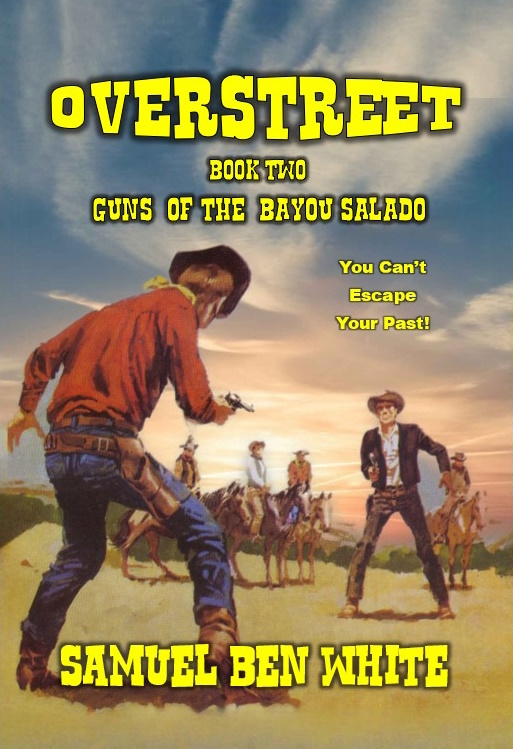
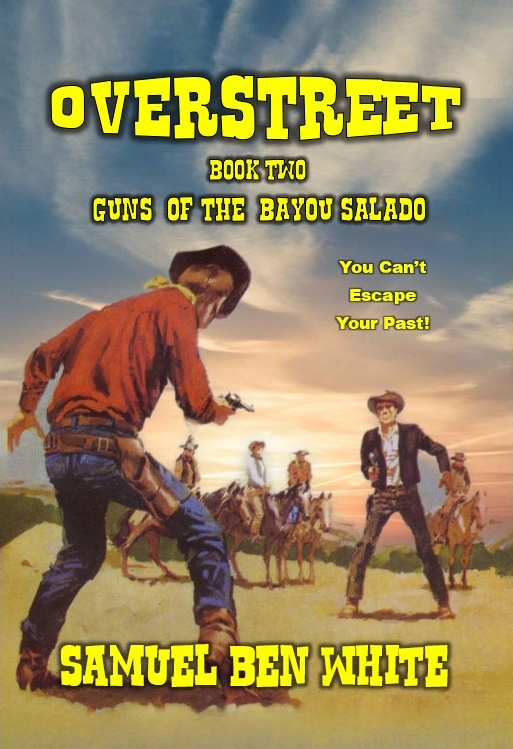
Settled in the Colorado mountains and hoping his gunfighting days are over. John finds marriage and family to his liking, but he’s still hounded by the family of the man he killed in Texas.
Available for ebook (in many formats) and paperback.
…
Sample reading
It was late fall in eighteen eighty-six when Lydia Rathum discovered she was pregnant again. She and her husband David had been trying for two years and had almost begun to think that David Junior wasn’t going to get a sibling. But as the last of the aspen leaves was buried under a mound of snow, Doc Baker told them a new member of the clan would be born the next summer.
In the mean time, it looked like it was going to be a cold, long winter, but the You’ll See was prepared. John had worked out a deal with the Sundown Mining Company to mow hay in some pastures the mine held title to. It worked out well for the mine because it insured someone would be on their property, at least occasionally, and might possibly discourage claim jumpers. This hay, combined with what they had cut off their own eight hundred plus acres, would give the You’ll See more than enough fodder for the winter. John expected to have some left over, even. He thought if he could get ahead, then the next winter the ranch might be able to sell a little hay and make a bit of extra income. It would also foreshadow the produce that would one day be the Bayou Salado’s number one income.
He came out of the bank and instantly buttoned his coat one button higher and pulled the collar up as high as it would go. Comfort had won out over pride several winters before and he wore a fur-lined hat that kept his ears warm and would have gotten him laughed out of his old haunts in Texas. On his hands he wore gloves but the right glove had the fingers cut out even though his heavy coat would pretty much have prevented any sort of fast draw anyway. But, it was a habit more than anything and necessitated keeping that hand in his pocket all day to keep it warm. The upshot was that John became more than a fair hand at doing things left-handed. Beyond that, there were some jobs that were just easier to do with non-gloved fingers and this saved him the time of taking off his glove and then putting it on again later.
He was instantly alert when he heard footsteps coming rapidly up to him and turned to find Claud crunching through the snow. He, too, was dressed for warmth and had a muffler on so that all you could see of him were his eyes peeking out from under the hat brim. All the same, they showed through the gray air with that laughter Claud was always known for.
Claud caught up with John and they made their way to the restaurant of the hotel for a drink of something—anything—warm. Hunched against the snow, they tried to acknowledge the people they passed on the street but everyone was intent on getting to their destination before their respective blood froze. No one had any mind to take their hands out of the warmth of their coat pockets to shake hands—let alone wave. Perhaps it was such as this that caused all southerners to believe that all northerners were unfriendly. And caused all northerners to think all southerners were too gregarious.
There were two hotels in town at that time, the Pacific Hotel and the Como House. The Kelly family and the Coyne family also ran boarding houses, and there were a few other rooms to let about town, but only one building in town served the needs of the lodger and the diner so well as the Pacific Hotel.
The Hotel—as it would be called for as long as it stood—was a large red brick building with rooms on the second floor and a restaurant on the bottom. It stood so close to the railroad tracks that the dishes rattled if the train was going by at any speed but the front window had a breathtaking view of Borias Pass, Silver Heels and Little Baldy—only slightly cluttered by the foreground vision of Como.
The two men stomped the slush off their boots as they entered and hung up their coats and hats near the door. With a keen sense of the weather—or just a good grasp of the obvious—the hotel proprietor had installed about twice as many coat racks as a hotel that size would normally have. Feeling twenty pounds lighter, Claud and John went and sat where they had for years—in Maggie’s section, near the fire.
Annabeth came out and smiled. As she brought them cups and saucers, John asked, “Where’s Maggie?”
Annabeth seemed uncomfortable and looked around for a moment. She had only recently gone back to work at the hotel, and that only on an extremely limited part time basis during the busiest part of the day. She asked, nervously, “You haven’t heard?”
“Heard what?” Claud replied, answering for both of them.
Annabeth, her figure having become quite “motherly” following the birth of her third child, sat down and said, “She left.”
“Left? The restaurant?” Neither cowboy was comprehending.
“Left the state,” Annabeth told them. She rather enjoyed stringing people along in conversations like this. Everyone in town was now used to it and resigned themselves to long, somewhat confusing, conversations whenever talking to Annabeth. If not in the mood for such a thing, it was best just to avoid talking to her. It was said that she had all the makings of a fine politician, had women been encouraged to run. “She went to California.”
“I’ll be,” John mused, shaking his head and wishing Annabeth would bring them some coffee or hot tea.
“That’s all?” Annabeth demanded of him. She was shocked. She had expected her revelation to make a much bigger stir. She had been waiting all day to share the news with John Overstreet. “Don’t you want to know why?”
“It’s her business,” John pointed out. “And she’s a grown lady, so she can go wherever she wants. And in spite of what everyone in this town has thought for the last six years, Maggie isn’t my girl and never has been.”
“But you’ve sat here in her section every time you’ve come in for six years!” Annabeth objected. Everyone in the restaurant was paying close attention to the conversation because, after all, they couldn’t keep from hearing it. And most of them had been waiting for the last six years for John to ask Maggie out on a date, or maybe even marry her. It had never occurred to them that it might not happen. “And you sat by her at church every Sunday through seven different parsons. What were we supposed to think?”
“You’d have thought whatever you wanted to think, that’s what. A few people asked about it over the years—including you, Annabeth—and I always gave you the same story I’m telling now. Maggie was a friend of mine and that’s all,” John told her, trying to sound upset but finding it all amusing. When it was obvious that Annabeth was neither going to leave nor pour coffee John asked, “Why did she go to California?”
Annabeth leaned forward and said, “She got married.”
This did take John by surprise and he exclaimed, “Married? To who?”
“Never thought she’d do it, did you? Thought you could just string her along until you decided to marry her, didn’t you?”
“I thought nothing of the kind! Like I just said, she was a friend and nothing more! I never once thought of marrying her,” John contradicted. “I just want to know who she married!”
Annabeth waited a moment to build the tension, then said, “She married that drummer that comes through with the brushes.”
John said, more to upset Annabeth than anything, “Seemed like a nice fellow the time or two I met him. Sold me two of the best currying brushes I ever owned. I hope this doesn’t mean he won’t be coming back through here again. I could use another one.”
Annabeth threw up her hands in disgust and went to get their drinks. She poured Claud a cup of hot coffee and John took tea. He didn’t particularly care for either drink but he needed something to cut the chill. The drink was a joy if for no other reason than that it warmed up the icy bones in his fingers. He could live with the fact that, to him, all tea tasted like water with dirt in it. Once in Denver he had tried a cup of hot chocolate and had really liked that, but the one time he asked for it in Como he was told that it was a “kid’s drink” in a voice that said very clearly that the cook wasn’t going to bother making some up for an adult.
Claud looked at John and asked, “You really don’t mind that Maggie ran off with someone else?”
John thought a minute, then shook his head, “No I don’t. She was a good friend, and that’s all. I hope she’s found a good man. What I knew of that Fuller guy, he seemed like stable stock. Wonder if she’ll travel with him or if he’ll stay on the road or what?”
Claud poured some of his coffee into the saucer, blew on it to cool it off, then poured it back into the cup. John watched the whole operation and shook his head because the only attractive thing he had ever been able to find about coffee was the heat. So, why order coffee then cool it off?
After taking a few sips, Claud ventured cautiously, “Still waiting for that one woman?”
John merely nodded and continued with his tea. It tasted like dirty branch water, but it was warm and left a good feeling in him as it went down—if a lousy taste in his mouth. After it was done with, he told himself, he’d go over to Carman’s and get a licorice whip to wash the taste away. Of course, just about anything would leave a better after-taste than tea, he mused, and not for the first time. He wondered if they’d serve him just a cup of hot water, but then he figured that wouldn’t taste any good, either.
“You really think she’s out there?” Claud asked in all seriousness.
John nodded again and said, “She’s out there. I just ain’t found her yet. But I will.”
“You sure don’t seem to be doing any searching.”
John turned and smiled at Claud, “What about you?”
“What about me?” Claud was completely off guard.
“What about you? You’re twenty-three years old. That’s marrying age anywhere you go. That’s past marrying age in some places. If you were a woman and unmarried at twenty-three, people’d be calling you a spinster. Why don’t you have a girl?”
Claud shrugged and—after a moment—replied, “She got away.”
“Huh?” John had never heard Claud even mention being interested in a girl. And he had known him since the young cowboy was sixteen. John was sure Claud hadn’t been keeping steady company with anyone since coming to work for the You’ll See and had never mentioned any woman from before then—other than his father’s wives, who he talked about with disgust often.
When Claud didn’t answer, John asked, “Who? I never heard you mention anyone.”
Claud was obviously uncomfortable, but he said, “I never told no one.”
“Did you tell her?”
Claud shook his head and it was obvious that this was what troubled him the most. “When I met her I was too young and unsure of myself. Used to watch her and tell myself I was going to talk to her, tell her how I felt, but I never did. I’d always tell myself there’d be a next time. By the time I thought about saying something, it was too late.”
“Too late?”
“She found someone else,” Claud explained.
It was clear that was all he intended to say on the subject, but John added consolingly, “Well, you know what they say: ‘There’s other fish in the sea.'”
“Not for me,” Claud replied. “Your woman is out there somewhere. I know where mine is, but she’s not for me.” He hastily gulped down the last of his coffee and stood up. “I’m heading back. You coming?”
“Not yet. I need to go by the general store and pick up some things. I’m all out of shaving soap.”
Claud nodded and left. John was curious to know who the woman was but enough of a respecter of persons not to bring it up again. And being that he knew Claud better than anyone around, there wouldn’t be any sense to asking anyone else.
He sat back in his chair and studied on it for a moment. Claud had sat by a woman or two in church over the years; had danced with a few at barn-raisings and socials; and had even called on one or two of the young ladies in town. They had talked about it afterward, but Claud had always seemed profoundly disinterested in most of them. Or had he? Had Claud hidden his feelings about one of them? No, that didn’t make sense. If he had the nerve to ask a girl to a dance, he’d have had the nerve to tell her how he felt.
So what were they talking about? Was Claud still “holding a torch” for someone he knew back when he was fourteen or fifteen? Was that maybe the real reason he had drifted east to Colorado? John had heard that those Mormon men sometimes took young wives. Maybe Claud’s love had married someone else when she was just thirteen or fourteen and he just couldn’t stay around and watch.
Shrugging, John stood up, left a quarter on the table for Annabeth, and walked over to get his wraps and head into the cold.
Niles Carman, a young man who was tall but skinny as a rail, was running the store when John came in. John placed his order and was looking at an old newspaper as the kid filled it. Of course, he wasn’t really a kid anymore but his face looked it even if his height didn’t. John couldn’t believe the little boy he used to know was old enough to be running the store now, but the kid seemed to be doing a good job. And his father was never far away. Probably down at the Allen Saloon, John suspected.
“You hear who’s in town?” Niles called over his shoulder from the back room.
“Nope.”
“Alvis McClory,” Niles proclaimed. He added proudly, “And I met him.”
“You don’t say,” John replied absently. When he had finished the paragraph he was reading, he looked up with more interest and asked, “What’s he doing in Como?”
“Who?” Niles asked, toting up John’s order and not paying much attention to the conversation he had initiated himself.
“McClory!”
“Don’t rightly know. Some folks say he’s speculating in gold or coal or suchlike. My Pa’s thinking maybe he’s up here to meet with Tabor—over at Leadville. Maybe he came here so’s people wouldn’t know about it and make a big deal out of it. Them high-powered people like that stick together, it seems. Others say he’s here just because of his wife.”
“His wife?”
John had heard much about Alvis McClory. Mentioned in the same breath with Silver Dollar Tabor and Jay Gould, he was a high-powered cattle man from Texas who had made money in every venture known to man, it seemed. And rumor had it he was always looking for something new to invest in. John knew how often he was “hit up” by people who wanted the You’ll See to invest in one crackpot scheme or another, so he couldn’t imagine how many lunatics hung around a legitimate baron like Alvis McClory.
No one knew his exact worth, it was said, but it was estimated at several million dollars. He even owned land in Australia, South America and Africa, according to some people. But in all the talk, John had never heard talk of his wife—never even thought to wonder if he had one. Come to think of it, John mused, I never even heard tell of him having family. But then, what did he know about any of the names? He was pretty sure Tabor and Gould were married, but he had no idea of their wives’ names or if they had any kids.
“Yeah,” Niles told him, carrying a bag of items he had put together. “They say she’s been all over the west looking for her brother for nigh onto fifteen years. She ain’t seen him in a long time, I hear.”
“Must be an understanding husband to fund such an endeavor. Fifteen years of travelling is a long time.”
“Oh, they ain’t been married but about seven years. And what does he care about travel? If he sees a place he likes, he can buy it. Lute, over at the masonry, he told me they were in Terlingua looking for her brother and he happened across an abandoned silver mine. McClory bought it and hit pay-dirt a week later.”
“Terlingua?” John mused. “I’ve been there. Punched cattle down that way for a while. It’s part of the Big Bend area. So many holes in the ground it looks like a giant walked through with those spiked boots some of the miners wear. Wonder why Terlingua? Where else have they been?”
“Shoot, you name it and they’ve been there. Sounds like they spent most of their time in Texas looking. ‘Course, that’s where she’s from. You know Texas, don’t you?”
John laughed and said, “I should smile. I grew up there. Probably been everywhere they’ve been—in Texas, anyway. Never got down to The Valley, though. Always wanted to, but the closest I ever got was down in the Big Thicket. Seems like ever’ time I’d think about going to the Valley, something else would come up.”
“Well then, maybe you could help them. They told me where all they had been looking but the names didn’t mean nothing to me. Me never being in Texas in my life, and all. But she seems powerful anxious to find her brother and that Alvis, he dotes on her and would buy her the moon if she asked for it. You help her find her brother, there’d probably be money in it for you—not that you need it,” Niles quickly added with embarrassment.
Curious, John asked again, “Where all did they say they’d been?”
“Said they started in that Big Thicket you just mentioned; I reckon that’s in East Texas from what they said. Said they lost her brother’s trail for a while but got a tip that someone who looked a lot like him was seen down in the Big Bend area. That’s when they went to Terlingua. After that, they say he drifted north and they’ve only heard rumors.”
“That’s odd. I was in those places. If her brother was there, I probably would have met him.” John took a licorice whip from the jar and began to chew on it. Pulling out a few coins to pay for his purchases he wondered, “They think he might have come up here?”
“They aren’t sure.”
“How is it that you know all this, Niles?”
“Oh, they came in here right after they got off the train. Alvis was right where you’re standing—wearing some suspenders with buckles on ’em that I bet were real gold. And his wife was asking my pa a few questions. She’s a right handsome woman, too. Probably forty, but she’s got thick black hair and carries herself like a real lady. I heard her describe what her brother used to look like, but it didn’t sound like anyone I knew—no one particular, anyway. She hadn’t seen him in a long time, o’ course, but she said he used to be a skinny, gangly kid. Said he had mousie brown hair and blue eyes. That could be a lot of people.”
“She give a name?”
“Yeah. But there ain’t nobody in the South Park Valley by that name. Pa said he’d never met anyone by that name, anyway. And I know I never heard of anyone by that name.”
“So what was it?”
Niles shrugged and answered, “James Conley.”
John blanched white and nearly dropped the sack he was holding. He asked Niles quickly, “Where are they, now?”
“Huh?”
“Where’d they go from here?” John demanded sharply.
Niles seemed taken aback by the abrupt change but he finally replied, “Up the street—to Judge Stoner’s house. Him and Alvis got the same friends, or something like that. You know what I said about rich folks. They stick together.”
John put the sack down and started quickly for the door. Niles called out, “Hey! Don’t you want to take these with you?”
“I’ll be back—or send ’em out to the ranch with Claud or Cleave if you see one of them,” John called as he shut the door behind him and took off running through the snow.
John knew it wasn’t a good idea to get worked up in such cold weather because a man’s sweat will freeze and form a thin layer of ice inside his clothing. When that happens, the body’s temperature can start dropping rapidly and the result can be frostbite or pneumonia—often leading to death.
But it was a short distance to the Judge’s house and John was clomping up onto the porch in a matter of seconds, heedless of everything except getting there. His breath was coming fast even before he started running and was coming in great, heaving gasps by the time he was mounting the steps. The porch had been freshly swept, but you wouldn’t have known it after John arrived. He took no notice of the mess he was making and knocked loudly on the door.
After a moment, Stoner opened the door and seemed surprised to see John standing there. Through the screen, Stoner said, “I have company right now, John. Could you come back—”
He never finished because John was pushing his way past and into the living room. Ignoring Stoner’s blustering, John walked into the midst of a fairly formal tea comprised of the McClorys, the Bakers and the Stoners.
Everyone looked up and Mrs. Stoner was about to object to the rude intrusion when John looked Mrs. McClory in the eye and said, “You finally came back, huh? You sure took your sweet time about it!”
All the tea partiers were aghast at his bold entry and insolent behavior—especially coming from a normally respectable young man. All took grave exception and made various blustering noises much like the Judge’s, except Mrs. McClory, that is.
She calmly set her tea cup and saucer aside and rose gracefully. She looked at John for a moment, as if studying him from head to foot, front to back and inside out, then asked softly, “James?”
John shook his head and told her, “I stopped being James Conley fourteen years ago. I buried that little boy in the swamps a long time ago, Clarice.”
Most everyone in the parlor was speechless but Clarice McClory seemed undaunted. She took a step closer and said, “I was afraid you’d feel that way, James.”
“It’s John,” he corrected. “My name is John Overstreet now.” He took a step back and said, “I’ve been John longer than I was James.”
Clarice hung her head for a moment and, when she looked up, there was a tear in her eye. Taking another tentative step, she told him, “You’re right, John. To feel the way you do, I mean.”
“Sure I’m right!” he retorted. “I was an orphan and you—my only blood kin I knew how to locate—you never came when I wrote for you.”
Coming closer, she said, “John, we have a lot to talk out.”
Angrily, he told her, “I have nothing to talk about to you. You ran out on Ma and Pa and then you ran out on me.”
“You’re my brother—”
“No!” John shook his head. “I am not your brother. You lost all right to make that claim fifteen years ago! You were James Conley’s sister but you’re not mine!”
Before she could say anything else, John turned for the door. As he left, he muttered to Judge Stoner, “Sorry to interrupt.”
For possibly the first time in his life, Judge Stoner was speechless.
When morning came the snow had stopped falling but it had left its mark on the land. Everything that hadn’t already been buried was now covered in such a pristine whiteness that John hated to spoil it by walking on it. Still, there were things that needed to be done and he knew he had best be about it. A few moments of walking in the snow had changed his attitude from one of appreciating the beauty to cursing it.
Dressed as warmly as the day before, and covering his face with the scarf Amelia had knitted for him years ago, he set out for the north pasture to help Bob Vernor. The stock tank they had built at the end of a small stream in the north pasture had proved to be a good water source but it was out in the open and not especially deep so it froze over quickly. So John could expect to spend most of the morning chipping a hole through the ice for the horses to drink through. A horse can break a thin layer of ice with its nose, but it will shy away from something as thick as the ice on that pond regularly got. Had they been so inclined—and not needed the ice for more important things—it would have been a good place to go ice skating.
As they were cutting the hole, they looked up to watch the train come by, less than a hundred yards away. It was making pretty good time through the fresh snow in the valley, but Bob remarked, “Bet that’s going to be a long trip over the Pass. They usually get a good half foot more than we do down here—sometimes better than that.”
“I bet,” John replied. He had worked up enough body heat that he had shed the scarf and one layer of clothing. He knew not to shed any more or complications could arise. “I’ve seen ’em stop running in better weather than this.”
“You ever been over the Pass in the winter?”
John nodded and Bob mused, “Something, isn’t it? The way they get that snow-plow engine up there and cut through what looks like an impenetrable wall. They keep the snow plow in that new roundhouse they got down there—””
“‘Impenetrable’?” John laughed, having missed the last part of Bob’s talk after being surprised by the big word.
Bob shrugged sheepishly and replied, “I guess that’s what happens when you have a daughter in college. She uses words I never heard of before—and I’ve been around animals all my life—and went to school myself.”
“What do you mean by that?”
“Well, when she told me she was studying to be a veterinarian I figured I’d know what she was talking about. I mean, I’ve doctored animals and birthed ’em and done just about all you can do with one.”
“Any chance we could get her to come back here?” John asked. “I mean, when she graduates. We sure could use a good vet. The more the coal and gold business dies up here, the more popular cattle and horses are going to be. A veterinarian could pull in a good living up here.”
“I’ve mentioned it to her, but she’s kind of liking the east right now. I think, though, when she tries to find a job she’s going to find out how hard it is for a woman to get a man’s job. Out here, we mostly just care whether a person does a good job or not. Besides, everybody out here already knows her and would be happy to throw her business.” He hesitated, then added, “And there’s still a lot of folks that wouldn’t go to a black veterinarian, even if he was a man.”
“People are stupid,” John commented.
“That’s a bit harsh, ain’t it?”
“Well, I mean,” John thought for a moment, “I mean individuals, they can be pretty smart. But get a bunch of us together and suddenly we’re stupid. There’s a lot of good white men who fought right alongside a black man during the war, but he gets back among a group of white men and forgets everything he learned. Me, I call that stupid.”
“It goes both ways. I know some black folks that think every white man’s a slaver. They’re so convinced that opportunity is never going to come their way, they don’t realize it when it does.”
John nodded and commented, “I figure anybody that can do a job ought to do it. I knew a man back in Presidio that could sew like you wouldn’t believe. Big, husky guy, too. Big ol’ hands. Looked like he ought to be swinging a sledge hammer or managing a big team of horses. But he made pretty quilts—and even dresses. Pulled in a good wage for it, too. I figure a person ought to do what they do best.”
Bob nodded and went back to chipping away at the ice. Just making conversation, he said, “They ever decide what to do about those bodies over to the King No. One Mine?”
“Just leave ’em, I hear,” John shrugged.
“That’s terrible,” Bob remarked, shaking his head. “I don’t care if they was Chinamen, when thirty-five men die in a mine explosion I think something ought to be done about it.”
John pointed out, “Doesn’t make a lot of sense to dig ’em up just to bury ’em again.”
Bob nodded, but added, “Still, I hear they’re planning on going ahead with working the other seven levels this summer. I ain’t a superstitious man by nature, but I’d sure hate to work knowing there was thirty-five men buried. Buried above me. Be like working in someone else’s grave.”
“I know what you mean. I understand that the work’s got to go on, I guess. Does seem like they could put up a marker or something—maybe one that lists all their names.”
“I bet there ain’t anyone in the management that knows all thirty-five names.”
John nodded, then said, “They could find out—”
“If they wanted to,” Bob nodded.
The sound of the train had not completely died away when they heard another sound. It was the sound of bells and it stopped the talk of graves and mine disasters short.
“Little early for Santy Claus, ain’t it?” John quipped.
Bob watched as the source of the sound came from behind the trees. “It’s a sled,” he remarked. It was driving on the right of way and looked to contain two people, a man and a woman.
John knew immediately who they were. When Bob saw that John was upset, he asked who it was. John mumbled something under his breath and replied, “It’s my sister.”
“I didn’t know you had a sister.”
John shrugged and told him, “For a long time I didn’t think I did, either. And now I ain’t sure I want a sister.”
The sleigh pulled up near the pond and Alvis helped his wife down. She was bundled up like an Eskimo and moving about was no easy task. She maintained her characteristic grace, though. To John, the grace just irritated him, and he wasn’t sure he wanted to put voice to why.
“Hello John,” she offered cordially.
With no feeling in his voice, he replied, “Howdy.”
Undaunted, she continued, “John, you didn’t meet my husband yesterday. This is Alvis McClory.”
“Pleased to meet you,” John told him, though he seemed more indifferent than pleased. He introduced Bob and they all shook hands. “I’ve heard a lot about you,” John said to Alvis.
“Good, I hope,” Alvis laughed, an affected laugh but a well-intended one, nonetheless.
Bob excused himself and headed for the barn. The icy breath was only the first clue he saw that made him not want to be around this little family discussion. John’s breath wasn’t as icy as his attitude. Bob knew John well enough to respect his feelings in any matter, but also knew that families had a way of bringing out the best and the worst in any man. Besides, between the snow and the high altitude, he could hear whatever was said from the barn anyway.
Clarice said, trying to put as much warmth into her voice as possible, “We saw one of your hands in town. Cleave, I believe it was. He said you’d be out here.”
“Thanks, Cleave,” John muttered.
Clarice looked around and said with admiration, “This sure is a beautiful place you own, John.” The mountains were covered in snow and it really was a wonderland—especially to someone from the flatlands of Texas.
“Part owner,” John corrected her. “I only own a third.”
Alvis, speaking for the first time, said, “But the people I’ve talked to in town say you’re the driving force behind this ranch. They say without you the You’ll See would have been sold and broken up years ago.”
“I doubt that. Whose to say what might have been?”
“How much land do you have here?” Alvis asked.
“About eight hundred and sixty acres. ‘Course, some of it’s not good for anything because it’s on the side of that mountain, yonder. Couldn’t raise horses there unless they all had shorter legs on one side than the other.”
“You own your own mountain?” Clarice asked in amazement.
“Mostly, yeah. There’s some mining claims on the far side but no body works them anymore. Dry hole, as they say. Odd how one mountain’ll have gold and the one next to it won’t.” He took his pick and began knocking holes in the ice. “So, what did you come out here for?”
“We need to talk,” Clarice replied seriously.
“‘Bout what?”
She sighed heavily, then began, “I need to apologize.”
He looked up at her, then went back to picking away. The hole was actually big enough by now, but he needed something to do. Something other than look at her because she was looking really sincere and he was afraid he would forget what she had done and start believing her.
Continuing, “You never knew why I ran away, did you?” He shook his head, so she continued, “I ran away because of our father.”
John didn’t look up, but the painful memories came back. He remembered their father coming home in a drunken stupor and taking them to task for everything. John himself, or James, rather, had taken more than a few beatings. And he had watched in horror as his father beat their mother.
“I put up with it as long as I could, John. Mother always told me he didn’t mean it and that he would change one day. And when he sobered up, he’d come to me and cry and beg my forgiveness. When I got about fourteen I was big enough to fight him off. Or at least fast enough to get away. And he wasn’t a strong man; he was a weak, sniveling coward. Maybe that’s why he acted like he did. He couldn’t prove himself a man to anyone else, so he did it to us—the only way he knew how.” She shook her head of the line of thought and added, “He laid off me then.
“I moved to Fort Worth when I turned eighteen. Do you remember that? You were so little.”
John nodded and said, “I remember you coming back and visiting Ma and me from time to time. I always thought it was coincidence that you never came while Pa was there.”
She shook her head, “I planned it that way. I couldn’t bear to see him. And I hated the thought of what he was probably doing to you. I tried to talk Mother into leaving, but she never would. She believed she should stay with him no matter what. She always said he didn’t mean it, that he really loved us. I never could convince her otherwise.
“But I made a mistake when I was twenty-five. I came home thinking I was old enough to deal with … Father. But I got there late one night and he was drunk when I got there. He—he had this strange look in his eyes. He started yelling at me, calling me all sorts of foul names, and he hit me. He knocked me down and then jumped on me. I thought he was going to beat me, like he used to, but he was trying to rape me. I cried out but you and Mother weren’t there. He just laughed.”
She paused, short of breath, then continued, “When he tore my blouse, something went off inside my head. I had more strength than I had ever felt before—and, like I said, he wasn’t all that strong. I threw him off and ran. I got on my horse and left.”
“That was the last time I ever saw you, wasn’t it?” John asked. “You came by the Andrews place where Ma and I were staying. I heard you tell Ma something like, ‘He’ll never do that again,’ but I didn’t know what you were talking about. I never saw Pa again. Then Ma went off to Fort Worth for a while and left me with the Andrews. When she came back, she looked old and worn—like she was ten years older than when she left. She died about two weeks after she got back. And I never could find you—or anybody.”
With difficulty, Clarice told him, “We wanted it that way.” Before John could object, she said, “I know now it was wrong. But I didn’t know it at the time. It’s time for you to know the truth. We’ve hidden it from you for too long. I’m surprised you never found out on your own.”
“Found out what?” He was completely surprised that there was, apparently, a secret behind all that had happened. He had just assumed everyone had left him and had been so mad at them that he’d never checked into it.
After another deep breath, Clarice related, “I left the Andrews place that night and caught a train for Houston. Charlie lived there. You never knew him that well, did you?”
John shook his head and tried to remember his older brother. He was two years younger than Clarice, but he ran away from home at the age of ten, two years before John was born. Charlie was just a picture on his mother’s dresser. “I never met him but once,” John told her. “He came by one night when I was about seven. Talked to Ma a while about something, then left again.”
This seemed to make her cry, but she took a moment and composed herself. She told, “I found Charlie working in a buggy shop in Houston. I had heard Ma talk about him being somewhere down there and he wasn’t really hard to find. I told him what had happened and—and I told him what I wanted to do. He hated Father more than I did and the wounds had festered in the years since he left. He blamed Father for everything that had ever gone wrong in his life—and maybe he had a right to. I can’t say anymore. But even at ten years old, he had run away because of Father. It takes a lot for a ten year old to run away and not come back.”
She took another deep breath and said, quickly, as if saying it slow she might not get it out, “John, we went back and killed Father a week later.”
John was shocked, and a little disbelieving. “Ma told me he just went off one day and didn’t come back.”
Clarice shook her head. “That’s what we wanted you to think. We thought you were too young to know all the awful truth. But Charlie and I both shot Father. We used his gun and we each put a bullet in him. Then we went and turned ourselves in.”
“You could have run,” John told her, even though he didn’t agree.
“Yes, we could have. But we decided on the trip from Houston that we wouldn’t. We decided that even prison or hanging would be better than a life with Father. In some weird perception of morality, we decided ahead of time to take our consequences. We were young and foolish. Murder is not a solution. To anything.
“The trial was in Fort Worth. That’s why Mother was gone that long time. It wasn’t much of a trial, since we had already confessed, but they had to decide on sentence. The judge said we had reason to kill our father, but he couldn’t condone murder. He sentenced us both to five years in prison. When the story came out in the papers of what our father had been like, the judge’s decision was a very popular one. Justice with leniency, they said. It was then I found out he was up for reelection. He probably should have given us a lot more time.”
“So you got out, met Mister McClory here some time later, and started looking for me. Is that it?” he said, still a little disbelievingly. It was all too pat.
She nodded. “That’s it. Alvis has been so wonderful.”
“How did you meet?” The side of him that was still wanting her to leave and never come back was doing battle with the side that wanted to have a sister again.
“I was working in a diner in Austin, trying to decide what to do with my life when he came in. Started eating there regularly.”
Alvis added, with a smile, “I asked her out a dozen times before she even gave me the time of day.”
“Even when I went out with him—to a church social there in Austin—I thought about hiding the past from him. I made up a dozen stories in my head that morning before he picked me up. But, I couldn’t. Then the preacher talked about how people need to be honest with each other and I thought he was talking right to me. So right at the social, while we sat there under a live oak, I told him about Father and prison and everything.”
“And it was more than I could handle,” Alvis said, with shame on his face. “I took her home with the intention of never seeing her again. I kept thinking of my family and everything.”
“So what happened?” John asked, genuinely curious.
Alvis smiled at Clarice and said, “I kept thinking about her. I finally decided to swallow my pride and see her again. Family and pride be damned.”
Clarice smiled, “I didn’t even know he felt this way because he was back in the diner on Monday asking me to go out again.”
“It was a long Sunday night,” Alvis laughed, with more than a little embarrassment.
“But we went out and didn’t speak of prison again until after we were married.” She took her husband’s hand, smiled at him, and said, “Not only did he risk his social position by marrying a convicted murderer, but he has used his fortune and influence to help me find you.”
“Why look?” John asked. “After all this time, why look? You must not have even known whether I were alive or not. ‘Specially since I wasn’t going by the name of James Conley, anymore.”
“I had to let you know the truth. And I had to make sure you were all right. I never stopped thinking about you Ja—John. Ma was pretty worn out when you came along. I raised you almost as much as she did. When I left and went to Fort Worth, it was almost like leaving my own baby behind—you’ve got to believe me.” She breathed a sigh of relief and asked, to lighten the mood, “Where did the name come from?”
He laughed and said, “After Ma died, and I couldn’t get a hold of you, I hooked up with a trail drive to Kansas. Up there, I heard singing one Sunday and I asked somebody where the church was. Fellow told me, ‘It’s over a street.’ I got there and the preacher was preaching from the book of John. I decided I didn’t want to be James Conley anymore, so when the preacher asked me what my name was after the service, I just told him John Overstreet. I guess it’s kind of silly, but it’s the only name I feel at home with anymore. Kind of got used to it.”
Alvis laughed and, speaking up for the first time in a while, said, “Ah, the many times I’ve wished for a name other than ‘Alvis.’ Many’s the time I came home from school near tears from the sport my name had been made of.”
“So I guess instead of changing your name, you turned your name into something big, huh?”
“I guess so; though, that was never my intention. I just have a good history of being in the right place at the right time. Some people say there is no such thing as luck—I know differently.”
John turned back to Clarice and asked, “Whatever happened to Charlie?”
She hesitated a moment, then said, “He died last year. Tuberculosis. He lived his last few years in Arizona and it was only the climate out there that allowed him to live as long as he did.” With a smile, she added, “He owned a buggy shop which his sons will take over one day. We hold it in trust for him for now.”
“I’ll have to go look ’em up one day. Nephews,” he laughed with a rueful shake of the head as, after so many years alone, he suddenly had a really big family. He paused, then asked, “Whatever happened to Reuben?”
John just barely remembered Reuben. Five years his senior, Reuben, too, had run away from home at age ten. Even when home, Reuben had been an outdoors type of kid and had rarely been at home. “He would be thirty-one now, wouldn’t he?”
Clarice smiled and said, “You’re not going to believe this, but we just saw him. He manages a hotel in Leadville for Silver Dollar Tabor.”
“Leadville?” John asked with disbelief. “He’s that close? How long has he been there?”
“About eleven years.”
John turned and looked at the majestic mountains around and smiled. He laughed and said, “This is too strange. I’ve been all alone for so long, I don’t know what to do with a family. Now I find that I have a brother, a sister and two nephews.”
“Six nephews, four nieces,” Clarice corrected.
“What?”
“Charlie had two boys. Reuben has three boys and a girl. Alvis and I have one boy and three girls.”
John took a moment to let it soak in, then asked, “Where are they? Your children, I mean?”
“With my mother,” Alvis replied. “They needed to stay in school, so my mother and father are watching them.”
Sheepishly, John requested, “When school’s out, could you bring them out here to see me?” Before they could answer, he said, “Why don’t I just have you and Reuben and Charlie’s family and everybody out here to the ranch next summer?”
“Better yet,” Clarice suggested, “Why don’t we all meet at Reuben’s hotel?”
John looked at Clarice and said, “You know something we have to do, first, though?”
“What?”
He smiled widely and told her, “I’ve got a sister I haven’t seen in fourteen years and I haven’t gotten to kiss her, yet.”
They embraced and it seemed like fourteen years of separation melted away forever.
“So this is where you live?” Clarice asked, trying not to let too much into her voice.
John knew what she was seeing: a simple cabin. He had swept it and picked up anything lying loose, but it wasn’t much to look at. And being winter, it smelled like a shut-up man’s cabin. “This is it,” he told her.
“How will you even a bring a woman here? You do want to bring a woman here, don’t you?”
John smiled and replied, “If you’re asking do I want to get married, the answer is yes. And if your next question is whether I’m seeing someone, the answer is no. I just ain’t met her yet.”
Clarice reached out and touched the few books that sat on a shelf and asked, “Have you read these?”
John stepped over and said, “Just the Bible there. I read a lot, ‘specially in winter, but then I trade off what I’ve finished. I’m about a third of the way through Meriwether Lewis there. Haven’t started on that Dickens or Mister Douglass’s book. My friend Bob loaned me that one, so I reckon I’ll read it next.”
“You were an early reader,” she commented, wistfully but happily. “It provided you something of an escape, didn’t it?”
“I ‘spect so.”
Clarice turned and looked at her little brother, now so much taller than she, and asked, “How did you get here?”
“You must know some of it, or you wouldn’t have followed me to Terlingua and up here.”
“You were in Terlingua?” she asked in surprise. “I have just been everywhere with Arlis. And everywhere we went, I asked about you. I’ve never had any clue I was close to you until you burst into the judge’s parlor the other day.”
“Really? That’s something!”
“Tell me,” she prompted. “Please?”
He smiled again and said, “I’m not reluctant. I’m just trying to remember.” He bade her sit on his lone chair, then took a seat on his bed. He thought back and said, “I stayed with the Andrews until Ma came back. After she died, I heard about some fellows that were rounding up wild cattle down in the big thicket. I made my way there and lied about my age. I don’t know that they believed me, but they were hard enough up for help that they took me on. Learned how to be a cowboy.
“Helped them take a herd up to Kansas. That was when I met that preacher—Peter Oberson was his name. He was trying to start a school there, so I took from him for a while. But then he got fired over something, so we drifted down to Texas. He started preaching at this Campbellite church in Haskell and teaching school on the side. I took from him when I could, but I was hired on with a local ranch run by a fellow named Shook. Took his herd to Dodge when I was just short of fifteen—”
“Seriously?”
John nodded deferentially and said, “I was the only one that knew the trail. Couple of the other hands weren’t no more than twelve. We got back and that church was going some good. Peter, he was forever trying to talk me into going into the ministry. I believed in it all, but just didn’t think that was for me.
“I got a chance to ride with some fellows down to the Big Bend area to take a string of horses to a ranch down there owned by the brother of one of our church members. I went, figuring to just be gone for a couple months or so. Got wounded in a bank hold-up—no, Sis, I wasn’t robbing the bank I was trying to stop the hold-up. That put me out of commission for a couple months, then I rode for a ranch over to Presidio for a while. I was writing letters to Peter, and he was writing back.
“But then one day I got into a scrape in Presidio. The law said I was in the right, but I was just thinking that neck of the woods—which had no woods—was unlucky and decided to head back to Haskell.” He paused, then said, “Got back in time to see Peter just before he died.”
“He died?”
“Consumption. I never knowed he had it. I knew he coughed some, but he would always just say it was allergies. The church near ‘bout fell apart then. I wanted to help, but I didn’t know how. Wound up riding for a ranch about sixty miles north of Haskell. Got into another scrape and headed up here, on account of the man I had killed had him some mean brothers and a father that knew nothing but grudges. Caught on with the You’ll See and been here ever’ since.”
Clarice had looked for the last few minutes as if something were on her mind then she started mumbling, “Terlingua, Presidio, Haskell … are you the Haskell Kid?”
John blushed and finally replied, “Well, yes.”
“Then you’re a gunfighter?” she asked with alarm. “They say you’ve killed twenty men!”
The look of horror on her face made him ashamed even as he said, “Five. I have killed five, and all in defense of either myself or someone else.” He knelt before her and said, “I never set out to be a gunfighter, Sis. I’ve just been … where things were happening.”
“But how—” She put her hands on his shoulders and said, “No. I will not—” She looked down, then back up at him and said, “There will be time, perhaps, someday. For now, I am just going to be thankful I have my brother back.” She pulled him into a hug and whispered, “Both our lives have been darker than maybe they should have been. But, well, that’s what it’s been.”
As he held her, he said, “Someday, maybe we’ll tell each other our stories—in all their detail. Right now, I’m just thankful I have a sister … again.”