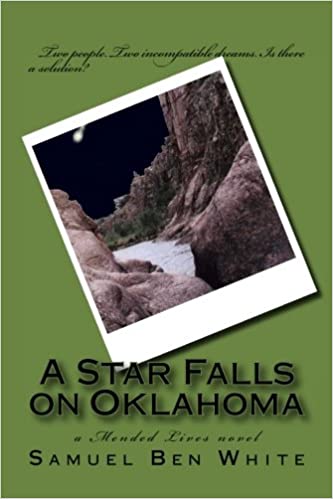
Rising star Sonya Kiel suddenly drops off the grid and lands on the doorstep of her cousin Lynette, who lives in western Oklahoma. Telling herself she’s just slumming and slowing down, Sonya finds herself enjoying the bucolic lifestyle … and Lynette’s best friend, a youth minister named Andy Brockton. Her life begins to be pulled in two directions as part of her desires to return to the bright lights and the silver screen, but another (and previously unknown part) wants to leave it all and follow Andy onto the mission field. Her dilemma becomes, literally, a life and death decision for her family.
Andy and Sonya also appear in the murder mystery “Ghosts of Families Past“, so make sure you read that one, too!
…
Reading Sample
“I can’t believe I let you talk me into this,” he grumbled as she straightened his tie. “Tell me again how you, a girl from western Oklahoma, have a cousin from England.”
Lynette let go of Andy’s tie and said, “My father’s younger brother was a Rhodes scholar. Smartest member of the Kiel family they say—before me, of course,” she chuckled. “He went to England to attend Oxford and avoid Vietnam and became a stuffy college professor. At forty, he married one of his students and proceeded to have eight children with her before he was fifty.”
“Eight?” Andy asked, though he was afraid of getting distracted from his original objection. “So, which one of the eight are you setting me up with?”
“Number five,” Lynette chuckled. “Or, Sonya, as her family calls her.”
“And she’s how old again?”
“Nineteen. And before you can object again, it’s only a three year difference and she’s very mature for her age.”
“The age is the only thing about this whole deal I’m not objecting to,” Andy quipped as he put on his suitcoat.
“For starters—well, actually, I’m not sure where to start. I’ve only been on one blind date in my life and it was a disaster.”
“Really? When was this?”
As they walked out to her car he said, “Back when I was doing that summer internship in Houston one of the girls in the youth group invited me to go out and play miniature golf with a bunch of her friends. I didn’t realize it was a date until about thirty minutes into it and I started counting heads.”
“‘Counting heads’?”
“Yeah, I realized there was an even number of boys and girls and all but one of the girls was already holding someone’s hand.”
“Was it that bad?” Lynette chided.
“Oh yeah.”
As they got into the car it occurred to Andy that he hadn’t complimented Lynette on how she looked, and she did look nice. The thing was, he and Lynette had known each other since seventh grade and had been best friends since about tenth. They had tried dating a couple times and realized it was like going out with a sibling and had called it off by quick and mutual agreement.
Lynette was pretty, if not a knockout. She was tall and a bit on the thin side, but had a winning smile and green eyes everyone envied. She was very smart, which had intimidated some guys, and it was true that she had a low level of patience for stupidity, but she was his best friend and he wanted the best for her. He thought the guy she was dating now might be the one for her, but he knew her well enough not to hold his breath.
Andy, Lynette thought, was just the type of guy she would like to find—in someone else. He was her intellectual equal, shared many of her interests, and wasn’t too bad looking. A little short for her tastes, but that was mainly because she was taller than average. He had thick, curly black hair that he kept cut too short, and an intriguing face if not actually handsome. His skin was dark but his eyes were atypically shaped and made her think that there might have been some Polynesian blood somewhere in his ancestry. He did have some Native American blood in his veins—Choctaw, to be exact—but it was so far back that it was doubtful if it were a contributing factor to his looks.
The way the evening had gotten started was that Lynette had shown up at his place an hour before, all dressed up, and saying she needed his help. Unwary, he had of course said yes before inquiring what sort of help would be needed. Lynette had then explained that she had tickets to the Wichita Falls Philharmonic Orchestra’s season opening concert for herself and Stephan but that her cousin from England had suddenly arrived unexpectedly and Lynette couldn’t just leave her at home and three was a crowd and so on.
It should probably be explained to the reader that very few inhabitants (i.e. “one”) of Lawton, OK, thought of the opening of the Wichita Falls Philharmonic Orchestra’s season as a big deal. Lynette, though, was an aficionado of classical music, a player of the viola herself, and had not missed an opening in Wichita Falls or Oklahoma City in five years. For four of those years, Andy had accompanied Lynette to the concerts out of friendship and had come to rather appreciate classical music, even if he had yet to buy a classical CD for himself. As a result, he had not been at all upset to find this year that Lynette had talked someone else into going with her to the concert.
Now, most people in Lawton facing a similar circumstance would probably have either called off the concert trip or given the tickets to someone else. This idea had never occurred to Lynette, even after Stephan suggested it. She promptly got online and purchased two more tickets to the concert. She had quickly dressed, then gone to get Andy, knowing if she called him on the phone with the idea of a blind date he might have some way to escape the issue.
So here they were, two well-dressed people on their way to Lynette’s apartment to pick up Lynette’s date and meet
Andy’s. Of course, Lynette knew her, but Andy had never met her, as far as he knew.
“How is it,” Andy asked, as if reading the narrator’s mind, “That I have never met this cousin?”
“You have, actually.” As Lynette sped down Cache Road, she said, “She came and spent a week with me when you and I were fourteen. I remember you came over one day and we all went swimming.”
“Just the three of us or was anyone else there, too?”
“Her sisters, your brother, and the rest of the youth group,” Lynette explained.
“So eight years ago I met an eleven year old girl and you expect me to remember her?”
“No, I don’t expect you to remember her, you just asked if you had ever met her. You’ve seen pictures of her, though.”
“Really?” Seeing all the restaurants they were passing, he asked, “Do I get a supper out of this or am I buying?”
“After the concert,” Lynette answered as she turned off the main road. “We’ll just barely have time to make it there before the overture. And we can go dutch treat if you like.”
“We better,” Andy replied.
As they pulled into the parking lot of the apartment complex where Lynette lived, she turned to Andy and said, “I really do appreciate you doing this. And I’ll explain it all to Carly if you like.”
“I’m not seeing Carly,” he said as they got out of the car. At Lynette’s skeptical glance, he said, “I’ve been out with her twice. I don’t know if there will be a third. And I know for a fact she’s dating other people. Which is perfectly fine with me, by the way.”
“Well, thank you, anyway.”
As they walked up the steps, he said, only half-joking, “I never asked you what she looks like.”
“You going to back out if she’s ugly?” Lynette asked, a laugh in her voice that made him curious what she was concealing.
“No. But I’ll get you back somehow.”
“Don’t worry,” Lynette said as they neared her floor. With an even stranger lilt to her voice, she added, “If she’s not the prettiest woman you have ever been out with, I’ll buy your supper tonight.”
“The world’s cheapest graduate student is offering to buy me supper?” he chided in return. “For the first time today, I’m actually anxious to see her.
Andy opened the door to Lynette’s apartment and let her in. As he followed her in, he saw Stephan sitting on the couch. Stephan looked up from a magazine and smiled. “Hey, Andy. How’s it going?”
Andy came over and shook Stephan’s hand as he sat down. “Not bad. You doing all right?”
“Can’t complain … too much,” he added with a laugh, showing perfect teeth in his dark face. Stephan was a first year assistant coach and biology teacher at Lawton High who loved his job but also found it exasperating at times. He had been introduced to Lynette by one of his fellow teachers, who had attended MacArthur High with Lynette four years before. Their personalities had seemed like oil and water initially (she very Type-A, he exactly not) but the fact that he was more than her intellectual equal—and a shared passion for volleyball—had led to, so far, multiple dates.
“I’ll go see if Sonya’s ready,” Lynette said, disappearing into the back of the apartment. It was a one bedroom affair, with the kitchen, living room and dining area all being the same, but it was a nice place and Lynette had fixed it up pretty well. Her parents still lived in town and would have loved for her to move back in, but the idea was anathema to Lynette, even though she had returned to Lawton after her undergrad work.
When Lynette was out of earshot, Andy leaned close to Stephan and asked in a whisper, “This Sonya, is she as pretty as Lynette says?”
Stephan chuckled, then noticed the look on Andy’s face and asked, “Are you kidding?”
“What do you mean?”
Stephan was about to reply when they heard the bedroom door open and Andy sat back in a more normal and casual position. He looked up (again, casually) to try to take a casual first glance of the cousin. His mouth casually hit the floor.
Alexander “Opie” Gates, a young man from west Texas, finds himself being greeted by a woman in a bar in New York City. At first glance, she’s kind of pretty and he likes the attention. But over the evening, he begins to think she is considerably older than she appears and worn down by life. Over the next few days, Opie finds himself drawn to this woman (who proves to be younger than he thought), but then he makes a horrible discovery about her lifestyle. Telling himself he’s emulating Jesus, he continues to be her friend. But then, two things Opie never anticipated happen almost at once: The woman comes to share his faith, and he begins to fall for her. Suddenly, he’s no longer just trying to be understanding and forgiving of a semi-nameless person. He’s trying to be forgiving of someone he wants to fall in love with but he can’t get over the idea that she’s already violated something he holds very dear.
Alexander “Opie” Gates sat at the dimly-lit bar of the dimly-lit dive a few blocks from Times Square reading his Bible and sipping on a Sprite. It was an attention-grabbing spectacle and he knew it. It was completely intentional.
He’d got the idea from an old roommate in college. The guy was short of stature and tended to dress like he’d just gotten off a gator-hunting swamp boat, which wasn’t as much of a stretch as one might think. He’d take his Bible—a big, leather-bound job with study notes in the margins and hundreds of handwritten notes on sticky-papers stuffed here and there from Genesis to Revelation—and he’d go to a bar, order something obviously non-alcoholic, and sit and read. He told Opie that, invariably, someone would come over and ask what he was doing, and then Allen would share the gospel with them. The long-term efficacy of such an evangelism approach Opie had always doubted, but he had admired it, nonetheless.
So, with nothing else to do on a night in Manhattan when he couldn’t sleep, he had decided to give it a try. He’d left a note for his host and, wisely or no, had slipped out into the big strange city and found his way to this bar, not so far from his friend’s apartment as the crow flew, but more than half a world from home.
With his red hair and a father who adored “The Andy Griffith Show” to be nick-named “Opie” had almost seemed pre-ordained. When he had read in a book that the kid from the TV show had actually been named after one of the star’s favorite performers, Opie Cates, the name had seemed inevitable. He knew he had been born bald as a bowling ball, so he guessed the only reason he hadn’t been named Opie officially was that they had been waiting to see what color his hair would take.
Now here he sat, clearly a tourist and clearly out of sync with the rest of the bar’s patrons. They seemed a reclusive lot—hiding back in the shadows like rats—and if they paid him any mind at all, it wasn’t for long. He’d only been in the Big Apple for a couple days, but he’d seen enough to know that there wasn’t much that would garner the attention of the locals and a tourist with a Bible barely even registered on the meter.
He’d read a good bit of the middle section of the book of Ezekiel and was thinking about heading back to Rory’s pad when a voice said from beside him, “Is that a Bible?”
He looked up in surprise, answering “Yes” before even seeing who had spoken. He was getting ready to go into his old roommate’s routine when he saw her.
She was a pretty woman, probably in her mid-twenties, just like Opie. She had dark hair and was dressed in tight jeans and a loose-fitting top that showed some cleavage. He caught a glimpse of a tattoo of a rose on her left breast and quickly looked away. Glancing back, making sure he looked only at her face, his second glance made him think she was probably a lot older than him, maybe even pushing forty. But she had expertly applied makeup which created the illusion of a much younger woman.
Suddenly, he felt very sad for her. Probably not the impression she wanted men to take away from her looks, he thought ruefully. If he knew her, he thought, he’d tell her to lose the makeup and just look her age. She might not be as striking, but he was sure she would actually be prettier. He wasn’t about to say such a thing to a complete stranger and any further thoughts were stricken from his mind by the question, “Why?”
“Why what?”
“Why are you sitting in a dump like this and reading your Bible at,” she glanced at the clock over the bar, “Almost midnight?” She tapped a finger against his glass, watched the bubbles move, and added, “And drinking a Sprite?”
He thought back to what his roommate always said in such situations, and suddenly it seemed canned and disingenuous. So he told her the truth, “I couldn’t sleep and I figured if I did this someone would eventually ask me why and I could tell them.”
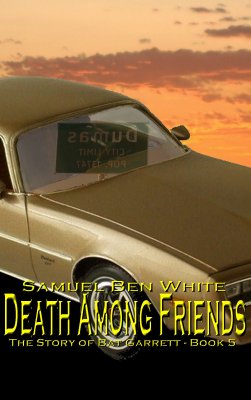
Bat Garrett goes to the funeral of a friend from high school, only to find that there are some family members of the deceased who think the death wasn’t accidental. Bat begins to look into the death and is confronted by old memories, some ex-girlfriends, and the disturbing idea that–if it was murder–it was committed by someone Bat knew.
When I got my private investigator’s license I figured my life would be a lot like the lives of those guys who used to show up late at night in the old shows on cable. High speed car chases, fist fights (where I would always win), and beautiful women who find a guy with a spotty income strangely alluring. Occasionally even solving a case.
Why was I so often surprised back in those days when life didn’t imitate art? Or even TV?
What the TV shows were especially bad at portraying was the stakeout. Oh, you would have the obligatory shot of the guy in his car at night, flashing neon in the distance, as he sips coffee from a thermos to set the mood, but considering the shows were only an hour long (minus commercials) they couldn’t show the reality of a stakeout.
Hour after hour, and sometimes night after night, just sitting there. Trying to stay awake and trying not to drink too much coffee ‘cause then you gotta go to the restroom and leave your post. So you just sit there.
And sit there.
And, if you’re me, drinking no coffee at all because you hate even the smell of it so you drink Dr Pepper like it’s going out of style, which still leads to bathroom issues.
Sometimes, you have a client who wants a meticulous log of everything that happens. “12:15Dog barks. 1:17Pizza delivery. Delivery vehicle license number … “ It sounds miserable and tedious—and it is—but at least with those you have something to do.
This was not one of those nights. I was sitting in my car across the street from an all-night diner that served, based on the smell, fried grease. As a side dish, one could order lard straight. But working in the diner was a woman who was being rapidly stalked by middle age and a husband who was convinced she was having an affair with one of her customers.
Now, you may be thinking that my job would be to watch her through the windows and see if she paid anyone any special attention. Not exactly. The husband was pretty sure who the affair was with, so I was supposed to sit there and watch to see if the Assumed One showed up and, especially, if the Waitress Woman were to leave with him.
Five nights down and not only had the Assumed One never showed, the Waitress had treated all of her customers with the same hostile indifference. Most of her customers left looking less than happy, so I couldn’t really see any of them saying something like, “Hey babe, after that rather belligerent service and a sandwich made—apparently—from old shoe leather, there’s nothing I’d like better than to take a hot mama like you out on the town.” Eight and a half hours after she would clock in (with a thirty minute “lunch” in the middle which she smoked away on a bench around the side of the building from the front door) she would leave and go straight home.
If this were a television show, the reason for the whole farce would be that I had been working on another, more important, case and this whole thing had been cooked up as a means of distracting me. In real life, I had taken this under-paying and boring job because there just wasn’t anything else, and hadn’t been for some time. It was a slack time in the P.I. biz, apparently. And being winter, it wasn’t much of a time for painting houses, either (my other listing in the phone book).
With Jody’s paycheck from her job as a speech therapist barely covering necessities, I was taking any job I could get in hopes of making ends meet. Thankfully, our cars were paid for and we didn’t pay much in rent, but you can’t eat an apartment—even the green moldy stuff on the walls that looks almost edible. We were still newlyweds in a lot of ways but, as much as I like old Glenn Miller tunes, his song about being able to live on love was starting to ring hollow.
Another night looked like it was going to drift by with no consequence when, just after three-thirty in the morning, a car that looked like the one I was told Assumed One drove pulled up in front of the diner. I perked up a little, then. I perked up a lot when the Assumed One, Mister Wally Norris himself, got out of the car. Tall, slatternly, with a one of those big droopy mustaches like country stars wore back in the eighties, I positively identified him from a picture I had been given when he stepped into the lights of the diner’s front entranceway.
As he went into the diner, I slipped quietly out of my car and closer to the diner, camera at the ready. Once in a position where I could get some good pictures of pretty much anywhere in the seating section of the diner, I started snapping.
It was a fairly old—let’s say broken-in—SLRand worked beautifully. For daytime shoots I was transitioning to a digital camera, but for nighttime work nothing beat that oldSLRand some 1200 film. Cameras may have gotten simpler to use as time has gone on, but that old camera could practically take the pictures itself even without auto-focus. It eventually developed a light leak I couldn’t get fixed and I sold it to a collector, but I always regretted it later, thinking I should have given it a place of honor on a shelf in my office. But I didn’t have a shelf in those days, let alone an office, and the collector helped me make a rent payment, which is neither here nor there for this story as it was some years later. Months anyway.
So there I was, getting pictures of him walking into the restaurant. And then there’s a picture of the Waitress looking none too pleased to see him. As I’m snapping away, she points toward the door, instructing him to leave. (It’s clear from the body language; I didn’t have to hear what she was saying.) But Assumed One steps right up to her and grabs her by the arm.
He should have grabbed the other arm—the one carrying a customer’s food—because she slammed the tray full of food upside his head. It was a horrible sight, all that Salisbury steak and candied apple slices spreading across the room. My last picture showed him letting go of her arm as he reached for his gravy-covered face, trying to get the apple chunks out of his eyes.
I dropped the camera—trusting the shoulder strap to take care of it—and darted for the diner’s door. By the time I was through the door, Assumed One had cornered Waitress behind the counter and the one customer was a guy who was rooted in place by fear and shouldn’t have been screaming like that in my humble opinion. His screams were soon drowned out by the screams of Assumed One, who had just taken a saucer of hot grease to the kisser.
No, I don’t usually talk like that, but it is a private eye story.
As Assumed One hit the floor on all fours and clawed at his face, the cook called 911 and the Waitress stood over her assailant with the saucer held in a threatening manner. I wouldn’t have thought it could be done, either, if I hadn’t seen it. If she had been holding a Glock with a round in the chamber, her demeanor could have been no more menacing.
Despite graduating from a correspondence college with a degree in private investigations and a long-ago Boy Scout merit badge in First Aid, I wasn’t sure what the protocol was for “hot-grease-in-face”. Still, it seemed like something ought to be done, so I pulled out my gun.
“The cops are already here?” asked the cook in impressed dismay, popping up from wherever he had been hiding.
“Probably just someone else that wants to kill him,” the Waitress grumbled, remarkably calm about the whole thing. Seeing my weaponry, though, she set down the saucer. Then, told me, “Go ahead and shoot him. I’ll gladly testify it was self defense.”
Assumed One, peaking at me from between his fingers with one red eye, just whimpered and made a larger mess on the floor than had been there previously. “I’m not going to shoot you,” I told him.
Sean Clarke moves to the town of his dreams, to a house he loves, to a life he’s always wanted. There he meets and falls in love with Angie. a beautiful young woman. Sean’s family is happy for him, but they are waiting: for that moment when Sean discovers something he doesn’t like about another perfect woman and dumps her.
A novel of self-discovery, about finding out that the things that irritate us most about the faults of other people are when they mirror our own.
To read more about Brad, Allie and Angie, make sure you read the novel Mended Lives! To read how Joe and Ellen met, check out Hating God – a love story!
…
Sample Passage
He let go of her to hold the picture in both hands. He was looking at it, but he wasn’t seeing it. He wasn’t seeing anything. His mind was gone and it didn’t show any signs of coming back any time soon.
“I’m sorry,” she finally said, when she didn’t think he would ever speak again. “I never meant to hide this—to hide anything—from you. But I was so ashamed—”
“You should be!” he blurted out.
“I know, I—”
He jumped to his feet and demanded, “What else are you going to tell me, Angie? When am I going to start meeting all these guys you slept with? What about the millions who saw you nude? When are more of them going to show up and start asking me if I’ve seen what they’ve seen? When, huh?”
She stood up in front of him and tried to reach out to him. “I wish I could take back all those pictures, Sean. I do. But I can’t. What can I do?”
“You could leave.”
“Sean!”
“What do you expect me to say? ‘Hey great! All the men of England have already seen my fiancé naked but I haven’t!’ Just leave, please.”
He picked up the folder, stuck the picture back in it (but not before seeing that there were other similar pictures in it and actually letting one slip out unnoticed that slid under the rocking chair), and thrusting the folder at her demanded, “Take these with you.”
“Sean—”
“Please, go.”
“Can I come back?”
He took a deep breath and replied, through clinched teeth, “I’ll get back to you on that.”
“Sean—”
He stepped around her and opened the front door. Gently but firmly, he pushed her outside and closed the door behind her.
She turned around to face the door, but heard the unmistakable sound of the deadbolt being thrown. She thought about knocking but didn’t think it was the right time. She sat down on the front porch steps, put her head on her knees, and started crying.
It was almost half an hour later that she got up, smoothed out her dress with her hands and, taking the folder, walked back to the café. Inside, the cook asked if she were all right, to which she nodded but didn’t answer out loud. She just put on her apron, then put on her customer face, and went out to deal with the public. She was relieved that the British couple was gone.
She looked around, though, at the crowd now there and wondered if any of them had ever seen her ads for Sutley’s, or Liverpool football, or any of the other ads she had done? What about just the magazine layouts? She remembered when she used to pat herself on the back because she had never done full-frontal, but now it didn’t seem like such a big deal. “Partly evil is still evil,” she muttered to herself. Then, noticing that a customer had overheard, she smiled, said, “Excuse me,” and took his order.
After that order, though, she went back and relieved the cook. Not only did she want to be away from the general public, working with food had long been a way to calm down and think. She did so, now.
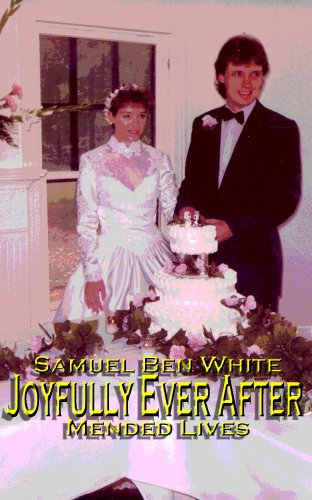
Brad Reynolds comes home to Medicine Park, OK, to take over his father’s old business and try to put his life back together after a divorce. He’s fitting in, he’s meeting great new people, he’s even started attending a Bible study. Brad’s a great guy by everyone’s account. What they don’t know is that he has an addiction. He’s kept it well-hidden so far, but it’s already destroyed his marriage and it will soon destroy his whole life. So Brad tries to bury it, to ignore it, to power his way through it … but it keeps escaping from the box he keeps it in.
“I really liked it. I had never read a book with that viewpoint of the guy with the sex addiction. It was interesting as he grew in Christ. I thought it was very encouraging as we all have aspects of ourselves we need to put under Christ’s Lordship.” ~KD, LA
And the “sort-of” sequel …
If you would like to read more about Brad, Allie and Angie, be sure and pick up the novel Joyfully Ever After.
…
Sample Chapter
The divorce was final the same day his parents died in the car wreck.
He thought about not even telling Darria, or trying to tell her in such a way as to hurt her. But he didn’t. He just called her and, as she prepared for one of his trademark snide remarks involving either the postal service or how relieved he was to finally be rid of her, he calmly told her he had gotten the papers and his parents had just died.
Darria didn’t know what to say, except that she was really sorry to hear that. She meant it and hoped she could convey her sincerity but knew she had her own reputation for caustic remarks, especially where Brad was concerned. Still, she had always gotten along just fine with the Reynolds and they had even reached out to her recently, as things had begun to go sour in her marriage to their son. She had bristled at the intrusion, but secretly appreciated it, too.
“Well,” he said, “I’ve got to go. I’ve got to go pick up Mike at the airport. Then, we’ll, um, head over to the mountains.”
“Yeah,” she said, nodding at the phone even though he, of course, could not see the motion. Then, she quickly added, “For what it’s worth, I’m really sorry it finalized today—of all days.”
“I’m sorry they had to die today, of all days.” He tried to think of something else to say, then, not even sure if she were still there, told her, “Good bye, Darria. Be seeing you, huh?”
“Yeah. I’m really sorry, Brad.”
“Thanks,” he told her as he hung up.
***
They hugged at the airport, cried a bit, then things got so quiet as they left the airport in Brad’s car that they jumped into as banal a brand of small talk as they could muster before they were even onto I-44. “You have to wonder whose idea it was,” Brad quipped, “To build the Wiley Post Terminal of the Will Rogers Airport on Amelia Earhardt Drive.”
“What do you mean?” Mike asked.
“What do those three people have in common?”
Mike thought a moment, then nodded, “They all died in airplane crashes, didn’t they?”
They ran out of small talk just as they passed Norman, however, and were stuck with silence, again. Suddenly, Brad said, almost to his own surprise, “I’d like the store.”
“What?” Mike responded, completely thrown off guard. His thoughts had already gone to his wife and baby, who were driving down from Colorado and would be joining him (hopefully) the next day. He hadn’t wanted to do it that way, but the fact was they just couldn’t afford three airplane tickets on such short notice but still felt Mike should be there for his brother as soon as possible.
“The bait shop,” Brad explained. “I’d like the bait shop.” Suddenly thinking it through aloud, he offered, “I’ll buy your half from you for whatever you think is fair. I can take what I got from mine and Darria’s house and make you a down payment. For the store and your half of Mom and Dad’s house. I’ll get a loan to cover the rest.”
Realizing how impetuous he was being, he suddenly added, “Unless you want it. I was just thinking that I’ve kind of been wanting out of my job—and out of Oak City—for a while now. But I don’t think that little bait shop makes enough money for us both to live on. So, you can have it, if—”
“No,” Mike replied, just as suddenly. “You take it.” After a moment, “I’m serious. Annette and I really like Aurora. It’s where we want Collin to grow up. It’s home now. Why don’t you just list me as a silent partner in the store and then slowly buy me out? That way you won’t get nailed for all that interest.”
“I wasn’t thinking of anything like that—”
“Why not? It works out for both of us. I get a monthly payment I haven’t been getting and you get the store.” After a moment, Mike asked, “Why do you want it? I don’t remember you showing any interest in it before.”
They were several miles further along before Brad answered, “You grow up in a small town and you can’t wait to get out. Now, I want to go back. I know it won’t be the same. But maybe I can recapture a little bit of what it was . . . once. I’m a grown-up now. As of today, I’m officially divorced—”
***
“I really feel bad about that. Wished there was something I could have done. Wished I had seen it coming.”
“The only people who could have were me and Darria and we waited too long to acknowledge it, and then longer to do something about it. And you didn’t see it because we tried so hard to hide from everyone, including ourselves. I think that’s part of why I want to get out of Oak City. I’ll always associate this place with my marriage. Now I can get out.”
“Do you really think going back to Medicine Park is the right answer? You want to get away? Come back to Aurora with me. You’ve always liked Colorado. You can get a job in Denver. You’d be near family. Lots of accounting jobs there.”
“Uhg. I’ve done accounting, Mike.” He smiled and added, “Maybe I could go to Texas, where cousin Denny lives. Maybe there’s a job in Frognot. I’ve always kind of wanted to live there just so I could have that name on my letterhead.”
***
The funeral home had done a good job, as far as such jobs went. Instead of two people who had been in a car that had gone off a rain-soaked highway, they looked like two people who had just chosen a strange place to take a nap. After a few moments of “viewing,” Mike commented to Brad, “I don’t know about you, but I’m ready to close the lids.”
“Yeah,” Brad nodded anxiously. He motioned to the funeral director, a thin woman with iron grey hair perfectly coiffed She came over and, with the help of a young assistant, closed the caskets. “Remember the line from that cousin in Arizona—I can’t ever remember his name. I just remember being at a funeral for some uncle or other and someone comments about the body looking natural and he said, ‘No he doesn’t. I’ve known Uncle Chuck for twenty years and not once can I remember him getting dressed up in his best suit, coming down to the church, then taking a nap in a box at the front of the room.’”
Mike actually smiled as he said, “I remember that. Uncle Leonard, wasn’t it? The man who died, I mean. Lived in New Mexico somewhere, didn’t he?”
“Las Vegas, it seems like,” Brad nodded. “I just went so I could be with Mom and Dad.”
“Yeah, and I met ya’ll there mainly so I could see everyone. Can’t remember that cousin’s name, though.”
“Private detective, wasn’t he? I remember that just because he was the only private detective I ever met.”
“I think you’re right. We’ll be back in the morning,” Mike told the funeral director suddenly, when he realized the director was still right behind them. The two brothers had already cried on each others shoulders to the point that now they were just drained and ready to leave and the moment’s laughter had been genuine under the relief it had brought. Neither had seen the other cry like that ever, so it left a surreal picture in their minds as they left.
***
Standing in the living room of their parents’ house, dressed now in casual clothes, Annette nearby playing with Collin on the floor, Brad commented, “It just doesn’t seem real. I keep expecting them to come in here. For Mom to try to feed us something.”
Looking around, Mike asked, “Are you sure moving here is the right idea? The fish and tackle shop is one thing, but this house? Sell it and buy another one nearer the shop if you want. You always joked you were going to buy a house in Paradise Valley just because you liked the name. Do that.”
“Naw, this is home. I may have never thought about having the bait shop, but I always dreamed about having this house. Pictured Darria and I having kids and moving here. You know, Mom and Dad always said they would move somewhere when they retired. Figured they’d move near you in Denver and we’d get this place. Maybe telecommute to a job in Oak City or just over in Lawton and drive in one or two days a week.” He sighed and shrugged, “The Darria part’s gone now. I can get the house, now, though.”
Mike bit his lip a moment, then said what he’d been thinking, not just all day but ever since he had heard that his brother was getting divorced, “Are you sure there’s no chance of you and Darria getting back together? You two were so great together—”
“I think she’s got somebody else,” Brad answered. At the looks in his brother and sister in law’s eyes, he quickly explained, “Don’t get the wrong idea. She was never unfaithful. Neither was I, for that matter. Anyway, I heard from a mutual friend that she had met somebody at her work that she was going to go out with as soon as the divorce was final.”
“It’s not like she’s already remarried,” Mike said, ignoring the look from his wife that was trying to tell him to just shut up. “Can’t you work things out?”
“I used to think so. Went to counseling and everything.” Another big shrug as he leaned on the mantel and looked into the low fire. “Didn’t work.” He looked over at Collin and said, “Kids were part of it, you know. Sometimes wonder, if we had been able to have kids . . . “ After a bit, he added, “On the other hand, sure am glad we didn’t put any kids through this. Divorce is hard on kids.”
“Well,” Mike said, stumbling over the words, “I don’t want to bug you about it. But if you, um, get the chance, talk to Darria. Maybe you two just needed some time away.”
Brad was too worn out to argue, so he just nodded and said, “Yeah. Maybe so. That’s what Dad said, too.”
***
“Thanks for coming,” Brad said as they walked away from the graveside service. The minister from the Reynolds’ church had delivered the eulogy and had done quite well. Brad and Mike had both thanked him for the words, and everyone else for coming out on such a cold, if sunny, day.
Darria nodded uncomfortably, then threw her arms around his neck and, sobbing, told him, “I am so sorry for you. And for Mike, too. But I’m really sorry for, for everything happening. Now, of all times.”
“Well, it wasn’t just you,” he told her as he held her close, feeling her for the first time in months. It had a strange familiarity that was surprisingly comforting. “I know the timing was an accident. But I, uh, do thank you for coming here today. It really does mean a lot. Can you come over to the house for a while? There’s a lot more food there than even Mike and I can eat. Give you a chance to see Annette. And Collin, too.”
“He sure is getting big, isn’t he?” Darria commented wistfully. She then let go of the hug, wiped her eyes and said, “I better get back into town, though. I told the office I would try to make it back for the afternoon.”
“Well, don’t go so fast you . . . drive carefully, huh?”
She was prettier than he remembered. Maybe it was the black dress. He had never seen her in black because she had always said it made her look washed out. With her reddish blonde hair and freckled skin, he had always taken her at her word. But now, looking at her, he realized she looked pretty attractive in black. And she had lost weight. She wouldn’t have been able to fit in that dress when they were still together.
But then, he had lost weight, too. He didn’t think it was stress so much as that he just hadn’t eaten as regularly since the split. He was almost back to his college weight. And what with walking every day in the sun, the red had come out in his brown hair and a few freckles had resurfaced that he hadn’t seen in a long time.
People used to say they belonged together but he always figured it was because they were both red haired and fair skinned. He wondered if, that day at the cemetery, they looked like they ought to be together again. He wondered if she were wondering the same thing.
She nodded, then kissed him on the cheek and walked away to her car. He watched her go, not knowing how he should feel. If it were a movie, he knew, he would run after her and catch her in his arms and convince her to stay with him. Or he’d watch her go and cry. But he didn’t feel like doing either. He didn’t feel like doing anything. So he just watched her go.
***
“You sure you don’t want me to hang around for a while?” Mike offered. “I’ve got a couple weeks coming. I could help you move and get settled in at the shop and all.”
“No. Your family needs you with them. I’ll be fine. Old Simms is going to run the shop until I can get out there, and most of my stuff is in storage so it won’t take all that much to move it. Got some friends that can help with that.”
“Well, if you need me, you call, all right? It’s just you and me now, brother.”
“Hey, same here. I mean, if you need anything, you call me. I know how to get to Aurora.” Brad snapped his fingers and said, “Let’s plan on getting together in a couple months. Maybe head into the mountains or something.”
“Sounds great,”
Brad hugged Annette, thanked her for coming, and held a very wriggly Collin one more time, kissing the little boy on the forehead. “I can’t believe how fast you can move, little guy. You’ll be walking by the next time I see you, I bet.”
Was it just a simple murder of a man passing through, or is there a larger plot afoot? Ira “Doc” Pearson is on the case, if he can survive it.
Published by Outlaws Publishingand available on ebook (in many formats) and in paperback!
Ira “Doc” Pearson is brought to an almost-dead body found beside the road. Before the man can reveal who his killer was, he expires, leaving Ira to uncover the mystery. And Ira doesn’t even know the identity of the dead man!
Meanwhile, someone is bringing in a lot of toughs to Van Bendt, TX, and the surrounding towns. Someone who has deep enough pockets to keep them paid, under controlled, and even satisfied with imported “working women.” Is someone just reopening one of the nearby gold or silver mines, or setting up a corridor for trafficking stolen goods across the border? Or does someone have imperial designs much bigger than that?
Can Dr. Ira Pearson, former Texas Ranger, uncover and even thwart the plot?
“He was like that when I found him, Doc.” Wandy Mitchell was squatting near the man who lay in the dirt, his neck at a seemingly impossible angle and a fresh bullet wound in his back. Wandy, himself, was a stout man of middle age, a family man, and known as a decent worker when sober.
The doctor reached out with expert hands and checked for a pulse. To his own surprise, he said, “This man is still alive!”
“I wasn’t sure,” Wandy mumbled. “But I, um, I had heard you should’na move a feller with a neck injury like that.”
“That is correct. Still, this man is alive. See if one of you can fetch me a buckboard. And a plank at least as long as this man is that we can use to put him in the buckboard.”
“Hawthorn has a buckboard,” someone in the small crowd that was gathering commented before the sound of scrambling feet indicated they were rushing to fulfill the doctor’s order.
“I seen a plank over by that barn yonder. C’mon Red, let’s go see is it long enough.” More feet moved out after that.
Erstwhile Texas Ranger Ira Pearson, now the town doctor in Van Bendt, Texas, was kneeling over the body. It did look at first glance as if the man’s neck were broken. If so, Ira wondered, what was the best treatment? He was likely paralyzed from the neck down, and would be for life—whatever life were left to him. Would he be better off living or dead? Ira knew that wasn’t his call to make, but it was a question he couldn’t help but asking.
Still, how was the man alive at all? A broken neck, a bullet wound that if it wasn’t right through the heart or spine could not have missed either by much. If this man lived another minute, it would be a miracle, Ira thought.
“Anyone know this man?” he asked, without looking up. There were several responses, all in the negative. Out of long habit, Ira glanced at the crowd now and then as he examined the man on the ground.
As Ira did his best to make sure the man’s breathing was unobstructed, he gave a quick glance to the man himself. Mid- to late-twenties, Ira guessed. Unremarkable features but with the latest hair style. Large mustache, carefully trimmed and waxed at the ends. His clothes were nice but showed some wear. The jacket he wore was something of an odd cut, shorter on the sides than most local men wore—almost like some of vaqueros from south of the border, but not quite.
The plank was soon there and Ira instructed the men how to position it and the man while Ira held the man’s neck and head as immobile as possible. Shortly after they had him on the plank, Wandy was there with the buckboard. Enlisting even more people—for at least one woman pitched in—they gently moved the man into the buckboard while Ira continued to brace the man’s neck with his own hands. Once the man was in the buckboard, Ira instructed, “Wandy, let’s get this man to my office. Don’t stop for anything, but drive as if you were transporting the baby Jesus himself.”
“Aye-aye,” replied Wandy, starting the buckboard off gently.
To the crowd, Ira said, “I’d appreciate it if some of you would come to my office and help us unload him.” Most of the crowd followed along, on foot, talking lowly as they did. Someone commented that it was like being in a funeral procession for a live person and was quickly shushed.
The man had been found just off the main trail to the north, not so well-traveled as the road to the west that connected the town to El Paso, but with a steady stream of travelers most days. Wandy, from his seat on the wagon, said, “I didn’t see nobody but this feller around, Doc. No horse, neither. How you reckon he got there?”
“Horse probably ran off when the rider was shot,” Ira replied. He was trying to focus on the patient, but his mind kept going to questions along the lines of what Wandy was discussing. “You didn’t see anyone riding off into the distance?”
“Naw, but it was close enough into town that whoever done it could have ducked into or around a building easy enough.”
“There are no powder burns on this man’s clothes,” Ira commented, not really caring whether such information should be disseminated or not. So it could have been a rifle shot from some distance away. Knocks him off his horse and he lands hard, hard on his neck, I mean. It’s a wonder the man is still alive. You check his pockets for any identification, Wandy?”
“Nope. I didn’t touch him. I was riding with Dewey—me and him been doing some work for MacKnight—and we seen this body beside the road. I don’t think Dewey did see him ‘til I pointed him out. When we come closer, I thought about just sending Dewey on to the undertaker. Ain’t that right, Dewey?”
Ira hadn’t realized Dewey was one of the men traveling along until Wandy asked his question. Dewey replied, “That’s right, Doc. I thought o’ coming to the undertaker, too. Couldn’t see no way that man was alive.”
“Did either of you hear a shot?” Ira asked.
“Not me,” Wandy replied, to be echoed by Dewey.
“This man was shot, obviously, and by the amount of blood under him I don’t think it could have been too long before you two showed up. Dewey,” Ira said suddenly, “How do you feel about blood?”
“Huh?”
“Go back to where you found this man and see if you can find the slug. There was blood under him, so the bullet had to have passed all the way through.”
“That’d be the wildest kind of luck, wouldn’t it?” Dewey asked. “I mean, if that bullet passed through this feller, it could be a hunderd feet from the body.”
“Right. Well, get a hold of the Sheriff and Chubby. Maybe they can find it. You’re right: it’d be the wildest kind of luck, but it might help us.”
“I’ll go tell Sheriff Wood,” Dewey said before wheeling his horse in the direction of the Sheriff’s Office. It turned out he needn’t have done so for Ben Wood was waiting for the procession at the doctor’s office.
He, along with the crowd who had walked along, helped Ira get the patient into the doctor’s office and surgery. There, Mina Pearson—Ira’s wife and nurse—was setting out the instruments she anticipated the doctor needing. They got the man onto the operating table, chest up—though with his head still at that odd angle. Ira gave her a thankful nod, thanked the crowd of helpers, then politely ran them out of his surgery. As Ira was washing his hands, Sheriff Wood asked, “Do you know what—”
“I know almost nothing, Sheriff,” Ira replied, hoping not too shortly. “Wandy and Dewey came up on this body—this man—on the northbound trail. They’re the ones you ought to talk to.”
“Right,” Wood responded. An ex-Army officer, he was not used to being brushed off, but he had enough sense to know that—in matters such as this—the doctor needed to put his complete focus on the patient. He wanted to ask more, but turned smartly on his heel and went outside to question the two locals. It was made somewhat difficult by the fact that everyone who helped carry the man—and a few who only walked along—had an opinion they needed to share.
“Who is this?” Mina asked as she began to cut away the man’s coat and vest and shirt.
“No one’s recognized him so far, or admitted they have, anyway,” Ira replied.
“I’ve sure never seen him,” Mina commented in that southern drawl of hers.
The man never woke up before he died.
And Ira Pearson could not figure out how he had lived as long as he did. A broken neck, a shot to the spine. If there were any solace, it was that the man did not appear to have suffered. At least, there were no outward signs of pain or indications that he was even aware of his injuries—or anything.
He was a man of pale skin—that skin which hadn’t been out in the sun, anyway—some sunburned on his face and neck. He wore a western cowboy hat that had seen some wear, but wasn’t worn out. Light brown hair thinning on top, brown eyes. The rounded shape of his head made Ira think of the few men he had met of eastern European descent, but he knew that wasn’t an absolute. Other than that coat, which was differently cut but probably didn’t amount to the category of strange, he was dressed like any other man who might have been riding that part of the range on that day: woolen trousers, shirt and vest off a rack, cowboy boots stamped on the inside as being from the “Boot Top – Odessa”, which might be one place to start. No gun, but fewer and fewer men were wearing them anymore.
There wasn’t much in his pockets. A silver pocket-watch engraved, “With love, Leona,” was the most telling item, though what it told they couldn’t tell right away. A few coins and paper money adding up to seventy-one dollars—not a paltry sum, but if the motive had been robbery the would-be thief had been scared away by the appearance of Wandy and Dewey. A pocket knife of no distinguishing significance. A half-empty packet of smoking tobacco but no sign of a pipe or papers.
Sheriff Wood put out word to the major papers and various law enforcement agencies describing the man and asking for information—no word of his death—but did not carry a lot of hope in the endeavor. There was just a description of his person and his clothes, that he was last seen around far west Texas, and had an acquaintance named Leona. In the meantime, the man was interred in the local cemetery as a “John Doe” and wrapped tightly in oil cloth should the need to exhume him arise. Most of the folks who had helped carry him came to the funeral, as well as the Sheriff, the doctor and his nurse, and a few curiosity seekers who never missed a funeral anyway. The preacher from the church where Ira and Mina attended said the obsequies under a cloudless and hot, west Texas sun.
After the crowd had mostly dispersed, Sheriff Wood asked Ira in a low voice, “You get word to the Rangers?”
“I assumed you had,” Ira replied.
“I did, but, well, I thought they might take more notice if it were to come from you.”
“I can send a wire, but I’m not a Ranger anymore. I think they’re more likely to pay attention to a duly-elected official than me.”
“Maybe.” He took off his hat and ran his hand through his now-thinning hair, then said, “Me and Chubby have both been out there. We sure can’t find any sign of the bullet that killed this fellow. You think it’s important?”
“Probably not. If it were some uncommon caliber and we knew of only one man in town who had a rifle like that—but no. Not likely.”
“The best bet,” Mina injected, “Is that someone will see that notice in the paper and realize it’s their cousin or husband who was out this way and hasn’t checked in.” She shrugged, as if embarrassed, and added, “That’s not exactly a ‘good bet’ is it?”
“You’re right, though,” Wood said. “Me and Chubby’s been all over that area out there the last couple days. No sign of an unclaimed horse that might be that man’s ride, no unexplained tracks nearby—well, I mean, it’s right by a major trail. Lots of tracks, but none suspicious. What would the Rangers do in a case like this?” He quickly defended, “I know how to keep peace and diffuse arguments before they turn into fights, but I must admit I know little of investigations.”
“Keep your ear to the ground. Lot of times, someone saw something that they didn’t know they saw, or they don’t remember it until later.” Ira offered a smile as he patted the sheriff on the shoulder and said, “The fun part is sifting through all the people who remember things they just made up or don’t matter in any way to the situation at hand.”
As they parted ways, Ira was reminded of the strange relationship he had with the Sheriff. Ira was a former and well-thought-of Texas Ranger. Ben Wood was a retired army officer used to command. Ira frequently told anyone listening—and himself—that he had no interest in returning to the Ranger fold, but the town still seemed to think of him as “their Ranger” as much as “their doctor”. This rankled Wood, but the sheriff was also smart enough or wise enough to use a good resource when one was available. So while he would have preferred to take on all such matters alone, he knew the value of having a pipeline to the Rangers handy. He was also becoming enough of a politician to keep up appearances of a good relationship with someone the town liked so much.
When Wood was out of hearing range, Mina asked—though still in a quiet voice, “How would you investigate this, if you were still a Ranger?”
“Mostly, I would do just what he’s doing: send out notices and ask questions. There’s always someone who saw something. A dog that barked when it was thought no one was around. A shirt that went missing off a laundry line. The first thing I would probably do—and Ben may be doing it—is to try and find out how that man got where he was. If he were shot from a horse, what happened to the horse? Even if he walked to that point, where did he walk from? We’re assuming he came in from the north, so I’d start asking people up along that way if they had seen him come by. If he were on horseback, then he must have watered his horse somewhere. Was it at a farm or in a community?”
“It’s a cinch he didn’t walk in from the north, not in this weather. And his boots would be worn to a frazzle.” Mina smiled at his enthusiasm and asked, “Do you wish you were still out there, on the trail as it were?”
Ira smiled and replied, “That’s a bit of a loaded question—or the answer is. That aspect of it, the puzzle and the thinking, I liked that. And I liked being on horseback and seeing new horizons.” He leaned over and gently drew her into a kiss before saying, “But then, I really like working with the world’s prettiest nurse, and coming home to her as my wife. And I like—well, I don’t want it to sound like I like to see someone in pain—but I do like it when someone comes in and they don’t know what’s wrong with them and we figure it out—you, me and the patient. You’re good at asking the right questions, you know.”
“I find that interesting, too. Sometimes, I think you should be in a research hospital, or at least in a big city somewhere, helping a lot more people than you do here.”
“If I did that, we couldn’t delay for a few minutes after a funeral and just talk. Shoot, we probably couldn’t even get away to go to the funeral.” As he started his horse toward the office, he added, “I think I have the distinct advantage over a younger man in that I have learned what’s important to me. I get to help people, I get to ride a horse, and—best of all—I have you.”
“Why Doctor,” she said, exaggerating her Alabama accent, “You do go on, don’t you?” She waved in front of her face as if she were holding a paper fan, such as southern women like her grandmother used to do. She remembered her grandmother, still trying to hold on to the “genteel south” long after everything had changed and the image made her shake her head—not with sadness but with a sort of ironic wistfulness for her grandmother.
“You all right?” Ira asked quickly, noticing the look on her face.
She forced a smile and said, “Mostly. Just a brief vision of the past, is all.”
Mina had never really regretted leaving Alabama, for there had been nothing left for her there except the prospect of trying to hold on to a past she had never experienced. She had made—or been given—a wonderful and fulfilling life out in the dry town of Van Bendt, so different from where she had grown up as to seem like something out of one of the more fantastic pulp stories. Still, she did miss her family at times, just not enough to go back.
“Want to go for a ride?” Ira asked as they were closing up shop for the day, the number of people in Van Bendt in need of doctoring having been unusually low that day.
“Always,” Mina replied with a light laugh. “But why do I get the feeling you have something in mind for this ride?”
“I have no idea, Nurse,” he replied as he put on his hat. Locking the door to the office, they went to where their horses were standing in the little corral adjacent and led them past the gate.
The gate closed and latched, they mounted up and—before they had even taken a dozen steps—Mina asked, “We’re going to go look at the scene of the slaying, aren’t we?”
He gave her a mock scowl and replied, “It’s really not a good idea for a Ranger to be this predictable.”
“Good thing you’re not a Ranger anymore,” she laughed in return. “And honestly, I doubt that anyone knows you as well as me, anyway.”
“That is probably true,” he said as they set out.
“What are you hoping to find?” Before he could answer, she quoted in a voice that loosely approximated his bass, “’I’ll know it if I see it.’” Back in her normal voice she asked, “This is one of those moments, isn’t it?”
“If I didn’t love you so much that could get annoying.”
There was still a spot of blood on the sand, which marked where the John Doe had fallen. Ira was surprised no one had covered it in the two days since the presumed murder, if not with intent to do so but just the milling about of people curious to see the site of a murder.
“We’re all assuming murder,” Ira said as he got off his horse. Mina stayed on hers for two reasons: she knew Ira was apt to mount and dismount frequently during such a pursuit and she really enjoyed riding a horse. Side-saddle (like this day) or astride, she really didn’t care, she just like being horseback.
“What else could it be?”
“Hard to say. Might be some scenario where this was self-defense, though that seems unlikely. About all I can rule out is suicide.” Ira stood there, hands on hips, trying to picture exactly how the body had lain. With that in mind, he reoriented himself slightly, trying to guess where the shot had come from. Talking mostly to himself, he said aloud, “The shot hits him square in the back, and goes through on a pretty straight path. The shooter seems to have been on a level with the victim. Was the victim mounted or walking?”
“If he were mounted,” Mina offered, “That makes it harder to tell where the shot came from, doesn’t it? The horse could have bucked him off, or even if he fell right away there’s no telling whether he slumped off to the side of the horse or went tail-over-teakettle over the horse’s head.”
“Right. Still, let’s pick an idea. Say he falls off to the side of the horse—no, I’m thinking the shot slammed him forward, then the horse bucks him off backward and that’s how he broke his neck. Still,” he looked around and said, “There’s just no indication which direction the bullet came from. Since none of us have ever seen him before—at least, no one has come forward who admits it—we assume that he was heading into Van Bendt. He’s shot in the back. He falls forward,” Ira didn’t go all the way to the ground, but pantomimed what it might have looked like.
Then, he shook his head and said, “That wouldn’t explain the broken neck, I don’t think. I’ve been shot in the back and you just fall forward, you don’t break your neck going down.”
“Unless you hit your head on something.”
“That’s true. But there wasn’t a rock nearby that would explain that or an accompanying bump on the head, and there sure weren’t any tracks to indicate the man had been shot somewhere else and dragged over here. There was enough blood pooled under him—and enough still here now—to make me think he was shot right here.”
“Any chance someone broke his neck somewhere else, then brought him here and shot him?” Mina queried.
“I’d stake everything I know about bullets and anatomy to say that shot came from a longer distance away than someone just standing over the body.” He went over to his saddlebags and pulled out a small spade he had carried in there for time out of mind, going back to his earliest days with the Rangers. He started digging where the blood stain was and soon got below the distance the blood had seeped. As he dug, he chopped up the dirt a bit to make sure he didn’t miss anything withal.
Mina, meanwhile, was walking her horse in a slow, ever-widening circle, to see if she could see anything—though she didn’t know what she was looking for, either. She was several yards away when Ira told her, “I’m not finding a bullet, which is consistent with my theory.”
“How far into the soil can a bullet go after passing through a body?”
“I don’t know for sure, but hard ground like this, and no further than from a man’s hand to the ground, I wouldn’t think it would be very far. I’m sure not seeing any indication at all that a bullet passed through this soil.”
Mina made her way to a clump of rocks and ocotillo, saying as much to herself as Ira, “This would be a good place to hide. Provide a level field of fire—maybe even if John Doe were on horseback.”
“Maybe, but being in among rocks will also echo the sound. I can’t figure our man was shot too long before Wandy and Dewey came along. Why didn’t they hear a shot?”
Mina was still on her horse, peering among the rocks in hopes of seeing a shell but wary about getting down for a cool spot in the shade of a rock would be an excellent hiding place for rattlers as well as snipers. She offered, “How sober were they?”
“Good question, but I don’t remember seeing anything that made me wonder at the time.”
“Smoke’s Livery isn’t too far away. If he’s got a good rhythm going while he beats out a shoe, could that noise drown out the sound of a bullet?”
“Maybe. Like you say: he gets a rhythm going when he’s hammering. If the shooter times his shot to that rhythm, it might be hard to distinguish a gunshot from one of his dings. ‘Specially depending on the distance the listener was away from the shot.”
“Aren’t there things you can put on your gun to make it quieter?”
“Silencers?” Ira called back, for she was several yards away by that time. “They’re not as effective as the stories would make you believe. They can also altar the accuracy of the gun and it sure looked to me like whoever shot our man was an expert marksman.”
Walking around in a widening circle of his own, he commented, “Presumably, someone shoots this man in the back with a rifle. Then runs up and break his neck just to make sure? Then he’s got to get away before Dewey or Wandy see him.”
“Why do you assume it’s a man? Women can pull guns on men as easily as other men.”
He gave her a sardonic smile, for the first time they had met she had been holding a gun on him, then said, “Take a pretty strong woman to break a man’s neck like that. There may be women who could do it, but not many, I wager.”
“Would provide a strong motive, though,” she said as she rode back closer to him. At his puzzled look, she said, “Jealousy. Infidelity. Maybe she pulls the trigger and her lover or husband steps over and snaps his neck just to make sure.”
“You have a scary imagination, Nurse.”
“Comes from being married to a Ranger,” she replied. Then, “Are you sure his neck was broken? I mean, did you actually cut into his neck and find the broken bone—or bones?”
“No, but you saw how he was laying—”
“And he was still breathing. I remember this man that lived near me in Houston. Sweet man, probably in his fifties or so—not really old. Anyway, there was something wrong with his neck and he was always walking around looking like he was watching his feet. If you spoke to him and he wanted to reply, if he wanted to see your face he had to move his whole upper torso. What would cause that?”
“Something wrong with the musculature in his neck, I suppose. I’ve seen that before once. Read about it, too. I suppose that’s possible, ‘specially the way he seemed to be breathing just fine.”
“Man like that, he’s going to have a hard time seeing an attacker.”
“Another good point.” He stopped and looked around again, focusing on the rocks Mina had ridden among, as he said, “Still, someone wanted this man dead, and succeeded. Why? Was it a robbery but the assailant hadn’t counted on Wandy coming up just then? Was there some other reason to want this man dead?”
“There’s always a reason,” she countered. At his surprised look, she said, “You’ve been around long enough to know that if someone gets it in their mind to kill another human bein’, they’ll think of a reason. It may be a weak reason to everyone else, but it works in their mind. And like you and the sheriff were saying: a lot of men have been killed for less than seventy dollars.”
Ira nodded and added, “Or if whoever did it had some reason to think John Doe had more than seventy dollars on him.”
Mina snapped her fingers and asked, “What if he did? We looked closely at the neck so I think we would have seen if there were marks where some sort of valuable necklace had been yanked away. But what if he were wearing a valuable ring, or a bracelet of some sort?”
“A bracelet? On a man?” Ira challenged dubiously.
“Some men do. It’s not common, but some do. Or what about a money belt? How long would it take to pull one of those off?”
“A money belt plus seventy dollars in his pocket?”
“Sure. The seventy might be his own but he’s carrying a large sum for someone else in—say! What if it weren’t money? What if the man had a paper on him of some value? A land deed, or a bank certificate or something like that. If the killer knew where it’s being carried, like in his vest pocket, it might take no time to snatch it and run.”
Ira nodded, saying, “That makes as much sense as anything. Still, they had to be quick. Make the kill, grab the papers, run.”
“Not if it’s a local person,” Mina told him. At another of his puzzled looks, she said, “You were telling me how quickly the crowd gathered. Where’d they come from? You didn’t see them when you rode up but seconds later they’re there. If people can come up that quickly, someone can disappear as quickly, right? Or what if it were someone in the crowd? They perform the murder, hide behind a rock or something when they hear Wandy and Dewey, then when they see the crowd they just act like part of it. That would also give them a chance to see if the sentiments of the crowd are leaning one way or another—or if someone saw something.”
“It would be chancy, but this sure looks like cold-blooded murder and someone that cool might have the nerve to stand in a crowd like that.” He shook his head and said, “I saw everyone in the crowd that day. No strangers, other than the dead man.”
“We don’t know the hearts of our fellow townspeople,” she pointed out.
“You’re getting scary again.”
“Not necessarily. And I’m still not saying that murder is good or justified, but who knows what was in the killer’s mind? Maybe he knew John Doe, or knew of him, and somehow was convinced he had to kill him before he got to town. Maybe it goes back to something a long time ago.”
“John Doe wasn’t that old—”
“He wouldn’t have to be. Maybe he was just the emissary for someone else, or the son of someone our local man knew. Maybe he killed John Doe thinking it was the man he fought with back in the war or even further back.”
Ira nodded again, saying, “You’re right. I mean, I don’t know that your scenario is right, but you’re right that we should come up with as many possibilities as we can think of, based on the facts on hand, then start eliminating them.”
“A diagnosis, then?”
“Exactly, Nurse.”
“Y’know, Doc, other wives get called ‘Honey-Pie’ or ‘Sweetie.’”
“Ah yes, but are those other wives as loved and respected as you are by your husband?”
“All right, I suppose it was your turn to make an excellent point.”