
The Dumbest Planet in the Universe

A world without sin or strife or pain.
Scott Passer III, “Trey” to his friends and family, went in for a routine heart ablation. He woke up in a spaceship little bigger than a coffin and going … where?
He finally crashes on an idyllic planet many galaxies away the locals call Oolod. They put him back together and begin to show him a world where no one even knows the meaning of lie.
And hovering over all is a mysterious figure Trey can’t see. He can’t even hear the being’s name when others speak it. Who is this strange being, and was it him that brought Trey across the universe?
And why?

$2.99 on Kindle and $12.99 in paperback. Order yours today!

A mysterious figure Trey can’t see. He can’t even hear the being’s name when others speak it. Who is this strange being, and was it him that brought Trey across the universe?
And why?

Sample Chapter

I went into the hospital for just a routine ablation. I mean, as routine as those things can be. They are attempting to get an out-of-whack heart back in whack by searing it and causing scar tissue in just the right spot. Yeah, it’s as crazy as it sounds, but it works.

And since you’re looking up what it is on line anyway, I’m not going to knock myself out explaining it to you.

As far as heart surgeries go, it has a history of success. A lot of people are back at work within weeks, sometimes days. For some people it takes a little longer, but not usually too long. Not like a lot of the other heart surgeries.

And I had had it done before. A couple years before I had had it done at a hospital in Oak City. The thing was, though, they could only do so much of it at one time, so they did (according to them) about ninety percent and then the plan was to get the remaining ten percent “in a couple years” after I was completely healed. (Yeah, I know I said that they said that most people recover quickly, and on the first round I had. I had gone back to my job as an accountant after a couple weeks—part time—and then full time by a month later. Not like I was playing pro sports or prone to ridiculous amounts of jogging, so I didn’t have a problem.)

I just had to get the job finished. Afterward, they told me, I would be back up to full strength in no time. All the old fatigue gone, better sleep at nights, a new man—if you didn’t count that I was rapidly leaving fifty in the rearview and hadn’t been a stud on any field or court since, well, ever. In Little League I was the kid you stuck in right field, in adult softball I was the man you put at second base or catcher—the two places least likely to harm the team in a no-slide league.

So maybe, with that final ten percent taken care of, I would at least be able to go on a long, brisk, walk without feeling light-headed or nauseous.

When I had it done before, I went through all the pre-test junk we’ve come to expect, filled out a ream or two of papers, then showed up at the hospital on the day in question. I was well-rested because my insurance had even sprung for a decent hotel room near the hospital for the night before and after the surgery. I hadn’t eaten or drunk anything in twelve hours when I walked through those hospital doors and, pretty soon, I was laying in a hospital gown on a hospital bed, thinking hospital thoughts.

They had wheeled me into the operating room and then this nice lady had told me she was going to put some stuff into my IV which would make me go to sleep. I started counting backward from a hundred, got to about ninety-seven … before waking up in recovery and being kind of sore and tired. It turned out, they had stopped short because the anesthesia had been wearing off and they couldn’t have continued without putting me in serious pain, the kind of pain that would have complicated my recovery.

That’s what I was expecting, then, for round two: count to three, wake up in another part of the hospital, everything hunky-dory.

Anytime you go under, though, there’s always a slight chance you won’t come back up. Or that you might have a wild dream while under the influence. The kind of dream that seems so real you will never be convinced by anyone that it was not.

The Journey

I’ve always been a man who followed his instincts. When I woke up, then, and my first instinct was to scream, that’s what I did. Instincts two through six were remarkably similar, so I followed them as well. Instinct seven was to call ineffectually for help, so I did that, followed by more screaming.

You see, I had expected to awaken to the visage of the anesthesiologist who had put me to sleep—or one as like that one as to be no matter—and then get the usual questions like “How are we feeling?” and “Would you like something to drink?” When I didn’t wake up to that, I think my responses were quite called for.

At first, I thought I was still asleep, for it was all darkness about me. But then I realized my eyes were open for I was seeing a little. Dim shapes and faint lights were all about me. Hence the screaming, though, for I appeared to be in a box. My first thought was: coffin. “I died on the table and now my heart has re-started on my own but they’ve already chucked me in a box for shipping back to … where would they ship me?”

I was born in Flomot, Texas—wait, that’s not right. I was born in Lubbock, TX, but that was because there was no hospital in Flomot. One of my first sensations upon awakening from the anesthesia was of movement, which is what helped lead me to the conclusion that I was in a coffin and someone was taking me back to Flomot for burial. I didn’t have any special affinity for Flomot, but I guess I never had made any “final wishes” known, so it made sense to bury me near my mother’s plot. They could have buried me near my father, but he was a veteran and accorded such honors, so I would only have been in the same pasture, not right next to him.

Once past most of the screaming, it came to me that if I were in a coffin, there wouldn’t be any lights. I had seen coffins advertised that were insulated so you could buy them before you needed them and use them as coolers at parties before you checked out, but I had never known of one that came with lights. And these lights didn’t seem close enough to be inside the coffin with me. Where were they coming from?

Trying to calm down and think about the problem, I hit on the idea that maybe I was inside an iron lung. I had never heard of winding up in one being one of the possibilities following ablation, but then I also had no idea what an iron lung looked like from the inside or out and, thus, the theory was no better or worse than any others I might have come to.

I tried to move my arms and legs, but while I could move them a little, I was clearly packed into some sort of … something? Box? Coffin? Shipping crate? I think my mind liked the iron lung idea because it at least connotated medical care whereas all the other options led one to think of abandonment.

Maybe it was some sort of hyperbaric chamber, I suddenly thought. I had heard the term and, while I didn’t know any more about what one looked like than I knew about iron lungs, the idea seemed more reasonable. Didn’t they use them to immerse someone in a very sterile, pure environment? Maybe, I reasoned with my still-panicky self, there had been some hint of infection and they needed me in a completely clean environment as I recovered.

With that thought in mind—and realizing it could still apply to what little I knew of an iron lung—I decided that maybe I was looking through a glass window at a darkened room in the hospital. Not one hundred percent dark, but just mostly darkened. Why would it be so? I asked. Perhaps it was late at night. Or maybe it was just part of providing a calm world for the patient to wake up in. Bright, garish, hospital lights can be rather unsettling, I knew, when one first woke up.

But then, I realized the lights were moving. And that there were a lot more of them than I had at first thought.

Stars!

I was looking through a window at stars!

And either they or I were traveling very fast.

I actually calmed down then, for it became instantly clear to me that I was having a dream. It didn’t feel like a dream, but I just guessed that to be because of the drugs. As I noticed the stars (or me) moving faster, I laughed to myself that the anesthesia should have included some Dramamine.

I also got the sense that I was accelerating away from Earth—flat on my back and feet first. I couldn’t turn around and look, of course, but that was just the idea that came to my mind. I looked for Saturn, but was already outside the solar system and moving away quickly—or so I calculated (with no available facts).

The Turtle – a Parody

When did you last read a funny book? (Read a sample below.)

Turtle cover

Join Tuttle as he is recruited by a wandering and mystical armadillo to help a baker’s dozen of dogs recapture their homeland from the fearsome Haug, a feral swine of enormous size, malevolence and smell. Along the way, they encounter a tennis-loving bear, almost-magical cats, and dreaded chupacabralopes.

With a foreword from award-winning cartoonist Leigh Rubin (“Rubes”) and illustrations from Sam White, creator and artist of the newspaper comic strip “Tuttle’s”, this is what a beloved children’s story might look like in West Texas. Published by Waldorf Publishing.

“I would chide the author for making fun of one of the great classics of children’s literature if he weren’t so dang funny doing it.”
Charlie W. Starr, author of The Faun’s Bookshelf: C. S. Lewis on Why Myth Matters.

You can order The Turtle – parody for your Kindle or in paperback by clicking here! Get your audio copy here! Or contact me at garisonfitch@gmail.com for an autographed copy.

Read a sample

Introduction
In a hole in the ground, there lived a turtle.

Without doing a lot of research, I’m going to go out on a limb and say this was not normal, for a swamp turtle anyway. Nor was it a normal hole, such as the wild critters you may have encountered live in, but a nice, cozy hole that smelled of good, swampy food and had the comforts a turtle likes, such as a flat-screen TV and high speed internet.

This particular turtle’s name was Tuttle; Tuttle T. Turtle, or just Tut for short, and he lived in a place the locals called The Shore. It was nowhere near the ocean, but had received its name in antiquity—some said as far back as last year—when after a sojourn of many days and quarter miles an intrepid band of turtles and other critters arrived in these lands. Someone, it is told in lore, asked, “Wanna stop here?” and many other voices replied in unison, “Shore. Why not?” For many days, perhaps as long as a week, they referred to their land by its full name, but eventually shortened it to just “Shore.” It was later that the local tourism board added the “The” in the hopes that doing so would make the area sound like one of those tony neighborhoods on the south side of Amarillo.

Now turtles like a simple life: good food, calm parties with friends, and long discussions about arcane subjects such as neo-Brutalism, square dance etiquette, and the virtues of a good shell wax. Tuttle was no different from his fellow Shorians in this matter and would have been quite happy to remain in such a lifestyle indefinitely or until such time as the new baseball gloves are released in the spring, if his existence had not been interrupted one morning by a visitor he would have been happy to greet had said personage not come with a purpose.

Chapter One
Turtles, you may have noticed if you’ve ever spent much time around them socially, are not generally very active, having all the physical enthusiasm of your average lily pad—for which they are often mistaken.
Alas betimes it was on a cool, crisp summer morning when he probably wouldn’t have accomplished much anyway that Tuttle, sitting on his front porch (yes, his hole had a porch, or a space he referred to as “the porch”, anyway), that a most unusual visitor showed up.
He was all in grey and, like Tuttle himself, went about with armor on his back. Though Tuttle had not seen him since boyhood, he knew instantly that this must be one of the armadillos for they were often whispered about among the residents of The Shore—whispered about because there were, like, a million of them in every neighborhood and while they were, as a rule, hard of hearing (owing to so much operating of heavy machinery and listening to old punk bands with shoddy earphones) they tended to lean close to all conversations and believe with little evidence that they were being slandered.
This particular armadillo was quite distinctive from all others of his kind for three special and instantly recognizable traits: he wore a tall, pointy hat with a wide brim and no ornamentation, glasses with bright read frames, Larry Mahan boots, a large silver belt-buckle won at the Stanford rodeo and—most eye-catching of all—was not disgustingly filthy or ridden with lice.
This particular armadillo was known to Tuttle, if not by him, and his name was Picadillo. A wise man among his fellow dillas, even those outside his fraternity said of him: “Y’know, he ain’t that dumb” to which others might reply, “No, he ain’t.” For Picadillo, or Pic, as some called him, studied books that weren’t about sports or colorable and was known to travel beyond the boundaries of The Shore and have, if not adventures, slightly more interesting than your average times. Stories of these adventurous times came back to The Shore in rumors … because Pic never used a travel agent and this was thought by many to be quite gauche.
And it came to pass that on this morning when Tuttle sat on his porch whittling fine birch logs into popsicle sticks to be used in craft projects later that he (the dilla) didst abruptly say, “Leave us dispense with the ‘good mornings’ and felicitations.” With powers of mental acuity beyond those of most mortals, Pic deftly added, “It means greetings and good will.”
“Which is it?” asked the turtle, interrogatively. At the puzzled look on the dilla’s face, the turtle didst elaborate, “Greetings or good will?”
“Both at once, I suppose,” spake the dilla. Then, as if recovering himself (because he was recovering himself) the dilla didst say, “I will come back one day soon … with friends.”
“Oh-kay,” replied the turtle, drawing the two syllables out as far as was turtly possible. Before the turtle could reply or say more, the armadillo had turned and made his slow, lumbering way down the road.
This being the panhandle (according to legend), the turtle was able to see the dilla walking thence for the rest of the day and into the next morning for the land was, as described by those learned souls who knew it well, flat.

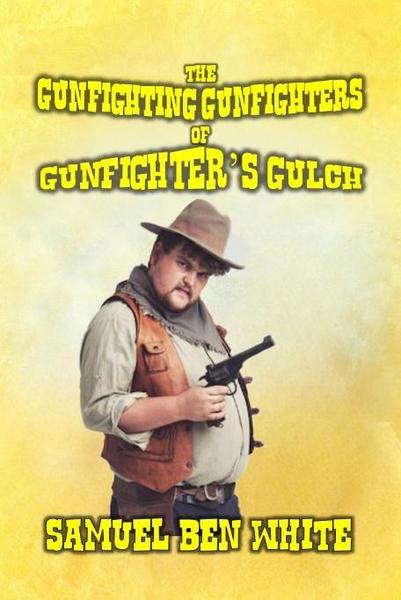
The Gunfighting Gunfighters of Gunfighter’s Gulch

Available now on Apple, Kobo, and many other formats! Coming soon in paperback!

When Portly Ben Rousterman tried to hold up the Third National Bank, he paid for the mistake with his life, and roiled the far west Texas town of Gunfighter’s Gulch.

Into the story with a fierce indifference ride the principals:

  • Raccoon Jack Carter, big game hunter with an oversized personality and a powerful thirst for avenging his fallen brother.
  • Sheriff Darren, the overweight, poor-on-the shoot sheriff with the massive wife must contain the trouble before it gets out of hand.
  • Hiram C. Cort, president of the Third National Bank who has ambition, drive and plans—all of which may be thwarted by an infestation of owls.
  • And lovely Lacy Halverson, the prettiest girl in Gunfighter’s Gulch, under a constant barrage of marriage proposals, and maybe the only one who really knows what happened to Portly Ben.

All these characters and more in one hilarious night of bullets, dancing, fowl and water as the gunfighting gunfighters collide in Gunfighter’s Gulch.

“At first I was mad at Sam White, when I shot coffee out my nose after he caught me off guard and made me laugh out-loud.   I loved the book and I don’t normally read ‘smoke burners’, as I call them. If you want to travel back to the old west, and then laugh when you step out of the saddle, this is your book! WARNING – Do not read while drinking coffee.” —Steve Sederwall, Cold West Investigations

Read a sample chapter …

Chapter One

It was a hot day in Gunfighter’s Gulch, the sun overhead as red as an undersized banana and beating down on man and beast. It hadn’t rained in time out of mind and the east town doctor was beginning to worry that insanity would set in sooner than usual this year.

It was such a day as that that Portly Ben Rousterman left his spotless appaloosa in the corral to the east and walked to the Third National Bank of Gunfighter’s Gulch. Hitching his twin Allen five-shot pistols into a more comfortable position on that part of his body where he once remembered having hips, he stepped up on the boardwalk.

And promptly went through as the heft of his girth cracked the dried wood. With a foul oath his mother had taught him on his lips, he stepped out of the hole and to the door of the bank. Throwing it open, he wedged himself through with much effort and difficulty for not only was it narrow and he wide, it was a revolving door—the only revolving door between Dallas and Los Angeles and, therefore, almost impossible to get parts for.

With an effort, Portly Ben finally shoved his way into the lobby and was told politely by the bank guard, “You might want to try the loading docks in the back when leaving, sir.”

“Obliged,” sneered Portly Ben before pulling out his twin Allens, their maple grips feeling comforting in his big beefy paws, and said, “This is a stick-up. Take me to the vault.”

A woman screamed. Another used that same word Portly Ben had used out on the boardwalk. Several people gasped at the use of such a word in public. A child asked his mother what it meant, to which she replied, “Ask me after the hold-up, please dear one.”

The nearest teller, a man so tall he could actually see over the cage, said, “Good sir, we have no funds in the vault at this time.” Eliciting more use of that same word from earlier from all the people who had come to withdraw various sums so that they might pay their bookies, he elaborated, “If only you had come tomorrow. That’s when the enormous secret gold shipment is due to be inexplicably deposited here.”

While Portly Ben mulled over this information with a strange light in his eyes, the bank guard couldn’t help but think there was something he should have been doing. The other teller, meanwhile, was Lacy Halverson, prettiest woman in the bank—and possibly Gunfighter’s Gulch—and a crack shot.  She had jet-blonde hair and an alluring if strictly off-limits body and piercing mismatched eyes. She dreamed of one day going on the stage, and taking that stage to some place where she might find a theater production to watch and then become a part of, where she might spurn many protestations of love and die a romantic but unrequited life.

“Just give me what’s in the vault,” Portly Ben demanded, his voice low and gravelly for he had forgotten to drink water that day, “And no one will get hurt.”

Whipping the ancient LeMat revolver from her cash drawer, where she kept it both for defense of the bank and her person, but also as a conversation piece as there was so rarely money in the drawer, Lacy pointed it at Portly Ben and said, “Kind sir, please either put your guns away or move a step closer for when I shoot you I do not want to hit anyone else.”

Portly Ben was surprised and, as he looked in Lacy’s one beautiful blue eye (the other being brown and only so-so), he saw that he truly could die. He had never thought that before.

Well, he reasoned, that wasn’t exactly true. He supposed he had always known he would die, but he expected it to be from either old age or cliff-diving, possibly hanging. He carried guns, and he had used them, often as firearms, so he knew that man could die by the gun. He just never thought it would be him because so far it never had been.

They stood there like that, in a New Mexican standoff—for the bank was in more than half of the town that was in the New Mexico Territory on account of the Texas side of town having more laws against fraud—until Percy McGoon, a slightly-built man with massive forearms and a taste for spinach said, “If you people don’t mind, I really need to make my deposit and get to work.”

“I don’t mind,” said Portly Ben and waved Percy to go ahead.

“Why does this always have to happen to me?” Percy whined as the very tall cashier—Very Tall Paul Bigman—counted the three dollars Percy was depositing and then made him out a receipt for the majority of the amount. Taking his receipt and vowing in his mind to one day avenge all that had been stolen from him by this bank for years, Percy wished all a good day and left. He thought about informing the sheriff that the bank was being robbed, but he had already been late for work every day that week and didn’t want to try his boss’s patience any further.

In the bank. Portly Ben and Lovely Lacy said in unison, “What’s it going to be, Pal?” and then he chuckled and she tittered at their harmony.

The bank guard happened to glance at the clock just then, saw it was his break time, and so sat down and picked up the nearest copy of Puck and began to read. Chuckling, he kept his daily vow to not think at all about the bank or it’s problems for the next fifteen minutes. He did think about going in the back and getting a cup of coffee, but he hated coffee, so he didn’t.

Portly Ben was a patient man, but he could be pushed past the point of endurance. It came just then and he said, “I’m going to count to three, and if you bankers don’t start handing me sacks of money, I’m going to let loose with these guns and heaven help whoever’s on the other end!”

Those still paying attention were scared, for he sounded like he meant it and they all knew about Allens. Five-barreled guns where the barrels rotated instead of just the chambers, they were notoriously unreliable but, if their triggers were pulled, bullets almost always came out the other end. In the hands of a skilled user, they knew, an Allen could do much random damage and, unlike Portly Ben and living in the west as they did, they knew one and all that they could die that day.

The tall cashier, already bored out of his mind since Percy had left, could only hope that one of the bullets would catch him and end the afternoon sooner rather than later. He sighed with exasperation, but such didn’t trigger Portly Ben’s trigger finger. Tall Paul Bigman would have sighed again, more loudly, if he could have generated the interest in doing so.

He couldn’t, and so just remained silent, wondering if the would-be outlaw would mind terribly if he balanced his drawer, especially now that there was three dollars in it.

“All I want’s what’s in the vault,” Portly Ben demanded. “Just let me by and I’ll go in there and get it myself if it’s too much trouble for you to get it for me.”

Lovely Lacy replied, “The vault is for authorized personnel only. Now you, just turn around and squeeze yourself back through the door and don’t come back.”

Portly Ben was not used to having anything he desired denied him. Things he commanded were always carried out. Who was this remarkably attractive girl to deny him anything, he wondered, and would she go out with me when this is all over? He happened to know there was a barn dance over in Friona the next Friday night and he was going to be there robbing the stagecoach anyway, so maybe—

While no one but the Good Lord ever knows for sure, it is quite possible that the Friona Quilt Store Jamboree and Hog Call was the last thought to pass through Portly Ben’s mind. It is quite possible that his thoughts were more along the lines of, “Wait! That’s a LeMat, the gun of the Confederacy that not only had six revolving chambers but a second barrel bored out to either 16- or 20-guage with which the user could fire a raft of buckshot!”

Accidentally waving his left-hand gun in a more threatening manner than he perhaps intended, he received the full brunt of the 16-gauge in the chest, which spun him around (twice). As, with his last breath and more from autonomic function than intention, he stumbled toward the front door, Lacy fired off the six rounds of .36 caliber bullets, knowing as she did that a .36 didn’t pack the wallop of a .45 and one couldn’t be too careful.

With his dying breath, Portly Ben Rousterman wedged himself into the front door of the Third National Bank of Gunfighter’s Gulch. Portly Ben dropped his two guns, the one from the right hand going off on impact with the floor, its bullet destroying the framed portrait of Aaron Burr which hung over the bank president’s desk for reasons that probably don’t come up in this story.

Someone screamed, several other people said that word, and all of them wondered how they were going to get out with the front door clogged up that way and the loading dock door the guard had mentioned blocked by that old train car.

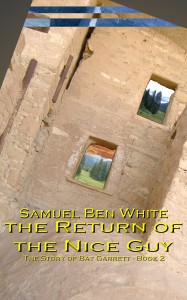
the Return of the Nice Guy

Book 2 of The Story of Bat Garrett

Two years after the murder of a prominent north Texas banker has been solved and the killer put in jail, Dallas private eye Bat Garrett is hired by an attractive widow to find out why her husband was killed.
The police (and everyone else) say it was just a robbery gone bad, but the widow thinks differently.
With Jody Anderson still on crutches from her horrific ordeal in “The Nice Guy” but by his side as always, Bat undertakes a case that leads him through an amateur archaeological society in Dallas and into a centuries old mystery in the ancient ruins of Mesa Verde in southwest Colorado.
Did the unassuming banker uncover something someone else would rather have stayed hidden?

Order Today on Kindle and paperback!


Make sure you read the prequel to this book, “The Nice Guy” and book 3 in the series, “Up to Bat“!

Reading Sample

Without a doubt, that was the best summer, fall and winter I had ever had.

As we have come to expect from the geniuses in government accounting, the Home Agency let me keep the money they had paid me for the job I had done for them back in the spring. It was way more than the job was worth—well, I should probably …

Anyway, I took the money and invested it in a friend who was opening up a baseball card and comic book store in Farmer’s Branch. As investments go, that wasn’t a whole lot better than just piling it up in the back yard and setting fire to it, but it gave me a chance to help out a guy who had been a good friend for a long time—and especially when I had needed one.

My private investigating business was starting to take off, too. I wasn’t getting any glamorous cases, but word had somehow gotten around that I was a pretty good hand at surveillance and so I was getting fairly steady work—some of it even from other investigation firms. I’ve always been a pretty plain guy, so I was a natural at hanging around in the background and watching other people without being observed myself.

Of course, the thing that made that summer, fall and winter better than all previous summers, falls and winters was that I had a girlfriend. A real, honest-to-goodness, she-likes-me-as-much-as-I-like-her girlfriend. I had never really had one of those before. Well, there had been Thalia, but that had been … oh, never mind.
Her name was Jody Anderson and she was the love of my life. The one you know that—even if things were to go sour—she’d always be the one you’d think of as “the one great love.” The kind you’d write songs about if—unlike me—you had rhythm or any sense at all of musical style.

She had shoulder-length hair that was somewhere between auburn and brown, tending to the red in the sunshine. She was petite of build but a perfectly shaped figure for all that. And she had this great little mole just above the left corner of her mouth.

She might not have thought of that summer as a great time, because she spent most of it in the hospital, or in rehab. She had shattered her right leg—above and below the knee—and there was talk on more than one occasion that it might have to be amputated. I think she kept it strictly out of will-power.

She had broken the leg while on the job with me for the Home Agency. She had also been shot, but that—by comparison—was easily dealt with. I mean, by itself, it would have kept her in the hospital for a couple weeks at a minimum. But then she would have been out and rehab would have probably consisted mainly of walking and getting her lungs back in shape. The leg, though, was a process of multiple surgeries and rehab that lasted well past Christmas.

So I say that the government overpaid me, but I doubt that Jody would say the same thing about the remuneration she received. They took care of her medical bills, of course, but no amount of money would be worth that kind of pain and suffering.

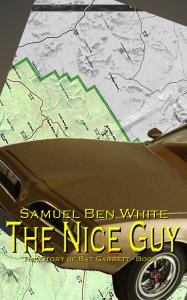
The Nice Guy (a Bat Garrett novel)

Bat Garrett was just a novice private investigator with big dreams when he was approached by two men from the Home Agency-a secretive government body-to go on a mission. On the mission, his dreams seem to come true as he is surrounded by beautiful women, intrigue and danger. The dream turns into a nightmare when the first woman tries to kill him, the second one turns out to just be a plant and the third woman-the one he has to marry-can’t stand the sight of him. As Bat tries to uncover the secret behind an apparent drug ring and the possibility that he’s just someone’s patsy, he also has to come face to face with the one trial he’s spent his life trying to avoid: growing up.

Order today on Kindle or in paperback!

To read more about Bat (and Jody), be sure and pick up the next book in the series “The Return of the Nice Guy“!

Reading Sample

I was in what was then the only non-smoking pool hall in Dallas-if not in the world-and about to sink the seven ball when someone tapped me on the shoulder. Tapping someone on the shoulder in a pool hall-when they’re setting up for a shot, no less-is not usually a wise move. Even in the higher class establishments, there’s still just a bit of the pool hall mentality lingering in the air. This particular tap hadn’t been one of those light, “excuse me” taps, but a hard, insistent tap.

Thinking it might only be a case of someone accidentally bumping into me, though, I turned around affably and asked, “Excuse me?”

Staring me in the face was a vaguely familiar, unshaven mug of a man. He looked mad enough to chew barbed wire and spit nails. His teeth made me think he might have even tried it once upon a time.

He stood about an inch below my six foot, but he would have made two of me in girth. He wore the outfit of a mechanic and something about those coveralls from “Jimbo’s Transmissions” reinforced the idea that I knew the guy from somewhere. On the other hand, I was relatively sure I had never met him before. I’m pretty sure I would have remembered the smell.

“Your name Garrett?” he asked in a gruff, demanding voice.

“Yeah,” I replied cautiously. I had never had any work done at Jimbo’s Transmissions, so I couldn’t imagine what this guy would want me for.

“You the private detective?”

“Yeah,” again, cautiously.

I noticed the pool cue he was holding in his left hand just as he swung it at me. I ducked just in time and the cue splintered as it smashed into a post just to my right. I took the momentary disorientation he was experiencing as a result of missing me to put the post between us. He recovered quickly and tried to take another swing at me, but it was again blocked by the post. I knew that tactic could only last so long, though, so I looked for my next point of defense.

“You mind telling me what this is all about?” I asked hurriedly, retreating to the far side of the pool table. I held my own cue up as if it were a sword and tried to parry his blows. Fortunately, he wasn’t any better at fencing than me and the blows didn’t land on anything except the table. I was hoping someone from management was watching because I didn’t want to have to pay for the gashes in the felt.

“You know what it’s about!” he shouted, a rage pouring out of him like I hadn’t seen since I rode my bicycle through Mrs. McClarty’s petunia garden in third grade.

“I promise you I don’t! But if you’ll tell me what it is that has you so worked up, I swear I’ll do whatever I can to rectify the situation.”

“I’ll rectify you! You lousy, worm-eaten shutter-bug!”

“Shutterbug?” I mumbled, more to myself than to him. As an errant swing of his pool cue smashed the three-bulb light over the pool table, a light went on in my own head and I suddenly said, “You’re Mister Watkins, aren’t you?”

“Got that right, punk. And you better stay away from me and my wife, you hear?”

“Stay away? Your lawyer hired me!”

“What?” he asked, still swinging but obviously befuddled.

“Isn’t your lawyer Randolph Shertz? Of Shertz and Osborne?”

“Yeah … ” The swings of the pool cue definitely had less power behind them. The last one had only broken one bulb.

“Randolph Shertz hired me to trail your wife and find out who she was seeing. I followed her and took some pictures. This afternoon I’m supposed to deliver them to Shertz and be paid.”

Watkins reached into the pocket of his once-blue coveralls and pulled out a dirty brown envelope. He tossed it across the table to me, then asked, “These the pictures you took?”

Before I even had the envelope open, I replied, “Nobody’s seen the pictures I took, ‘cept me. I just developed them this morning. Well, me and the folks at the one-hour photo place. And my next door neighbor. He saw ‘em because a couple of the pictures were of his cat.”

I pulled some photos out of the envelope and took a look at them. They were pictures of Mister Watkins kissing-making out, really-with a young blonde woman who definitely wasn’t Mrs. Watkins. I had never met the wife of this wonderful couple, but I had followed her enough for four nights to know what she looked like. The woman in these pictures definitely wasn’t the woman I had been following. This woman had a figure while Mrs. Watkins was, basically, round. I looked up from the photos to Mister Watkins and asked, “Who is this?”

“A friend,” he replied, as if suddenly realizing that his whole appearance in the pool hall that afternoon was, at best, ill-conceived.

“Must be a good friend,” I commented.

“You didn’t take those?” he asked, a little bit of hope that I did take them showing through in his voice. He was suddenly realizing that, if I didn’t take them, then someone else entirely knew about his tryst and he had just told me about it for no reason.

“No, not my work. How did you get the idea that I had?”

Watkins was shifting his feet and absently fumbling with the broken end of his pool cue when he finally replied, “I was looking for the checkbook when I stumbled across some of my wife’s files and found that she had been seeing my lawyer. I wondered why. Then, I ran across your name on one of the sheets and it said you were a private eye. When I got them pictures, I figured Shertz must have hired you on her behalf to trail me and find out if I was cheating on my wife.”

“Well, I didn’t take these pictures.” I went over to my jacket, which was hanging on a near-by hat tree, and pulled an envelope out of the righthand pocket. I tossed it to Watkins and said, “These are the pictures I took. See? I have a much better sense of composition and style.”

He pulled out the photos and a strange smile appeared on his face as he flipped through them. I knew what was in those pictures and was wondering what a husband would find amusing about them.

“I’ll be dogged,” he remarked. “So she was cheating on me while I was cheating on her. Who’d’a thought?”

I was puzzled and asked, “You didn’t know your wife was cheating on you?”

“Not a clue,” Watkins replied. He smiled a gapped grin and asked, holding up one of the pictures of his wife, “If you were married to that, would you ever suspect her of cheating?”

“I think I’d rather not answer that.”

Watkins shrugged and muttered something like, “No matter.” He seemed to be taking it awfully calm, but that may have been because he had just been caught with his own coveralls down.

I was talking mostly to myself when I asked, “Then why did Shertz hire me to take photographs of your wife? I don’t get it.”

“Huh?” he looked up from the pictures as if he hadn’t been listening.

“Your wife goes to Shertz to start divorce proceedings. Shertz, it would seem, hires a private detective to catch you in the act of infidelity; a job that is done quite well. So, why would he also hire me to trail his client and catch her cheating?”

“I don’t know. Why?”

“That’s what I’d like to know. It seems like his best bet would have been to make his client come out looking virtuous while you look like a jackrabbit. But, as long as I get paid …” I pointed to the contents of his hands and said, “Can I have my photos back?”

“Uh, sure.” He handed them across the table and picked up the photos that had heated him up and sent him after me in the first place. Then, much to my surprise, he extended his hand across the table and said, “Sorry about trying to brain you with the pool cue.”

“It’s all right,” I told him, shaking his burly hand. “I’d have probably been more upset if you had been successful.”

“I was just all worked up when I thought you were going to blackmail me. I’ve been through that before.”

As much as I would have liked to know what he meant by that, I was already thinking along other lines. My brow furrowed with confusion, I asked, “But you aren’t that upset now that you know she was cheating on you?”

“Well, you know what they say: turnabout is fair play.”

“In bowling, maybe. But this is a marriage you’re talking about.”

“Eh,” he dismissed with a wave of his hand, “It wasn’t much of a marriage.”

The attitude was completely incomprehensible to me, but suddenly, I had a pretty clear idea about why his marriage wasn’t working.

“I guess I better go back to work.” He said it like it was just the most natural thing to do; like this sort of thing happened on all his lunch breaks. “Reckon I ought to give Shertz a call on my coffee break and find out when the divorce proceedings will start.” He laughed good-naturedly and added, “Them lawyers. They sure play both ends against the middle, don’t they?”

He left without further ado. Me, I just stood there with my pictures of Mrs. Watkins and the butcher. I got to thinking that-if I’d had any idea the marriage had such casual views of fidelity-I could have saved myself a lot of trouble. Rather than skulking around and taking pictures from house-tops and rose bushes, I probably could have just asked Mrs. Watkins and her paramour to pose for me. I cast one more glance at the ugly couple-now even more distasteful to me since I knew more of the story-then shoved the pictures into my pocket.