
If you live in Canyon or Amarillo, you can now pick up copies of “After Time Ends” and “The Turtle-A Parody” at The Borrowing Owl Bookstores. Tell your friends!
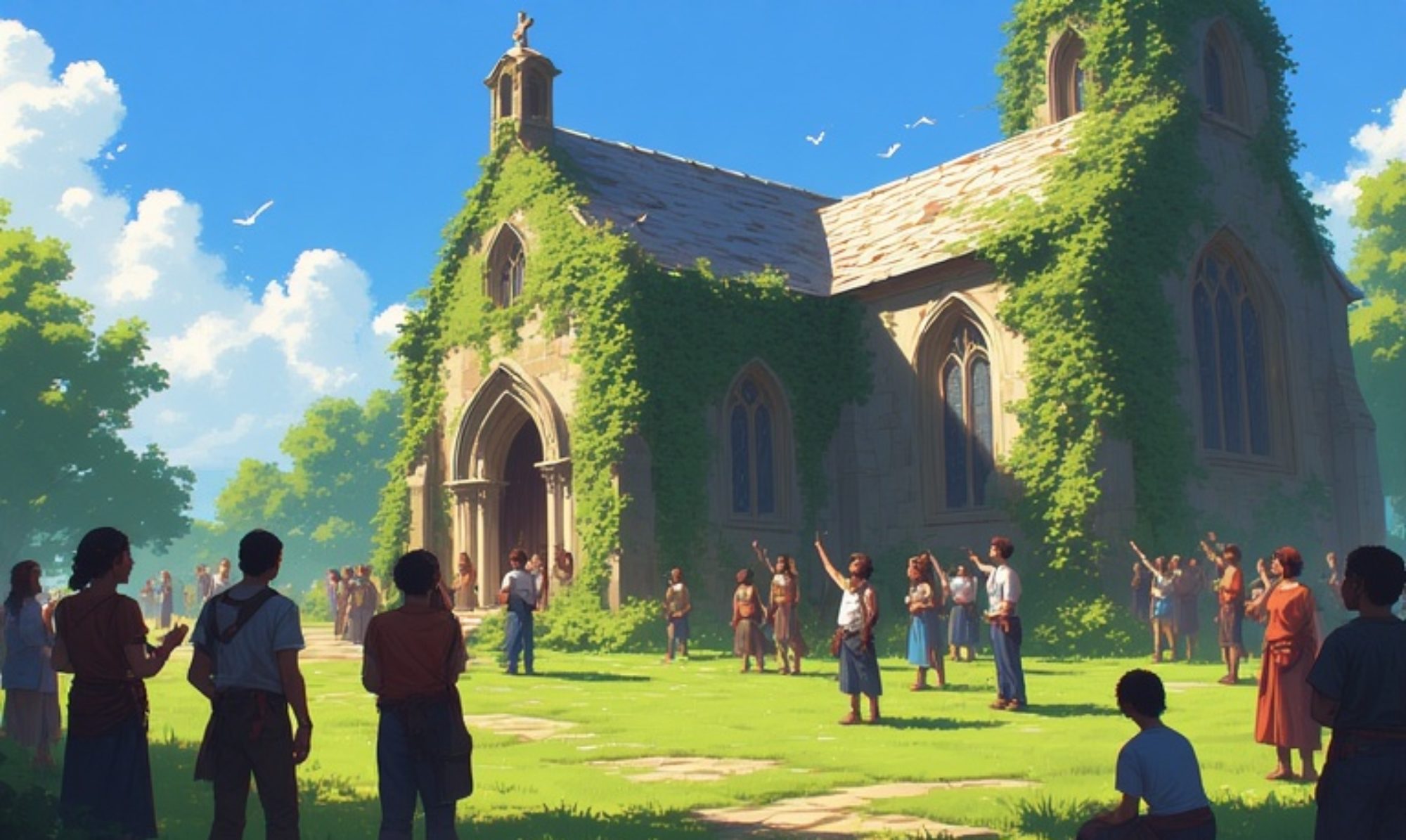

What happens after Gabriel blows his trumpet? Available Now!
If you live in Canyon or Amarillo, you can now pick up copies of “After Time Ends” and “The Turtle-A Parody” at The Borrowing Owl Bookstores. Tell your friends!
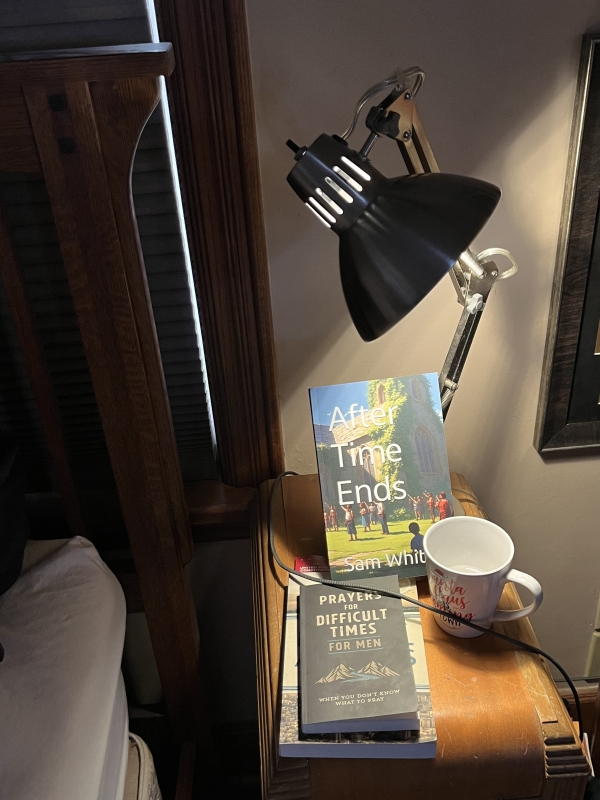
This is where Phil is reading “After Time Ends”. How about you?
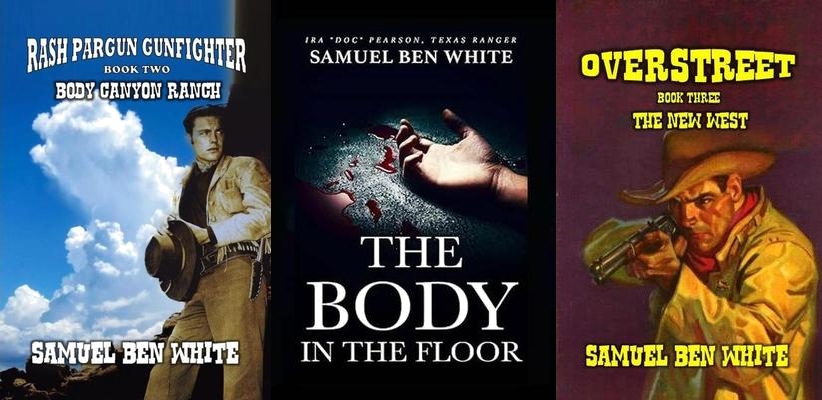
All twelve of Samuel Ben White’s westerns are now available on multiple platforms here! Make sure you order them all!
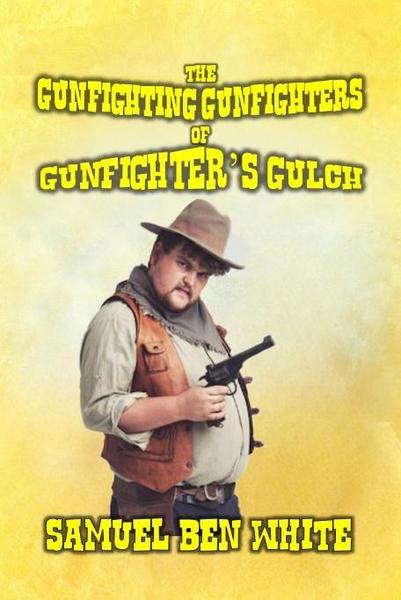
Available now on Apple, Kobo, and many other formats! Coming soon in paperback!
When Portly Ben Rousterman tried to hold up the Third National Bank, he paid for the mistake with his life, and roiled the far west Texas town of Gunfighter’s Gulch.
Into the story with a fierce indifference ride the principals:
All these characters and more in one hilarious night of bullets, dancing, fowl and water as the gunfighting gunfighters collide in Gunfighter’s Gulch.
“At first I was mad at Sam White, when I shot coffee out my nose after he caught me off guard and made me laugh out-loud. I loved the book and I don’t normally read ‘smoke burners’, as I call them. If you want to travel back to the old west, and then laugh when you step out of the saddle, this is your book! WARNING – Do not read while drinking coffee.” —Steve Sederwall, Cold West Investigations
Read a sample chapter …
Chapter One
It was a hot day in Gunfighter’s Gulch, the sun overhead as red as an undersized banana and beating down on man and beast. It hadn’t rained in time out of mind and the east town doctor was beginning to worry that insanity would set in sooner than usual this year.
It was such a day as that that Portly Ben Rousterman left his spotless appaloosa in the corral to the east and walked to the Third National Bank of Gunfighter’s Gulch. Hitching his twin Allen five-shot pistols into a more comfortable position on that part of his body where he once remembered having hips, he stepped up on the boardwalk.
And promptly went through as the heft of his girth cracked the dried wood. With a foul oath his mother had taught him on his lips, he stepped out of the hole and to the door of the bank. Throwing it open, he wedged himself through with much effort and difficulty for not only was it narrow and he wide, it was a revolving door—the only revolving door between Dallas and Los Angeles and, therefore, almost impossible to get parts for.
With an effort, Portly Ben finally shoved his way into the lobby and was told politely by the bank guard, “You might want to try the loading docks in the back when leaving, sir.”
“Obliged,” sneered Portly Ben before pulling out his twin Allens, their maple grips feeling comforting in his big beefy paws, and said, “This is a stick-up. Take me to the vault.”
A woman screamed. Another used that same word Portly Ben had used out on the boardwalk. Several people gasped at the use of such a word in public. A child asked his mother what it meant, to which she replied, “Ask me after the hold-up, please dear one.”
The nearest teller, a man so tall he could actually see over the cage, said, “Good sir, we have no funds in the vault at this time.” Eliciting more use of that same word from earlier from all the people who had come to withdraw various sums so that they might pay their bookies, he elaborated, “If only you had come tomorrow. That’s when the enormous secret gold shipment is due to be inexplicably deposited here.”
While Portly Ben mulled over this information with a strange light in his eyes, the bank guard couldn’t help but think there was something he should have been doing. The other teller, meanwhile, was Lacy Halverson, prettiest woman in the bank—and possibly Gunfighter’s Gulch—and a crack shot. She had jet-blonde hair and an alluring if strictly off-limits body and piercing mismatched eyes. She dreamed of one day going on the stage, and taking that stage to some place where she might find a theater production to watch and then become a part of, where she might spurn many protestations of love and die a romantic but unrequited life.
“Just give me what’s in the vault,” Portly Ben demanded, his voice low and gravelly for he had forgotten to drink water that day, “And no one will get hurt.”
Whipping the ancient LeMat revolver from her cash drawer, where she kept it both for defense of the bank and her person, but also as a conversation piece as there was so rarely money in the drawer, Lacy pointed it at Portly Ben and said, “Kind sir, please either put your guns away or move a step closer for when I shoot you I do not want to hit anyone else.”
Portly Ben was surprised and, as he looked in Lacy’s one beautiful blue eye (the other being brown and only so-so), he saw that he truly could die. He had never thought that before.
Well, he reasoned, that wasn’t exactly true. He supposed he had always known he would die, but he expected it to be from either old age or cliff-diving, possibly hanging. He carried guns, and he had used them, often as firearms, so he knew that man could die by the gun. He just never thought it would be him because so far it never had been.
They stood there like that, in a New Mexican standoff—for the bank was in more than half of the town that was in the New Mexico Territory on account of the Texas side of town having more laws against fraud—until Percy McGoon, a slightly-built man with massive forearms and a taste for spinach said, “If you people don’t mind, I really need to make my deposit and get to work.”
“I don’t mind,” said Portly Ben and waved Percy to go ahead.
“Why does this always have to happen to me?” Percy whined as the very tall cashier—Very Tall Paul Bigman—counted the three dollars Percy was depositing and then made him out a receipt for the majority of the amount. Taking his receipt and vowing in his mind to one day avenge all that had been stolen from him by this bank for years, Percy wished all a good day and left. He thought about informing the sheriff that the bank was being robbed, but he had already been late for work every day that week and didn’t want to try his boss’s patience any further.
In the bank. Portly Ben and Lovely Lacy said in unison, “What’s it going to be, Pal?” and then he chuckled and she tittered at their harmony.
The bank guard happened to glance at the clock just then, saw it was his break time, and so sat down and picked up the nearest copy of Puck and began to read. Chuckling, he kept his daily vow to not think at all about the bank or it’s problems for the next fifteen minutes. He did think about going in the back and getting a cup of coffee, but he hated coffee, so he didn’t.
Portly Ben was a patient man, but he could be pushed past the point of endurance. It came just then and he said, “I’m going to count to three, and if you bankers don’t start handing me sacks of money, I’m going to let loose with these guns and heaven help whoever’s on the other end!”
Those still paying attention were scared, for he sounded like he meant it and they all knew about Allens. Five-barreled guns where the barrels rotated instead of just the chambers, they were notoriously unreliable but, if their triggers were pulled, bullets almost always came out the other end. In the hands of a skilled user, they knew, an Allen could do much random damage and, unlike Portly Ben and living in the west as they did, they knew one and all that they could die that day.
The tall cashier, already bored out of his mind since Percy had left, could only hope that one of the bullets would catch him and end the afternoon sooner rather than later. He sighed with exasperation, but such didn’t trigger Portly Ben’s trigger finger. Tall Paul Bigman would have sighed again, more loudly, if he could have generated the interest in doing so.
He couldn’t, and so just remained silent, wondering if the would-be outlaw would mind terribly if he balanced his drawer, especially now that there was three dollars in it.
“All I want’s what’s in the vault,” Portly Ben demanded. “Just let me by and I’ll go in there and get it myself if it’s too much trouble for you to get it for me.”
Lovely Lacy replied, “The vault is for authorized personnel only. Now you, just turn around and squeeze yourself back through the door and don’t come back.”
Portly Ben was not used to having anything he desired denied him. Things he commanded were always carried out. Who was this remarkably attractive girl to deny him anything, he wondered, and would she go out with me when this is all over? He happened to know there was a barn dance over in Friona the next Friday night and he was going to be there robbing the stagecoach anyway, so maybe—
While no one but the Good Lord ever knows for sure, it is quite possible that the Friona Quilt Store Jamboree and Hog Call was the last thought to pass through Portly Ben’s mind. It is quite possible that his thoughts were more along the lines of, “Wait! That’s a LeMat, the gun of the Confederacy that not only had six revolving chambers but a second barrel bored out to either 16- or 20-guage with which the user could fire a raft of buckshot!”
Accidentally waving his left-hand gun in a more threatening manner than he perhaps intended, he received the full brunt of the 16-gauge in the chest, which spun him around (twice). As, with his last breath and more from autonomic function than intention, he stumbled toward the front door, Lacy fired off the six rounds of .36 caliber bullets, knowing as she did that a .36 didn’t pack the wallop of a .45 and one couldn’t be too careful.
With his dying breath, Portly Ben Rousterman wedged himself into the front door of the Third National Bank of Gunfighter’s Gulch. Portly Ben dropped his two guns, the one from the right hand going off on impact with the floor, its bullet destroying the framed portrait of Aaron Burr which hung over the bank president’s desk for reasons that probably don’t come up in this story.
Someone screamed, several other people said that word, and all of them wondered how they were going to get out with the front door clogged up that way and the loading dock door the guard had mentioned blocked by that old train car.


Published by Outlaws Publishing and available on ebook (in many formats) and in paperback!
See all of the Ira “Doc” Pearson novels here!
The Van Bent courthouse burns down and a body is found to have been stuffed into the floorboards years before, when the building was built. Ira Pearson is determined to discover the identity of the woman, but Sheriff Wood has little interest in the matter for he has more important matters on his hands–including a numbers runner and big city tough who came to Van Bent for some reason and promptly lost a thumb in an alley fight. Could the back alley fight and the woman in the floor somehow be connected?
Sample passage
“What’s going on, Chief?”
“I just—you need to see, first.”
The chief led the way over to the smoldering remains of the courthouse and to a ladder that had been lowered into the basement. He handed Ira some big, rubber boots, saying, “Put these on. Foller me. It’s safe,” Buckler directed as he descended the ladder.
Ira hesitated, but the man seemed to be going down with no fear. And it did look like everything was safe but soaked, hence the boots, which he put on. He took a breath, then followed the man down the ladder and into the pit that had so recently been the courthouse basement. He was glad of the rubber boots if for no other reason than that they came up to his knees and the piles of muddy ash were at least that deep.
They slogged over to a space almost in the center of the building’s footprint—which seemed surprisingly small to Ira, now that the building was gone—and Buckler knelt down and pointed. “Looky here, Doc.”
Ira bent over and saw instantly what the man was pointing at. “Human hand, ain’t it?” Buckler asked.
“Sure looks like it. Right hand.”
“No chance it’s just a fake of some kind? I seen a human skeleton over to El Paso once made out of plaster. This looks real to me, but I ain’t seen all that many human bones in my day.”
Ira moved in closer and peered at the strange object before him. “My early thought is that it’s real. Is there more?”
“We stopped work when we seen this,” Buckler answered. “If there is, I reckon it extends in under that pile there,” he continued, pointing. “I didn’t want to go no further ‘til we had you here to supervise. Thought you could tell us if this person died in the fire.”
“At an early guess, I’m going to say no. As hot as that fire was, if this were a, um, ‘fresh body’, there would probably still be more signs of flesh. And the burn marks on the bones would be different if flesh were melted off or if it were just bones in the fire.”
Buckler nodded and said, “I git ya, Doc.”
“Chief, you know of any reason there would be a skeleton in the courthouse?”
“None I can think of. Nobody had one in an office or anything—that I know of.”
“And this is on top of some things,” Ira commented, mostly to himself. Realizing he had said it out loud, he explained, “Not like this courthouse was built on top of an old cemetery and this was someone buried here. This person is above the rock of the basement. Any chance this person was stored in the basement?”
“What for?” Buckler asked, almost laughing.
“Who knows? Any old rumor that there was a body in the basement, though?”
“None that I ever heard. An’ I been here since the foundation was laid on this place. Before that, even. I helped to dig the hole.”
“All right,” Ira said, standing up. He looked around, then said, “This person’s dead, so it’s not like we can hurt him—or her—in any way. Still, let’s see if we can dig him out without jostling the bones around any more than we have to.”
“Okey-dokey,” Buckler said. “We’re going to need to brace that west wall, though. It’s bucklin’ a little and liable to collapse on us if we don’t.”
Ira nodded and said, “You get some men on that. You and me, let’s get some shovels and maybe a pry bar and see if we can find out whether there’s more under here than just a hand.” As the fire chief went off to put those instructions into action, Ira looked at the hand and remembered how finding a hand like this had landed his friends the Jameses in all sorts of trouble. He hadn’t been there, but he had heard the story. He also had thought over the years that, if he had been there, he could have kept Polly from spending that year in prison that she hadn’t deserved.
Buckler was soon back and, as three men worked to shore up the west wall, he went to work with Ira at pushing the ash and dirt away from the hand.
Soon, they were seeing a wrist, and then part of a forearm. And then, it seemed as if the arm were reaching out from within a wooden frame. “A casket?” Buckler asked as he looked at the wood.
Ira took up one of the shovels and scraped some of the dirt and ash away, then said, “Look at this, Chief. This isn’t a casket. Not built like that.”
Buckler shoved some of the dirt away himself and said, “That there’s flooring.” As Ira nodded, Buckler commented in worried awe, “This body was inside a floor! Somebody hid a body in the floor.” He reached out and rubbed some ash away from the top, saying, “That’s the tile from the first floor. I’m picturing in my mind and them joists for the first floor was foot-wide beams. Two foot on center.”
“Plenty of room to hide a body,” Ira commented.
Buckler tried to made a joke as he said, “Ain’t nobody goin’ to fit me in a foot-by-two space lessen they squeeze me down a might.” He looked up suddenly and asked, “You don’t reckon it’s a child, do ya, Doc?”
“Based on the size of that hand, I’d say it’s at least someone fifteen years old, or more. Not a big person. Might be a lady.”
Buckler took off his hat, as if at a funeral, and said with reverence, “God be with us.”
Ira raised up, tapped through the mud and ash in a couple places, then said, “Looks like there’s a fair-sized portion of that floor here still intact. Relatively speaking, anyway. Let’s clear it off and get some more pry-bars over here.”
“Think the whole body’s still together?”
“I’d have to say that would be beyond belief, but finding this at all is pretty incredible. And somebody better go fetch Sheriff Wood.”
“After all this time?”
“Whether we can figure out how this person got here I have my doubts, but it’s not likely to have been for benign reasons that someone hid a body in between floorboards. I think the sheriff needs to know.”
Buckler nodded again, then detailed someone to go get the sheriff and the other two men to help them pry the boards apart. It was not easy for the floor had been well made and they were trying to not disturb the bones any more than absolutely necessary.
Sheriff Wood was with them a while later—and quite a crowd had gathered nearby though the volunteer fire department men and Wood’s deputy Chubby were keeping them back—when they finally got the right boards pried up. There were a couple of reverent exclamations, the Catholics present crossed themselves, and Ira was the first to articulate any recognizable words.
“This was a woman,” he said. Though the visage before them was mostly of bones, there was just enough muscle and tendons still clinging to the form to keep the skeleton intact.
“How old, you reckon?” Buckler asked, watching with great curiosity, but also with a clear reluctance as to touching the bones.
Ira shook his head, but leaned closer and said, “I can give a better answer with more study, but her hips make me think she was old enough to have given birth. There was no sign of arthritis in that hand we saw first.” He then pointed and said, mostly to Wood, “Look there, Sheriff. However she came to be between these boards, someone murdered her to get her here.”
Wood looked, as did the other men close by, and could see the crack in the skull Ira was pointing to. Wood, feeling the need to say something, “She was either dead when she was put in here or close to it. Nobody would have lived long after a rap like that.”
Ira nodded in agreement then said, “It’s been a long time, Sheriff. Trail’s going to be colder than a polar bear. But this fire just revealed a murder.”
Published by Outlaws Publishing
Available for ebook (in many formats) and in paperback.
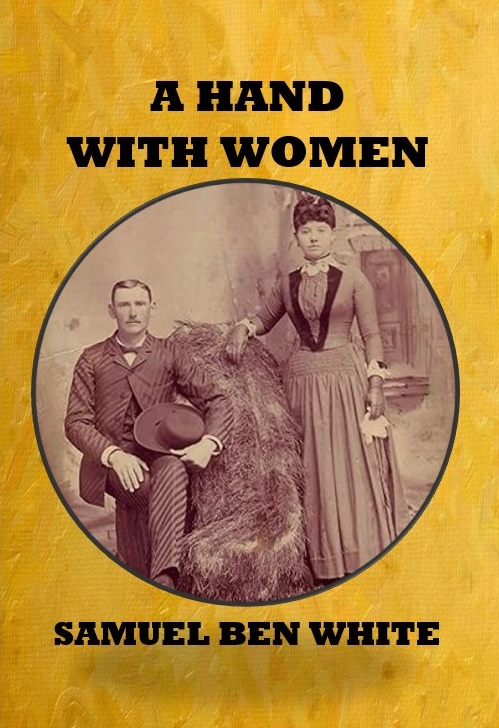
Morgan James left McKeon, Texas, ahead of a neck-tie party the esteemed locals were preparing to throw in his honor.
His horse had been tired when he hit McKeon to start with, and after a night of hard riding, it was about done in—and so was Morg. So he stopped at what looked at first glance in the early morning sun like a deserted ranch for water and a rest. It wasn’t so deserted as it looked, for a woman with a haunted look about her lived there. She offered Morg shelter, but there was still something about her that gave him the willies.
The ranch was called the T-Bell and there were those who said that death stalked the T-Bell range. Others said it was the woman who ran it that was being stalked, while still others said she was crazy, or a witch.
And then Morg found the better part of a dead body on the part of the T-Bell range that backed up on Palo Duro Canyon and suddenly all those wild stories he had been hearing didn’t seem half-wild enough.
…
Sample reading
I was never much of a hand with women. Not that I had ever been around many of them I wasn’t related to, but when I was, words flowed about as freely from me as water did in those dried-up creek beds back home.
The more I think about it, that’s a pretty good description all the way around ‘cause when rain did come back home, the creeks would suddenly swell up and overflow and cause all kinds of destruction. That’s me, too. Around women, I’d get tongue-tied and couldn’t hardly make a word come out that made sense, but then, sometimes, I couldn’t shut up. I’d talk like a carnival barker and, generally, make a fool of myself.
So I had learned, mostly, to be even quieter. When there was a woman around, she didn’t generally take much notice of the quiet, homely man—whether I was standing in the corner (not unusual), or right next to her. What I did know about women-folk, they was more likely to look at and admire a fancy piece of furniture than a guy like me.
Looking back now, maybe I wouldn’t have gotten in so much trouble if’n I’d knowed how to talk to women. Or, at least, had knowed how to let them talk to me and still keep my wits about me.
You take my pa. Why, he could talk to a woman just as easy as talking to a fella. Just had that easy, friendly, way some men have about them even though I’d say he weren’t no better looking than me. But he could walk into a room and folks would notice, or he’d start yarning and the women folk would be listening as close as the men.
Don’t get me wrong: my pa loved my ma and anyone who even hinted that he might have stepped out on her would find themselves on the business end of a punch to the nose, from me or anyone who really knowed my pa. He was just … I heard someone describe him once as “charming” and I think that’s the word that fit best. I think when them moments came where I’d be shooting my mouth off like a wagon wheel in need of grease that, deep down, I was trying to be like Pa.
Another thing about Pa was that he sure never would have gotten himself in a fix like the one I was in. The only trouble I ever knowed Pa to have was with the bankers. Not that he was a robber or sharp of any kind, but he was a farmer, and farming’s a chancy thing in Texas. Maybe it is anywhere, but down there in central Texas, when one year you got nothing but rain, then the next nothing but hail, then the year after that all the dust and dirt Oklahoma can spare, why, it just ain’t a stable business to my thinking. But Pa, he loved it. Sometimes I thought he even liked arguing with the banker, ‘cause he sure did it enough.
I remember one time when he fell behind on some payment or other and the banker sent out a couple of the toughs from town to “attach” Pa’s best mules. I was just a young’un then, and was wondering what they would attach the mules to, but Pa, he stood right up to them. He was holding a shot-gun like he meant business and told them two men that if the banker wanted Pa’s mules he could come get ‘em hisself. They argued a little, but they didn’t want to argue too much with that scatter gun, so they rode off, saying they would be back with the banker. They showed up the next day, banker with ‘em but looking scared, and Pa hands over the reins to them mules just as calm as you please. Next day, he takes me along with him and we head west, away from town, and over to Old Man Possum’s place. I reckon now that I’m grown that that man’s name wasn’t really Possum, but that’s what everybody called him. My pa made a deal with Possum that afternoon. He traded two weeks worth of me for two weeks worth of Possum’s oxen.
It’s hard to say who got the worst deal out of that. I was twelve years old and pretty strong for my age, so I was set to working in Possum’s garden, as he called it. It wasn’t much of one, but it needed weeding and watering—from a can, water drawn from a well that seemed like it must have been halfway to China in depth and as far as possible from the garden and still be on Possum’s place. So I took care of that garden, slept in Possum’s barn, was fed meals that ran mostly to stews with mighty little meat by Possum’s wife (I never had no idea what to call her other than “ma’am”) and did a few other odd jobs around the place.
My father, though, he got stuck trying to finish his plowing and planting with a team of oxen that, he said, was more muley than mules. But he got it done, and we worked that farm without mules that summer—and without much talk, for I was some mad at my pa for trading me off like that—but it was a good, rainy year for that time and that place, so we had the best crop we’d ever had. Pa took the money we made, paid off that banker that took the mules, then went thirty miles away and opened up an account with another banker. Pa fixed up to be a pretty fair farmer and had a good eye for dairy cows, so though we was never rich—while I was to home anyway—he generally ran ahead and rarely behind. That other banker, the one Pa went to after the first one, his bank eventually became quite a going concern and I heard he liked to rub it in on that guy Pa had left.
When I turned fifteen, though, I lit out. I wasn’t mad at Pa, and he didn’t begrudge my leaving, but a cattle drive from way down south came through our area and the drover asked if I or my pa would like to ride along and make a few dollars as one of the men he had started the drive with was sitting back in Leander with a broken leg. I think Pa hated to see me go, but he had done some yonderin’ when he was about my age, and then he had fought in the war, so he knew what it was like to be a young man who feels the need to get out and test hisself against the world. He shook my hand, slipped me a five dollar gold piece (where it come from I always wondered, for I had sure never known him to have any extra money lying about) then told me to write my ma now and again. I said I would and lit out, nothing to my name but a used Colt, a used-er saddle, a middlin’ horse, and not enough of an idea what I was going to do for it to be considered good or bad.
When I rode up on that little farm house, boards old but took care of with white wash next to a barn in similar state, it was fifteen years later and I had a sight of riding behind me, and a lot of years. I was done in and thinking anywhere, no matter how ragged, would be a good place to stop and cool off for a moment. When I saw that it had a pump and a trough, why I thought I was as close to heaven as a body could come on this green earth, which wasn’t much green that year, but that’s not really important to the tale I don’t think.
There was an old army canteen at the base of the pump, the lid screwed on tight. I figured that was left by some good Samaritan and that the water in the canteen was so’s anybody who came along could prime the pump. It was a common practice out there in them dry lands, and every man—even the outlaws and ne’er-do-wells—knowed to refill the canteen before riding on. Why even me, riding ahead of a posse like I was, I was already figuring that my first move after getting that pump a-flowing would be to fill that canteen and set it back where it was for the next guy, even if it was them that was hunting me. So when I picked it up and nothing sloshed, I said a word my church-going parents would not have approved of. I apologized to them and the Lord, then reached for the handle on the pump. I took a good look at the water in the trough, then, and saw that it was pretty and clear, not old and scummy like I had been expecting. Fact was, there wasn’t any green at all on that trough, just a little in the grass around the trough where water had been sloshed.
Sloshed by who? I wondered, as most western people would have heard me coming for a quarter mile—and seen me for twice that—and been out to greet me or shoo me on my way. I’d seen nobody, though, so I cranked that handle a couple times and water gushed out of there like Moses’s rock. I filled up that canteen out of habit and set it by the pump, then drank some myself and splashed some on my face. That horse I was riding, an old fellow with a blaze across his nose and a faded Spectacle brand on his rump, he was already at work on the water in the trough and looked at me as if to say, “I seen this water was fine right off. What was you waiting on?”
It was a dry day, and I drank my fill, but it wasn’t really all that much; I suppose on account of having spent a lot of dry days in my life. So I filled my own canteen, then drank again.
With water in my belly, which suddenly felt like too much water when I started to walk away from that pump, I tried to think of what I should do next. Running from that posse seemed like a bad idea the more I done it. They were going to catch me, sooner or later, and even if they didn’t, someone would. And then even though I still thought I wasn’t guilty of what they said, I was guilty of … what was it a sheriff I once knew called it? Escaping justice? Evading arrest? Yeah, that was it. So even if I got shed of that posse this day, they would put out a wanted poster saying I was wanted for evading arrest and there was no way I could deny the fact.
If I was to ask my ma and pa, I reckoned they would have told me to go back and face the music. Setting a good bit of store by both justice and the Good Lord, they would have told me that the truth would set me free, or something like that. I didn’t want to doubt the Lord, but I knew the carrying out of justice would be done by men, and I had no cause to trust them. Specially not in a bunch like that. One man, I might could talk to him and set him right, but a whole bunch like that, and with me being a man who had run like he was guilty even if he wasn’t? No, I didn’t have a lot of confidence in justice being did.
The short of it was: a local man was dead and I was a stranger. I was pretty sure I hadn’t killed him, but everyone else who might be a suspect was a knowed local, which made it a lot easier to suspect me. Who knows but what I might have thought the same in their place. I told myself then that, if I was ever in such a situation, I’d cool my heels and find out what the facts was before making a decision. Such an idea was fine and dandy, but it still left me out there on the prairie with a posse likely somewhere behind—and not by much.
It was then I noticed there was a bit of a garden beyond the house, and some straggly fence guarding a draw further back. I couldn’t see anything being kept in that fence—or kept out by it—but it didn’t look broken down so I was guessing there were cows beyond those barbs. The barn door was half-closed, so I couldn’t tell if there was anything in there.
So, I up and hollers, “Hello the house!” like a neighborly westerner should. In the city, they tell me a person would walk right up to a stranger’s door and knock, but all my life I had been told that the best thing to do—the friendly thing to do—was announce yourself before even setting foot on the porch, just in case they didn’t want you to come no further. Most folks wouldn’t begrudge anyone some water, but they lived out there in the middle of nowhere because they wanted to stay in the middle of nobody and didn’t want nobody coming round unexpectedly.
And in that country, you could see who was coming. It was flat and there wasn’t hardly a tree in sight, and very little roll to the land except where that draw was. It was the kind of land that made me mindful of a man I worked for during roundup down near what would later be called Sudan. He was a grizzled, grumpy old man who once told me he picked such flat land because when his wife left him, he wanted to watch her go for a week.
Where this little farm sat, it was almost that flat. It was deceiving, though, because I had a hunch that draw was just one of the tentacles of the canyon, which one could ride up on all of a sudden. Even without the canyon, flat lands are rarely as flat as they appear and little dips and hollows can hide a lot more than one would think—just ask them that fought the Indians for them lands.
For all the flatness, it wasn’t a bad spread. The buildings could use some work, but that well was good water and in that country, water was gold. A man could run some cattle, or maybe grow some crops. I couldn’t see any way a man could get rich off that land, but I was thinking a body could make a living, and I’d seen just enough rich people to make me think the man who made a living was probably better off than the man who was rich. Me, I’d been nothing but a drifting saddle-bum, a good hand on a ranch, but I’d started to think that I wouldn’t mind putting my feet under the same table night after night, plowing my own land or cutting my own hay or riding herd on my own cattle. Fourteen or fifteen years before, I’d have said that would never be for me, but a man changes over time, or I had, anyway.
That was sort of why I had been in that town to start with, the one that now wanted me back so badly that they’d sent a posse of men to look for me. I had come there to hunt up a job ‘cause I had heard that the local ranches were hiring for a round-up. It had been in my mind that I could stay in one area for a while and keep my eye out for a likely piece of land that I could buy and develop for myself. My great plan didn’t make it past the first night.
I’ve never been much of a drinker, but I was new to town and there’s not a better place to learn what’s going on than a saloon and that town only had two of them. Looking back, I wished I had tried the other one, but I went into one called “Jeb’s” and there was a fair sized crowd already drinking. A faro game was going, as well as some kind of a wheel you could bet on. (I never liked them wheels ‘cause it seemed likely they were weighted and, even if they wasn’t, the odds of winning seemed awfully low. I played faro a few times, and won a little, but my money had always been too hard to come by for me to throw it away like that.) I ordered a drink, leaned against the bar, and surveyed the room.
Right about then, one of the guys playing faro, a big, hairy fellow with a too-tight shirt and a scar on the back of his head where the hair didn’t grow, he grabs the faro dealer by the collar and jerks him over the table, calling him a cheat. That faro dealer wasn’t much of a man size-wise, but he was quick with a knife and had this thin-bladed job out and driven deep into the big man’s right arm. The big man hollers and fetched that faro dealer upside the head with his left hand but the faro dealer still wasn’t having any of it and drives that knife into the man’s gullet.
From that point on, it was a little hard to say what all happened, but as near as I can remember, one of the big man’s friends took exception to what had transpired and smashes a chair over the faro dealer’s head. The dealer went to his knees, then the man who was spinning that chance wheel comes up with something like an Indian club and brings it down on that friend’s head. Then someone else jumped, then someone else. Before you knew it, everyone in that saloon was throwing punches.
Including me.
Now, with the clear vision of looking back, what I should have done was skedaddle out of there, even if I had to duck under a table and crawl. But I had been in some fights before and usually gave a good account of myself. Not a big man—just right at six foot—I had the muscles of hard work and had learned a little just from being knocked down here and there. So when a fella crashed into me and spilled that drink all over my best shirt, why naturally I straightened him up and give him an upper-cut to the chin. Somebody else took offense at that, or maybe just wanted in on the fight, and jabbed me in the kidneys. It hurt something fierce, so I took to pounding on the man who I thought had done it. He was standing in the right spot, anyway.
From there on, it was just a circus act, with men throwing chairs, punches and each other until the room was a mess and we were, too. Of a sudden, a shotgun blast goes off and we all stop what we’re doing to see the sheriff of that town standing in the doorway, a couple deputies by his side and a scattergun in his hand. Then he tells us we’re going to pay for the damages and anyone who tried to leave the room without putting at least five dollars in the saloon-keeper’s hat was going to jail until such time as he, the sheriff, thought we deserved getting out. Now, I begrudged that five dollars, for I had been planning to send it to my bank, but I figured five dollars was better than a night in jail so I chucked it into the hat and the sheriff let me walk out the door, but not before asking my name. I told him it was Morgan James and he let me go but told me not to leave town right away.
My horse was tied up out front, so I hopped up on it and rode him out to a clump of trees I had seen west of town, figuring to bed down there for the night since the few dollars I had hoped to spend on a room were now in my Cindy Lou Fund, as I sometimes thought of it. They weren’t so much trees as just tall scrub, but after checking for snakes they made for a decent place to bed down, and a little off the road. I ground-hitched the horse and lay down.
It was just a few minutes after I stretched out that I heard a ruckus coming from town. I wasn’t but a couple hundred feet from the back door of the other saloon and sounds can travel pretty well on a prairie night. Once my ears was attuned, which was mostly a matter of waking up, I heard someone shouting that someone named Buster McKeon was dead, and something about his head being stove in. Someone else said something about him being still on the floor of Jeb’s when the fight was over and how they had thought he was just knocked out until someone felt of him and realized he wasn’t just out, but dead. I was listening good, then, for who doesn’t like to hear a good yarn like that?
It was at that moment that I began to wish I had crawled out when that big hairy fella got stabbed in the arm ‘cause my ears caught real clearly someone saying the name, “Morgan James.” Someone else said something about how they all knowed each other so it had to be that stranger who killed this McKeon.
Part of my brain said I ought to walk in right then and clear my name, but that part of the brain was stampeded by the rest of me that said I better get out of there because McKeon was the name of the owner of the biggest ranch around. I didn’t know Alexander McKeon or this Buster by sight, but I told myself there was no chance I was getting a job in that town now and I had best put some distance between me and them good folks.
As the crowd moved off towards where I had seen the sheriff’s office, getting louder and angrier as they went, I hurriedly and quietly rolled up my blanket, saddled my horse (he wasn’t too happy about that!) and slipped off into the night as fast as I could go without making any noise. There’s always noise, though, and with every one I made, I scrunched my shoulders, waiting to hear someone from town holler, “He went that way!” I didn’t hear any such thing, but I still didn’t relax much even as I prodded the horse to a slightly faster gait as we got a couple hundred yards from town.
Most of a day later, after watching over my shoulder and seeing a faint dust cloud that I was sure was a posse on my tail, I arrived at that little, run-down farm. Even though that well water was as good as I had said, I was about to come to the conclusion that no one was home when the front door of that little house opens up and a woman’s voice says, “You’ve had your drink, now move on.”
I looked up in surprise and for the first few moments I couldn’t have told you whether she was tall, short, fat, skinny or pretty, because all I could see was that old Sharps .50 she was holding that would have drove a hole through me bigger than my horse if let loose at that distance.
When Bat Garrett wakes up one morning with the wrong wife, he knows something is wrong.
Jody’s dead. His grandson Edward is dead. A young woman named Marianne went to the future by herself.
Everything is wrong and Bat is the only person who remembers how things used to be, when they were right. But it’s not just a memory. Bat can see that other life. Bat is caught in a dual reality and most everyone–in both realities–thinks he’s going crazy. But Bat is convinced that only one of the realities is the way things are supposed to be, so he sets out to find out what split reality and do whatever he has to do to make it right. Even if it means teaming up with Garison Fitch.
No, not the Garison who lives in Colorado. The one who lived and died in the 1700s. Bat has to get to that Garison to straighten everything out.
Available now on Kindle (click here to order) and in paperback!
And don’t forget to read the next step in the saga: “TimeKeeperS: Rectification“ and the conclusion “TimeKeeperS: Restoration“.
…
Reading Sample
Garison had taken the man’s hand when it was offered, but now he let it go as if it were on fire. Regaining most of his composure, he peered at the man with rapt interest and asked, “Bat Garrett?”
The man looked nervously at the three women, the one fair and blonde, the one dark and the one with red hair, but all with striking good looks, then said, “We met, um, back when you were coaching baseball at Sul Ross University.”
Garison could not hide his surprise as he repeated vaguely, “Sul Ross?”
“It’s in Alpine,” the newcomer said, by way of explanation. “Texas,” he added.
Garison suddenly slumped back into the large, padded chair behind his desk, muttering, “Alpine.” Then, again, more softly, “Alpine,Texas.”
Helen, rushing to her father’s side in near panic, couldn’t help but ask, ”How could he know, Pop?”
Heather’s lawyerly mind kicked into gear and she confronted the newcomer with, “If I find that you have broken—“
“Broken into the Anglican Church and read the manuscript? Oh, wait, you haven’t left it at the Anglican Church, yet, have you? It’s still in the house somewhere, isn’t it?” As Garison Fitch and his daughters looked at him suspiciously, the man who had introduced himself as Bat Garrett reached into his pocket and produced a coin, flipping it to Garison. As Garison caught it deftly, the man instructed, “Take a look at who’s on that coin. And the year.”
As Helen continued to gaze piercingly at Garison, Heather looked at the coin in her father’s hand and muttered, “That looks like—“
“George,” Garison completed. Then, “1975? That’s the year I was born.”
Helen injected, “He could have read the manuscript and manufactured that.”
“That’s what Heather said you’d say,” the man replied with a smile. Looking at the Heather in the room, he explained, “The other Heather. The one you were named for. So she wanted me to show you this.” He pulled a small picture frame from the leather satchel he carried and passed it across the desk to Garison.
Garison took it suspiciously, almost insolently, but then he saw the picture in the frame and his voice caught with a gasp. He finally managed to say, “Heather.”
The Heather in the room reached out to still her father’s shaking hands and looked at the picture in the frame. She turned her eyes to the newcomer in the room and asked, “That’s Heather? His other—the woman I’m named for?”
Bat hesitated, but not as one who is trying to think of a lie. He finally managed to say, “Yes.”
Helen gently drew the frame from her father’s hands and looked at the picture. In her best lawyerly voice—owing to living in a family of lawyers—which she sometimes affected to keep the emotion out, she asked, “This is what you call a—a photograph, isn’t it?” At her father’s nod, she took a closer look at the picture and said, “She—she looks kind of like Jody, doesn’t she?”
“No she doesn’t,” the newcomer said, then blushed and, shaking his head said, “Oh, you mean the Jody in this room. Yeah, they do kinda favor, don’t they?”
Garison nodded as a low laugh emanated from his chest. “She has from the day she was born. I mean, Jody looked like Heather from the very first.” He looked at his daughter Heather, and told her with a smile, “When your mother suggested we name you Heather, I thought it would be a grand, divine joke if you looked like the Heather of the future. You never did, though. You’ve always been your mother in dark colors. But when Jody was born—I mean, from the day she was born … “
He swiveled his chair and looked out the window for a moment, then shook his head and jumped to his feet. He came around the desk, almost bowling Jody over, and extended his hands, asking warmly, “Bat Garrett? Is it really you?”
The newcomer pulled Garison into hug—which surprised everyone in the room—and said, “I wasn’t sure I could find you. But, all in all, it wasn’t really that hard.”
“You’re kidding.”
“Well, I mean, I guess it was—once you get past the whole time travel thing. Once past that, though, I just had to follow the directions on the old map and they pointed me right here.”
“So where have you been? Anthony said you came by earlier. You could have waited.”
“I know, but, I really wanted to see the eighteenth century.”
“You took an awful risk.”
Bat laughed and assured him, “It’s OK. I didn’t stomp on more than a half-dozen butterflies.”
“Butterflies?” Heather asked. “At this time of year?”
“It’s a reference to—oh, never mind,” said her father. He turned back to Bat and asked, “I’m not sure whether to ask why you’re here or how you’re here.”
“How’s easier to answer,” Bat told him with a smile. “You want to take a walk and I can tell you what I know?—which may not be as much as you would like to know, but I’ll do my best.”
“I’d like that,” Garison replied. Then, “Would you like something to eat?”
Bat hesitated, then told him, “I packed a lunch and ate it just before heading into townbut that sure does smell good. I think I could eat a bite, if you’ve got it to spare.”
“Certainly,” Helen said, fixing Bat some food on the plate she had been using for herself. “Sorry that I only brought four plates.”
“How could you know I would be here?” Bat asked with a chuckle as he took the food. Then, “Thanks.”
Garison leaned close and asked with a smile, “You didn’t happen to bring anyTabascosauce with you, did you?”
“Of course. I always travel with condiments,” Bat told him. Then, at Garison’s hopeful look, added, “I’m kidding.”
“Well, then why come back at all?” Garison chided.
“You know, I always liked you better than the other Garison,” Bat said, gesturing with a steak wrap he had built. “The one in the future’s too serious.”
“Does he look like—like my father?” Heather asked, anxiously, for the first time in her life believing that her father’s story might be true.
“Exactly like.”
“I want so badly to start asking everyone questions,” Bat told him as they walked the dirt streets ofAlexandria. “’Did you fight in the war?’ ‘How’s the Constitution coming?’” He saw a man walk by, followed by another man with dark skin, and added in a low voice, “’How can you possibly think enslaving another human being is an acceptable practice?’”
Garison nodded and said, “I have lived for more than forty years with those thoughts. How to bring indoor plumbing to everyone. To build an internal combustion engine. To end slavery. I’ve talked to George about that quite a good bit. And others. I’ve found a willing ear inAdams. George tells me he will free his slaves upon his death. It’s a start, but,” he was silent as a person whom he knew passed nearby, then added, “It is not enough. I am known as an abolitionist, and I’ve been working on the issue but—but you didn’t come here to talk about that. Why did you come here?”
“Let’s talk about how and that’ll get us to why.”
“Fine. But not here. Not in the open. Let’s go to my house.”
“I guess we could have talked in your office. You being a lawyer, people are probably used to you visiting with weirdoes.”
“Oh, they think I am the weirdest of all,” Garison chuckled. “But mainly, I want you to meet Sarah.”
“I’ve always wanted to. You know: my son married your Sarah. I mean, the Sarah in the future.”
“Is that so? How did I—how did the other me take that?”
“Not good at first.” He slapped Garison on the back and added, “By the time they celebrated their twentieth anniversary, he was pretty much used to it, though.
“Oh, um, will I get to meet Bat? The one you named after me? Thanks, by the way.”
“He is off surveying, in theOhiocountry. He gets back this way when he can, but he’s always had a touch of the wanderlust.” Garison laughed ruefully, “More than a touch. He and Darius—who is his nephew and I’m guessing you may have heard about—have always liked the far lands. Maybe it’s because of all those stories I used to tell them about where I grew up.”
“Kinda wanted to meet him. Henry’s a congressman, isn’t he? And Justin’s in shipping, right?”
“You have done your homework,” Garison complimented. “Justin would prefer to be a woodworker, but his talent along those lines is limited. As we might have said in the twenty-first century, the shipping is done merely to support his woodworking habit.”
“We thought it best that I study up for this. And Jody, she works for you, doesn’t she?”
“She could be one of the finest lawyers in the country. Heather already is. But Heather stays here because her husband works with Justin and she is, at heart, a homebody.”
“And Jody?”
Garison shrugged, then answered, “For all her independence, Jody thinks it is also her job to look after me in all matters.”
“That’s great.”
“And do you have any other children? Besides the one who married Sarah? Did she turn out as pretty as her mother?”
“Prettier, if you can imagine it.”
“I don’t believe I can.”
“We—Jody and I—had two more children, actually. Eryn, she married a minister named Douglas Joens and lives inFlagstaff, near us. Homeschools. I think she looks just like Jody—my Jody—but no one else ever sees it.”
“It’s a father thing,” Garison nodded.
“And then there’s the baby of the family, Lori. She’s married to a fellow named John. He manages a church camp about halfway betweenLa PlataCanyonand Cortez and she just became a junior partner in your—I mean, the other Garison’s—law firm.”
“You don’t say,” Garison beamed with admiration.
“And Sarah—the future Sarah. Did she have kids?” he asked with interest.
“Yes. Gave us three beautiful grandsons. Only sad thing about that is that we all wondered if a daughter of hers would have continued the family looks. But it would have been hard to top Sarah, so maybe she was a good stopping place.”
Garison smiled happily and recalled, “I can still see her playing in the yard when she was a toddler. Did you ever read about the time she saw the little tree?”
They came to a large, frame house on a quiet street. There was a small oak tree growing in the yard. The lawn was manicured, though being autumn the grass was mostly golden with few shoots of green still holding tenaciously to the cooling ground.
“It’s a nice place,” Bat commented, charmed by the antique rusticness of what was, in reality, one of the finest houses in town.
Before Garison could reply, a petite blonde woman stepped out on the porch. With a warm smile, she greeted, “Welcome Bat Garrett.”
Bat stopped in his tracks, then continued up onto the porch and offered his hands, saying, “And you’re Sarah Fitch. How do you know who I am?”
Sarah smiled and, after looking from side to side, told him in a whisper, “Helen called me as soon as you left the office.”
“’Called’?”
Sarah took him by the arm and, leading Bat inside told him, “Garison hasn’t left the eighteenth century completely unsullied.” She whispered, “I believe you call it a radio.”
Turning toward Garison, Bat asked with a forced chuckle, “I really hope you’ve invented toilet paper ‘cause I’m still shuddering from one near experience with what you call a privy earlier this morning.”
“It was one of my very first things,” Garison replied as he followed them into the house.

Book Three of The Legend of Garison Fitch
Jason Kerrigan and Brownwyn Dalmouth are pilots with the Republic of Texas Army Air Corps. A world war is going on and bombs have just brought an end to Crockett Air Field in south Texas. Jason and Bronwyn, though, are called away from the battle to be test pilots for a new aircraft that-they’re told-will bring the war to an end. The experimental craft lives up to expectations in early tests, but then it lands them somewhere it never should have sent them. Another place? Another time? Another dimension? Somehow, they’ve taken a trip to the future and changed the past. Or did they? The answer to their change of reality may be known to a Justice of the Peace in Colorado named Garison Fitch. To figure it out, though, Garison may have to team up with his least favorite person: Bat Garrett.
Order Today!
.
Reading Sample
When he woke up he was laying face down in the dirt and couldn’t remember how he got there. There was a horrible pounding sound in his ears that was more than just a headache from having been knocked to the ground, but he couldn’t recognize it right off.
He couldn’t recognize anything, he almost realized. The truth was that even when he woke up, he wasn’t really awake. While he might not have a concussion, he was certainly disoriented.
He had enough sense to know that laying down in the dirt wasn’t what he normally did, so he decided to change things a bit. He positioned his hands underneath himself and realized he was pushing gravel. Gravel on tarmac, actually. So he raised himself to his knees and looked around.
What he saw was chaos.
Where once had been buildings, there were smoking ruins. On a military base that had been governed by rules of order and decorum he saw only disorder and panic. The few living people still inhabiting the base were trying their best to walk, crawl or drag themselves to a place that was safe from the bombs. None of these people were visible to him at the moment, though, because of the smoke from the bombs and the fire from the buildings.
That’s what he was hearing, he suddenly realized. The pounding in his ears wasn’t just from the headache (though that was undoubtedly part of it) it was from the bombs.
Overhead, through the fog of dust and smoke that threatened to choke what little life was left, he could see the shadows of the planes. He counted at least three big ones and maybe a dozen fighter planes. It was hard to be sure, though, as they were moving so fast and the visibility was so bad.
He put his hands to his ears not so much to see if they could deaden the sound–he knew that was too much to hope for–but to see if his ears were bleeding. Between the sounds of the explosion, the roar of the low-flying planes, and the whistle-scream of the bombs as they fell, his ears were hurting. He was not only surprised that his hands came away blood free, he was a little surprised that they came away without actual pieces of his ear-drum.
He tried to get to his feet but the concussion of another bomb knocked him back down. He realized quickly that it must not have been too close, for he was still alive. So he raised himself again to his knees, and then his feet. Making a cursory check of his body to see if any bones were broken, he satisfied himself that he was suffering only from a few scratches and a lot of dirt. An attempt to brush himself off (in retrospect he couldn’t imagine why he cared how dirty he was), he brushed his hand across a piece of glass that had been embedded in his uniform and received his first real injury of the day. Fishing out a handkerchief, he wrapped his hand as best he could, ignoring the tableau of standing by himself in the middle of a bomb zone taking so much trouble to treat something so relatively innocuous.
Crockett Army Air Base, his home for the last sixteen months, was being bombed out of existence.
The day had begun ordinarily enough for Captain Jason Kerrigan. Early morning run with the enlisted men, cold shower, then breakfast in the officer’s mess. He had eaten quickly because he had a meeting with General Wright at 0800 and, while Wright was a notoriously lenient commanding officer, Jason wasn’t about to be late for this meeting.
Jason Kerrigan was twenty-six years old, just over six foot tall, and had jet black hair. He was somewhat dark complected, though not overly so, and his build was strong if not imposing. He was a handsome man if not possessing of movie star good looks. In all, he was a pleasant-looking man who one instantly liked but could almost as quickly forget.
Sergeant Carol LeMans had saluted him at the door and told the general by intercom that the captain had arrived. So he stood at ease, feeling like a little kid who had bent sent to the principal’s office, and waited. He looked around at the cinder block walls out of something that couldn’t quite be called interest. The walls were of the standard military color euphemistically known as “olive” and were decorated with a few plaques commemorating the base and the obligatory picture of Sam Houston. It seemed like he was waiting a long time (it was just moments) before the general called him in.
The two officers saluted, then shook hands as the door closed behind them. Jason could tell by the look on the general’s face that the news he was about to receive wasn’t good news. He almost blurted out something to convey his disgust, but remembered where he was and who he was with and kept his peace.
“Won’t you have a seat?” General William Wright had offered. The General was a young man, younger than Kerrigan, even, but he had received a battlefield promotion to Captain two years ago at the Battle of Matamoros, then a jump to Colonel six months after that when he had single-handedly turned the enemy attack at a battle near Thibadeaux. Four months later he had been given command of Crockett Army Air Base and a Generalship to go along with it. He was an excellent officer and bright young man who also owed a large portion of his placement to the fact that the world was at war and fighting men–especially intelligent fighting men–were hard to come by. He was easy-going and lenient, but he knew exactly what he wanted and how to convey it at all times for all that. He also knew that at any other time in history he could have risen no higher than captain in such a short time and meant to do all he could to take advantage of the “blessing” of the war that went on around him.
“Thank you, sir,” Jason said as he sat down. The chairs were big, comfortable, leather chairs and completely incongruous with Crockett. But he guessed they were congruous with a general’s office (and very heavy) so they stayed in place even with the general changed.
Knowing his face had already given away the news, General Wright said, “Your request for a transfer to the front has been denied, Jason.”
“Any reason why?”
General Wright looked like he was about to say something else, then sighed and replied, “The same reason they always give. You’re a crack pilot and we’re going to need you if–”
“If this God-forsaken stretch of desert ever becomes the hotbed of frontline activity they expect it to become.” Jason wasn’t in the habit of interrupting his superior officers, but the frustration had welled up and canceled out his good sense.
“You seem to have this memorized,” Wright smiled.
“Unfortunately. Sir. You’re the third commanding general I’ve heard it from so far.”
“I’m really sorry, Jason. I put all the influence behind this request that I could.”
“Yessir, I’m sure you did.” Jason believed the young general, but he was afraid his voice gave away the fact that this was the third time he had heard that from a commander, too. He looked out the window absently for a moment, watching the fighter planes take off, and said, “Don’t they know you’ve already got two full squadrons of crack pilots wasting away down here?”
Wright stood up and walked over to the window, motioning for Kerrigan to join him. “There goes the 187th now,” he said.
“And I’m better than every one of them,” Jason mumbled. At the General’s glance–which contained a bit of a smile–Jason emphasized, “I am. I mean it, General. They’re all good pilots. I’d fly with any one of them. I have flown with most of them. I’d take any one of them in the 27th with me. And I’m rated on almost every fighter plane we’ve got, from the little scrubs to the big hawks. And you know full well I can outfly any one of them and ought to be somewhere where my skills can be put to use!”
General Wright pointed at the last fighter plane to take off and said, “What about her? Think you could outfly Lieutenant Dalmouth?”
“Yessir. Without a doubt.” Venting his frustration again, Jason said, “And that’s another thing. If we’re so short on pilots that we’re having to rewrite the laws and allow women into combat, then how come they won’t send me where I’m needed? I’m tired of training these new pilots. I want to be out there where I can do something.” Kerrigan watched the last plane soar up into the air and spat, “She’ll probably be sent to the front before I am!”
“Technically, this is the front, Captain.”
“It’s the back of the front, General, and you know it. I’m sorry, sir. I know I shouldn’t talk that way, but–” Jason straightened up all of a sudden and asked, “Permission to be excused, sir?”
“Granted,” the general replied as he returned the salute. As Kerrigan was reaching for the doorknob, though, he said, “Jason?”
“Yessir?”
“I know I’ve told you this before, but I’ve seen the front. And I know how you wish you were out there. I know it sounds glorious when you hear people like me talking about it. The battles, the heroism. But, well, I remember watching one of my best friends–known each other since high school–get literally cut in two by a bomb. The only thing that saved my life was his. I still see that at night.” He sighed, then said, “But I wish I were back out there, too, sometimes. I’ll keep trying to get you there.”
“Thank you, sir,” Jason said as he left.
General Wright turned back to his window and watched at Kerrigan crossed the tarmac, heading towards the hangers. That was Kerrigan. A day off after forty-eight hours on, someone else patrolling the skies, yet there he went to check out his plane and hope against hope he’d have a reason to fly it that day. Wright sighed, knowing no one ever had a reason to do an emergency take-off at Crockett, and turned away from the window.
He never heard the bomb that took out the command center.
Her hair pulled back tightly into a ponytail and tucked into her collar so that she could get the leather helmet and radio-phones over her head, Lieutenant Bronwyn Dalmouth pulled back on the stick and launched herself into the sky. She loved that feeling. There was nothing like it. And even on a day like this, that promised nothing but another patrol around lifeless skies over an almost lifeless desert, she was thrilled.
She loved the feel of the plane around her. With her hands on the throttle and the steering mechanism, she could feel every little wind current, every little wisp of a cloud. She loved the response of the airplane and was confident she could set a gliding record in it if she had to just because she knew it so well. Even her instructors had said it was as if she were one with the airplane.
She pulled up next to her wingman and looked to her right, lifting her hand to give him a thumbs up. Her eyes focused on his smiling face in the cockpit as he was just about to return the signal when his head exploded in a rush of blood and gore against the cowling. Her mind didn’t even have a chance to react to the horrific sight before his plane began to billow smoke and begin its death dive into the countryside below.
Rather than doing what almost anyone else would have done when operating on sheer reflex, she pushed forward and went into a dive herself. Going under the enemy fighter’s guns, she looped around behind him and put about twice as much lead into his fuselage as was needed. As the enemy went into a death dive, she followed to make sure he died, then pulled up at the last second to rejoin the battle above her that was already all but over.
Captain Jason Kerrigan didn’t know how long he had been out but it was long enough for Crockett Army Air Base to be virtually wiped off the map. He looked at his wrist, but his watch was gone. It was probably nearby, he thought, but he didn’t want to look for it. The hangers were burning masses of twisted metal. The airplanes that had been parked out on the flight line looked like a giant child’s uncompleted model kit and a brief glance told Jason there wasn’t a one of them that was flyable or even repairable.
Whoever had planned the bombing raid had known exactly what they were doing, that was for sure. The runway and the flight line were crater-filled and basically useless. The command center was a smoldering ruin, as was every other building on the desert base. Even the infirmary, which had been marked on its roof with a nice big red cross in a white circle, was leveled. It was as if . . .
His steps suddenly got a sense of purpose as he realized that this wasn’t just an “inflict damage on the enemy” bombing run. This was a “wipe them out so completely they can’t even call for help” bombing campaign. Such a campaign would most likely mean that something–something like invasion–was to follow. This was a long way from the sources of power, but that might be just the reason it had been chosen.
And now the sound of the bombs was dying out for there was nothing left to bomb. And the secondary sound he had barely acknowledged–that of the bombers and their accompanying fighters–was dwindling off into the distance. They were heading back to the south, their mission accomplished.
It suddenly occurred to him to wonder what had happened to the 187th. He looked up into the skies and could see the smoke trails of airplanes that had been heading for the ground in an unplanned landing. They must have been caught completely by surprise, he thought. He hoped at least some of them had been able to eject and would be even now trying to make their way back to Crockett.
What would he do with them or for them if they got there? he wondered. Even what little medical skills he had been given as an officer required some sort of implements and bandages. He had nothing but his clothes, which he supposed he would soon be ripping into bandages.
He also thought to hope that someone of the 187th –one, even–had gotten away and was able to get to somewhere to radio for help. If a ground attack were massing on the other side of the river, just waiting for Crockett to be out of the way, he wondered if reinforcement enough could be supplied in time. Whatever he could do, then, needed to be done quickly.
He saw movement through the smoke towards where the motor pool had once stood and started walking in that direction. Whoever was over there had apparently seen him at the same time and was walking towards him. At fifty feet, they were finally able to make each other out. The form in the smoke said, “Captain Kerrigan? Is that you?”
“Corporal Luis?” Jason returned.
“Aye sir.”
As they got closer, Jason asked, “Have you seen anybody else, Corporal?”
“I was about to ask you the same thing, sir. But no, I haven’t seen anyone.”
Jason stopped and looked around, hands on his hips. “Do you have any idea how long ago this happened? I woke up on the ground with my watch missing.”
Corporal Montoya “Junior” Luis, a wiry, dark-skinned young man with perfect teeth, looked at his own watch and said, “At least half an hour ago, sir. Not much more than that, though.”
“Where were you when it happened? How’d you survive?”
Corporal Luis looked embarrassed as he said, “I was in the head, sir. You know, that one on the back of the motor pool. One of the blasts blew a bunch of stuff up against the door but didn’t break the window, somehow. Took me the better part of fifteen minutes to break out that tiny window then squeeze through. When I saw what was going on, I just took cover under a wall that I think used to belong to the enlisted mess and waited for a chance to start looking for another survivor. You’re the first I’ve found, sir.” He quickly added, “But I haven’t looked much, yet.”
Jason looked down with his own embarrassment and said, “I somehow survived a walk across the flight line then slept through the rest. I was just walking towards my plane and then–boom–next thing I know I’m waking up face down on the tarmac. There were bomb craters all around me and pieces of blown up airplanes that had to have passed right over me after I fell. Don’t know why I’m not dead.”
“What do we do now, Captain?”
“First priority is survivors. You head that way, along the west side of the flight line, and I’ll take the east side. Any survivors that can walk, start them towards the motor pool. Any that can’t walk, leave them where you find them until we can try to round up someone with medical experience. Unless we have no choice, we’ll try not to move them until we’ve at least got someone with corpsman training to help.” He started to walk off, then said, “And Corporal, if you spot any kind of communications equipment, see if you can call for some help. Let someone know what happened here.”
“What about the 187th? Surely they’ve gone for help.”
“If any of them survived, yes. But right now, as far as we know, Corporal, you and I are the only two people alive in this part of the world.”
“Except the enemy, sir.”
“Yeah, there’s them. But I think they’ve left . . . for now.”
“Finally got you on the run!” she announced triumphantly.
But then the adrenaline began to wear off just a little and rational thought began to creep back in and she knew they weren’t running. Not from her. Not a whole squadron of bombers and half a dozen zeroes. They weren’t running from her or anyone else.
They were going home. They were going home because they were done with what they had come to do and there wasn’t any reason to stick around. She was just a whispering gnat of an annoyance that wasn’t even worth expending the fuel or lead on.
She thought about chasing at least one of them down and making him sorry for turning his back on her, but she knew they were already out of range. Especially if she had any hope at all of making it back to Marathon or anywhere else. She could no-power further than anyone in a Comal 38, but not that far.
With tears in her eyes, she turned around and started west. Maybe, she told herself, she could catch some sign if anyone else had made it. She was pretty sure all the planes were gone, but she had seen at least two chutes and possibly a third, though she hadn’t been able to tell whether it were one of her friends or not. Maybe she could mark their spots for ‘em and hasten the job of the rescue teams.

a Bat Garrett story
A ghost. Bat has to be seeing a ghost. While recuperating in Houston he stumbles across a shopgirl who looks and sounds just like someone he lost a year before. As his friends think he’s going crazy, and even he’s starting to wonder if he watched “Vertigo” one too many times, he tries to piece together the background of the shopgirl. The investigation takes Bat from Houston and Dallas, to Arkansas and Durango (where he meets a young Garison Fitch) and closer to the conclusion that he may not have been the only one set-up by the Home Agency.
Order Today!
To read more about Bat Garrett, be sure and check out “The Nice Guy“, “The Return of the Nice Guy” and “Up to Bat“. All available on Kindle & in paperback! And, if you want to read this story from Jody’s perspective (as well as find out what happened next), be sure and read “Cheerleader, Gymnast, Flautist, Spy“!
…
Read a Sample
“What is it we’re going to go look at?” Dave asked as we walked through the mall. I was surprised how few people were there shopping, but I guessed it was because it was a week day.
“Sunglasses. I’m telling you, Dave, these are the ugliest you’ve ever seen. They would have been great for that day in college when we had the ‘Ugliest Outfit’ contest.”
“I didn’t know the Galleria had a gag shop.”
“It’s not intended to be, but these will make you gag.”
As we were nearing the store, I saw a girl walk into the shop ahead of us who just about took my breath away. I stopped dead in my tracks and could feel my heart pounding in my chest like faulty pistons in a Ford Granada. If I had been prone to such things, I think I would have had a heart attack. The quick and unexpected (even to me) stop on the crutches almost made me fall on my face, so I had to take a moment to regain my balance.
“What—what is it?” Dave asked. The look on my face must have scared him. I imagine I went almost completely white—maybe even green.
“That girl that just walked in.”
“So? She was cute; but we’ve seen several of those today. She wasn’t as pretty as Heather, I didn’t think.”
“No. This girl looked like … like someone I used to know.”
“Let’s go see her,” he said. “Maybe it’s her.”
“Couldn’t be.”
“Why not? Houston’s a big city.” He smiled, “Shoot, I bet there’s more than two hundred people in this town. I hit that many cars in the parking lot.”
“But this couldn’t be her, Dave.”
“It’s a small world, Bat.”
“But it’s not the Twilight Zone.”
“What are you talking about?”
“The girl she reminded me of is dead.”
Book 3 of The Story of Bat Garrett
Dallas private eye Bat Garrett is hired by wealthy Texas oilman Frank Gaston, who thinks someone is trying to kill him.
Bat is skeptical but when Gaston is found dead, slumped over at his desk, the fear seems to have been well-placed.
Darla Gaston, the beautiful young oilman’s daughter, is encouraged by her lawyers to fire Bat and let the police investigate. Darla, however, wants Bat to find out why her father has been calling a number in Colorado for several years. Bat discovers that Gaston has left a trail of lies and deceit, bigamy, and maybe even a decades-old smuggling operation involving children and a massive real estate deal in Oak Cliff.
It’s the biggest case Bat’s ever had, but it may cost him more than he’s ever had to give.
Available on Kindle and paperback.
Make sure you read the whole Bat Garrett (& Jody) saga, beginning with “The Nice Guy“, followed by “The Return of the Nice Guy“, then this book, then concluded (this arc, anyway) in “Last at Bat”
…
Reading Sample
My name is Bat Masterson Garrett. I’m a private detective. I always dreamed of leading a glamorous life like the P.I.s on TV, but it doesn’t seem to work out that way in real life. Real life private detectives track down husbands who don’t pay their alimony, or find out if someone is having the affair their spouse suspects them of having. Once in a while, there is a fight; but there aren’t many shootouts or car chases. I sometimes wonder why I wanted that stuff in the first place.
Detectives on TV always get the girl, too. That never happens. Like I said, the people I deal with are usually already married (albeit trying to remedy the situation). Besides, people in real life don’t even look like the people on TV. Well, some people (my former fiancé Jody Anderson) used to accuse me of looking like Kevin Costner.
Well, what she said was that I probably weighed the same as Kevin Costner. My hair’s almost the same color as his, but I have blue eyes and am only about an even six foot—while I’ve always figured him to be taller. Some girls think I’m attractive, some don’t, so I’ll let you draw your own conclusions.
One day, I was sitting in my apartment in North Dallas looking at my baseball card collection when the phone rang. My phone never rings, so it liked to scared me to death. I hastily picked up the cards I had dropped and went over to the phone, sorting them on the way. I figured the odds were that the cards were more valuable than the phone call and deserved my attention. Having once owned a baseball card shop of my own (for about six months), I knew something of their value.
I answered and a man asked, “Is this B.M. Garrett Investigations?”
“Sure is, what can I do for you?” I was real surprised that anyone wanted me to investigate something. I’m also listed in the yellow pages under “Painters: House”, and that seems to generate the majority of my calls for gainful employment. A couple times people have tried to hire me as a body guard, but I don’t much care for the “rough work” after my limited experience with it. I’m not exactly a “big dude”, anyway, and most of my schooling in self defense would fall under the heading of “run”.
“This is Franklin Gaston,” he told me, “Of Gaston Oil.” He put in a pause like I ought to have heard of him but I hadn’t so I just mumbled noncommittally. I don’t keep up with the oil market except to the extent that I go to the cheapest gas station.
He continued, “I think I am in need of the services of a private investigator, Mister Garrett. You are Mister Garrett, aren’t you?”
“Yes, but call me Bat.”
“Pat?”
“No, Bat. Like those things that sleep upside down in caves.”
“Well, yes,” he said as he tried to regain his train of thought. My name always does that to people. Thanks, Dad.
“What did you need, Mister Gaston?”
“Well,” he said cautiously. “I really think it would be much better for us to meet in private—and in person. I’m confident no one is listening in, but I would just feel more confident if I could talk to you in person.”
“I understand,” I told him. It already sounded like he was going to ask me to trail his wife and find out if she was cheating on him. If that were true, I thought, he was probably afraid she would walk into the room he was in and overhear the conversation. Maybe she was already in there. You never know about these people. One guy hired me to watch his wife then told her I would be there. I didn’t get much on her for some reason.
“Where would you like to meet, Mister Gaston?” I asked. “I’m pretty flexible.”
He seemed to be thinking a minute, then replied, “It needs to be some place out of the way. Do you have any suggestions?”
“I know just the place. It’s on Northwest Highway—”
“That’s not out of the way,” he told me.
“In a way, it is. Think about it, if you were having a secret meeting, would you normally go to one of the busiest streets in town? See, the idea is to do what’s not expected. Like in football, sometimes you run the play that seems like the worst choice because the other team is confident you won’t run that one.”