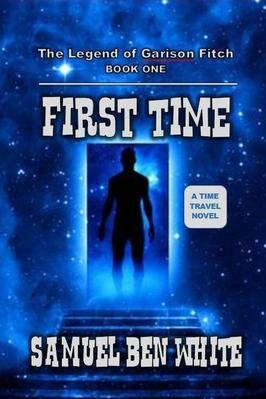
First Time – The Legend of Garison Fitch – Book 1

What if history didn’t happen that way the first time?

Garison Fitch was a scientist and something of a celebrity in the Soviet Americas in the early 21st century until dropping off the map to pursue his theories in the remote La Plata Canyon.

An experiment with such travel surprised him when he landed him in 1744. There he discovered a primitive world of somewhat suspicious people, but a freedom he had never experienced before–which may have been most frightening of all.

When he tries to rid himself of his time machine by sending it into the future, however, it took him with it. Now, he finds himself back in the twenty-first century where a woman he has never met claims to be his wife and the country he grew up in is gone, replaced by something called “The United States of America”.

Should he live in this new world, or try to travel once more through time and return the world to “normal”? As he becomes convinced he can’t return to the past, he’s not really sure if he can live in this new world he created, either.

Order today on ebook (in many formats) or paperback!

The Legend of Garison Fitch continues in “Saving Time” and concludes in “Lost Time“!

Reading Sample

With a flash of light and a complete absence of noise, Garison found himself swept out of the eighteenth century. He had just begun to have the beginnings of a thought that would have turned into wondering where he was going when the trip ended. In all, he had traveled for a length of time that would have registered on his body as less than a nano-second. To the world, however, the trip took longer. Still, it was not as long as Garison would have guessed it to be.

Garison and the interdimensional machine-come time machine reappeared in his laboratory inColoradoapproximately one point three seconds after it had left. With a pop that signified the nuclear core had just melted all the circuits then collapsed in on itself into a ball of radiation with a half-life of a few millennia, Garison found himself dressed for the seventeen-forties and standing in the early twenty-first century.

He was suddenly assaulted by a woman who threw her arms around him before he could get a good look at her and exclaimed, “It worked Garison! It worked! You were gone and now you’re back!”

There were so many thoughts and so much confusion going through his head that all he could do was stand there limply while she hugged him tighter and tighter, kissed him on the cheek, and went on and on about how proud she was of him and how she just had to congratulate him and how she wanted to hear all about it.

When she had worked her way across his cheek and was on the verge of kissing his mouth, he finally got his wits about him enough to push her away and stand back a pace himself. He backed into a bench and turned to look, momentarily surprised to find a work bench where there wasn’t supposed to be one. He also spotted the tarpaulin under his feet, and kicked it away in anger.

The woman looked at him strangely and asked, “Garison? Is something wrong?”

He looked around the room without answering. It was his lab all right, but it was different. The windows were in the wrong places, but only by a foot or so. The workbenches had been moved and the place was, well, decorated differently. His lab had been strictly utilitarian while this one had curtains on the windows and some sort of wall-paper border half-way up the walls.

But, he told himself, the cameras are in the right place. There were four video cameras, one mounted in each corner of the room, but their lights were showing red instead of green. While the workbenches were in different spots, the tools on them were laid out just as he would have laid them out and there was the right number of workbenches.

Then he looked at the woman. She was beautiful. She stood almost as tall as Garison, probably five-eleven or six foot he estimated. She had shoulder-length black hair, done in loose curls such as the women had worn in the twenty-first century he remembered. She had green eyes like Sarah’s, but was dark complected like someone who spent time out in the sun. Her figure was astounding, and quite shocking in a sweater and form-fitting pants made of, it looked like, the sort of material he had once seen warm-ups made of. On her feet, she wore white leather tennis shoes much like the shoes he had once worn himself.

He looked up at her and noticed that his confused scan of the room somehow troubled her. He looked her over from head to foot once more and asked, “Who are you?”

The look of confusion turned to fright as she stepped forward and started to put a hand to his head, “Are you OK, Garison? Did you hit your head?”

He brushed her hand away angrily and stepped to the side. “No, I didn’t hit my head. I’m fine. Who are you?” In fact, he thought to himself, the concussion symptoms of moments before and the dizziness were completely gone.

She looked as if she still wanted to touch him, but kept her distance. Then, it was as if she were seeing him in a whole new light as she said, “Wait a minute, you’ve changed. How did your hair get so long in two seconds? How did you grow a mustache that quick? And those clothes? Except for that jacket, you look like you’re…from the revolutionary war or something. And you look older.” She looked extremely concerned as she implored, “Garison, what happened?”

He demanded more forcefully, pronouncing each word carefully and distinctly, as if she might not have heard him before, “Who are you?”

“Heather,” she replied, as if it were something he should know. She took a step closer, but he took a step further away, backing down the workbench, keeping one hand on the cabinet as if it would steady him.

“Heather? Heather who? I don’t know a Heather. What kind of name is that, anyway? A plant name?”

“You don’t remember me?” she asked, seeming totally at a loss—and looking genuinely worried.

“Why should I?”

“Heather Fitch,” she told him. “Heather Dawson Fitch.”

“Fitch? You’re not related to me. Just what are you trying to pretend here?”

She reached out to touch him again and again he slapped her hand away, this time with more force. As she brought the hand back, seemingly shocked that the slap had stung, she said, “I’m not just related to you, Garison. I’m your wife.”

“My wife?” he replied with a forced laugh. He stood there and stared at her, wondering what this woman’s game could be. A spy? he wondered. The KGB had been known to use some pretty elaborate schemes to learn information, but he had never heard of one like this. Did they think just sticking a stranger in his lab who claimed to be his wife would make him tell some secret? There had to be more to it.

“All right,” he smiled, “What’s going on? Who put you up to this?”

She reached out again and asked, “What happened to you, Garison?”

He stood there rigidly as her fingers reached out and touched the side of his face very lightly. Did she really think that the touch of a woman would make him break down? He almost smiled as he thought of the futility of her actions. Still, he wondered what the point to her actions were. She seemed to have a point, but he couldn’t imagine what it might be.

She came a little closer and looked intently at him. After a moment, she touched the corner of his right eye and asked with something that sounded like genuine puzzlement, “What are these?”

In spite of himself, he mumbled, “Huh?”

“These lines around your eyes. You never had these before.” She pivoted slightly to look at both sides of his head and said, “And you’ve got gray hair that wasn’t there before you left. How do you turn gray in a couple seconds?”

“I’ve been turning gray for—who are you? Tell me the truth!”

“I’m Heather Fitch. I’m your wife.”

Garison had to give the girl credit for acting. She certainly seemed convinced of her part even if her part were ridiculous. In fact, it actually seemed like she believed what she was saying. Could it have been possible that she had been brain-washed or something into believing what she said? If so, he wondered, what was the point? She had to just be a very good actress, he thought. The whole charade was too stupid to accomplish anything.

Toltec Mountain

a Bat & Jody Garrett mystery

Dallas private eye Bat Garrett is called in to investigate a snowboarder who crashed in the “Mind Games”, a made-for-TV spectacular being held at Toltec Mountain Ski Area in New Mexico. What looks like just a routine accident–like the many other accidents that have happened on the slopes–becomes more suspicious when the snowboarder is found dead in her hotel room. Soon, there’s another death, and then another. Is someone stalking the “Mind Games”? Can Bat–and his wife, Jody, who is working the case undercover–unravel the mystery before the bodies pile up higher than the snow?

Order it today on Kindle and paperback!

….

Sample Chapter

It was about lunchtime when I found myself sitting on a bench at “ski-Techers”, getting fitted for boots and skis and poles. Ski boots had come a long way since the first time I had put any on, but they still weren’t what I would call “comfortable”. They were, at best, “comfortable for ski boots”. I think it was Dave Barry who first referred to them as “bowling balls melted down to fit your feet” and they still felt like that in a lot of ways. They had more padding in them than they had back when I first tried the sport, so that was an improvement.

As the tech put my boots to the skis, I commented, “I saw that wreck from Monday with that Nitro lady. Looked pretty rough.”

“Uh hmm,” he replied, checking the bindings against some sort of chart.

But then, one of the other techs, who didn’t have anyone to help at the moment, injected, “Pretty wicked, wasn’t it? Almost looked like she slammed that board down on the rail a-purpose, huh?”

“Really?” I asked. “What do you mean?”

“Oh, it just seemed to me that no one would land on a rail like that unless they were trying to. Maybe she’s got some new trick that that was supposed to be the lead-in for, though.”

My tech had finally done whatever it was he was doing and entered into the conversation by saying, “I can’t imagine what that would lead into.” Then he laughed and offered, “Unless maybe the board’s made out of some sort of space-age rubber where you hit it on the rail and ‘sproing!!’ you go bouncing thirty feet into the air!”

Who still uses the term “space-age” I wondered? That was like something out of the sixties. But then, so were the ski techs. Not that they were old enough to have been born in the seventies, even, but I had noticed before that a lot of the ski techs (at every mountain I had been to) wished for a decade they hadn’t experienced except on film.

“But normally,” I mused, “Wouldn’t a landing like that just be kind of jarring? I mean, those snowboards are built to take some punishment, aren’t they?”

“Sure,” said the tech that wasn’t working on my gear, “But she hit it hard. They were showing a close-up of the crash on the sports channel last night and she hit it harder than those two chuckleheads that were trying to break a snowboard on the post office steps yesterday.”

I kept my mouth shut.

When I stepped up to the first lift line at about one o’clock, I was a little nervous, as usual. The first ski run of the year never bothered me, but the first attempt to get on and off the lift did. I hadn’t fallen off a lift in years, but the memory of my first couple times skiing—when getting off the lift was clearly my weak spot—still lingered.

Most of it was alleviated when the guy standing there telling people, “Stop here and look for the chair” said, “You’re that private detective, aren’t you?”

“How’d you know?” I asked.

“My brother works at the hotel,” he replied. Before I could pursue that line of thought further, the chair was whisking myself and a middle-aged stranger up the mountain.

“You’re a private detective, huh?” he asked in the gravelly voice of someone who smokes too much.

“Yes,” I replied, trying not to sound too cautious.

“Must be interesting,” he replied.

“It can—“ was all I got to reply …

Before he started in with, “I run an auto parts store, myself. I tell you, somebody ought to do a TV show about my work.” The rest of the ride was filled up with the glorious and lewd antics of the auto parts world. I had to admit: I was surprised there wasn’t a show about it already.

Those first few minutes were a microcosm of how my afternoon went. On an afternoon where the mountains were covered with television cameras and actual (or cable, anyway) celebrities were to be found everywhere you threw a snowball, everywhere I went people wanted to talk about being a private detective.

At first, it was kind of fun being a celebrity, but it quickly grew old. For one thing, I had always enjoyed a sense of anonymity in relation to my job. Not that this particular case required it, it still seemed strange to be known—“made” in the vernacular.

Which led to some wild speculation about why I was there. There was a rumor that someone was stealing the high-end equipment used by the athletes. Another one said there was somebody stalking one of the skiers. Still another said there was some suspicion of financial impropriety in regards to the Games themselves. A couple other rumors alleged that the indoor games were fixed in some non-specific way.

Of all the people I heard from, no one hit on the real reason I was there, which I found strange as I would have guessed that someone would have heard the story of the video I had watched with Penny and Pete. In a way, though, that made me feel a little better about my diagnosis because I was thinking that, if someone really had sabotaged Nitro’s board, that rumor would have gone around.

When the runs closed at 4 o’clock, I checked in my equipment, switched back to street shoes, and made my way to supper where I was invited to dine with a couple of the athletes from the Men’s Downhill Extreme, which I was to learn was the ski version of the terrain park Nitro had crashed on. In fact, it was held on the same park, just targeted toward some different obstacles.

The topic of conversation at supper was that day’s outdoor activities and some trash talking about the evening’s indoor games. If Nitro’s crash of Monday entered anyone’s thoughts on that Thursday evening, they said nothing about it. The big topic was a killer run put in by Steve “Onionhead” Wachowski. He wasn’t in our group, but the word at our table was that he would have to really blow his Scrabble™ game to not finish the day as the favorite for the D-E. Apparently, some new trick with a name that meant nothing to me had been the kicker. Something like the “Double-Back-Front-Triple-Lutz-Alpaca” … or something to that effect. They tried to describe it to me, but the terms they used were not, as far as I could tell, in any known language, so I just nodded like I understood them and we moved on.

From there, I made my way to a couple other popular hangouts, was greeted cordially on the street by people I had never met before, and managed to learn absolutely nothing about the case. Monday’s crash was ancient history. If there was any news in Toltec that evening, is was either that there was a P.I. in town or Onionhead’s mind-blowing run. No other topics were being discussed anywhere—at least in my presence.

Finally, I found my way into The Dive Bar and the presence of a beautiful, auburn-haired young lady who I happened to know was a year older than me but looked like she fit in with the coeds around her. Sipping her smoothie, she did a good job of pretending to play up to me and, maybe, even making any casual observers think she was slightly tipsy. Unless someone had spiked the smoothie against her will, I knew she was no more tipsy than I was.

When it seemed like enough time had passed that I could credibly pick her up, I invited her to leave with me and she did. Back in my “real life single scene” I had always been too chicken to meet girls in such a setting, let alone try to get one to leave with me (I could rarely work up the nerve to ask out even the girls I met at church!), so it was kind of a thrill to walk out of a crowded bar with the prettiest woman there on my arm.

Still, I was really curious about that hair!

And the tat.

Death Among Friends

a Bat & Jody Garrett novel

Bat Garrett goes to the funeral of a friend from high school, only to find that there are some family members of the deceased who think the death wasn’t accidental. Bat begins to look into the death and is confronted by old memories, some ex-girlfriends, and the disturbing idea that–if it was murder–it was committed by someone Bat knew.

Now available on Kindle and paperback!

Sample Chapter

When I got my private investigator’s license I figured my life would be a lot like the lives of those guys who used to show up late at night in the old shows on cable. High speed car chases, fist fights (where I would always win), and beautiful women who find a guy with a spotty income strangely alluring. Occasionally even solving a case.

Why was I so often surprised back in those days when life didn’t imitate art? Or even TV?

What the TV shows were especially bad at portraying was the stakeout. Oh, you would have the obligatory shot of the guy in his car at night, flashing neon in the distance, as he sips coffee from a thermos to set the mood, but considering the shows were only an hour long (minus commercials) they couldn’t show the reality of a stakeout.

Hour after hour, and sometimes night after night, just sitting there. Trying to stay awake and trying not to drink too much coffee ‘cause then you gotta go to the restroom and leave your post. So you just sit there.

And sit there.

And, if you’re me, drinking no coffee at all because you hate even the smell of it so you drink Dr Pepper like it’s going out of style, which still leads to bathroom issues.

Sometimes, you have a client who wants a meticulous log of everything that happens. “12:15Dog barks. 1:17Pizza delivery. Delivery vehicle license number … “ It sounds miserable and tedious—and it is—but at least with those you have something to do.

This was not one of those nights. I was sitting in my car across the street from an all-night diner that served, based on the smell, fried grease. As a side dish, one could order lard straight. But working in the diner was a woman who was being rapidly stalked by middle age and a husband who was convinced she was having an affair with one of her customers.

Now, you may be thinking that my job would be to watch her through the windows and see if she paid anyone any special attention. Not exactly. The husband was pretty sure who the affair was with, so I was supposed to sit there and watch to see if the Assumed One showed up and, especially, if the Waitress Woman were to leave with him.

Five nights down and not only had the Assumed One never showed, the Waitress had treated all of her customers with the same hostile indifference. Most of her customers left looking less than happy, so I couldn’t really see any of them saying something like, “Hey babe, after that rather belligerent service and a sandwich made—apparently—from old shoe leather, there’s nothing I’d like better than to take a hot mama like you out on the town.” Eight and a half hours after she would clock in (with a thirty minute “lunch” in the middle which she smoked away on a bench around the side of the building from the front door) she would leave and go straight home.

If this were a television show, the reason for the whole farce would be that I had been working on another, more important, case and this whole thing had been cooked up as a means of distracting me. In real life, I had taken this under-paying and boring job because there just wasn’t anything else, and hadn’t been for some time. It was a slack time in the P.I. biz, apparently. And being winter, it wasn’t much of a time for painting houses, either (my other listing in the phone book).

With Jody’s paycheck from her job as a speech therapist barely covering necessities, I was taking any job I could get in hopes of making ends meet. Thankfully, our cars were paid for and we didn’t pay much in rent, but you can’t eat an apartment—even the green moldy stuff on the walls that looks almost edible. We were still newlyweds in a lot of ways but, as much as I like old Glenn Miller tunes, his song about being able to live on love was starting to ring hollow.

Another night looked like it was going to drift by with no consequence when, just after three-thirty in the morning, a car that looked like the one I was told Assumed One drove pulled up in front of the diner. I perked up a little, then. I perked up a lot when the Assumed One, Mister Wally Norris himself, got out of the car. Tall, slatternly, with a one of those big droopy mustaches like country stars wore back in the eighties, I positively identified him from a picture I had been given when he stepped into the lights of the diner’s front entranceway.

As he went into the diner, I slipped quietly out of my car and closer to the diner, camera at the ready. Once in a position where I could get some good pictures of pretty much anywhere in the seating section of the diner, I started snapping.

It was a fairly old—let’s say broken-in—SLRand worked beautifully. For daytime shoots I was transitioning to a digital camera, but for nighttime work nothing beat that oldSLRand some 1200 film. Cameras may have gotten simpler to use as time has gone on, but that old camera could practically take the pictures itself even without auto-focus. It eventually developed a light leak I couldn’t get fixed and I sold it to a collector, but I always regretted it later, thinking I should have given it a place of honor on a shelf in my office. But I didn’t have a shelf in those days, let alone an office, and the collector helped me make a rent payment, which is neither here nor there for this story as it was some years later. Months anyway.

So there I was, getting pictures of him walking into the restaurant. And then there’s a picture of the Waitress looking none too pleased to see him. As I’m snapping away, she points toward the door, instructing him to leave. (It’s clear from the body language; I didn’t have to hear what she was saying.) But Assumed One steps right up to her and grabs her by the arm.

He should have grabbed the other arm—the one carrying a customer’s food—because she slammed the tray full of food upside his head. It was a horrible sight, all that Salisbury steak and candied apple slices spreading across the room. My last picture showed him letting go of her arm as he reached for his gravy-covered face, trying to get the apple chunks out of his eyes.

I dropped the camera—trusting the shoulder strap to take care of it—and darted for the diner’s door. By the time I was through the door, Assumed One had cornered Waitress behind the counter and the one customer was a guy who was rooted in place by fear and shouldn’t have been screaming like that in my humble opinion. His screams were soon drowned out by the screams of Assumed One, who had just taken a saucer of hot grease to the kisser.

No, I don’t usually talk like that, but it is a private eye story.

As Assumed One hit the floor on all fours and clawed at his face, the cook called 911 and the Waitress stood over her assailant with the saucer held in a threatening manner. I wouldn’t have thought it could be done, either, if I hadn’t seen it. If she had been holding a Glock with a round in the chamber, her demeanor could have been no more menacing.

Despite graduating from a correspondence college with a degree in private investigations and a long-ago Boy Scout merit badge in First Aid, I wasn’t sure what the protocol was for “hot-grease-in-face”. Still, it seemed like something ought to be done, so I pulled out my gun.

“The cops are already here?” asked the cook in impressed dismay, popping up from wherever he had been hiding.

“Probably just someone else that wants to kill him,” the Waitress grumbled, remarkably calm about the whole thing. Seeing my weaponry, though, she set down the saucer. Then, told me, “Go ahead and shoot him. I’ll gladly testify it was self defense.”

Assumed One, peaking at me from between his fingers with one red eye, just whimpered and made a larger mess on the floor than had been there previously. “I’m not going to shoot you,” I told him.

“More’s the pity,” said the Waitress.

So Many Books

a Mended Lives story

He had never seen so many books in one room. Stacked on rickety shelves from floor to ceiling, they overwhelmed the room, and the visitor. Chris Farmer, investigator for the Bureau of Indian Affairs, suddenly felt like he knew nothing about the person he was trying to help. But he was suddenly curious. Why would someone so young-why would anyone-have so many books? Alyste Smith was a young woman who lived with an abusive step father and longed to escape. The only way she knew how was through books. So she read and read and read, hoping beyond hope that, one day, a hero like the ones in her books would walk through her door and rescue her.

Order today on Kindle!

Reading Sample

I had never really noticed her until I saw the books. Hundreds of books (thousands, I was to learn later) adorned her small room. She had bookshelves she had brought in from somewhere at, I guess, the start of it. Between them she had built other shelves. They would have made Norm Abrams cringe, but they would have warmed the heart of any librarian.

Some shelves were built by putting a board across cinder blocks, then more cinder blocks, then another board and so on up to the ceiling. In some cases, where cinder blocks or other bricks couldn’t be found, larger books were used to hold the shelves above off the books below. Here and there an ineffectual nail had been driven into a board to secure that board to the side of another shelf or to the wall itself. The whole business showed a profound lack of engineering knowledge but would have made even Rube Goldberg envious.

How the whole mess stood and hadn’t collapsed and killed her years before I have no idea. My own experience with dismantling it all brought a few paper avalanches that threatened to take my own life, but I’ll have to get back to that later.

“You’ve read all these?” I asked in dubious wonder as I looked at the books that lined the walls from floor to ceiling, making the little eight by ten room about seven by eight and a half. If she could have figured out a way to attach a bookshelf to the back of the door, I was sure she would have.

“Uh-huh,” she nodded. Then, in the apparent need for accuracy, she amended, “Everything but these two shelves. I haven’t read them, yet. But I will.” Pulling back the covers on the bed, she revealed a weathered paperback and, picking it up, said, “And this one. I haven’t finished it, yet. I …can I take it with me?”

“Yeah,” I told her, still looking in awe at the walls-which I couldn’t see, but assumed they were back there-somewhere-behind the books.

I knew there were more important and pressing matters, but I couldn’t help stepping closer to the books for a moment. There was no discernible theme in the volumes chosen. I saw a few romance novels, of the kind I would have stereotyped a young woman in her position to read. But I saw much more. There were psychology textbooks and biographies of famous people, from Teddy Roosevelt to Tacitus, and books by Twain, L’Amour and Kafka. There was a shelf of books by CS Lewis, just above a shelf of books by Tolkien (having never read either, I had no idea of the significance of this paring). I saw books on horticulture and agriculture and books of poetry by people with names I couldn’t read, let alone pronounce.

“All of them?” I asked again, though not necessarily meaning it to be out loud.

“All of them,” she confirmed.

“Do you have a favorite?”

I happened to be looking at her at that moment and realized from the look that flew fleetingly across her face that I had asked her a question akin to asking a mother which of her children were her favorite. When her composure was regained, she replied, “Probably whichever book is in my hands at the moment you ask.”

I pointed to the book that she had picked up off the bed and asked, smiling and trying to make it sound friendly, “So right now it’s that one?”

She looked down at it, a slight grimace at the corner of her mouth, then back at me and replied, “No. Not this one. It’s not that good.”

“So why read it?”

There was just the slightest hesitation before she answered, “Because I started it.”

For the first time, I took a look at this remarkable person who had, up until that very moment, just been a part of another complicated if strangely routine and boring case.

The way he looked at the books intrigued me.

Not many people had seen my collection of books, but some had. All the others had had pretty much the same reaction, though. Wondering why I had so many books, why I wanted so many books, or complete incredulity at my claim to have read them all.

People my age were the worst. The couple times I had met people my age who claimed to be readers, when they saw all my books, they usually looked at me like they thought I was crazy. Most of them, I would find out (if given the chance, most were gone after a glimpse into my room), read more than the average teenager, but they only read one thing. All romance books, or all mystery novels or all books on a single subject. That, to me, sounded like eating the same thing meal after meal, year after year. I like pizza, but I have to eat some other things now and then, you know?

So when he looked at the books with amazement, I thought I had found a soul mate. I was so surprised later to find he wasn’t a reader. Oh, he knew how, of course. He had just never known why anyone would do it on purpose. What struck me, though, was that he didn’t dismiss my reading. And when he found out just how many books I had, he didn’t renege on his offer to carry them all out. For the first time since my mother died, someone saw my books and didn’t treat me like a freak.

On the other hand, I have never been able to understand people who don’t read, or don’t love reading. I love reading. Even when my life was going well, I loved reading.

Last at Bat

a Bat Garrett story

A ghost. Bat has to be seeing a ghost. While recuperating in Houston he stumbles across a shopgirl who looks and sounds just like someone he lost a year before. As his friends think he’s going crazy, and even he’s starting to wonder if he watched “Vertigo” one too many times, he tries to piece together the background of the shopgirl. The investigation takes Bat from Houston and Dallas, to Arkansas and Durango (where he meets a young Garison Fitch) and closer to the conclusion that he may not have been the only one set-up by the Home Agency.

Order Today!

Kindle or Paperback

To read more about Bat Garrett, be sure and check out “The Nice Guy“, “The Return of the Nice Guy” and “Up to Bat“. All available on Kindle & in paperback! And, if you want to read this story from Jody’s perspective (as well as find out what happened next), be sure and read “Cheerleader, Gymnast, Flautist, Spy“!


Read a Sample

“What is it we’re going to go look at?” Dave asked as we walked through the mall. I was surprised how few people were there shopping, but I guessed it was because it was a week day.
“Sunglasses. I’m telling you, Dave, these are the ugliest you’ve ever seen. They would have been great for that day in college when we had the ‘Ugliest Outfit’ contest.”
“I didn’t know the Galleria had a gag shop.”
“It’s not intended to be, but these will make you gag.”
As we were nearing the store, I saw a girl walk into the shop ahead of us who just about took my breath away. I stopped dead in my tracks and could feel my heart pounding in my chest like faulty pistons in a Ford Granada. If I had been prone to such things, I think I would have had a heart attack. The quick and unexpected (even to me) stop on the crutches almost made me fall on my face, so I had to take a moment to regain my balance.
“What—what is it?” Dave asked. The look on my face must have scared him. I imagine I went almost completely white—maybe even green.
“That girl that just walked in.”
“So? She was cute; but we’ve seen several of those today. She wasn’t as pretty as Heather, I didn’t think.”
“No. This girl looked like … like someone I used to know.”
“Let’s go see her,” he said. “Maybe it’s her.”
“Couldn’t be.”
“Why not? Houston’s a big city.” He smiled, “Shoot, I bet there’s more than two hundred people in this town. I hit that many cars in the parking lot.”
“But this couldn’t be her, Dave.”
“It’s a small world, Bat.”
“But it’s not the Twilight Zone.”
“What are you talking about?”
“The girl she reminded me of is dead.”

Up to Bat

Book 3 of The Story of Bat Garrett

Dallas private eye Bat Garrett is hired by wealthy Texas oilman Frank Gaston, who thinks someone is trying to kill him.

Bat is skeptical but when Gaston is found dead, slumped over at his desk, the fear seems to have been well-placed.

Darla Gaston, the beautiful young oilman’s daughter, is encouraged by her lawyers to fire Bat and let the police investigate. Darla, however, wants Bat to find out why her father has been calling a number in Colorado for several years. Bat discovers that Gaston has left a trail of lies and deceit, bigamy, and maybe even a decades-old smuggling operation involving children and a massive real estate deal in Oak Cliff.

It’s the biggest case Bat’s ever had, but it may cost him more than he’s ever had to give.

Available on Kindle and paperback.
Make sure you read the whole Bat Garrett (& Jody) saga, beginning with “The Nice Guy“, followed by “The Return of the Nice Guy“, then this book, then concluded (this arc, anyway) in “Last at Bat

Reading Sample

My name is Bat Masterson Garrett. I’m a private detective. I always dreamed of leading a glamorous life like the P.I.s on TV, but it doesn’t seem to work out that way in real life. Real life private detectives track down husbands who don’t pay their alimony, or find out if someone is having the affair their spouse suspects them of having. Once in a while, there is a fight; but there aren’t many shootouts or car chases. I sometimes wonder why I wanted that stuff in the first place.

Detectives on TV always get the girl, too. That never happens. Like I said, the people I deal with are usually already married (albeit trying to remedy the situation). Besides, people in real life don’t even look like the people on TV. Well, some people (my former fiancé Jody Anderson) used to accuse me of looking like Kevin Costner.

Well, what she said was that I probably weighed the same as Kevin Costner. My hair’s almost the same color as his, but I have blue eyes and am only about an even six foot—while I’ve always figured him to be taller. Some girls think I’m attractive, some don’t, so I’ll let you draw your own conclusions.

One day, I was sitting in my apartment in North Dallas looking at my baseball card collection when the phone rang. My phone never rings, so it liked to scared me to death. I hastily picked up the cards I had dropped and went over to the phone, sorting them on the way. I figured the odds were that the cards were more valuable than the phone call and deserved my attention. Having once owned a baseball card shop of my own (for about six months), I knew something of their value.

I answered and a man asked, “Is this B.M. Garrett Investigations?”

“Sure is, what can I do for you?” I was real surprised that anyone wanted me to investigate something. I’m also listed in the yellow pages under “Painters: House”, and that seems to generate the majority of my calls for gainful employment. A couple times people have tried to hire me as a body guard, but I don’t much care for the “rough work” after my limited experience with it. I’m not exactly a “big dude”, anyway, and most of my schooling in self defense would fall under the heading of “run”.

“This is Franklin Gaston,” he told me, “Of Gaston Oil.” He put in a pause like I ought to have heard of him but I hadn’t so I just mumbled noncommittally. I don’t keep up with the oil market except to the extent that I go to the cheapest gas station.

He continued, “I think I am in need of the services of a private investigator, Mister Garrett. You are Mister Garrett, aren’t you?”

“Yes, but call me Bat.”

“Pat?”

“No, Bat. Like those things that sleep upside down in caves.”

“Well, yes,” he said as he tried to regain his train of thought. My name always does that to people. Thanks, Dad.

“What did you need, Mister Gaston?”

“Well,” he said cautiously. “I really think it would be much better for us to meet in private—and in person. I’m confident no one is listening in, but I would just feel more confident if I could talk to you in person.”

“I understand,” I told him. It already sounded like he was going to ask me to trail his wife and find out if she was cheating on him. If that were true, I thought, he was probably afraid she would walk into the room he was in and overhear the conversation. Maybe she was already in there. You never know about these people. One guy hired me to watch his wife then told her I would be there. I didn’t get much on her for some reason.

“Where would you like to meet, Mister Gaston?” I asked. “I’m pretty flexible.”

He seemed to be thinking a minute, then replied, “It needs to be some place out of the way. Do you have any suggestions?”

“I know just the place. It’s on Northwest Highway—”

“That’s not out of the way,” he told me.

“In a way, it is. Think about it, if you were having a secret meeting, would you normally go to one of the busiest streets in town? See, the idea is to do what’s not expected. Like in football, sometimes you run the play that seems like the worst choice because the other team is confident you won’t run that one.”

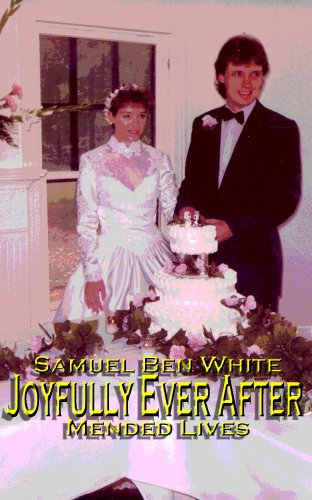
Joyfully Ever After

a Mended Lives novel

Sean Clarke moves to the town of his dreams, to a house he loves, to a life he’s always wanted.  There he meets and falls in love with Angie. a beautiful young woman.  Sean’s family is happy for him, but they are waiting: for that moment when Sean discovers something he doesn’t like about another perfect woman and dumps her.

A novel of self-discovery, about finding out that the things that irritate us most about the faults of other people are when they mirror our own.

Available on Kindle!

To read more about Brad, Allie and Angie, make sure you read the novel Mended Lives!  To read how Joe and Ellen met, check out Hating God – a love story!

Sample Passage

He let go of her to hold the picture in both hands.  He was looking at it, but he wasn’t seeing it.  He wasn’t seeing anything.  His mind was gone and it didn’t show any signs of coming back any time soon.

“I’m sorry,” she finally said, when she didn’t think he would ever speak again.  “I never meant to hide this—to hide anything—from you.  But I was so ashamed—”

“You should be!” he blurted out.

“I know, I—”

He jumped to his feet and demanded, “What else are you going to tell me, Angie?  When am I going to start meeting all these guys you slept with?  What about the millions who saw you nude?  When are more of them going to show up and start asking me if I’ve seen what they’ve seen?  When, huh?”

She stood up in front of him and tried to reach out to him.  “I wish I could take back all those pictures, Sean.  I do.  But I can’t.  What can I do?”

“You could leave.”

“Sean!”

“What do you expect me to say?  ‘Hey great!  All the men of England have already seen my fiancé naked but I haven’t!’  Just leave, please.”

He picked up the folder, stuck the picture back in it (but not before seeing that there were other similar pictures in it and actually letting one slip out unnoticed that slid under the rocking chair), and thrusting the folder at her demanded, “Take these with you.”

“Sean—”

“Please, go.”

“Can I come back?”

He took a deep breath and replied, through clinched teeth, “I’ll get back to you on that.”

“Sean—”

He stepped around her and opened the front door.  Gently but firmly, he pushed her outside and closed the door behind her.

She turned around to face the door, but heard the unmistakable sound of the deadbolt being thrown.  She thought about knocking but didn’t think it was the right time.  She sat down on the front porch steps, put her head on her knees, and started crying.

It was almost half an hour later that she got up, smoothed out her dress with her hands and, taking the folder, walked back to the café.  Inside, the cook asked if she were all right, to which she nodded but didn’t answer out loud.  She just put on her apron, then put on her customer face, and went out to deal with the public.  She was relieved that the British couple was gone.

She looked around, though, at the crowd now there and wondered if any of them had ever seen her ads for Sutley’s, or Liverpool football, or any of the other ads she had done?  What about just the magazine layouts?  She remembered when she used to pat herself on the back because she had never done full-frontal, but now it didn’t seem like such a big deal.  “Partly evil is still evil,” she muttered to herself.  Then, noticing that a customer had overheard, she smiled, said, “Excuse me,” and took his order.

After that order, though, she went back and relieved the cook.  Not only did she want to be away from the general public, working with food had long been a way to calm down and think.  She did so, now.

Medicine Park

Brad Reynolds comes home to Medicine Park, OK, to take over his father’s old business and try to put his life back together after a divorce.  He’s fitting in, he’s meeting great new people, he’s even started attending a Bible study.  Brad’s a great guy by everyone’s account.  What they don’t know is that he has an addiction.  He’s kept it well-hidden so far, but it’s already destroyed his marriage and it will soon destroy his whole life.  So Brad tries to bury it, to ignore it, to power his way through it … but it keeps escaping from the box he keeps it in.

(Cover photograph (c) 2012 Derrick Bias)

ON SALE NOW!

Kindle    paperback

What the Readers are saying …

“I really liked it.  I had never read a book with that viewpoint of the guy with the sex addiction.  It was interesting as he grew in Christ.  I thought it was very encouraging as we all have aspects of ourselves we need to put under Christ’s Lordship.” ~KD, LA

And the “sort-of” sequel …

If you would like to read more about Brad, Allie and Angie, be sure and pick up the novel Joyfully Ever After.

Sample Chapter

The divorce was final the same day his parents died in the car wreck.

He thought about not even telling Darria, or trying to tell her in such a way as to hurt her.  But he didn’t.  He just called her and, as she prepared for one of his trademark snide remarks involving either the postal service or how relieved he was to finally be rid of her, he calmly told her he had gotten the papers and his parents had just died.

Darria didn’t know what to say, except that she was really sorry to hear that.  She meant it and hoped she could convey her sincerity but knew she had her own reputation for caustic remarks, especially where Brad was concerned.  Still, she had always gotten along just fine with the Reynolds and they had even reached out to her recently, as things had begun to go sour in her marriage to their son.  She had bristled at the intrusion, but secretly appreciated it, too.

“Well,” he said, “I’ve got to go.  I’ve got to go pick up Mike at the airport.  Then, we’ll, um, head over to the mountains.”

“Yeah,” she said, nodding at the phone even though he, of course, could not see the motion.  Then, she quickly added, “For what it’s worth, I’m really sorry it finalized today—of all days.”

“I’m sorry they had to die today, of all days.”  He tried to think of something else to say, then, not even sure if she were still there, told her, “Good bye, Darria.  Be seeing you, huh?”

“Yeah.  I’m really sorry, Brad.”

“Thanks,” he told her as he hung up.

***

They hugged at the airport, cried a bit, then things got so quiet as they left the airport in Brad’s car that they jumped into as banal a brand of small talk as they could muster before they were even onto I-44.  “You have to wonder whose idea it was,” Brad quipped, “To build the Wiley Post Terminal of the Will Rogers Airport on Amelia Earhardt Drive.”

“What do you mean?” Mike asked.

“What do those three people have in common?”

Mike thought a moment, then nodded, “They all died in airplane crashes, didn’t they?”

They ran out of small talk just as they passed Norman, however, and were stuck with silence, again.  Suddenly, Brad said, almost to his own surprise, “I’d like the store.”

“What?” Mike responded, completely thrown off guard.  His thoughts had already gone to his wife and baby, who were driving down from Colorado and would be joining him (hopefully) the next day.  He hadn’t wanted to do it that way, but the fact was they just couldn’t afford three airplane tickets on such short notice but still felt Mike should be there for his brother as soon as possible.

“The bait shop,” Brad explained.  “I’d like the bait shop.”  Suddenly thinking it through aloud, he offered, “I’ll buy your half from you for whatever you think is fair.  I can take what I got from mine and Darria’s house and make you a down payment.  For the store and your half of Mom and Dad’s house.  I’ll get a loan to cover the rest.”

Realizing how impetuous he was being, he suddenly added, “Unless you want it.  I was just thinking that I’ve kind of been wanting out of my job—and out of Oak City—for a while now.  But I don’t think that little bait shop makes enough money for us both to live on.  So, you can have it, if—”

“No,” Mike replied, just as suddenly.  “You take it.”  After a moment, “I’m serious.  Annette and I really like Aurora.  It’s where we want Collin to grow up.  It’s home now.  Why don’t you just list me as a silent partner in the store and then slowly buy me out?  That way you won’t get nailed for all that interest.”

“I wasn’t thinking of anything like that—”

“Why not?  It works out for both of us.  I get a monthly payment I haven’t been getting and you get the store.”  After a moment, Mike asked, “Why do you want it?  I don’t remember you showing any interest in it before.”

They were several miles further along before Brad answered, “You grow up in a small town and you can’t wait to get out.  Now, I want to go back.  I know it won’t be the same.  But maybe I can recapture a little bit of what it was . . . once.  I’m a grown-up now.  As of today, I’m officially divorced—”

***

“I really feel bad about that.  Wished there was something I could have done.  Wished I had seen it coming.”

“The only people who could have were me and Darria and we waited too long to acknowledge it, and then longer to do something about it.  And you didn’t see it because we tried so hard to hide from everyone, including ourselves.  I think that’s part of why I want to get out of Oak City.  I’ll always associate this place with my marriage.  Now I can get out.”

“Do you really think going back to Medicine Park is the right answer?  You want to get away?  Come back to Aurora with me.  You’ve always liked Colorado.  You can get a job in Denver.  You’d be near family.  Lots of accounting jobs there.”

“Uhg.  I’ve done accounting, Mike.”  He smiled and added, “Maybe I could go to Texas, where cousin Denny lives.  Maybe there’s a job in Frognot.  I’ve always kind of wanted to live there just so I could have that name on my letterhead.”

***

The funeral home had done a good job, as far as such jobs went.  Instead of two people who had been in a car that had gone off a rain-soaked highway, they looked like two people who had just chosen a strange place to take a nap.  After a few moments of “viewing,” Mike commented to Brad, “I don’t know about you, but I’m ready to close the lids.”

“Yeah,” Brad nodded anxiously.  He motioned to the funeral director, a thin woman with iron grey hair perfectly coiffed   She came over and, with the help of a young assistant, closed the caskets.  “Remember the line from that cousin in Arizona—I can’t ever remember his name.  I just remember being at a funeral for some uncle or other and someone comments about the body looking natural and he said, ‘No he doesn’t.  I’ve known Uncle Chuck for twenty years and not once can I remember him getting dressed up in his best suit, coming down to the church, then taking a nap in a box at the front of the room.’”

Mike actually smiled as he said, “I remember that.  Uncle Leonard, wasn’t it?  The man who died, I mean.  Lived in New Mexico somewhere, didn’t he?”

“Las Vegas, it seems like,” Brad nodded.  “I just went so I could be with Mom and Dad.”

“Yeah, and I met ya’ll there mainly so I could see everyone.  Can’t remember that cousin’s name, though.”

“Private detective, wasn’t he?  I remember that just because he was the only private detective I ever met.”

“I think you’re right.  We’ll be back in the morning,” Mike told the funeral director suddenly, when he realized the director was still right behind them.  The two brothers had already cried on each others shoulders to the point that now they were just drained and ready to leave and the moment’s laughter had been genuine under the relief it had brought.  Neither had seen the other cry like that ever, so it left a surreal picture in their minds as they left.

***

Standing in the living room of their parents’ house, dressed now in casual clothes, Annette nearby playing with Collin on the floor, Brad commented, “It just doesn’t seem real.  I keep expecting them to come in here.  For Mom to try to feed us something.”

Looking around, Mike asked, “Are you sure moving here is the right idea?  The fish and tackle shop is one thing, but this house?  Sell it and buy another one nearer the shop if you want.  You always joked you were going to buy a house in Paradise Valley just because you liked the name.  Do that.”

“Naw, this is home.  I may have never thought about having the bait shop, but I always dreamed about having this house.  Pictured Darria and I having kids and moving here.  You know, Mom and Dad always said they would move somewhere when they retired.  Figured they’d move near you in Denver and we’d get this place.  Maybe telecommute to a job in Oak City or just over in Lawton and drive in one or two days a week.”  He sighed and shrugged, “The Darria part’s gone now.  I can get the house, now, though.”

Mike bit his lip a moment, then said what he’d been thinking, not just all day but ever since he had heard that his brother was getting divorced, “Are you sure there’s no chance of you and Darria getting back together?  You two were so great together—”

“I think she’s got somebody else,” Brad answered.  At the looks in his brother and sister in law’s eyes, he quickly explained, “Don’t get the wrong idea.  She was never unfaithful.  Neither was I, for that matter.  Anyway, I heard from a mutual friend that she had met somebody at her work that she was going to go out with as soon as the divorce was final.”

“It’s not like she’s already remarried,” Mike said, ignoring the look from his wife that was trying to tell him to just shut up.  “Can’t you work things out?”

“I used to think so.  Went to counseling and everything.”  Another big shrug as he leaned on the mantel and looked into the low fire.  “Didn’t work.”  He looked over at Collin and said, “Kids were part of it, you know.  Sometimes wonder, if we had been able to have kids . . . “  After a bit, he added, “On the other hand, sure am glad we didn’t put any kids through this.  Divorce is hard on kids.”

“Well,” Mike said, stumbling over the words, “I don’t want to bug you about it.  But if you, um, get the chance, talk to Darria.  Maybe you two just needed some time away.”

Brad was too worn out to argue, so he just nodded and said, “Yeah.  Maybe so.  That’s what Dad said, too.”

***

“Thanks for coming,” Brad said as they walked away from the graveside service.  The minister from the Reynolds’ church had delivered the eulogy and had done quite well.  Brad and Mike had both thanked him for the words, and everyone else for coming out on such a cold, if sunny, day.

Darria nodded uncomfortably, then threw her arms around his neck and, sobbing, told him, “I am so sorry for you.  And for Mike, too.  But I’m really sorry for, for everything happening.  Now, of all times.”

“Well, it wasn’t just you,” he told her as he held her close, feeling her for the first time in months.  It had a strange familiarity that was surprisingly comforting.  “I know the timing was an accident.  But I, uh, do thank you for coming here today.  It really does mean a lot.  Can you come over to the house for a while?  There’s a lot more food there than even Mike and I can eat.  Give you a chance to see Annette.  And Collin, too.”

“He sure is getting big, isn’t he?” Darria commented wistfully.  She then let go of the hug, wiped her eyes and said, “I better get back into town, though.  I told the office I would try to make it back for the afternoon.”

“Well, don’t go so fast you . . . drive carefully, huh?”

She was prettier than he remembered.  Maybe it was the black dress.  He had never seen her in black because she had always said it made her look washed out.  With her reddish blonde hair and freckled skin, he had always taken her at her word.  But now, looking at her, he realized she looked pretty attractive in black.  And she had lost weight.  She wouldn’t have been able to fit in that dress when they were still together.

But then, he had lost weight, too.  He didn’t think it was stress so much as that he just hadn’t eaten as regularly since the split.  He was almost back to his college weight.  And what with walking every day in the sun, the red had come out in his brown hair and a few freckles had resurfaced that he hadn’t seen in a long time.

People used to say they belonged together but he always figured it was because they were both red haired and fair skinned.  He wondered if, that day at the cemetery, they looked like they ought to be together again.  He wondered if she were wondering the same thing.

She nodded, then kissed him on the cheek and walked away to her car.  He watched her go, not knowing how he should feel.  If it were a movie, he knew, he would run after her and catch her in his arms and convince her to stay with him.  Or he’d watch her go and cry.  But he didn’t feel like doing either.  He didn’t feel like doing anything.  So he just watched her go.

***

“You sure you don’t want me to hang around for a while?” Mike offered.  “I’ve got a couple weeks coming.  I could help you move and get settled in at the shop and all.”

“No.  Your family needs you with them.  I’ll be fine.  Old Simms is going to run the shop until I can get out there, and most of my stuff is in storage so it won’t take all that much to move it.  Got some friends that can help with that.”

“Well, if you need me, you call, all right?  It’s just you and me now, brother.”

“Hey, same here.  I mean, if you need anything, you call me.  I know how to get to Aurora.”  Brad snapped his fingers and said, “Let’s plan on getting together in a couple months.  Maybe head into the mountains or something.”

“Sounds great,”

Brad hugged Annette, thanked her for coming, and held a very wriggly Collin one more time, kissing the little boy on the forehead.  “I can’t believe how fast you can move, little guy.  You’ll be walking by the next time I see you, I bet.”

the Return of the Nice Guy

Book 2 of The Story of Bat Garrett

Two years after the murder of a prominent north Texas banker has been solved and the killer put in jail, Dallas private eye Bat Garrett is hired by an attractive widow to find out why her husband was killed.
The police (and everyone else) say it was just a robbery gone bad, but the widow thinks differently.
With Jody Anderson still on crutches from her horrific ordeal in “The Nice Guy” but by his side as always, Bat undertakes a case that leads him through an amateur archaeological society in Dallas and into a centuries old mystery in the ancient ruins of Mesa Verde in southwest Colorado.
Did the unassuming banker uncover something someone else would rather have stayed hidden?

Order Today on Kindle and paperback!


Make sure you read the prequel to this book, “The Nice Guy” and book 3 in the series, “Up to Bat“!

Reading Sample

Without a doubt, that was the best summer, fall and winter I had ever had.

As we have come to expect from the geniuses in government accounting, the Home Agency let me keep the money they had paid me for the job I had done for them back in the spring. It was way more than the job was worth—well, I should probably …

Anyway, I took the money and invested it in a friend who was opening up a baseball card and comic book store in Farmer’s Branch. As investments go, that wasn’t a whole lot better than just piling it up in the back yard and setting fire to it, but it gave me a chance to help out a guy who had been a good friend for a long time—and especially when I had needed one.

My private investigating business was starting to take off, too. I wasn’t getting any glamorous cases, but word had somehow gotten around that I was a pretty good hand at surveillance and so I was getting fairly steady work—some of it even from other investigation firms. I’ve always been a pretty plain guy, so I was a natural at hanging around in the background and watching other people without being observed myself.

Of course, the thing that made that summer, fall and winter better than all previous summers, falls and winters was that I had a girlfriend. A real, honest-to-goodness, she-likes-me-as-much-as-I-like-her girlfriend. I had never really had one of those before. Well, there had been Thalia, but that had been … oh, never mind.
Her name was Jody Anderson and she was the love of my life. The one you know that—even if things were to go sour—she’d always be the one you’d think of as “the one great love.” The kind you’d write songs about if—unlike me—you had rhythm or any sense at all of musical style.

She had shoulder-length hair that was somewhere between auburn and brown, tending to the red in the sunshine. She was petite of build but a perfectly shaped figure for all that. And she had this great little mole just above the left corner of her mouth.

She might not have thought of that summer as a great time, because she spent most of it in the hospital, or in rehab. She had shattered her right leg—above and below the knee—and there was talk on more than one occasion that it might have to be amputated. I think she kept it strictly out of will-power.

She had broken the leg while on the job with me for the Home Agency. She had also been shot, but that—by comparison—was easily dealt with. I mean, by itself, it would have kept her in the hospital for a couple weeks at a minimum. But then she would have been out and rehab would have probably consisted mainly of walking and getting her lungs back in shape. The leg, though, was a process of multiple surgeries and rehab that lasted well past Christmas.

So I say that the government overpaid me, but I doubt that Jody would say the same thing about the remuneration she received. They took care of her medical bills, of course, but no amount of money would be worth that kind of pain and suffering.

The New West – Overstreet book 3

The conclusion of the John Overstreet saga. The gunfighters are hanging up their guns, a new century is dawning, and a different kind of fight comes to the You’ll See. But one more gunfight is on the horizon for John Overstreet: the last gunfight.

Available in ebook (in many formats, including Apple) and paperback.

Reading Sample

“Aunt Melinda! Aunt Melinda!” Ben shouted as he ran up the road from town. He had run all the way and though he was about out of breath, he was long on enthusiasm and that was making the difference.
Afraid something was wrong, Melinda stepped out on the porch and was relieved that he seemed to be shouting it in a happy way. Still calling her name, he ran up onto the porch and into her arms, panting happily like a dog.
“What is it, Ben?”
He tried to tell her his news, but his wind had finally caught up with him (or left him, depending on how one looked at it) and all he could do was stand there and breathe heavily. He was a blonde-headed boy with his mother’s green eyes and his father’s good looks. A little more stout than his older brother, he was still good-sized for his age and becoming very athletic.
His real passion, though, was art. So he held up a piece of paper and managed, “Read this.”
Melinda took the paper and read, “‘Dear Mister Rathum, We are pleased to inform you that the drawing you submitted has been chosen as a finalist and will be on display in the Denver Museum of Art and is eligible for first prize in The Rocky Mountain News’ Young Artist Competition.’ Oh Ben, this is wonderful!” She gave him a hug, which he barely acknowledged as he took the paper back and read it again.
“Can we go see it? In the museum, I mean?”
“You bet we will!’ Melinda told him with another hug. “We’ll take the whole family. And we’ll be sure and let Jo and Leonard know, too.”
“Can I write them?”
“You sure can.”
“Can I tell Uncle John when he gets in?”
“Certainly.” Melinda laughed and added, “You might want to sit down and breath between now and then, though.”

“Uncle John!” Ben practically screamed as John rode into the ranch yard. “I’m a finalist!”
John got off his horse and, walking it to the Hayloft, asked, “A finalist for what?”
Ben quickly explained the commotion and showed John the paper. John read it and gave Ben a hug. “Aunt Melinda says we can go to Denver and see my picture in the museum.”
“You bet your life we will. Come on, let’s put my horse up, then we’ll go make some plans. Which picture was it?”
“That picture I drew of the Old Homestead with that special pencil you got me for Christmas.”
“That was a good picture.” He tousled Ben’s hair and added playfully, “Must’ve been the pencil.”

“And this drawing,” the tour guide explained, “Was drawn by a member of our very own tour group: Mister Benjamin Rathum of Como. Wave your hand, Ben.”
As Ben shyly stuck up his hand, the group of a couple score people clapped politely and several were heard to remark that it was amazing a child of his age could draw so well. He received several pats on the back and more than one vote of confidence that he would win the prize. Nervous beyond belief, Ben held tightly to John Mac’s hand and just nodded at all the compliments. If anyone noticed that Ben’s blonde hair didn’t seem to fit in with the black-haired family he was traveling with, they were polite enough not to say anything.
Everyone involved, including Ben, thought of him as part of the Overstreet family these days. John Mac followed him around the way Andrew and Emily followed John Mac around and John and Melinda treated him like one of their own. In return, he treated John and Melinda as if they were his parents. Almost from the moment he had come to live with them, there had been a bond of love that was so strong as to be unbelievable. But Ben was a very special boy, one bound to make a mark in the world if in no other way than all the people he would be kind to.
As the tour moved on, Melinda realized that Emily was about to fall asleep where she stood. Melinda whispered to John, “I’m just going to sit in that chair over there and snuggle Emily. She needs a nap and my feet are killing me.”
“We’ll come back and get you before we leave,” John whispered in return.
Melinda sat in a big, surprisingly comfortable chair, and Emily eagerly climbed into her lap. She had chattered on the whole train ride from Como and in the carriage from the train station to the museum and had worn herself out. And while she and Andrew were both giving up their naps as a general rule, Emily could still be persuaded to take one in her mother’s lap now and again.
As she sat there, Melinda found that she was almost tired enough to go to sleep herself. They had gotten up early, then all dressed in their best clothes so they could come straight to the museum, and the long day was suddenly catching up with her. Through half-focused eyes, Melinda absently watched the few other patrons who had elected to tour the museum sans a guide.
There was an elderly couple who talked happily about every picture; a college-aged looking young man who scrutinized every piece of art as if he were a world-renown art critic visiting the Louvre; and a middle-aged woman with fading blonde hair who stopped at every picture, examined the name plate then moved on without seeming to have seen the picture at all.
Melinda found herself watching the woman. She moved slowly, her feet almost dragging, as if she had walked to the museum from a great distance. Melinda had read of people who appeared to be “beaten down by life” and, while she had seen a few such people, this woman was the personification of the idea. Melinda couldn’t see her face, but she could see the slumped shoulders, the tired gait, the hands that reached out to every name plate as if for a life raft.
Melinda began to wonder about the woman and what her story might be. She tried not to stare at the woman—even though she guessed that the woman was oblivious to everything around her—but cast furtive glances her way in an attempt to, somehow, read the woman’s story. Suddenly, Melinda was very awake, but was also thankful that Emily was there. An inveterate people watcher, Melinda had spent many hours watching people while holding one or another of her children on the porch of the Como Hotel or the boardwalk on Rowe Street. She had even done it a few times in Denver and had always enjoyed it immensely for there were so many more people to watch.
The woman was wearing a traveling dress of impeccable style, which would have been incongruous with the picture she put forth except that it was still dusty from travel. In a world where the streets were mostly dirt and carriages mostly open, the dust wasn’t necessarily out-of-place. But the dress was so nice, Melinda realized that what looked odd was that normally someone with a dress like that wouldn’t have stepped out of their railway car without borrowing a brush from one of the porters and giving it a once-over.
The train? Melinda suddenly wondered why she thought this woman had just gotten off a train. She realized, with closer scrutiny, that it wasn’t just dust that clung to the woman’s dress but soot. That fine soot that Melinda had been so careful to brush off her own dress before coming over.
So what would posses a person who seemed so ill at ease with life to hop a train and come to a museum? Maybe, Melinda thought, she’s downtown for something else and stopped by the museum to kill time. There were a few lawyer’s offices nearby and the capitol building wasn’t all that far away.
No. She came to believe as she watched the woman (less and less furtively), that the woman was in the museum for a purpose. There was something in these pictures that she was looking for. What could it be?
No again. As Melinda watched the woman’s movements she realized that the woman was looking not at the pictures but the names. One of these pictures was done by someone that meant something to the woman. A grandchild perhaps? All the pictures in this room were done by children twelve years of age and under and it was unlikely that this woman could have a child in that range.
What is it about a grandchild’s picture that would so enthrall this woman, so entrance her that she would travel across country to see it?
The woman came then to Ben’s picture and stopped. She actually looked at the picture, and then put her hand on the name plate as if it and not the wall behind it were holding her up. She put her other hand to her heart as if to keep it from killing her, and just stared.
Just as Melinda began to shoot various scenarios through her mind to explain these events, she mumbled to herself, “Oh my!”